

Reviewed · CHIANG MAI
Chiang Mai : Traditional Lanna Bamboo Fan Weaving
Lasting calm, made by hand in Chiang Mai. This short workshop turns plain bamboo into a graceful Lanna fan and gives you real skills, not just a photo stop. I love how the session is built around hands-on weaving and patient guidance from your host, Baannoi Nornmuan.
You’ll also appreciate the relaxed pace and the chance to work in a private group, even if you’re coming straight from busier parts of town. One thing to consider: the workshop runs about 90 minutes, so you won’t master every advanced style of weaving—but you will finish with a usable fan you made yourself.
In This Review
- Key Points Worth Your Time
- Lanna Bamboo Fans in Chiang Mai: Why This Workshop Feels Practical
- Where You’ll Go: Wat Gate Area and a Home-Style Workshop Setting
- Your 90-Minute Flow: How the Workshop Is Usually Structured
- From Bamboo to a Real Fan: What You’ll Make and Why It’s Satisfying
- The Wave-Like Motion: The Technique That Gives Lanna Fans Their Look
- Lanna Cultural Context: More Than a Craft Demo
- Your Host Experience: Baannoi Nornmuan and the Calm Pace
- The Included Drink Break: Butterfly Pea Tea With Lime and Honey
- Price and Value: Is $22 Worth a Handmade Fan?
- What to Know Before You Go (So You Enjoy It More)
- Who This Workshop Suits Best (And Who Might Want Another Activity)
- Should You Book This Chiang Mai Bamboo Fan Weaving Session?
- FAQ
- How long is the Chiang Mai traditional Lanna bamboo fan weaving workshop?
- What is included in the workshop?
- Is pick-up or food included?
- Where is the workshop located?
- What languages are used by the instructor?
- What is the cancellation policy?
Key Points Worth Your Time
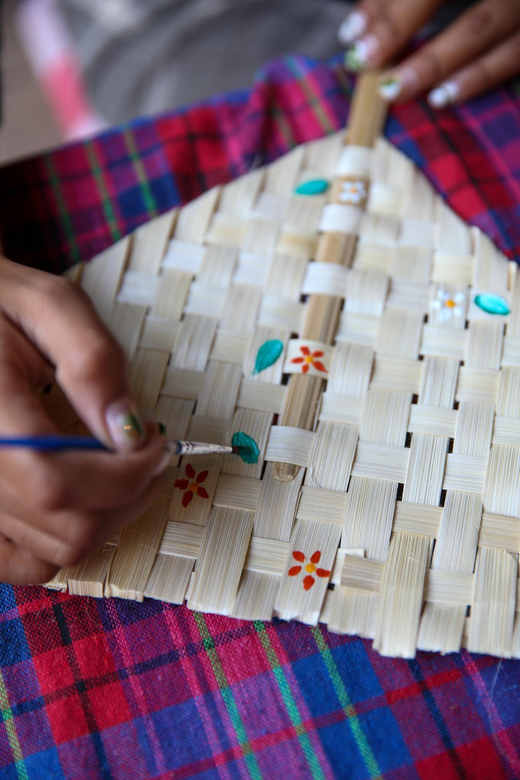
- Traditional Lanna bamboo weaving, taught step by step
- A take-home fan you can actually use
- Private group setup with English and Thai support
- Butterfly pea with lime and honey included
- Hosted at a local Chiang Mai address near Wat gate
A first trip to Chiang Mai fills up fast. Start with the tours everyone books.
- Half-Day Thai Cooking Class at Organic Farm in Chiang Mai
★ 5.0 · 19,087 reviews - Chiang Mai: Elephant Sanctuary, Waterfall & Bamboo Rafting
★ 4.9 · 9,160 reviews - Chiang Mai: Doi Inthanon National Park Eco-Friendly Tour
★ 4.6 · 6,667 reviews - Chiang Mai: Elephant Sanctuary & Waterfall Group Tour
★ 4.9 · 5,780 reviews
Lanna Bamboo Fans in Chiang Mai: Why This Workshop Feels Practical
Chiang Mai has a lot of craft options, but bamboo fan weaving is special because it sits right where function meets art. You learn a technique you can picture using again later, whether you’re making something small at home or just understanding why local crafts look the way they do.
I also like that this is a short session. Ninety minutes is long enough to get into a rhythm and finish a complete creation, but short enough that it doesn’t steal your whole day. For many people, that makes it a perfect “slow down” activity between temples, markets, and day trips.
And the best part is the outcome. When you leave, you’re not holding a souvenir. You’re holding a handmade fan—the kind of thing that keeps reminding you of the moment you learned the pattern.
Where You’ll Go: Wat Gate Area and a Home-Style Workshop Setting
Your workshop location is listed as 7/6 Rat-U-Thit rd. Soi 4, T. Wat gate, A. Muang Chiang Mai 50000. That area matters, because it’s not designed like a big show. You’re heading into a more everyday corner of the city, which makes the experience feel grounded.
Expect a home-style or family-style atmosphere rather than a formal classroom. That’s often what helps people feel comfortable asking questions, especially if you don’t speak much Thai. The instructor team includes English and Thai, so communication is usually manageable even if you’re nervous at the start.
Bring a small amount of flexibility with your expectations. If you’re used to structured tours with constant explanations, this will feel more like a guided craft session—learning by doing, with short cultural notes added along the way.
Your 90-Minute Flow: How the Workshop Is Usually Structured
In 90 minutes, you can only do so much, so the workshop focuses on what gives you results fast. Here’s the practical flow you should expect:
- Start with an introduction to bamboo weaving—what it is, and why it matters in the region.
- Get a look at the materials and how the fan components come together.
- Learn the main weaving steps for building the fan structure.
- Practice with guidance until your own fan starts to take shape.
- Finish and take your creation home.
This kind of structure is a smart match for a beginner. You’re not sent off with complicated instructions. You’re taught the key moves, then you repeat them until your fan looks right.



From Bamboo to a Real Fan: What You’ll Make and Why It’s Satisfying
The included material is bamboo, and that’s the point. Bamboo has a springy feel and a natural stiffness when handled correctly, which is why it works so well for fans that need a light, wave-like movement.
You’ll learn fan construction techniques that turn bamboo strips into a functional piece. In practical terms, that means you’ll work on:
- Forming the fan shape
- Weaving enough tension so it holds together
- Building the structure so it moves the way a fan should
When people walk out of this workshop, the big win isn’t just that they made something. It’s that they made something that behaves correctly. A fan that flexes and opens the way it should feels like a true craft object, not a school project.
And there’s another hidden value: learning the process makes the finished item more meaningful. You’ll notice your own technique when you fan yourself back in your hotel room.
The Wave-Like Motion: The Technique That Gives Lanna Fans Their Look
One of the highlights is learning the weaving method behind the mesmerizing wave-like motion. That motion is what makes a bamboo fan feel graceful instead of stiff.
Here’s what you can look for while you work:
- The way each strip follows the pattern without buckling
- How the spacing affects the final look
- How consistent tension changes the curve across the fan
This is where patience pays off. Early on, your hands may feel slow. That’s normal. The craft reward comes when your movements start repeating naturally, and the fan begins to line up with the shape the instructor is aiming for.
If you’ve ever wanted a craft where you can see progress quickly, this is one of the better choices. Unlike things that take days to dry or finish, bamboo fan weaving tends to show visible results while you’re still in the room.
Lanna Cultural Context: More Than a Craft Demo
The workshop includes cultural insights into Lanna bamboo fan weaving. You’ll hear why bamboo is used, how weaving connects to local life, and what these fans represent beyond cooling yourself on a warm day.
This matters because the value of craft isn’t only aesthetic. In many regions, traditional techniques are a form of local knowledge—how people used what was available, how they solved practical needs, and how styles developed over time.
Even if you’re just looking for a fun activity, the cultural framing helps you avoid the common souvenir trap. Instead of thinking, Wow, cute fan, you’ll think, Oh, I get why it’s built like this.
Your Host Experience: Baannoi Nornmuan and the Calm Pace
The provider is Baannoi Nornmuan. That name shows up because the experience is truly hosted, not outsourced. You’re guided by someone who’s close to the craft, and that typically means more patience and more “watch me, then you try” teaching.
Guests also highlight the kind, welcoming nature of the hosts and how clearly the session is prepared. That combination is exactly what you want for a hands-on workshop. When instructions are friendly and the workspace is comfortable, you spend less energy worrying and more energy learning.
Also, because it’s a private group, you’re less likely to feel rushed. That’s a big deal if you’re bringing kids, older relatives, or anyone who learns better when they can move at their own speed.
The Included Drink Break: Butterfly Pea Tea With Lime and Honey
One small detail that I genuinely like: you get a drink included—butterfly pea with lime and honey. It’s not just a random add-on. This kind of tea helps make the session feel like a break from sightseeing pressure.
Butterfly pea tea is known for its color and gentle flavor, and the lime/honey combo makes it feel more refreshing than tea that’s only sweet. It’s a nice mid-workshop reset when your hands are busy and your mind needs a moment to slow down.
And since food isn’t included, this drink helps you manage timing if you’re doing the workshop between meals.
Price and Value: Is $22 Worth a Handmade Fan?
The price is listed at $22 per person for about 90 minutes. For Chiang Mai, that’s positioned in a reasonable range for a guided, take-home craft with materials provided.
Here’s how I judge value on workshops like this:
- Do you leave with a finished item made during the session? Yes: a bamboo fan.
- Are materials included? Yes: bamboo.
- Do you get real instruction, not just a quick demo? Yes, step-by-step guidance is the core.
- Is it time-efficient? Ninety minutes is solid.
- Is there a small included perk? Yes: butterfly pea tea with lime and honey.
If you’re comparing it to buying a ready-made souvenir, the cost becomes easier to justify. You’re not paying extra just for the object. You’re paying for the teaching, the workspace, and the time that turns a skill into something you can say you learned.
This is also a good deal if you’re traveling as a family or small group, because a private group format often means the instructor can give attention without crowd control.
What to Know Before You Go (So You Enjoy It More)
A few practical things can make your session smoother:
- You’re not picked up. Plan to arrive on your own near Wat gate area.
- No food is included. If you’re hungry, eat before or plan something nearby afterward.
- Wear comfortable clothes. Bamboo work is hands-on, and you’ll likely lean forward and use your fingers a lot.
- Bring a curious attitude. Even if you think you’re not good at crafts, this is beginner-friendly by design.
If you care about language, you’re covered. The instructor is listed as English and Thai, so you should be able to get explanations when you need them.
Who This Workshop Suits Best (And Who Might Want Another Activity)
This is the kind of activity I recommend when you want a meaningful break without committing to a full day.
It’s especially good for:
- Families with kids or multigenerational groups who want a calm, creative activity
- People who like hands-on learning and want to make something tangible
- Travelers who are tired of temple hopping and want a local skill instead
- Anyone who wants a lighter souvenir that feels personal and useful
It might be less ideal if:
- You want a long, deep course. This one is short by choice.
- You’re looking for an activity with heavy sightseeing components. This is about the craft, not the street-food crawl.
Should You Book This Chiang Mai Bamboo Fan Weaving Session?
If you like crafts, want a break from rushing, and enjoy taking home something made with your own hands, I’d book it. The combination of traditional Lanna technique, step-by-step guidance, and a take-home fan makes the value feel clear.
One more reason: it’s a rare kind of souvenir. It’s not just decorative; it has movement and purpose. That means it can keep living in your day-to-day life long after you leave Chiang Mai.
FAQ
How long is the Chiang Mai traditional Lanna bamboo fan weaving workshop?
The duration is about 90 minutes (listed as 1 to 1.30 hour).
What is included in the workshop?
You get bamboo materials and a drink: butterfly pea with lime and honey.
Is pick-up or food included?
No. Pick-up car and food are not included.
Where is the workshop located?
It’s at 7/6 Rat-U-Thit rd. Soi 4, T. Wat gate, A. Muang Chiang Mai 50000.
What languages are used by the instructor?
The instructor speaks English and Thai.
What is the cancellation policy?
You can cancel up to 24 hours in advance for a full refund.
More Tour Reviews in Chiang Mai
- Half-Day Thai Cooking Class at Organic Farm in Chiang Mai★ 5.0 · 19,087 reviews
- Chiang Mai: Elephant Sanctuary, Waterfall & Bamboo Rafting★ 4.9 · 9,160 reviews
- Chiang Mai: Doi Inthanon National Park Eco-Friendly Tour★ 4.6 · 6,667 reviews
- Chiang Mai: Elephant Sanctuary & Waterfall Group Tour★ 4.9 · 5,780 reviews
- Chiang Mai: Chiang Rai Temples, Karen Tribe and Hot Springs★ 4.7 · 5,401 reviews