
Reviewed · TOURS
Half Day Traditional Handicraft Craftsmanship Tour from Chiang Mai
Crafts here are made by hand, not by theory. This half-day tour connects San Kamphaeng Road workshops with Bo Sang umbrella makers, with low-pressure factory watching and plenty of time to look around. You’ll move with a guide in a small group (max 10) and start from central Chiang Mai, so the morning feels practical, not rushed.
Two things I really like: you get real craft demonstration time (silk weaving, wood-carving processes, and Saa-paper umbrella making), and the pace stays manageable thanks to door-to-door hotel transfers and an air-conditioned vehicle. One extra bonus: one guide I’ve heard about on this route, often described as Ms Ooh Lala, is good at explaining how multiple workshops keep traditional skills alive.
The main consideration is simple: it’s a half-day, so you’ll see a lot of making in a short window. This is best if you want guided craft sightseeing and browsing, not if you’re expecting long, hands-on classes at every stop.
In This Review
- Key things to know before you go
- How the 4-hour craft route runs from Chiang Mai hotels
- San Kamphaeng Road and the Saturday walking market: silk weaving you can actually watch
- Baan Jang Nak: elephant wood carvings and the production logic behind furniture
- Bo Sang (Umbrella Village): Saa-paper parasols made from scratch
- Shopping without the hard sell: how to use the last hour smartly
- Price and value: is $65 a good deal for a morning craft tour?
- Who should book this craft tour (and who should skip it)
- Should you book this traditional handicraft craftsmanship tour?
- FAQ
- What time does the half-day tour start?
- How long is the tour?
- Is pickup from hotels included?
- Where can I meet the tour if I’m not getting picked up?
- How many people are in the group?
- Are admission tickets included?
- Is there an extra fee for pickup/drop-off outside the center?
- Is the transport air-conditioned?
- Do I need to bring special shoes?
- Can children join?
Key things to know before you go
- Small group, max 10 means you can ask questions without feeling lost in the crowd.
- Two-way door-to-door pickup is free within about a 3 km city-center radius, with a 300 THB surcharge outside that area.
- Free admission at each stop keeps the day straightforward (you’re mostly paying for the guide and transport).
- Watch traditional methods: hand silk weaving, wood carving production steps, and umbrella-making from scratch.
- Bo Sang is a shopping zone by design, so you’ll likely want a plan for what you’ll buy (and where you’ll carry it).
A first trip to Chiang Mai fills up fast. Start with the tours everyone books.
- Half-Day Thai Cooking Class at Organic Farm in Chiang Mai
★ 5.0 · 19,087 reviews - Chiang Mai: Elephant Sanctuary, Waterfall & Bamboo Rafting
★ 4.9 · 9,160 reviews - Chiang Mai: Doi Inthanon National Park Eco-Friendly Tour
★ 4.6 · 6,667 reviews - Chiang Mai: Elephant Sanctuary & Waterfall Group Tour
★ 4.9 · 5,780 reviews
How the 4-hour craft route runs from Chiang Mai hotels
This tour is scheduled for about 4 hours, starting at 8:00 am. That early start matters in Chiang Mai. You’re usually still in comfortable morning temps, and the crafts districts are active enough for you to see ongoing work, not just static displays.
You’ll travel by air-conditioned vehicle, and the tour is built around being convenient: hotel pickup and drop-off are included for selected hotels, plus there’s a free pickup area in central Chiang Mai (Night Bazaar, Tapae Gate, Chiang Mai Gate, Suan Dok Gate, Old City, and nearby roads, including Ibis Hotel and Nimmana Haeminda/Santitham areas). If your hotel is farther out, you should expect a 300 THB surcharge for pickup/drop-off around the city-center boundary (about 5 km from the 3 King Monument is referenced).
If you’re not getting picked up, there’s also an option to join at the McDonald’s at Chiang Mai Night Bazaar. The day ends back at the meeting point, so you don’t need to worry about figuring out transport at the end.
Practical tip: wear comfortable walking shoes. This isn’t a museum-only route. You’ll move through craft areas where you’ll want steady footing—especially if you plan to wander a bit after the umbrella stop.
San Kamphaeng Road and the Saturday walking market: silk weaving you can actually watch
Your morning begins with a short transfer from your hotel into the Sankampaeng district—often known as Chiang Mai’s handicraft corridor. The route is designed so you arrive in time to see workshops functioning like workshops, not like staged photo stops.
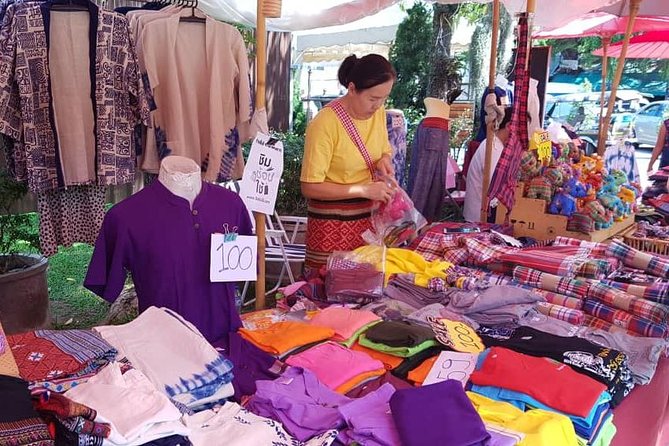
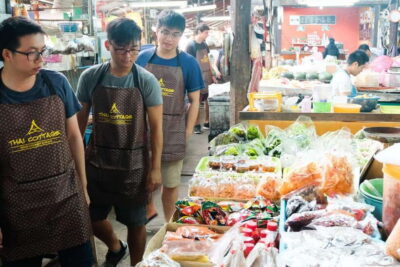
The second stop is the San Kamphaeng Saturday Walking Street Market. It’s described as the center of Thailand’s handicraft production, and the key value here is the workshop-style viewing. You’ll watch locals demonstrate hand silk weaving, using methods that are generations-old. Even if you don’t know anything about textiles, watching the process helps you understand why silk can be both time-consuming and expensive. It’s not just a fabric; it’s a chain of decisions—thread, tension, pattern setup, and weaving pace.
One thing I appreciate about this stop is that it’s free and you’re guided through it with context. Instead of wandering aimlessly, you’ll know what you’re looking at: how silk production works as a detailed process, and why certain styles take longer than others.
A small downside to keep in mind: because this is a market area, you may see more browsing and demonstrations than quiet “museum lighting.” If you want a calm, slow environment, you’ll need to enjoy it for what it is—busy, active, and hands-on in feel.
Baan Jang Nak: elephant wood carvings and the production logic behind furniture
Next up is Baan Jang Nak – A Museum of Elephant Wood Carvings. The name sounds specific, and that helps set expectations: you’re heading to a place focused on wood carving craftsmanship and the way wood items are made.
What makes this stop more useful than a simple viewing gallery is the factory-and-process framing. You’ll pass through a renowned wood and furniture factory, and the guide helps you understand the steps from raw material to finished pieces. That “how it goes from A to B” piece is what turns craft sightseeing into real learning. You start noticing things like tool work, shaping stages, and the idea that the final look comes from careful decisions long before the polishing stage.
After that, there’s also an exhibit featuring locally made items—native costumes, jewelry, and home novelties. This is where you can shift from “watching how it’s made” to “seeing what it becomes.” If you like practical souvenirs, this is a good moment to think about what you might actually use after you return home: small carved pieces, decorative objects, and wearable items.
From a value standpoint, I like that admission is listed as free here too. You’re getting a guided narrative plus access to a museum-style exhibit without feeling like the day is constantly costing extra along the way.


Bo Sang (Umbrella Village): Saa-paper parasols made from scratch
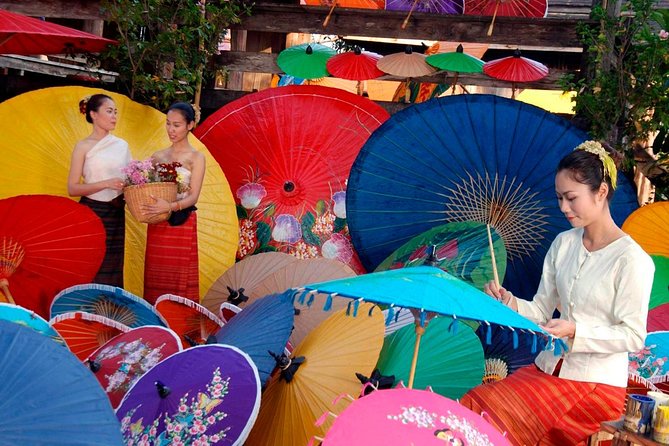
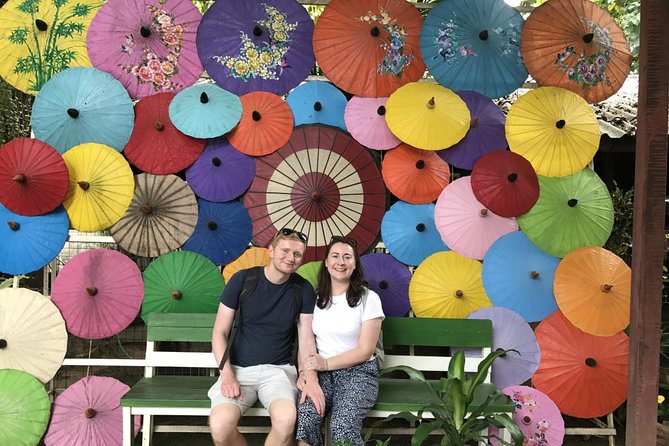
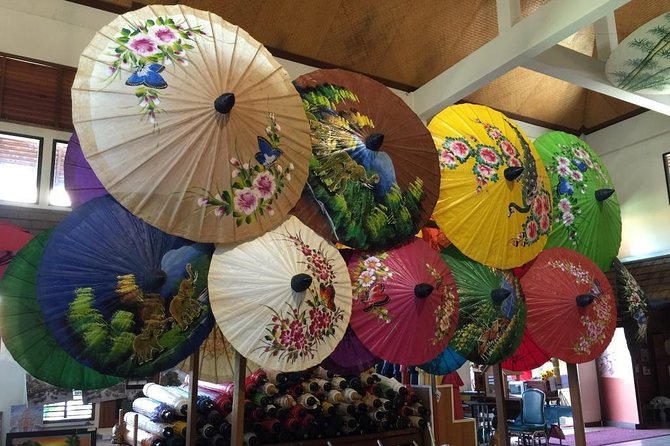
The final major craft stop is Umbrella Village (Bo Sang), known for Saa-paper umbrellas—often called parasols. This is one of the easiest places to connect the dots between tradition and everyday beauty: you can see the raw material process and how the umbrella becomes a finished product.
What I like about this part of the tour is that you’re not just shown a finished umbrella display. The day is described as seeing how Saa-paper umbrellas are made from scratch, and that’s a big difference. When you watch the early steps, later decoration and shaping make more sense. You’ll also understand why these umbrellas can feel both light and sturdy—because the structure isn’t magic, it’s material work plus careful assembly.
After the umbrella-making segment, the schedule includes time to wander around the district and interact with locals. This is where Bo Sang can feel like a living craft neighborhood rather than a single workshop. And yes, this is also where purchases are tempting—so it helps if you go in with a simple rule: decide on your souvenir category first (umbrella vs. smaller crafts) and then check sizes and quality.
Even if you don’t buy, the wandering time is valuable. It gives your eyes a chance to compare designs and learn what “good craftsmanship” looks like when you see several examples side by side.
Shopping without the hard sell: how to use the last hour smartly
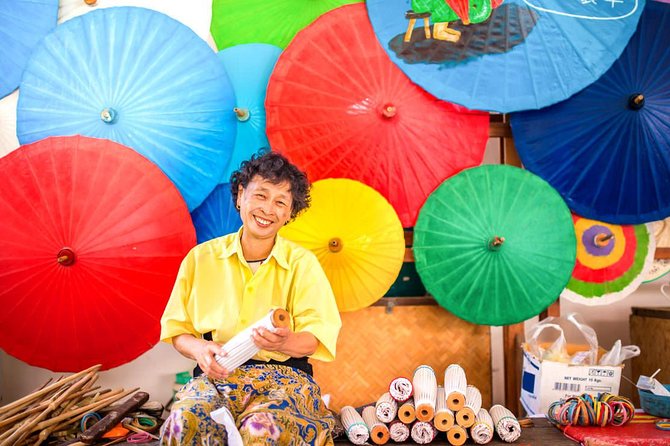
This tour is described as avoiding buying pressure, and that matters. Craft districts can turn into a sales maze if you’re not careful. Here, the browsing is positioned as part of the experience—especially after Bo Sang—so you’re free to look and compare at your own speed.
If you do plan to buy, here’s the mindset that usually works best on crafts days in Chiang Mai:
- Pick one or two items you’ll actually take home and use or display.
- Ask questions about what you’re seeing, even if you’re not buying.
- If you’re comparing textiles or paper items, look for clean finishing and consistent structure.
One detail that stands out from a guide-focused review: a guide described as Ms Ooh Lala was noted for showing multiple business enterprises that keep older craft skills running. In that same context, celadon pottery came up—specifically throwing, glazing, and painting. That tells me the tour can feel more like a craft ecosystem than a single-thing visit. If you happen to get a guide who explains cross-craft businesses, you’ll get extra value beyond the obvious umbrella and silk stops.
Price and value: is $65 a good deal for a morning craft tour?
At $65 per person, the first question is what you’re really paying for. The tour includes:
- a guided craft-and-factory route through the key districts
- hotel pickup and drop-off (selected hotels and a central pickup zone)
- an air-conditioned vehicle
Admissions at the listed stops are shown as free, which helps control your total cost. In other words, this isn’t a “pay for tickets then pay again for shopping” kind of day. You’re mostly paying for the guide, transport, and the convenience of stitching together multiple craft areas in one morning.
The other cost to plan for is the 300 THB surcharge for pickup/drop-off outside the city-center boundary described in the info (and the free pickup zone is about a 3 km radius from the center reference points). If you’re staying well inside the pickup area, your day is likely closer to the headline price. If you’re farther out, budgeting for that added 300 THB keeps you from getting surprised later.
Also worth noting: the group size is capped at 10 travelers. In practice, that often means better questions, more direct attention, and fewer moments where you’re standing around wondering what to do next.
One small caution on value: you’re visiting multiple craft-focused stops, but the overall timeframe is short. If you’re the kind of person who likes to spend hours in one workshop, you might feel the day moves fast. If you like variety, you’ll probably feel like you “covered the basics” and left with an understanding of how different crafts work.
Who should book this craft tour (and who should skip it)
This tour is a great match if you:
- want a guided look at Thai crafts without getting shoved into sales pitches
- like watching how things are made—especially textiles, woodwork, and paper crafts
- have limited time in Chiang Mai and want a structured morning
- prefer small-group attention (max 10) over a big bus of strangers
- want hotel convenience and comfort via A/C transport
You might skip it if you want:
- long, hands-on training (this is built around observation and guided factory viewing)
- a very slow museum experience where you can linger in one exhibit for a long time
- purely historical sightseeing with fewer craft demos (this route is craft-first)
If you’re traveling with kids, the info says children must be accompanied by an adult, and most travelers can participate. The day involves walking a bit, so comfortable shoes are key.
Should you book this traditional handicraft craftsmanship tour?
I think it’s worth booking if your goal is a smart half-day that combines silk weaving, wood carving production, and Bo Sang umbrella making with a small-group guide and central pickup. The best value comes from pairing this with unstructured time later in Chiang Mai—use the tour to get oriented on how the crafts world works, then browse independently when you feel ready.
Before you book, check one practical thing: where your hotel is in relation to the free pickup zone. If you’re outside the ~3 km central radius, factor in the 300 THB surcharge so the math stays simple.
If you’re excited about crafts and want a morning that’s both informative and fun, this is an easy yes. If you’re craving deep hands-on practice, you may want a more workshop-heavy option instead.
FAQ
What time does the half-day tour start?
It starts at 8:00 am.
How long is the tour?
The duration is about 4 hours.
Is pickup from hotels included?
Yes. Hotel pickup and drop-off are included for selected hotels, with a free central pickup area and a surcharge if you’re outside that area.
Where can I meet the tour if I’m not getting picked up?
You can join at the McDonald’s at Chiang Mai Night Bazaar.
How many people are in the group?
The tour has a maximum of 10 travelers.
Are admission tickets included?
Admission tickets are listed as free for the stops in the itinerary.
Is there an extra fee for pickup/drop-off outside the center?
Yes. A 300 THB surcharge is mentioned for pickup/drop-off in hotels outside the city-center area (based on the distance reference provided).
Is the transport air-conditioned?
Yes, the tour includes an air-conditioned vehicle.
Do I need to bring special shoes?
You should wear comfortable walking shoes.
Can children join?
Yes, but children must be accompanied by an adult.
More Tours in Chiang Mai
- Chiang Mai: Doi Inthanon National Park Eco-Friendly Tour★ 4.6 · 6,667 reviews
- Chiang Mai: Elephant Sanctuary & Waterfall Group Tour★ 4.9 · 5,780 reviews
- Chiang Mai: Cooking Class, Market & Thai Herbs Garden Tour★ 4.9 · 4,824 reviews
- Chiang Mai: Elephant Sanctuary Feeding Program Half-Day Tour★ 4.8 · 4,527 reviews
- Chiang Rai White Temple and Blue Temple Day Tour★ 4.6 · 3,366 reviews
More Tour Reviews in Chiang Mai
- Half-Day Thai Cooking Class at Organic Farm in Chiang Mai★ 5.0 · 19,087 reviews
- Chiang Mai: Elephant Sanctuary, Waterfall & Bamboo Rafting★ 4.9 · 9,160 reviews
- Chiang Mai: Doi Inthanon National Park Eco-Friendly Tour★ 4.6 · 6,667 reviews
- Chiang Mai: Elephant Sanctuary & Waterfall Group Tour★ 4.9 · 5,780 reviews
- Chiang Mai: Chiang Rai Temples, Karen Tribe and Hot Springs★ 4.7 · 5,401 reviews
Fresh off the pile: Chiang Mai tours we have just written up



Tours, compared.
 ★ 4.9Elephant Sanctuary & Waterfall Group TourFrom $505,780 reviews
 ★ 4.9Cooking Class, Market & Thai Herbs Garden TourFrom $314,824 reviews
 ★ 4.8Elephant Sanctuary Feeding Program Half-Day TourFrom $274,527 reviews
 ★ 4.6Chiang Rai White Temple and Blue Temple Day TourFrom $273,366 reviews
 ★ 4.2White, Red/Black & Blue Temples Tour with LunchFrom $332,017 reviews
 ★ 4.8Elephant Care Program and Nursery TourFrom $531,899 reviews
 ★ 4.6Doi Suthep and Wat Umong Enchanting Evening TourFrom $271,811 reviews
 ★ 4.9Small Group Ethical Elephant Sanctuary TourFrom $771,572 reviews