Reviewed · CHIANG MAI
Mastering Chiang Mai Temples in Halfday – Visit 7 Temples
Seven temples, one tidy half day. Chiang Mai has over 300 Buddhist temples, and this route helps you see a lot without turning your day into a logistics puzzle. Think of it as a temple art tour, with Lanna architecture clues you can actually spot fast.
What I love is how efficient it feels: you cover big-name places and smaller gems in about 4 hours without you juggling transport between neighborhoods. I also like that the guide brings the sites to life with clear storytelling and group photo help (one guide named Faan was singled out for being extra informative and picture-friendly).
One consideration: each stop is short, so if you want slow meditative wandering in one place, this pace may feel a bit tight. Also, you’ll be visiting active temple grounds, so you need to dress for it (shoulders and knees covered) and be ready for rainy-season weather from May to October.
In This Review
- Key highlights at a glance
- The Chiang Mai temple route that feels like an art exhibit
- Price and what you’re really paying for
- The 9:00 start: how the schedule keeps momentum
- Dress code and temple manners (important)
- Wat Phra Singh: the Songkran-linked Chiang Saen Buddha
- Wat Chedi Luang Varavihara: photograph the massive chedi
- Wat Phantao: a teakwood ordination hall you can spot fast
- Wat Chiang Man: the oldest town temple with elephant buttresses
- Wat Lok Molee: Lanna stucco patterns and pagoda shape
- Wat Suan Dok: flower garden vibes and white chedis
- Wat Phrathat Doi Kham: the 17-meter golden mountain Buddha
- Rainy-season planning: how to make this tour comfortable
- Driver, photos, and the value of guided context
- Who this tour suits best
- Should you book it?
- FAQ
- How long is the Mastering Chiang Mai Temples in Halfday tour?
- What time does the tour start?
- How many temples do you visit?
- Is pickup included?
- Are temple admissions included?
- What should I wear to the temples?
- Does the tour run in the rainy season?
- Can I cancel for a full refund?
Key highlights at a glance
- 7 temples in one loop so you skip figuring out routes and rides
- Pickup offered to reduce time wasted before you even start sightseeing
- Most admissions are free once you’re on the tour, with one paid stop included
- Lanna details you can look for like teak wood, elephant buttresses, and stucco patterns
- Rain still counts during May–October, so pack an umbrella or raincoat
- Doi Kham hill payoff with a large 17-meter Buddha you can spot from miles away
A first trip to Chiang Mai fills up fast. Start with the tours everyone books.
- Half-Day Thai Cooking Class at Organic Farm in Chiang Mai
★ 5.0 · 19,087 reviews - Chiang Mai: Elephant Sanctuary, Waterfall & Bamboo Rafting
★ 4.9 · 9,160 reviews - Chiang Mai: Doi Inthanon National Park Eco-Friendly Tour
★ 4.6 · 6,667 reviews - Chiang Mai: Elephant Sanctuary & Waterfall Group Tour
★ 4.9 · 5,780 reviews
The Chiang Mai temple route that feels like an art exhibit
Chiang Mai is famous for temples, but the sheer number can stress you out fast. You end up with that question: which ones actually matter, and how do you get there without burning half your day in transit?
This tour answers both. You’re guided through a mix of highly recognizable “must-sees” and places where the architecture does the talking. The seven stops create a neat sequence of Lanna-style features—chedis, viharns, carved supports, and painted/stucco surfaces—so you start noticing patterns instead of just collecting stamps.
And because the tour is private (only your group participates), it tends to feel less like a cattle call and more like you’re moving together with a knowledgeable driver-guide team.
Price and what you’re really paying for
The cost is $93.71 per person, and it’s typically booked about 49 days in advance. On paper, that’s not the cheapest way to do temples. But you’re paying for time savings: pickup, a planned route with multiple destinations, and guided context that helps you understand what you’re looking at.
Here’s where the math gets friendlier: most temple admissions on this route are free, and only one stop has admission included. Add that up and the biggest part of what you’re buying is convenience plus guidance—not a long list of paid entrances.
If you’re short on time in Chiang Mai, this is a smart way to avoid the hidden costs of doing it alone: driver-hiring back-and-forth, waiting around, and figuring out which sites are realistically close enough for a half-day.
The 9:00 start: how the schedule keeps momentum
The day begins at 9:00 am and runs about 4 hours. The pacing is designed so you can see multiple major temples without feeling like you’re stuck in one place too long.
The timing is approximate and can shift due to weather or other interruptions, which matters in the rainy season. The upside is that the schedule stays realistic: you won’t get stuck with unrealistic promises that fall apart the moment it rains.



Dress code and temple manners (important)
You’ll be walking into active religious sites, so bring clothes that follow the rules: shoulders and knees covered. Sandals or flip-flops are allowed, which is a big practical win in Thailand heat.
If you show up in tank tops or shorts that are too short, you may have to improvise on the spot. It’s easier to just plan ahead.
Wat Phra Singh: the Songkran-linked Chiang Saen Buddha
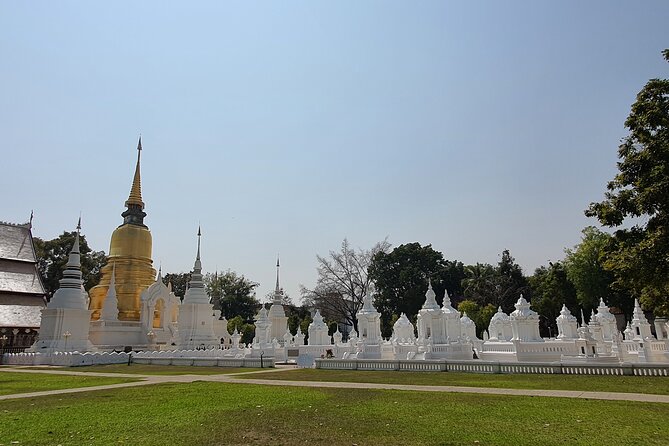
Wat Phra Singh is often the anchor stop in Chiang Mai temple visits. It’s home to one of the city’s most sacred Chiang Saen-style Buddha images.
What makes it interesting beyond the usual photo moment is the story tied to Songkran. During April 13–15, that image is carried in a town procession so locals can bathe it with scented water, a tradition believed to bring good luck. Even if you’re not there during Songkran, you can sense why this statue is treated with extra care.
Time on site is about 30 minutes, which is just enough for a good look and to understand the significance without turning the visit into a long detour. The only drawback is that if you want to linger for quiet moments, the half-hour can feel brief.
Wat Chedi Luang Varavihara: photograph the massive chedi
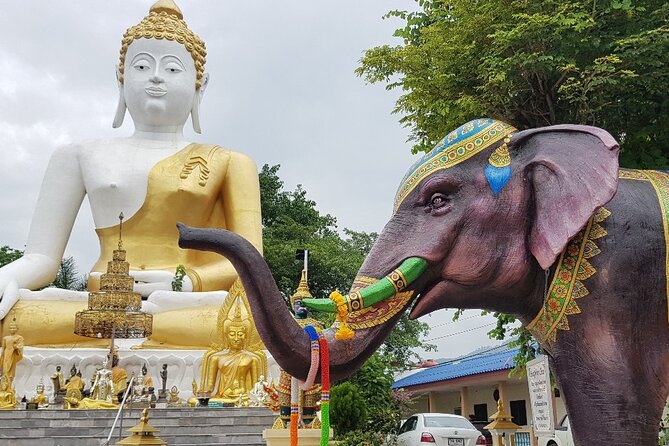
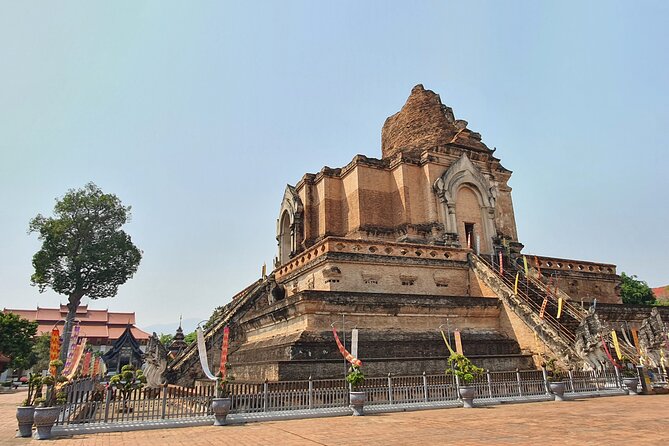
Wat Chedi Luang Varavihara is dominated by its chedi—huge, eye-catching, and built to be the first thing you notice. If you only have a short time in Chiang Mai, this is the kind of stop that earns its spot.
Expect the focus to stay on that massive structure and the surrounding layout. The admission for this stop is included on the tour, so you don’t have to manage extra costs or ticket hunts mid-day.
With about 30 minutes here, you can get wide-angle shots, then step into more detailed views. The only potential downside: the scale means you’ll spend time looking up, which can be tiring in heat and humidity. Hydrate and take breaks when you can.
Wat Phantao: a teakwood ordination hall you can spot fast
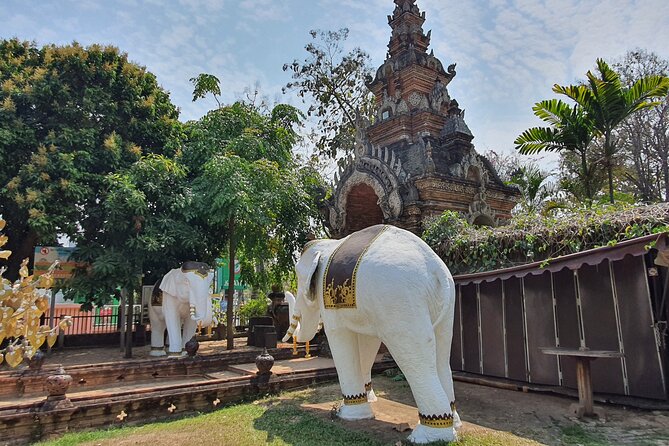
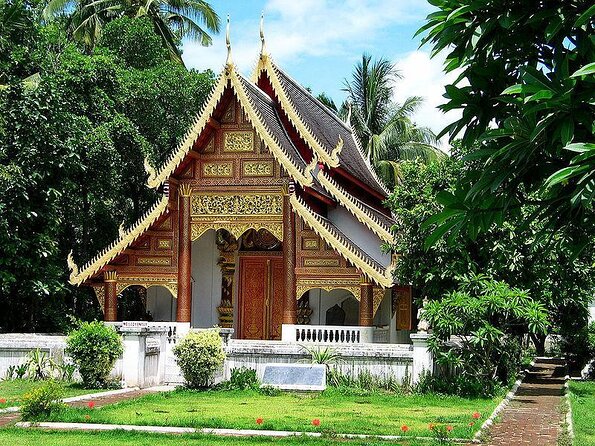
Wat Phantao is known for its exquisitely made Lanna-style ordination hall (Wihan) built entirely of teakwood. It also served as a throne hall, which adds an extra layer to why the craftsmanship matters.
This stop is short—about 10 minutes—so the trick is to choose what you want to notice most. Look for the woodworking details and the hall’s sense of function and form. In ten minutes, you won’t be able to study everything, but you can still catch what makes it special.
If you’re a person who loves architecture and materials, you may wish you had more time. But as one piece of a seven-temple route, it works well as a quick “wow” moment.
Wat Chiang Man: the oldest town temple with elephant buttresses
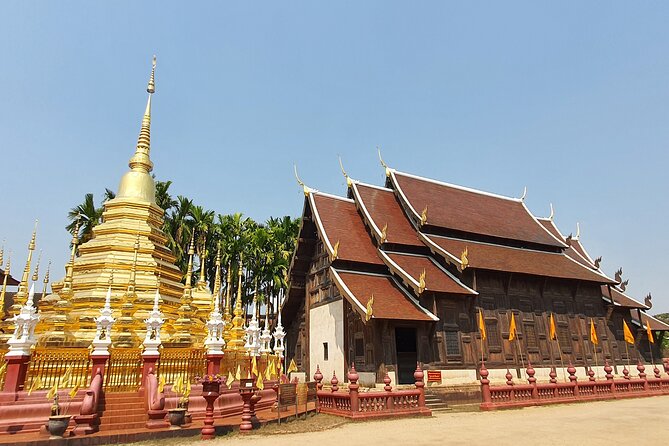
Wat Chiang Man is one of the oldest temples in Chiang Mai town. Its key feature is a Lanna-style chedi supported by rows of elephant-shaped buttresses—a design element that’s both decorative and memorable.
You’ll have about 20 minutes here. That’s usually enough to see the chedi’s overall look and then get your eye back on the elephant details without feeling rushed.
The main consideration at this stop is the same as most temple visits: you’re balancing viewing time with respecting the space. In warm weather, it also helps to wear breathable clothes and shoes you can walk in comfortably.
Wat Lok Molee: Lanna stucco patterns and pagoda shape
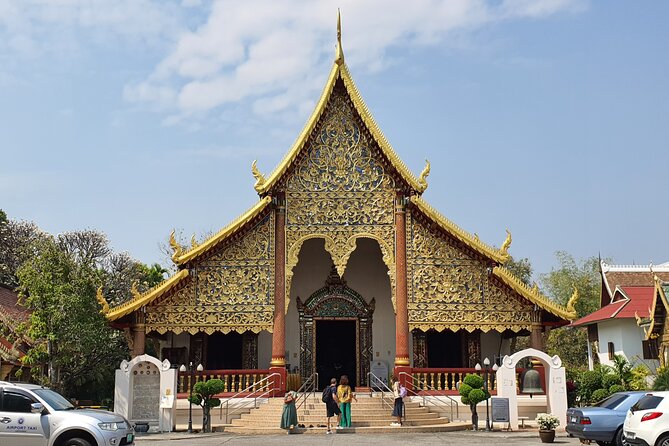
Wat Lok Molee is the kind of temple stop that rewards people who like design details. The pagoda and the stucco pattern work together in a way that’s classified as Lanna art—so instead of just one big object, you’re looking at surface pattern, shape, and overall harmony.
You’ll have around 15 minutes, which is more of a “check this out and move on” stop than a deep study. Still, for a half-day route, it’s a great balance: it adds variety after the bigger, more dominant chedis elsewhere.
If you’re the type who likes to compare styles, use this brief stop to spot differences in patterning versus what you saw at earlier temples.
Wat Suan Dok: flower garden vibes and white chedis
Wat Suan Dok is known for its large number of white chedis (pagodas). The name literally means flower garden temple, and the temple area was once used as a royal flower garden by the ruler of Chiang Mai.
This is a slower-feeling stop at 20 minutes, and it gives you room to look for the repeating forms of the chedis. Those repetitions can be visually calming, even when you’re on a timed tour.
If there’s a drawback, it’s simple: because so much of the appeal is visual rhythm, fifteen or ten minutes would probably feel too short. The 20 minutes helps. Still, if you love photography, you may wish you had time to reset your composition without feeling like you’re racing the schedule.
Wat Phrathat Doi Kham: the 17-meter golden mountain Buddha
The day’s biggest view payoff comes at Wat Phrathat Doi Kham, often described as the Temple of the Golden Mountain. It’s perched on Doi Kham hill, surrounded by mountainous landscapes, and you can see its massive sitting Buddha image from miles away.
The focal point is the enormous Buddha image—about 17 meters high—showing the calling the earth to witness mudra. It’s the kind of statue that turns your brain off in a good way. You stop overthinking and just take in scale.
You’ll have about 40 minutes here, which is the longest stop of the day and makes sense. You need time for the ascent, photos, and a calmer moment to watch the view change as you look around.
In the rainy season, this is also the stop where weather matters most. If it’s wet, go slower on steps and paths, and keep your footing in mind.
Rainy-season planning: how to make this tour comfortable
From May to October, the rainy season is in full swing, but the tour runs even on rainy days. That’s good news if you don’t want to gamble on weather. The bad news is you’ll need to dress for it.
Bring an umbrella or raincoat. It’s a small thing that makes the difference between enjoying temples and getting cranky fast. Waterproof shoes or at least shoes that handle puddles well can also help.
Timing can shift with weather, so don’t treat the schedule like a train timetable. But do expect a thoughtful route that still gets you to the key places.
Driver, photos, and the value of guided context
One of the most useful parts of a half-day temple tour is the translation of what you see. The guide’s job here is to point out the features you might otherwise miss: why a specific style matters, what makes one chedi stand out, and how Lanna design shows up across multiple sites.
In the feedback I’ve heard, guides like Faan are particularly strong at giving lots of information quickly and taking pictures of your group. That matters more than it sounds. When you’re bouncing between seven locations, it’s easy to end up with awkward solo selfies and half-aimed shots. A guide who helps with photos saves you time and frustration.
Also, the ride itself tends to be punctual and modern/clean, which keeps things comfortable as you hop between stops.
Who this tour suits best
This is ideal if:
- You want to see a lot of Chiang Mai temples in a short amount of time
- You’re okay with brief stops and want the guide to set the context
- You don’t want to arrange separate transport legs on your own
- You prefer a structured route instead of wandering and hoping
It’s less ideal if:
- You want long, slow visits at one or two temples
- You’d rather study architecture deeply without moving on
- You’re sensitive to walking and hills during rainy weather
Should you book it?
If you only have half a day (or you’re trying to protect your energy for other Chiang Mai plans), I think this is a solid booking. The value comes from three things working together: pickup and transport planning, lots of major temple sights, and short guided context that helps you recognize what you’re looking at.
Book it if your goal is to get your bearings fast and see standout Lanna temple features without the stress. Skip it if your dream trip is slow temple time with no schedule and no route hopping.
FAQ
How long is the Mastering Chiang Mai Temples in Halfday tour?
It runs for about 4 hours.
What time does the tour start?
The start time is 9:00 am.
How many temples do you visit?
You visit 7 temples in one half-day tour.
Is pickup included?
Yes, pickup is offered.
Are temple admissions included?
Most temple admissions are free on this route, and Wat Chedi Luang Varavihara includes admission.
What should I wear to the temples?
You’ll need shoulders and knees covered. Sandals or flip-flops are allowed.
Does the tour run in the rainy season?
Yes. From May to October, the tour runs even on rainy days, so bring an umbrella or raincoat.
Can I cancel for a full refund?
Yes. You can cancel up to 24 hours before the experience for a full refund. Changes within 24 hours of the start time aren’t accepted.
More Tour Reviews in Chiang Mai
- Half-Day Thai Cooking Class at Organic Farm in Chiang Mai★ 5.0 · 19,087 reviews
- Chiang Mai: Elephant Sanctuary, Waterfall & Bamboo Rafting★ 4.9 · 9,160 reviews
- Chiang Mai: Doi Inthanon National Park Eco-Friendly Tour★ 4.6 · 6,667 reviews
- Chiang Mai: Elephant Sanctuary & Waterfall Group Tour★ 4.9 · 5,780 reviews
- Chiang Mai: Chiang Rai Temples, Karen Tribe and Hot Springs★ 4.7 · 5,401 reviews