
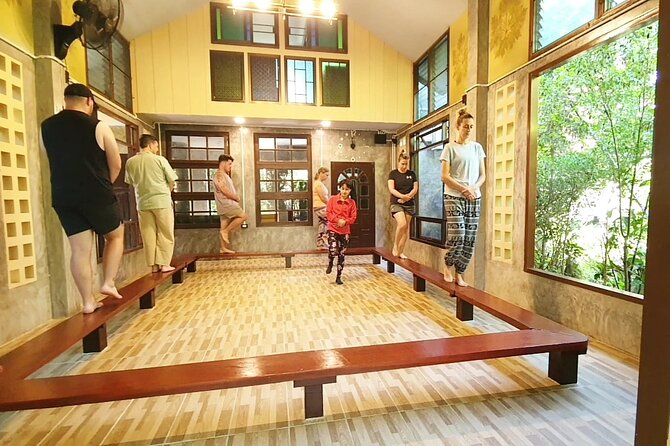
Reviewed · SUNRISE & MEDITATION TOURS
Meditation Retreat and Self-Care in Nature
Simple moments can change your day fast, and this retreat is built around that idea by mixing mindful walking and guided sitting meditation outdoors with real explanation from Amori. Two things I especially like: the session feels structured without being stiff, and the movement (yoga or gentle stretches) is treated as part of self-care, not a workout test. One consideration: it’s in the Doi Saket area, so if your hotel is in central Chiang Mai you’ll need to plan your own taxi.
You’ll finish with something human and grounding too: tea or coffee in a garden, right after you’ve practiced being present. With a max group size of 5 and provided cushions plus a yoga mat, it’s a low-friction way to try meditation basics without a big time or equipment commitment.
In This Review
- Key things to know before you go
- Where This Chiang Mai Self-Care Session Fits in Your Trip
- Meeting in Doi Saket: Simple Start, Realistic Logistics
- The Flow of the Retreat: What Happens in the 3 Hours
- Mindful walking in nature
- Guided sitting meditation with real explanations
- Yoga or gentle stretches (adapted to you)
- Tea or coffee in a garden
- Who This Is Best For (And Who Might Skip It)
- Price and Value: Is $47.20 a Good Deal?
- What to Do Before and After for the Best Results
- The Human Side: Amori’s Guidance and a Calmer Pace
- Quick FAQ (practical answers)
- FAQ
- Where is the meeting point for this meditation retreat?
- What time does the retreat start?
- How long is the experience?
- How many people are in the group?
- What meditation and movement will I do?
- Are cushions and a yoga mat provided?
- Is transportation included?
- Is the retreat suitable if I have only moderate physical fitness?
- Can I bring a service animal?
- What’s the cancellation policy?
- Should You Book This Chiang Mai Meditation and Self-Care Session?
Key things to know before you go
- Small group (max 5 travelers): more attention, less waiting around, and a calmer pace.
- Doi Saket meeting point: you’ll start and end back there, so plan your transport accordingly.
- Mindful walking + guided sitting: you’re not just told to meditate; you practice two core styles.
- Yoga or gentle stretches: adapted to practitioners, so you can move at your comfort level.
- Tea or coffee in a garden: the session ends with a soft landing, not a hard stop.
Dawn at the temple: sunrise and monk-blessing visits
- Chiang Mai: Doi Suthep, Wat Umong, and Pha Lat Sunrise Tour
★ 4.7 · 1,425 reviews - Wat Phra That Doi Suthep spiritual Sunrise Tour with an Ex-monk
★ 5.0 · 798 reviews - Spiritual Sunrise Wat Doi Suthep, Pha Lat, Alms & Meditation
★ 4.9 · 674 reviews - Doi Suthep and Wat Pha Lat Sunrise Tour (Small Group Only)
★ 5.0 · 70 reviews
Where This Chiang Mai Self-Care Session Fits in Your Trip
Chiang Mai is famous for temples and long sightseeing days, but this is different. This is a late afternoon reset aimed at re-balancing your body and mind by focusing on the here and now. The timing also helps: starting at 3:30 pm gives you enough daylight for outdoor practice, without forcing you to wake up early.
The retreat’s promise is simple: you learn practices, you feel clearer, and you leave with tools you can repeat later. In the reviews, people point out that the guidance helped them understand what they were doing, not just go through motions. That matters, because meditation works better when you understand the structure.
Also, it’s positioned as a self-care session, not a performance. Yoga here is yoga-for-you, and stretches are meant to loosen up rather than “prove” anything.
Meeting in Doi Saket: Simple Start, Realistic Logistics
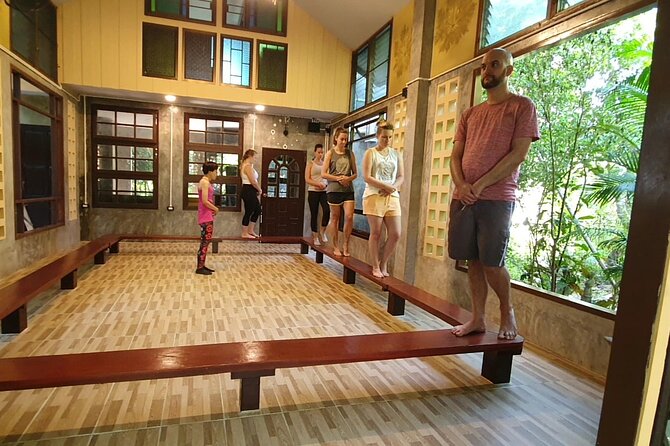
You meet in the Doi Saket District (Chiang Mai 50220) area, and the retreat ends back at the same meeting point. That round-trip setup is convenient for planning, but it also means you need transportation solved up front.
Private transportation isn’t included. In practice, that usually means you’ll either:
- take a taxi to Doi Saket and arrange a return pickup, or
- coordinate a ride based on where you’re staying in Chiang Mai.
One review specifically flagged that the area was far from their hotel and they ordered a taxi for the session. If you’re staying in the old city or near Nimman, just assume you’ll spend some time getting there and back. Budget a little extra time for traffic.
Good news: you get a mobile ticket, so you won’t be digging around for printed confirmations.
The Flow of the Retreat: What Happens in the 3 Hours
This is roughly a 3-hour experience, and it follows a clear rhythm. That structure is part of the value, because you’re guided from active attention (walking) to quieter attention (sitting), then into movement-based self-care (yoga or gentle stretches), and finally a calm break with tea or coffee.
Here’s what you can expect, step by step.



Mindful walking in nature
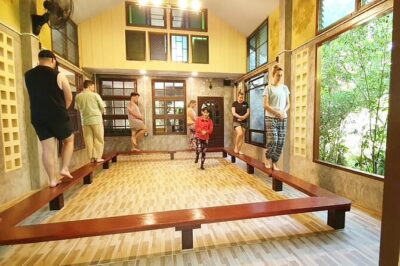
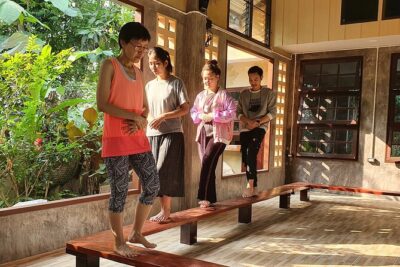
You’ll start by learning mindful walking. This is one of the best entry points to meditation because you’re using something practical you already do all day: walking. Instead of trying to empty your mind, you practice noticing what’s happening in real time—your steps, your body, and your awareness as you move.
Walking meditation also tends to feel less intimidating than sitting meditation. It’s easier to stay engaged outdoors, where sights, sounds, and movement provide natural anchors. If you’re restless or your thoughts race, this can be a helpful “training wheels” approach.
A small group (max 5) is a plus here. You’re more likely to get personal correction or encouragement if your pace or attention feels off.
Guided sitting meditation with real explanations
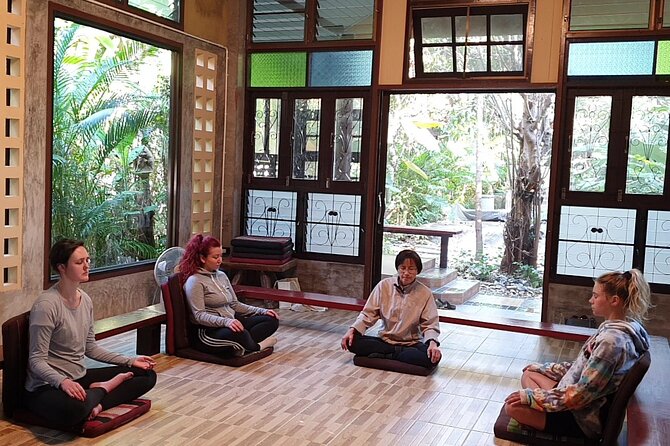
After mindful walking, you shift into guided sitting meditation. The goal is inner calm and peace of mind, but the method matters. One of the strongest signals from the reviews is how clearly Amori explains the practice itself. That helps beginners avoid common confusion, like not knowing what to focus on or when to adjust posture.
Sitting meditation can make some people tense at first. That’s normal. The value here is that you’re not left to guess. You’re guided, and you learn how to practice in a way that fits the moment rather than forcing perfection.
Yoga or gentle stretches (adapted to you)
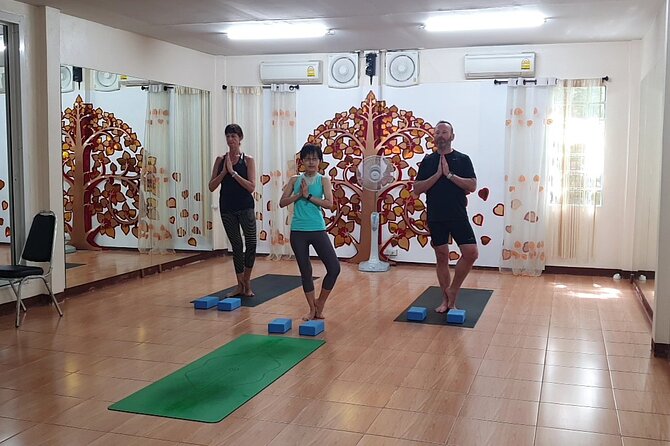
Next comes yoga or gentle stretching, and the important detail is adaptation. The practice is adjusted to practitioners, meaning you should expect options rather than a single rigid routine.
This part is especially relevant if you travel a lot. Sitting and walking meditation are attention practices, but the body still carries stress from flights, buses, stairs, and long temple days. Reviews mention people leaving feeling less stiff and more in tune, which matches the logic of pairing meditation with gentle movement.
If you’ve got moderate physical fitness, this setup is designed for you. Still, if you have injuries or strong mobility limits, consider contacting the provider before booking, since “adapted” can mean different things depending on the person.
Tea or coffee in a garden
The session ends with tea or coffee and snacks in a beautiful garden. This is not just a perk. It’s a transition tool. After meditation and movement, a warm drink gives your body and mind a familiar rhythm again.
It’s also a chance to quietly reflect before you head back to your hotel. Think of it like a soft landing after practicing attention on purpose.
Who This Is Best For (And Who Might Skip It)
This retreat is a good fit if you want:
- a beginner-friendly intro to meditation with guidance,
- a calmer alternative to temple-hopping,
- gentle movement that helps your body feel less “stuck,” and
- a short, focused session (about 3 hours) that still feels meaningful.
It also makes sense if you’re traveling solo and would like a small group setting with supportive instruction. With only up to 5 people, you’re unlikely to feel lost in the crowd.
You might want to consider a different option if:
- you’re looking for a deep, multi-day retreat experience (this is only 3 hours),
- you don’t want any outdoor time, or
- transport to Doi Saket is a hassle you’d rather not deal with.
Price and Value: Is $47.20 a Good Deal?
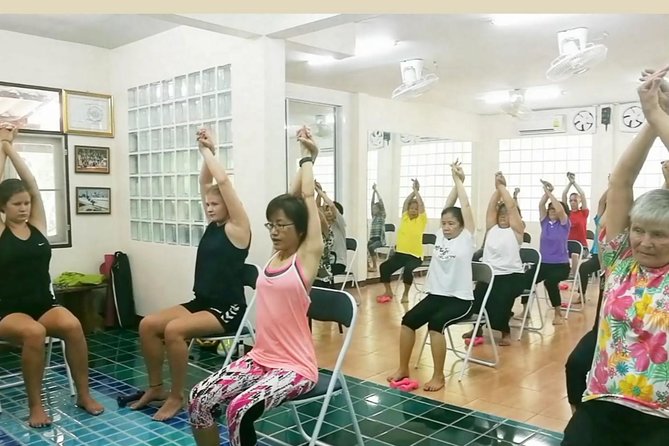
At $47.20 per person for about 3 hours, the price lands in the reasonable range for what you get—especially because most of the practical essentials are included.
Here’s what’s included:
- cushions and a yoga mat
- coffee and/or tea with snacks
Add the small-group size and guided instruction, and the value becomes clearer. You’re paying for structure, coaching, and the calming environment. If you’ve ever tried to learn meditation from videos and still felt unsure, this kind of guided practice is often worth it because it turns “how do I do this?” into “I get it now.”
In other words: you’re buying time plus guidance plus outdoor self-care. That’s usually more efficient than building your own routine from scratch during a trip.
What to Do Before and After for the Best Results
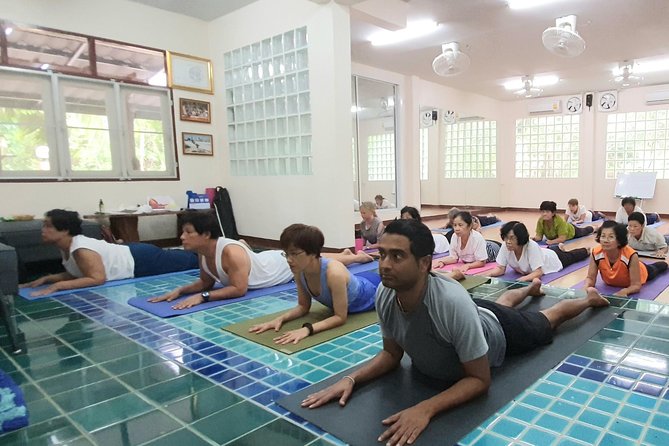
You’ll get the most from this experience if you treat it like a real mini-reset, not an activity you just squeeze in between other plans.
Before you go:
- Plan a smooth ride to Doi Saket so you’re not stressed right at start time.
- Wear comfortable clothing you can move in for yoga or gentle stretching.
After you go:
- Keep your evening light. Meditation tends to work best when your next hours aren’t immediately chaotic.
- If you liked the mindful walking concept, try a short version the next day. Even 5 minutes can help you remember the feeling of being present.
One review theme was that people left with a lot to think about. That’s often what happens when you practice something new and realize how quickly attention shifts your mood.
The Human Side: Amori’s Guidance and a Calmer Pace
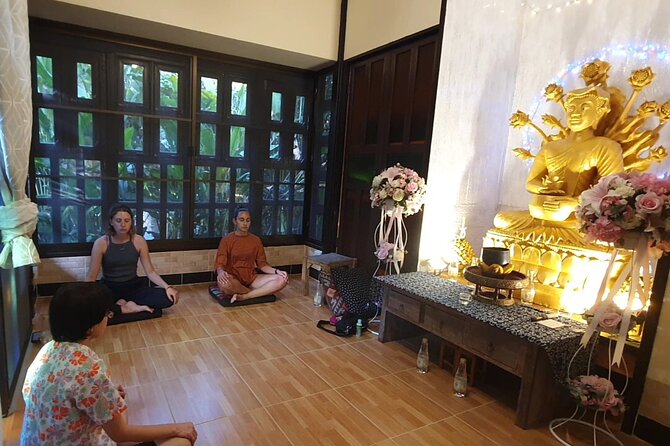
The strongest praise in the feedback centers on instruction quality. People specifically thanked Amori for guiding them through different meditations and for providing extensive explanations of how the practice works.
That’s important for two reasons:
- Meditation becomes less confusing when you understand the “why” and the “how.”
- You’re more likely to keep practicing after the retreat, because you know what to do when you’re not in a guided session.
It also helps you feel safe in the process. Meditation can bring up restlessness or discomfort. With clear guidance and a calm group size, you’re less likely to feel judged or rushed.
Quick FAQ (practical answers)
FAQ
Where is the meeting point for this meditation retreat?
The retreat starts in Doi Saket District, Chiang Mai 50220, Thailand, and it ends back at the same meeting point.
What time does the retreat start?
It starts at 3:30 pm.
How long is the experience?
It lasts about 3 hours.
How many people are in the group?
The group size is capped at a maximum of 5 travelers.
What meditation and movement will I do?
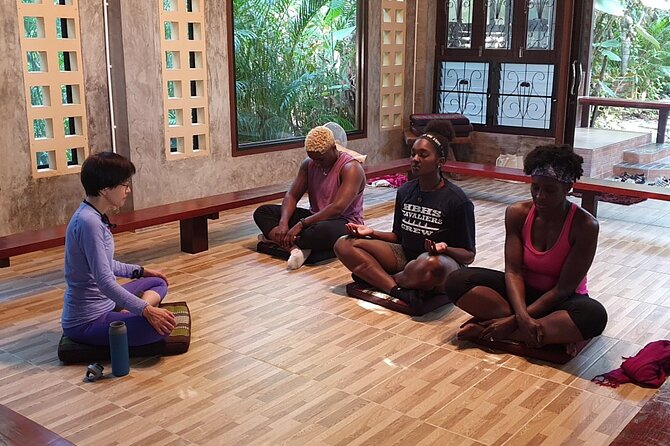
You’ll practice mindful walking and guided sitting meditation, then do yoga or gentle stretches adapted to practitioners.
Are cushions and a yoga mat provided?
Yes. Cushions and a yoga mat are included.
Is transportation included?
No. Private transportation is not included.
Is the retreat suitable if I have only moderate physical fitness?
Yes, the activity is listed for travelers with a moderate physical fitness level.
Can I bring a service animal?
Yes, service animals are allowed.
What’s the cancellation policy?
You can cancel for free up to 24 hours in advance for a full refund.
Should You Book This Chiang Mai Meditation and Self-Care Session?
If you want a short, supportive way to learn meditation basics in nature, I think this is an easy yes. The combination of mindful walking, guided sitting, and gentle movement makes it less intimidating than “sit and figure it out.” And the tea or coffee garden finish gives you a real end point, which helps the whole experience stick.
Book it if:
- you like calm instruction and structure,
- you want something practical you can repeat,
- you’d benefit from feeling less stiff and more in tune.
Skip it if:
- you don’t want to plan transport to Doi Saket,
- you’re expecting a full-day or multi-day retreat,
- you need a fully indoor experience.
If you’re building a Chiang Mai itinerary, this is a smart balance move. It adds quiet and clarity to a trip that otherwise might be all temples, markets, and motion.
More Tour Reviews in Chiang Mai
- Half-Day Thai Cooking Class at Organic Farm in Chiang Mai★ 5.0 · 19,087 reviews
- Chiang Mai: Elephant Sanctuary, Waterfall & Bamboo Rafting★ 4.9 · 9,160 reviews
- Chiang Mai: Doi Inthanon National Park Eco-Friendly Tour★ 4.6 · 6,667 reviews
- Chiang Mai: Elephant Sanctuary & Waterfall Group Tour★ 4.9 · 5,780 reviews
- Chiang Mai: Chiang Rai Temples, Karen Tribe and Hot Springs★ 4.7 · 5,401 reviews
More Sunrise and Meditation Mornings
- Chiang Mai: Doi Suthep, Wat Umong, and Pha Lat Sunrise Tour★ 4.7 · 1,425 reviews
- Wat Phra That Doi Suthep spiritual Sunrise Tour with an Ex-monk★ 5.0 · 798 reviews
- Spiritual Sunrise Wat Doi Suthep, Pha Lat, Alms & Meditation★ 4.9 · 674 reviews
- Doi Suthep and Wat Pha Lat Sunrise Tour (Small Group Only)★ 5.0 · 70 reviews
- Mount Doi Inthanon National Park Sunrise and Hiking★ 5.0 · 52 reviews
Fresh off the pile: Chiang Mai tours we have just written up




Sunrise & Meditation Tours, compared.
 ★ 4.7Doi Suthep, Wat Umong, and Pha Lat Sunrise TourFrom $321,425 reviews
 ★ 5.0Wat Phra That Doi Suthep spiritual Sunrise Tour with an Ex-monkFrom $64798 reviews
 ★ 4.9Spiritual Sunrise Wat Doi Suthep, Pha Lat, Alms & MeditationFrom $59674 reviews
 ★ 5.0Doi Suthep and Wat Pha Lat Sunrise Tour (Small Group Only)From $2970 reviews
 ★ 5.0Mount Doi Inthanon National Park Sunrise and HikingFrom $12652 reviews
 ★ 5.0Meditation Retreat and Self-Care in NatureFrom $4846 reviews
 ★ 5.0Half-Day Yoga, Meditation, and Thai Cultural Immersion in Chiang MaiFrom $7140 reviews
 ★ 4.9Full-Day Yoga & Meditation Experience with LunchFrom $8338 reviews
Browse the lists this tour appears in