

Reviewed · ETHICAL ELEPHANT SANCTUARIES
ChiangMai Elephant POOPOOPAPER Park Optional StickyWaterfall
Elephant waste, turned into paper. I like this because it’s eco paper-making taught step-by-step, and you get hands-on souvenir time instead of just watching. The main thing to watch is that if you want to take home extra finished items, there can be an additional fee beyond the basic ticket.
This is a casual outdoor museum-style experience in Chiang Mai Province, focused on sustainability and creativity. The tour runs with an English instructor, and you can also add the optional Sticky Waterfall (Bua Tong Waterfall) if you want to make it a bigger day.
In This Review
- Key things to know before you go
- Why Elephant POOPOOPAPER Park feels different in Chiang Mai
- Entering the eco-paper world: what you’re really paying for
- The guided steps: from collection to colorful sheets
- Hands-on time: making your own POOPOOPAPER souvenir
- Time slots and how long to plan (45 to 330 minutes)
- Pairing with Sticky Waterfall (Bua Tong Waterfall) in the same day
- English instruction and who will enjoy this most
- Price and value: is $4.82 worth it?
- Practical tips to get the most out of it
- Should you book Elephant POOPOOPAPER Park?
- FAQ
- How long is the Elephant POOPOOPAPER Park experience?
- Is the tour available in English?
- What does the ticket include?
- Do I get to make a paper souvenir?
- Are Sticky Waterfall tours included?
- Are there multiple time slots?
- Is there an additional fee for souvenirs?
- Can I cancel and get a refund?
- Can I reserve now and pay later?
Key things to know before you go

- Elephant waste to paper process: you’ll see the collection, cleaning, boiling, and sheet-making steps explained in English
- You make something yourself: plan for hands-on time to create your own POOPOOPAPER keepsake
- Budget for extras: the ticket covers admission, but finished souvenirs may cost extra
- Flexible scheduling: multiple time slots are available, and total duration can vary
- Optional waterfall combo: pair it with Sticky Waterfall (Bua Tong Waterfall) for a fuller outing
More ethical elephant sanctuaries around Chiang Mai, side by side
- Chiang Mai: Elephant Sanctuary, Waterfall & Bamboo Rafting
★ 4.9 · 9,160 reviews - Chiang Mai: Elephant Sanctuary & Waterfall Group Tour
★ 4.9 · 5,780 reviews - Chiang Mai: Elephant Sanctuary Feeding Program Half-Day Tour
★ 4.8 · 4,527 reviews - Chiang Mai: Elephant Sanctuary, Long Neck & Sticky Waterfall
★ 4.9 · 2,262 reviews
Why Elephant POOPOOPAPER Park feels different in Chiang Mai
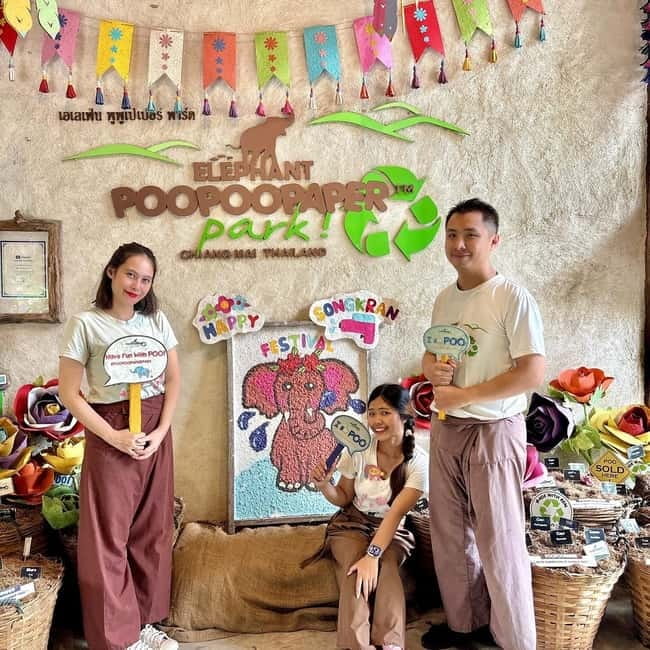
If your Chiang Mai days include temples and markets (good plan, by the way), this is a nice change of pace. Elephant POOPOOPAPER Park is more like an outdoor learning workshop than a typical attraction. You’re not only hearing a story—you’re seeing how a material gets transformed, and you get to try.
I also like that it’s built around a simple idea: sustainability you can understand with your own hands. Turning elephant waste into paper is unusual on purpose. It forces you to think about waste differently, not with a lecture, but through practical steps you can visualize.
There’s also a human-friendly side to it. The experience is interactive and described as suitable for all ages, so it works whether you’re traveling as a couple or bringing kids. Expect it to feel playful, not heavy.
Entering the eco-paper world: what you’re really paying for
Your ticket is for admission to Elephant POOPOOPAPER Park plus the guided experience. That matters because at places like this, the price can be either mostly “show” or mostly “activity.” Here, the value comes from the guided walkthrough of the process and the chance to make paper yourself.
The tour is described as about 40 minutes of guided instruction. You’ll follow along as the team explains how raw material is collected, cleaned, boiled, and turned into colorful sheets of paper. Even if you’re not a DIY person, the step-by-step approach makes it feel manageable.
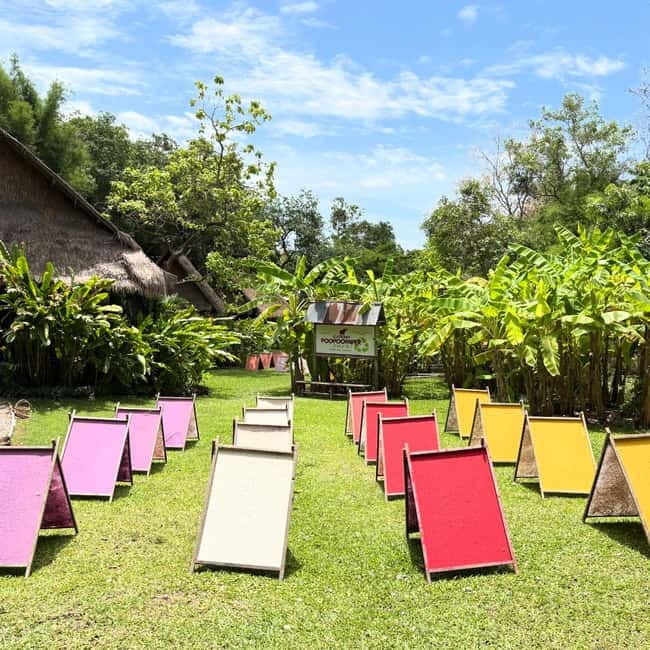
Also, the “colorful sheets of paper” part isn’t just a nice visual. It’s part of the lesson: paper-making is creative. You’re learning that this is not only a waste-reduction project, it’s also an art process with choices.
The guided steps: from collection to colorful sheets
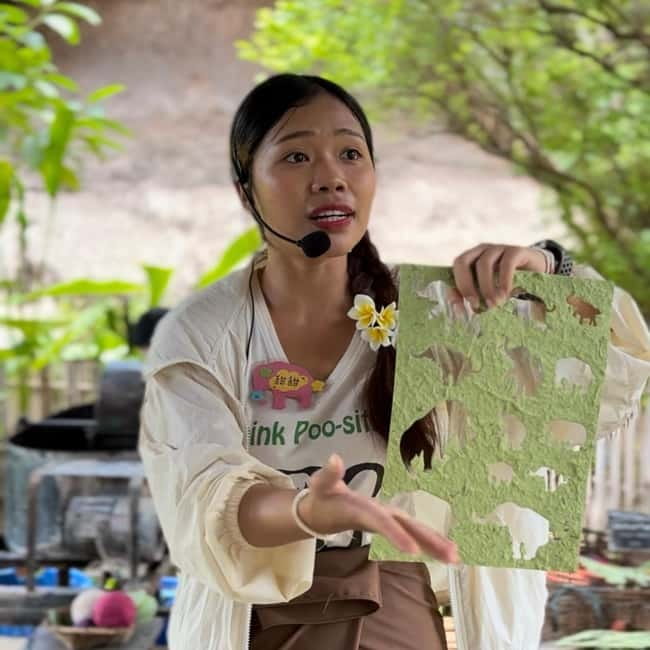
Here’s what you should expect during the guided portion. The instructor leads you through each stage of the workflow, and you get a clearer picture of how raw material becomes usable paper.
First comes the collection and cleaning stage. This is where the topic stops being gross in theory and starts becoming technical in practice. The goal is to prepare the material so it can be processed into paper pulp.
Next is the boiling stage. Boiling is one of those steps that makes everything “click” because it explains how you move from messy matter to something that behaves like a material you can form. You’ll hear how the process supports consistency in the final paper.
Then comes turning it into colorful sheets. This is the stage you’ll likely remember most visually. Colorful output makes the whole process feel practical and creative, not just educational.
Throughout, the tour is designed to be easy to follow, and the language is English. That’s a big deal in Thailand attractions where explanations can be limited. Here, you’re getting a proper guided flow rather than piecing things together on your own.
Hands-on time: making your own POOPOOPAPER souvenir
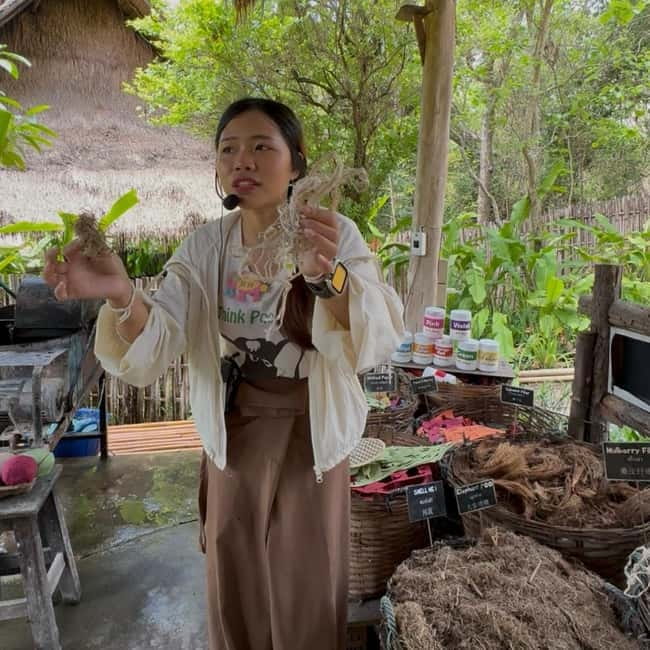
The best part is the hands-on component. The experience includes a DIY activity where you make your own POOPOOPAPER souvenir. This is where the learning sticks, because you’re not just watching the paper-making—you’re experiencing the work and seeing how choices affect the result.
You can expect multiple DIY project options, and you can choose what to make. In one reported experience, bookmarks and paper fans were mentioned as examples of project types you can select. That’s useful because it tells you this isn’t one single craft template. You have some ability to pick a souvenir that fits your taste.
One important consideration: making anything to take home may come with an additional fee. The basic admission gets you into the park and the guided experience, but finished items can cost extra depending on what you choose. If you’re trying to keep spending low, pick one souvenir project and stick to it.
Practical tip: bring a plan for your souvenir space. A paper item is lightweight and easy to pack, but it can still get bent if your bag is stuffed. If you’re traveling in a rush, set aside a flat spot in your daypack.
Time slots and how long to plan (45 to 330 minutes)
The booking duration shows a wide range: 45 to 330 minutes. That sounds confusing until you realize the experience can be short on its own, and longer if you add another activity.
The core guided visit is described as about 40 minutes. In practice, your actual time on-site may include orientation, moving through the different steps, and the hands-on making portion. If you’re selecting an earlier or later slot, you’ll still want time buffer for the full experience.
If you’re pairing it with Sticky Waterfall, that can easily stretch your day. The attraction is optional, so your schedule choice can keep things tight or turn it into a half-day outing.
If your Chiang Mai itinerary already has a temple slot and a night market, this can still work. Choose a time slot that won’t force you to rush, because the craft part is the point.
Pairing with Sticky Waterfall (Bua Tong Waterfall) in the same day
This is one of the easiest ways to make the day feel “worth it” without doubling the stress.
Sticky Waterfall (Bua Tong Waterfall) is offered as an optional add-on. The park experience focuses on sustainability and creative craft; the waterfall is the nature contrast. If you enjoy Chiang Mai because it gives you variety—culture, food, and outdoor nature—this combo is a sensible match.
What I like about adding the waterfall is that it balances the learning part. You go from making paper with your hands to experiencing a well-known natural site afterward. You’re changing gears instead of repeating the same type of attraction back-to-back.
Drawback to consider: both activities can be weather-sensitive. If it’s a rainy day, your timing might feel tighter. Still, it’s a flexible option, so you can keep your plan fluid.
English instruction and who will enjoy this most
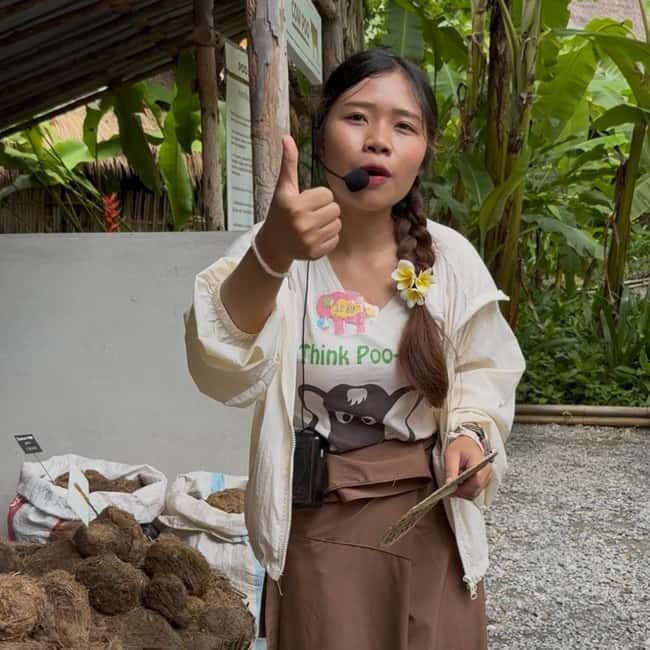
The tour is offered with an English instructor. That makes it easier to follow the process, ask questions, and understand why each step matters. If you’ve ever been stuck translating your own way through demonstrations, you’ll appreciate having guidance in plain English.
This works well for:
- Families who want a hands-on activity that isn’t just sitting
- Travelers who like quirky-but-meaningful sustainability ideas
- People who enjoy crafting and want a souvenir that has a story behind it
- Anyone who wants a shorter daytime activity that doesn’t dominate an entire day
It may be less ideal if you’re the type who hates workshops or needs total silence and minimal interaction. This place is meant to be participatory.
Price and value: is $4.82 worth it?
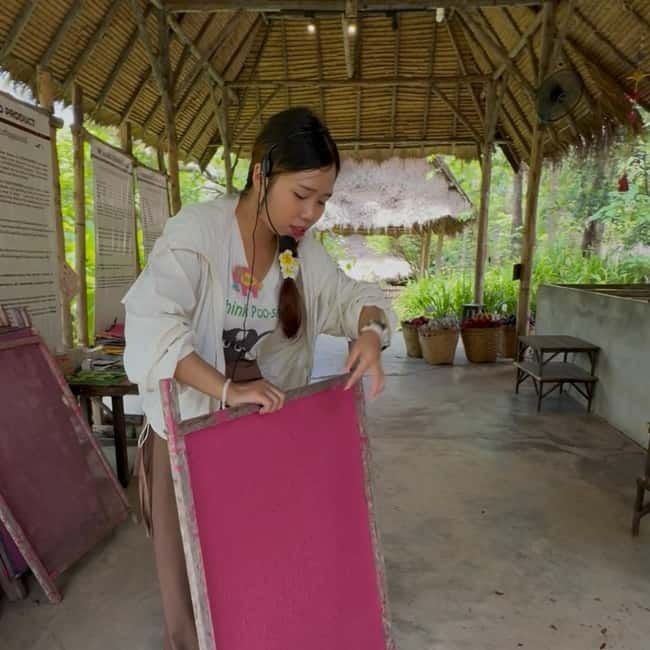
At $4.82 per person, the ticket price is low compared with many “activity” attractions in Chiang Mai. The big value driver is that your admission includes the guided process and the chance to make a souvenir yourself, not just entry to a display.
Where the budget can shift is what you choose to create and take home. There can be additional fees for finished souvenirs or DIY projects. That’s normal for workshop-style attractions: materials and final products take time and cost.
So the real value question is: are you planning to make one souvenir and call it done? If yes, the ticket price makes a lot of sense. If you’re planning multiple projects, you’ll want to accept that the final total can rise.
Either way, you’re paying for something specific: a structured explanation of waste-to-paper and hands-on creativity. That’s different from paying for a photo stop.
Practical tips to get the most out of it
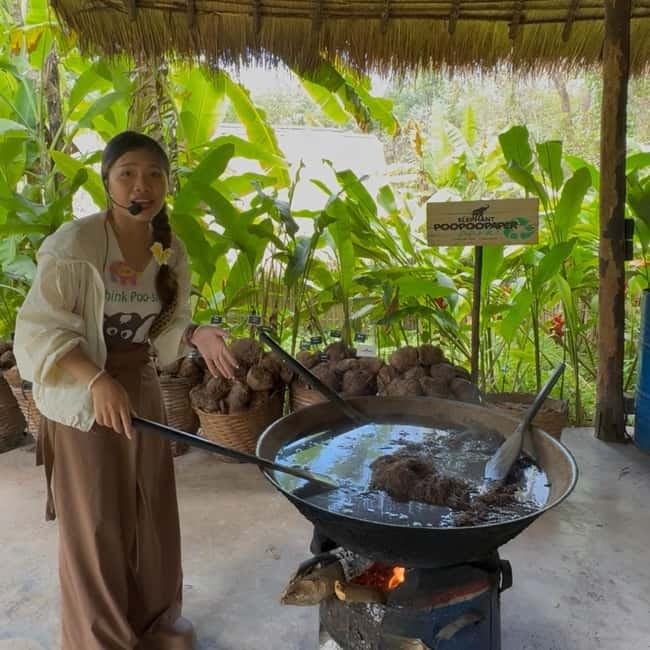
Bring curiosity. The process sounds unusual at first, but once you see the steps—cleaning, boiling, forming colorful sheets—it becomes understandable. I’d treat it like a hands-on science-and-craft lesson.
Pick your souvenir early. If you want something like a bookmark or a paper fan, decide before you start spending time on comparisons. This helps you avoid “oops, I should probably make one more” spending.
Plan your packing. Even if the items are lightweight, paper can crease. If you’re taking it back to your hotel in a crowded bag, protect it.
Pair wisely if you’re adding Sticky Waterfall. If you’re sensitive to schedule pressure, choose a time slot that gives you breathing room between activities.
Should you book Elephant POOPOOPAPER Park?
I’d book it if you want a short, meaningful Chiang Mai activity with a hands-on element. The English guided process and the chance to make your own POOPOOPAPER souvenir are the core reasons. The low starting cost is also attractive, as long as you go in knowing souvenirs may cost extra.
Skip it or rethink it if you’re not interested in crafts at all, or if your day is already too tight to fit a guided workshop pace. Also, if you dislike paying additional fees for take-home items, set expectations before you choose your project.
FAQ
How long is the Elephant POOPOOPAPER Park experience?
The duration is listed as 45 to 330 minutes, and the guided tour is described as about 40 minutes.
Is the tour available in English?
Yes, the instructor for the tour is English.
What does the ticket include?
The included item is admission to Elephant POOPOOPAPER Park.
Do I get to make a paper souvenir?
Yes. You’ll join in a hands-on activity to make your own POOPOOPAPER souvenir.
Are Sticky Waterfall tours included?
Sticky Waterfall (Bua Tong Waterfall) is an optional add-on, not included by default.
Are there multiple time slots?
Yes, multiple time slots are available to match your schedule.
Is there an additional fee for souvenirs?
The provided information notes that you may need to pay an additional fee if you want to make anything to take home, depending on what you choose.
Can I cancel and get a refund?
Yes. Free cancellation is available up to 24 hours in advance for a full refund.
Can I reserve now and pay later?
Yes. There’s a reserve now & pay later option listed.
If you want, tell me your travel dates and whether you’re also doing Sticky Waterfall, and I’ll help you pick a realistic time-slot plan for the day.
More Tour Reviews in Chiang Mai
- Half-Day Thai Cooking Class at Organic Farm in Chiang Mai★ 5.0 · 19,087 reviews
- Chiang Mai: Elephant Sanctuary, Waterfall & Bamboo Rafting★ 4.9 · 9,160 reviews
- Chiang Mai: Doi Inthanon National Park Eco-Friendly Tour★ 4.6 · 6,667 reviews
- Chiang Mai: Elephant Sanctuary & Waterfall Group Tour★ 4.9 · 5,780 reviews
- Chiang Mai: Chiang Rai Temples, Karen Tribe and Hot Springs★ 4.7 · 5,401 reviews
More Elephant Sanctuaries Near Chiang Mai
- Chiang Mai: Elephant Sanctuary, Waterfall & Bamboo Rafting★ 4.9 · 9,160 reviews
- Chiang Mai: Elephant Sanctuary & Waterfall Group Tour★ 4.9 · 5,780 reviews
- Chiang Mai: Elephant Sanctuary Feeding Program Half-Day Tour★ 4.8 · 4,527 reviews
- Chiang Mai: Elephant Sanctuary, Long Neck & Sticky Waterfall★ 4.9 · 2,262 reviews
- From Chiang Mai: Elephant Care Program and Nursery Tour★ 4.8 · 1,899 reviews
Fresh off the pile: Chiang Mai tours we have just written up





Ethical Elephant Sanctuaries, compared.
 ★ 4.9Elephant Sanctuary, Waterfall & Bamboo RaftingFrom $609,160 reviews
 ★ 4.9Elephant Sanctuary & Waterfall Group TourFrom $505,780 reviews
 ★ 4.8Elephant Sanctuary Feeding Program Half-Day TourFrom $274,527 reviews
 ★ 4.9Elephant Sanctuary, Long Neck & Sticky WaterfallFrom $632,262 reviews
 ★ 4.8Elephant Care Program and Nursery TourFrom $531,899 reviews
 ★ 4.9Small Group Ethical Elephant Sanctuary TourFrom $771,572 reviews
 ★ 5.0Half Day Visit Smile Elephant Chiang MaiFrom $501,216 reviews
 ★ 4.9Doi Inthanon and Elephant Sanctuary TourFrom $811,091 reviews
Browse the lists this tour appears in