
Reviewed · ETHICAL ELEPHANT SANCTUARIES
Chiang Mai: Elephant Sanctuary Feeding Program Half-Day Tour
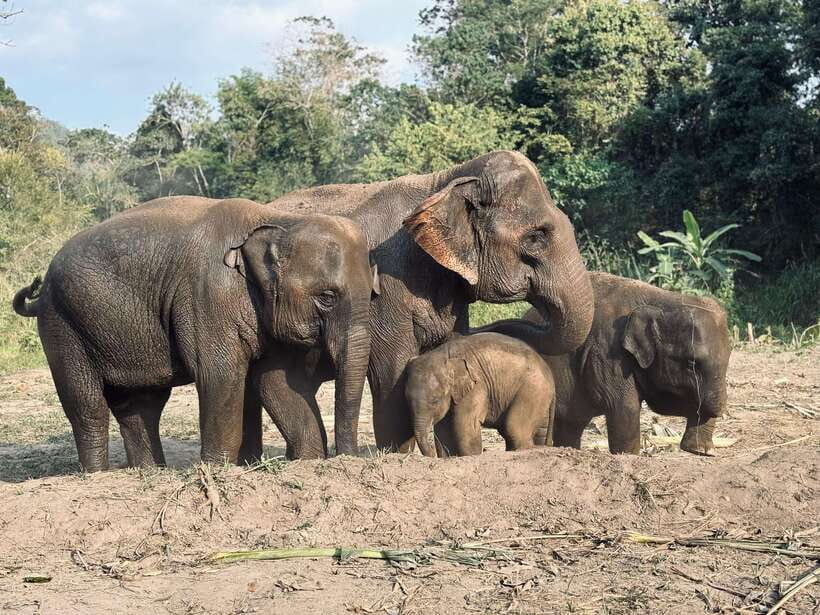
Elephants follow the rules, and so do we. This half-day at Pon Elephant Thailand pairs up-close feeding with an elephant-first approach, plus human stories you can actually use to make sense of what you’re seeing. I especially like how the day is broken into clear moments, with guided explanations (you might meet staff like Pat, Toto, or Tuto) and hands-on time that stays calm. Another big win: the elephants decide if they want river bathing, so the experience feels natural instead of staged.
One consideration: you should plan on light-to-moderate walking and getting muddy, which may not feel great if you have back issues or low fitness.
In This Review
- Key things I’d mark on your must-do list
- Elephants, Forest, and Four Feeding Stations That Feel Purposeful
- Getting to Pon Elephant: the 1.5-Hour Drive South of Mae Wang
- The Safety Briefing: What You Learn Before You Get Close
- Nature Walk and Herbal Treat Prep: Learning That Makes Feeding Meaningful
- Feeding Napier Grass, Sugarcane, and Bananas Without the Chaos
- The River Stop: Swimming and Washing When the Elephants Choose
- Guides, Organization, and What 330 Minutes Actually Feels Like
- Value at Around $27: Why This Costs What It Costs
- What to Pack: Wet Clothes, Mud, and Biodegradable Stuff
- Who Should Book, and Who Might Want a Different Day
- Should You Book the Chiang Mai Elephant Sanctuary Feeding Half-Day?
- FAQ
- How long is the Chiang Mai elephant sanctuary feeding half-day tour?
- Where does the tour take place?
- Is hotel pickup included?
- What is included in the price?
- What should I bring with me?
- Is there any riding involved?
- Is elephant bathing forced?
- What do you feed the elephants?
- What are the common “don’ts” for the tour?
- What’s the cancellation policy?
Key things I’d mark on your must-do list
- Elephant-led river time: bathing and splashing happen only if the elephants choose it
- Real feeding in a safe setup: Napier grass, sugarcane, bananas, plus herbal treat prep
- Simple, repeatable guidance: you get behavior rules before you get close
- Four “stations” style flow: lots of focused time without feeling rushed
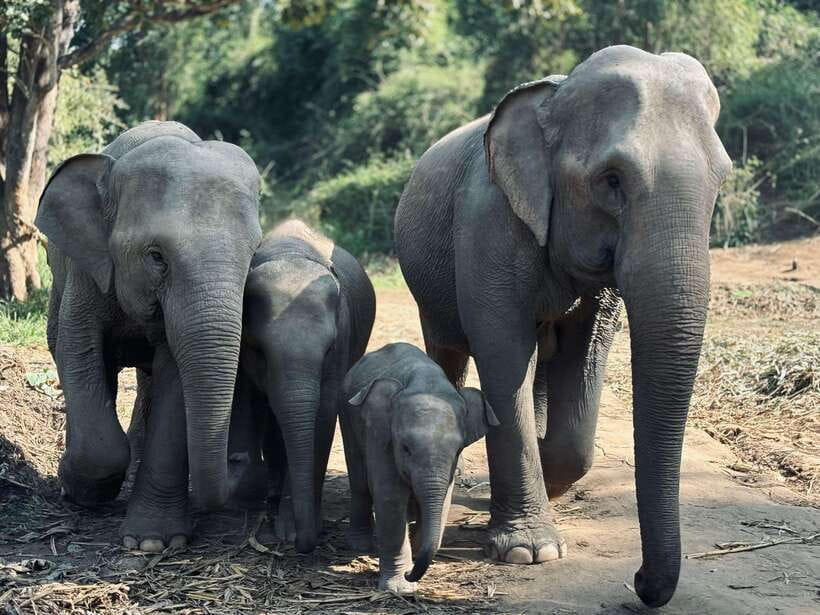
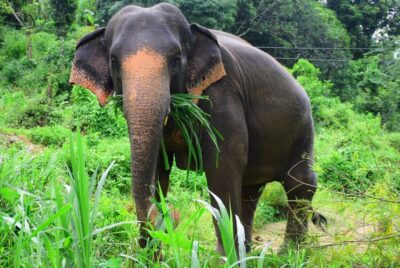
- You see the care up close: elephants appear healthy, calm, and able to roam in a large area
More ethical elephant sanctuaries around Chiang Mai, side by side
- Chiang Mai: Elephant Sanctuary, Waterfall & Bamboo Rafting
★ 4.9 · 9,160 reviews - Chiang Mai: Elephant Sanctuary & Waterfall Group Tour
★ 4.9 · 5,780 reviews - Chiang Mai: Elephant Sanctuary Feeding Program Half-Day Tour
★ 4.8 · 4,527 reviews - Chiang Mai: Elephant Sanctuary, Long Neck & Sticky Waterfall
★ 4.9 · 2,262 reviews
Elephants, Forest, and Four Feeding Stations That Feel Purposeful
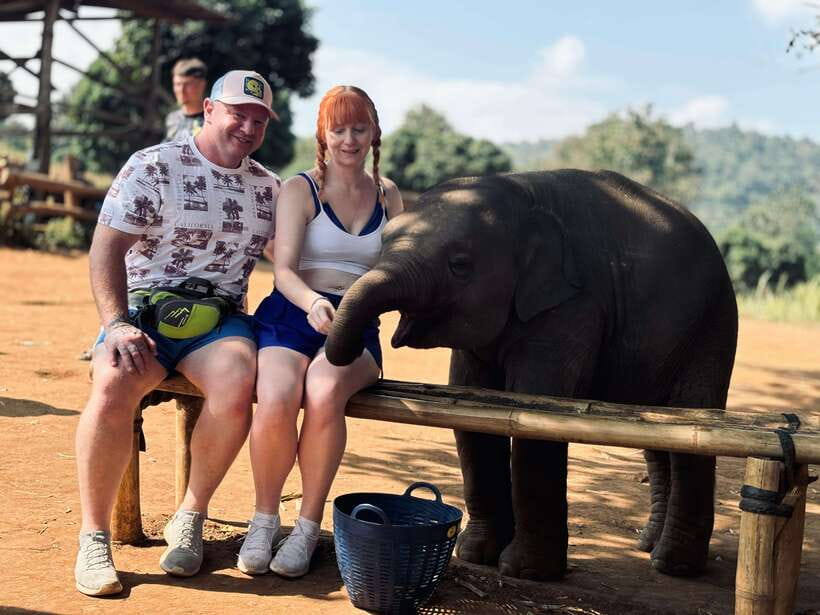
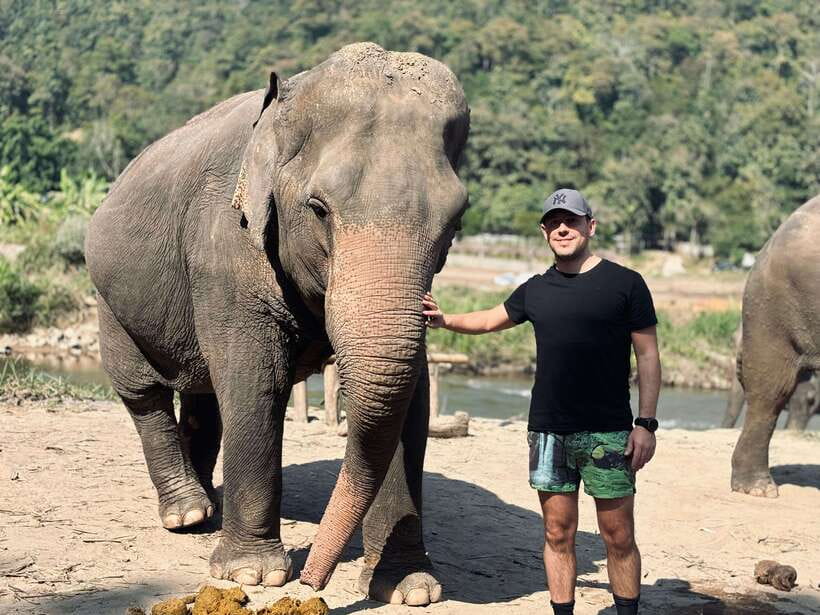
This is the kind of elephant tour that works because it doesn’t try to impress you with tricks. Instead, it builds a safe rhythm: brief, guided learning, then respectful proximity, then another chance to observe and interact. You spend time feeding and watching, with the focus on how Asian elephants live and what they actually eat.
What makes this format click is the mix of hands-on moments and boundaries. You’re not just standing there. You prepare treats, feed from a safe position, and get close enough to notice details like how the elephants move, how they respond to people, and how their handlers read body language. The best part is that the day stays peaceful. Even the river portion doesn’t feel like a forced stunt.
Getting to Pon Elephant: the 1.5-Hour Drive South of Mae Wang
From Chiang Mai Province, you’ll travel south of Mae Wang for about 1.5 hours. The ride goes through hills, forests, and local farms, which helps set expectations: you’re not going to a polished theme park. You’re heading to a real natural area where the elephants spend time as part of their care routine.
If you choose hotel pickup, you’ll be picked up from the lobby (drivers wait up to 5 minutes past the scheduled time). If you skip pickup, you’ll meet the group at the stated meeting point, which can vary depending on your option. Either way, plan for a chunk of travel time so the sanctuary part doesn’t feel like a hurried stop.
A practical tip: bring something you can reach fast. Your phone will be busy, and you’ll want water for the road and for the day.
The Safety Briefing: What You Learn Before You Get Close
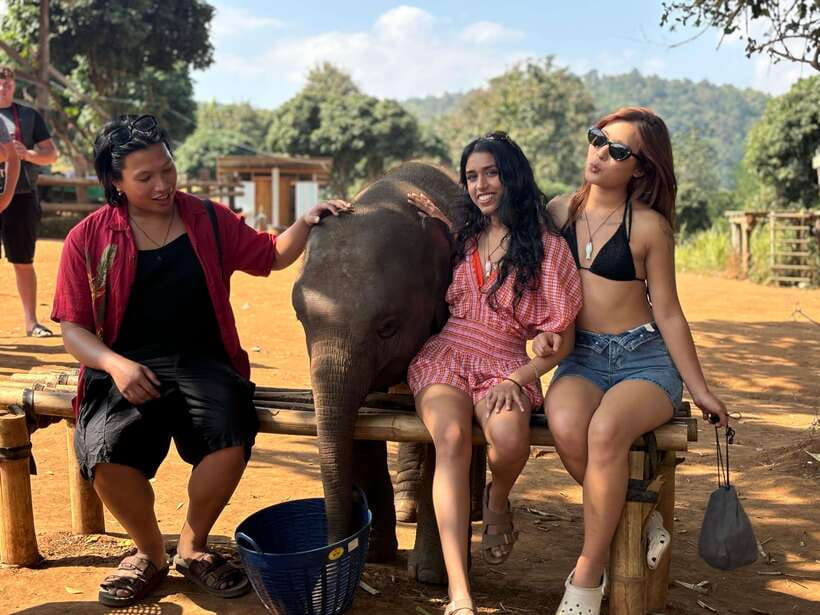
Once you reach Pon Elephant Thailand, you meet the team and get a briefing on the habitat, history, habits, and behavior of the elephants. This matters more than people realize, because calm behavior isn’t just for your comfort. It helps the elephants stay comfortable too.
You’ll also get instruction on what to do—and what not to do—around elephants. The tour’s rules are clear: no riding, no weapons or sharp objects, no intoxication or alcohol and drugs, no littering, and no party groups. That’s good because it removes the big variables that can make elephant encounters chaotic.
One of the standout details in the experience is that guides work to explain elephants as individuals, not props. Based on the guide styles people describe, you may hear humor and clear explanations from guides such as Tuto, Toto, Pat, Pan, Saki, Jackie, or Mr Big. Even if the names vary by group, the goal stays the same: you learn how elephants behave before you interact.
Nothing jumping out yet? More Chiang Mai trips are just down the page
Nature Walk and Herbal Treat Prep: Learning That Makes Feeding Meaningful
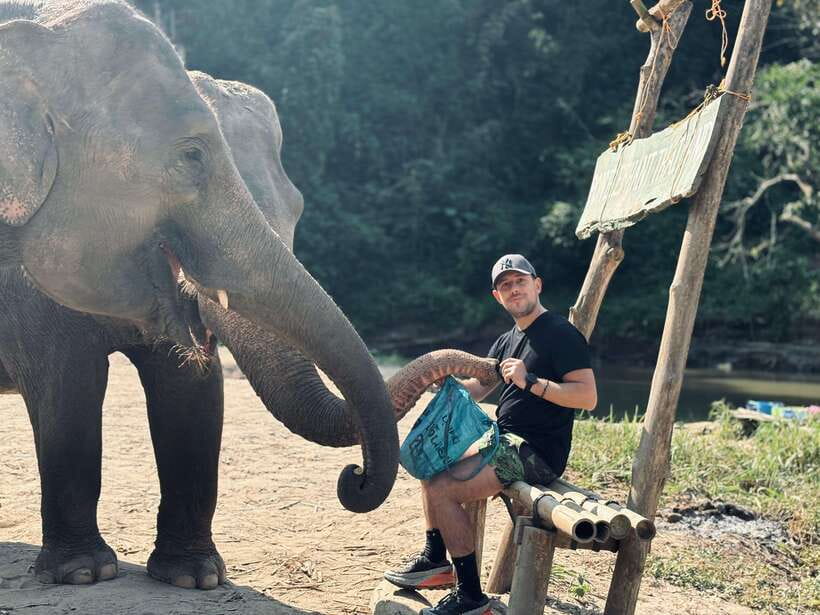
After the briefing, you go for a nature walk with the rangers. This gives you a “context layer” for what comes next. You’re not just arriving and feeding. You’re stepping into the environment where the elephants live and where their day makes sense.
Then you get the special part: learning how to prepare herbal treats for them. The day isn’t only about handing over food. You learn about elephant diet and how care staff prepare supplements or treat-like food. One review detail points to making herbal/vitamin-style treats, including time preparing a special food for an elderly elephant. That kind of moment sticks, because it turns the experience from a photo op into an education moment with purpose.
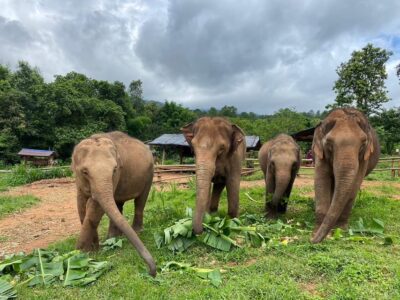
You also learn which foods are part of the feeding setup. The highlights list Napier grass, sugarcane, and bananas, and those show up as the main feeding foods during the close-up interaction.
Feeding Napier Grass, Sugarcane, and Bananas Without the Chaos
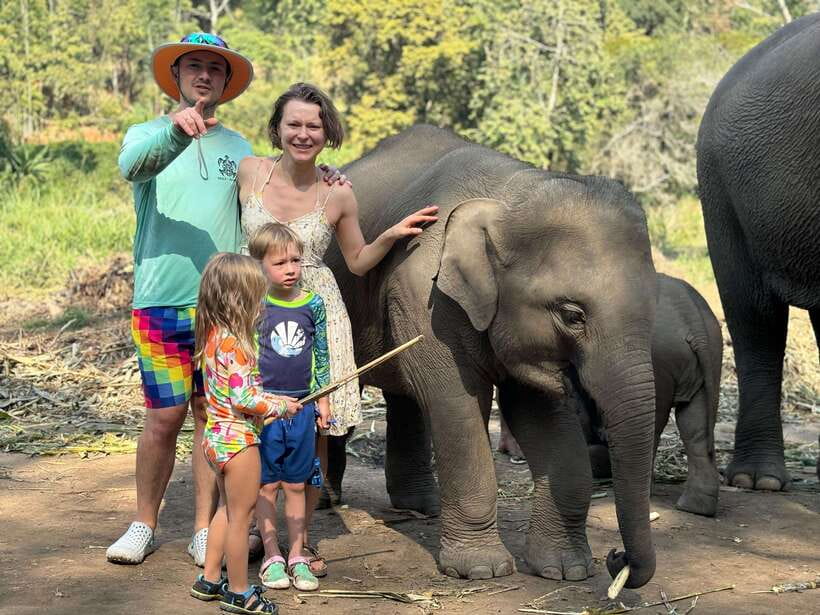
This tour gives you multiple opportunities to feed and observe elephants up close. It’s not one quick bite-and-run moment. You get a chance to slow down and see how feeding works in a safe, supervised way.
Here’s what you can expect during the feeding portion:
- You’ll move between different “stations” (the day is often described as having four), each with a guided focus.
- Rangers and staff explain what you’re seeing as you approach and feed.
- The interaction stays controlled so the elephants aren’t pushed beyond comfort.
One thing I like about the design is that it avoids the common elephant-tour pitfalls. There’s no riding. No forced performance. The emphasis stays on safe coexistence and thoughtful interaction.
Also, keep expectations realistic: you’re feeding in a forest environment, so you’ll likely get a bit dirty, and you might do some walking between stations. It’s not a slick, paved walkway the whole time.
The River Stop: Swimming and Washing When the Elephants Choose
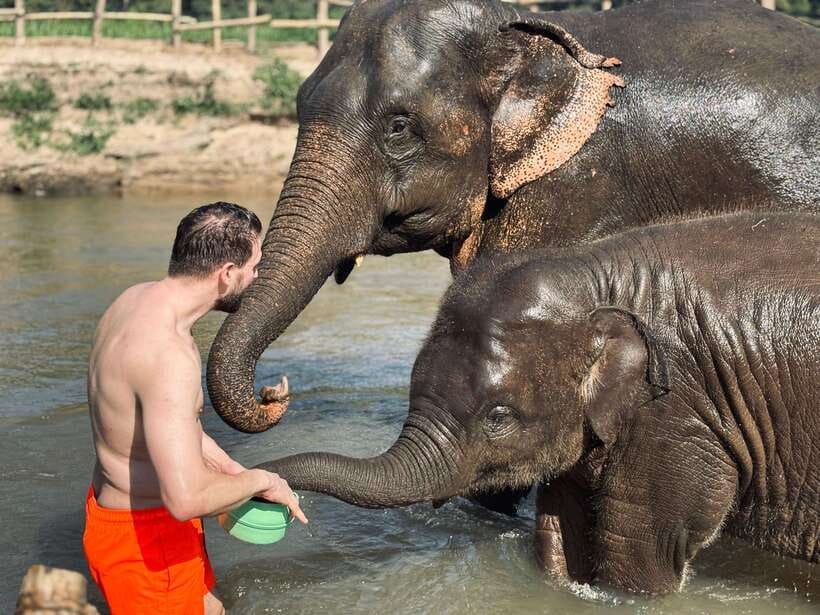
The most emotional part for many people is the river time. The day includes taking the elephants to the river, where swimming and bathing can happen. One key detail: the elephants choose to bathe, and the staff do not force them. That means your exact activities can change at short notice, depending on what the elephants decide that day.
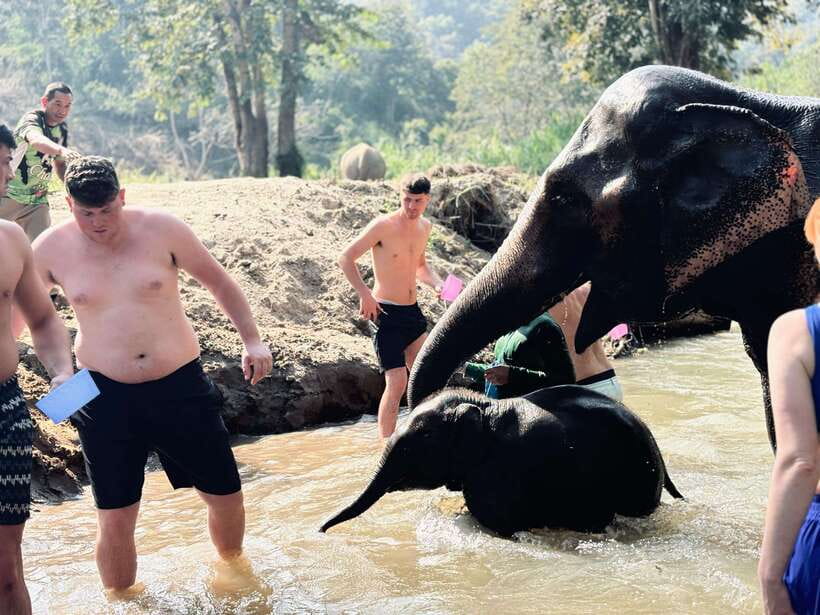
When it goes well, you’ll get something special: a gentle, intimate “watch and participate” moment where the elephants go into the water and you can join in within the safety rules. People describe getting soaked, including fun water play like a water fight atmosphere where elephants seemed to enjoy the splashing. Even when the river time is shorter than you expect, it usually feels like the natural highlight because it’s elephant-led.
A logistics note for your body: bring a swimsuit mindset. You’ll likely get wet, and the tour description specifically mentions beachwear and beachwear-friendly plans. Also, towel and a change of clothes aren’t included, so you’ll want to handle this on your own.
Guides, Organization, and What 330 Minutes Actually Feels Like
On paper, it’s a half-day: about 5 hours (330 minutes). In reality, that time feels full because you’re not just driving and waiting. You’re doing briefing, walk, feeding, and river activities across several stops.
Many people mention strong organization, including a station-by-station flow with an MC-like guide at each point. You might notice a difference in how groups are handled, but the consistent theme is structure that keeps you moving without rushing you. One detail worth noting: some groups are kept small (around 7 people in one account), which can make the day feel less crowded and easier to manage.
You’ll also likely meet different personalities among the team. Names that show up in accounts include Pat, Toto, Pan, King Kong, Mr Hod, Jackie, and Lek (and sometimes Jacky as a separate name). The common thread is that staff explain what you’re seeing with humor and real commitment, not scripted buzzwords.
Value at Around $27: Why This Costs What It Costs
At about $27 per person, this is positioned as a budget-friendly way to do an ethical-style elephant experience. The value comes from the combination of:
- Hotel pickup/drop-off when you choose it
- English-speaking tour guide (English and Thai are listed)
- Fruit for elephants (food for the feeding sessions)
- Drinking water
- Insurance
Not included: towel and a change of clothes, so you’ll want to factor that in. But even with that, the price typically feels reasonable for a structured half-day that includes multiple close-up interaction moments.
Where the value really shows is in how much time you spend with the elephants in a natural setting. You’re paying for a care-and-coexistence experience, not a fast “touch and go” attraction.
What to Pack: Wet Clothes, Mud, and Biodegradable Stuff
For this tour, pack like you’re going to spend time outdoors with animals in a forest-and-river environment.
Bring:
- Change of clothes and a towel (not included)
- Camera and a charged smartphone
- Comfortable clothes that can get dirty
- Beachwear (for river time)
- Biodegradable sunscreen and biodegradable insect repellent
- Cash (listed as something to bring)
- Passport or a copy accepted
One small but important mindset: wear something you’re okay getting muddy. Even if the elephants don’t fully go in for bathing at all moments, you’ll still be moving through a natural area.
Don’t bring:
- Weapons or sharp objects
- Anything that could cause safety issues (and no alcohol and drugs)
- Items that get in the way of group rules (like fireworks/explosive substances)
Who Should Book, and Who Might Want a Different Day
This tour can be a great fit for you if:
- You want an elephant experience that’s mainly about feeding, observing, and learning
- You like the idea of elephant-led behavior (especially for the river portion)
- You’re comfortable with some walking and outdoor conditions
- You want a half-day option that still feels complete
It may not be a great fit if you have:
- Back problems or low fitness
- Mobility impairments or you use a wheelchair
- Recent surgeries
- Epilepsy
- Animal allergies (listed) or insect allergies (listed)
- Visual impairment needs that aren’t supported by the tour setup
If you’re traveling with kids, this can be a memorable choice because there are multiple moments throughout the day, and guides work to keep the experience engaging and safe.
Should You Book the Chiang Mai Elephant Sanctuary Feeding Half-Day?
If your top priority is a close-up elephant encounter that stays respectful and calm, I’d say yes. The strongest reason to book is the way the day is built around safe feeding, guided behavior rules, and an elephant-led river experience rather than forced performance. The other big plus is organization: the format keeps you busy and informed during the 5 hours.
That said, don’t book if your body can’t handle outdoor walking and possible soaking. And if you’re set on a completely controlled schedule, remember the elephants choose the bathing, so parts can shift with their comfort.
If you’re the type who wants to leave with both great photos and real understanding of elephant care, this half-day is a strong bet for Chiang Mai.
FAQ
How long is the Chiang Mai elephant sanctuary feeding half-day tour?
It runs about 5 hours (listed as 330 minutes).
Where does the tour take place?
It’s in Chiang Mai Province, traveling about 1.5 hours south of Mae Wang to Pon Elephant Thailand.
Is hotel pickup included?
Hotel pickup and drop-off are included if you select the pickup option.
What is included in the price?
The tour includes an English-speaking tour guide, insurance, fruit for the elephants, and drinking water (and hotel pickup/drop-off if selected).
What should I bring with me?
Bring comfortable clothes you can get dirty, beachwear, a change of clothes, a camera, a charged smartphone, biodegradable sunscreen, and biodegradable insect repellent. A cash amount is also listed, and a passport (or a copy) may be needed.
Is there any riding involved?
No. Riding the animals is not allowed.
Is elephant bathing forced?
No. The elephants choose whether to bathe in the river, so activities may change at short notice.
What do you feed the elephants?
You feed them Napier grass, sugarcane, and bananas during the experience, and you also learn about preparing herbal treats.
What are the common “don’ts” for the tour?
Weapons or sharp objects are not allowed, as well as intoxication, alcohol and drugs, littering, and party groups. Fishing and making fire are also not allowed.
What’s the cancellation policy?
Free cancellation is offered up to 24 hours in advance for a full refund.
More Tours in Chiang Mai
- Chiang Mai: Doi Inthanon National Park Eco-Friendly Tour★ 4.6 · 6,667 reviews
- Chiang Mai: Elephant Sanctuary & Waterfall Group Tour★ 4.9 · 5,780 reviews
- Chiang Mai: Cooking Class, Market & Thai Herbs Garden Tour★ 4.9 · 4,824 reviews
- Chiang Rai White Temple and Blue Temple Day Tour★ 4.6 · 3,366 reviews
- Chiang Mai: White, Red/Black & Blue Temples Tour with Lunch★ 4.2 · 2,017 reviews
More Tour Reviews in Chiang Mai
- Half-Day Thai Cooking Class at Organic Farm in Chiang Mai★ 5.0 · 19,087 reviews
- Chiang Mai: Elephant Sanctuary, Waterfall & Bamboo Rafting★ 4.9 · 9,160 reviews
- Chiang Mai: Doi Inthanon National Park Eco-Friendly Tour★ 4.6 · 6,667 reviews
- Chiang Mai: Elephant Sanctuary & Waterfall Group Tour★ 4.9 · 5,780 reviews
- Chiang Mai: Chiang Rai Temples, Karen Tribe and Hot Springs★ 4.7 · 5,401 reviews
More Elephant Sanctuaries Near Chiang Mai
- Chiang Mai: Elephant Sanctuary, Waterfall & Bamboo Rafting★ 4.9 · 9,160 reviews
- Chiang Mai: Elephant Sanctuary & Waterfall Group Tour★ 4.9 · 5,780 reviews
- Chiang Mai: Elephant Sanctuary, Long Neck & Sticky Waterfall★ 4.9 · 2,262 reviews
- From Chiang Mai: Elephant Care Program and Nursery Tour★ 4.8 · 1,899 reviews
- Chiang Mai: Small Group Ethical Elephant Sanctuary Tour★ 4.9 · 1,572 reviews
Fresh off the pile: Chiang Mai tours we have just written up



Ethical Elephant Sanctuaries, compared.
 ★ 4.9Elephant Sanctuary, Waterfall & Bamboo RaftingFrom $609,160 reviews
 ★ 4.9Elephant Sanctuary & Waterfall Group TourFrom $505,780 reviews
 ★ 4.9Elephant Sanctuary, Long Neck & Sticky WaterfallFrom $632,262 reviews
 ★ 4.8Elephant Care Program and Nursery TourFrom $531,899 reviews
 ★ 4.9Small Group Ethical Elephant Sanctuary TourFrom $771,572 reviews
 ★ 5.0Half Day Visit Smile Elephant Chiang MaiFrom $501,216 reviews
 ★ 4.9Doi Inthanon and Elephant Sanctuary TourFrom $811,091 reviews
 ★ 5.03-in-1: Doi Inthanon Tour, Elephant Sanctuary, and Trekking TrailFrom $481,087 reviews
Browse the lists this tour appears in