
Reviewed · SUNRISE & MEDITATION TOURS
Walk With Monks Collecting Alms(meeting point maybe change)
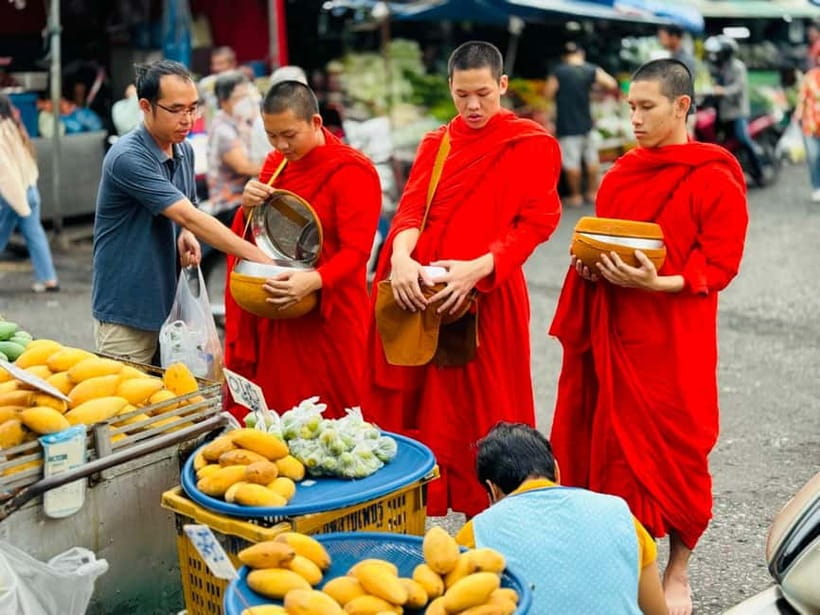
An early-morning walk with monks feels quietly powerful. What makes this one special is the chance to understand alms giving as a daily Buddhist practice, not a show. I also love that you learn as you go with an ex-monk guide, plus you pass through Mueang Mai Market where local devotees prepare offerings.
Here’s the one real catch: this tour accepts only men, and it starts early at 5:45 AM. If you’re not a morning person, plan your whole day around this.
In about 147 minutes with a small group (up to 6), you get the walk, a guided lesson, and a chance to sit and talk with monks back at the temple. It’s practical, respectful, and very focused on how Buddhism works in everyday Chiang Mai life.
In This Review
- Key highlights you’ll care about
- How Chiang Mai alms giving feels different at dawn
- Wat Chai Sri Phum: your first lesson before you move
- The Mueang Mai Market route: seeing offerings in motion
- Chiang Mai temple time: questions, Dhamma talk, and etiquette
- Helping with alms: what you’re really doing (and what to watch for)
- Price and value: is $20 worth a 2.5-hour morning?
- Timing and logistics: what to plan for so the morning goes smoothly
- Etiquette rules you’ll want to know before you go
- Who should book this monks-and-alms walk in Chiang Mai
- Should you book this Chiang Mai monks collecting alms tour?
- FAQ
- What is the duration of the Walk With Monks Collecting Alms tour?
- How much does it cost?
- Where do we meet for the tour?
- What time does the tour start?
- Who is the tour guide, and what languages are spoken?
- Is food or drink included?
- Is a donation included?
- Is this tour open to everyone?
Key highlights you’ll care about
- Small group, up to 6 people: easier questions and better pacing
- Ex-monk guide experience: explanations of monk life and Buddhist practice in plain language
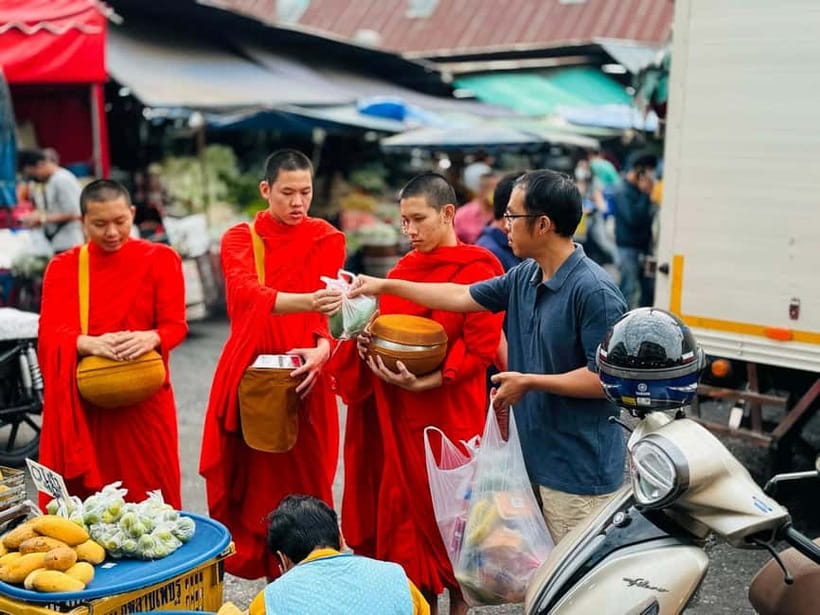
- Walk through Mueang Mai Market during alms time: you see how locals prepare and offer food
- Temple dialogue after the walk: a real Dhamma conversation, not just a photo stop
- Clear rules that keep things respectful: no headphones, no alcohol, and no costume-wearing
Dawn at the temple: sunrise and monk-blessing visits
- Chiang Mai: Doi Suthep, Wat Umong, and Pha Lat Sunrise Tour
★ 4.7 · 1,425 reviews - Wat Phra That Doi Suthep spiritual Sunrise Tour with an Ex-monk
★ 5.0 · 798 reviews - Spiritual Sunrise Wat Doi Suthep, Pha Lat, Alms & Meditation
★ 4.9 · 674 reviews - Doi Suthep and Wat Pha Lat Sunrise Tour (Small Group Only)
★ 5.0 · 70 reviews
How Chiang Mai alms giving feels different at dawn
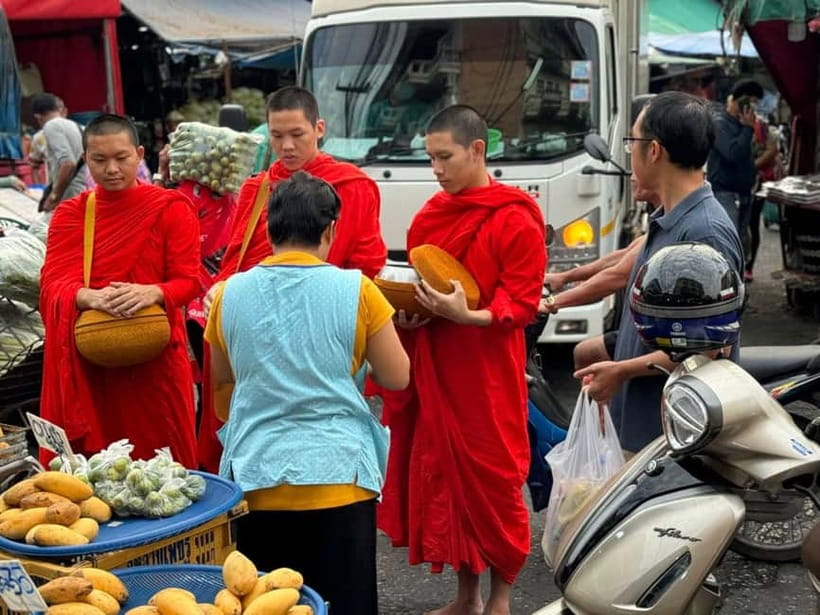
This is one of those Chiang Mai activities that makes you slow down on purpose. Alms collection happens in the early morning, when the temple and neighborhood routine is already underway. That timing changes the whole tone of the experience: it’s quiet, focused, and watchful—more like you’re stepping into a real local rhythm than sightseeing.
I like that the format is built around understanding. You’re not just trailing monks for pictures. You get guidance on what you’re seeing, why devotees offer food, and how Buddhist culture shapes daily behavior in Thailand.
Also, the small group size matters. With a limit of 6 participants, the guide can keep the group moving at the right speed and still answer questions when curiosity hits.
One other point: you’ll be walking and standing outdoors. The tour asks you to bring a change of clothes, so treat this as something you might want to finish feeling fresh—not soaked in sweat and morning haze.
Wat Chai Sri Phum: your first lesson before you move
The day starts with assembly at Wat Chai Sri Phum. Plan to arrive by 5:45 AM at the front of the chanting hall, where the tourist guide waits. (They note the exact meeting spot could change, so get there a touch early.)
Before you set off, your guide gives a concise overview of:
- how the walk works during alms collection
- basic Buddhist culture and temple etiquette
- what participants should watch for as you pass devotees and shops
This first briefing is not busywork. It helps you avoid the common mistake of treating the morning ritual like street theater. When you understand the flow—monks receive food, devotees prepare offerings—you’re more likely to behave naturally and respectfully.
And because your guide is an ex monk, you’ll often hear the practice explained from lived experience. In past groups, guides have included former monk Son and former monk Katoon, and both kinds of explanations tend to be practical: how monk life runs day to day, how conversation in temple spaces works, and what matters in Buddhism beyond big slogans.
The Mueang Mai Market route: seeing offerings in motion
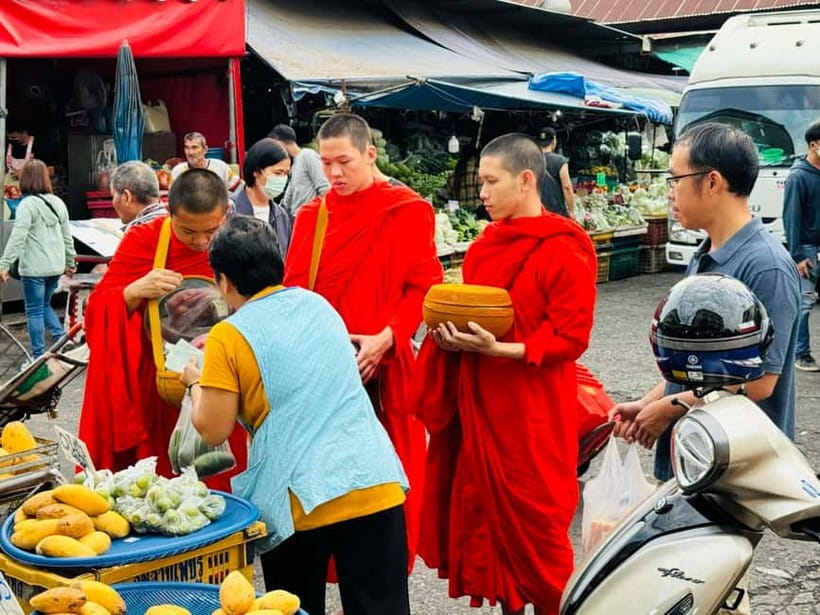
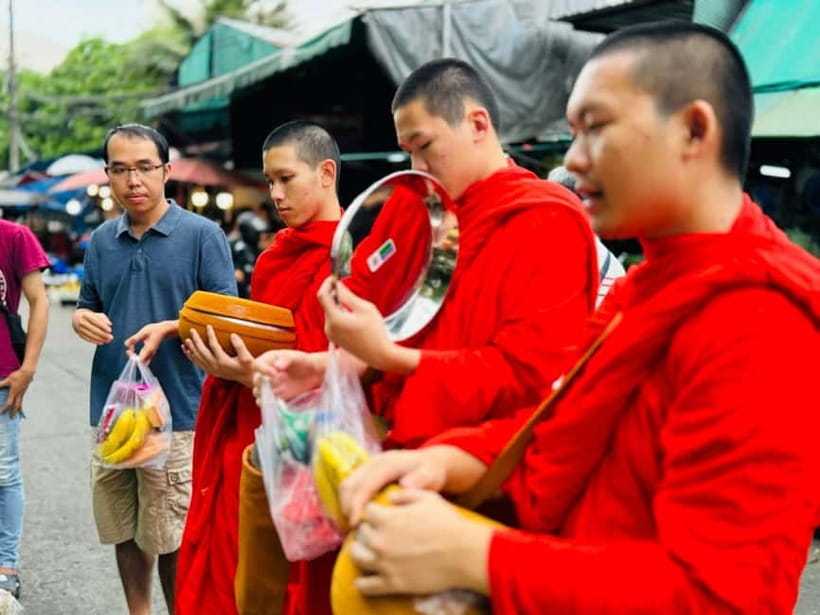
After you start (around 6:00 AM), you’ll walk with the monks as they collect food. During the journey, you pass through a market area where Buddhist devotees wait with offerings.
This is the part I’d call the most visually and emotionally “real.” Instead of seeing a market later at tourist time, you see it while people are actively participating in a morning spiritual routine. You can expect:
- devotees lined up with prepared food
- people moving with purpose but not rushing
- a mix of local details—fresh produce and everyday habits—right alongside the ritual
Two reasons this matters. First, it teaches you how Buddhism sits inside daily Thai life. Second, it gives you a grounded cultural lesson you can’t replicate by reading captions at a temple gate.
You’ll also likely have a guided class as part of this stretch (the tour structure includes guided tour/walk/class totaling about 2 hours around the market). That’s where the guide connects what you see with Buddhist meaning, often using monk-life context to make it easier to understand.
One practical note: the tour rules say no drinks are allowed, and the tour listing also doesn’t include food. So think of this as a morning experience where you start light, stay focused, and eat after—when your schedule allows.
Nothing jumping out yet? More Chiang Mai trips are just down the page
Chiang Mai temple time: questions, Dhamma talk, and etiquette
You return to the temple around 7:30 AM. Then you transition into a meeting and dialogue with the monks. This is your chance to ask questions in a calmer setting than the street walk—exactly when you’ll want to ask the stuff that keeps popping up while you’re watching the process.
The tour also lists a second “class” time after the market segment (another 2 hours is included in the schedule). The combination usually works like this: you learn enough during the walk to recognize what matters, then you go back and ask deeper questions when the group is settled.
What should you expect from the conversation?
- learning about Buddhist culture and daily monk routine
- Dhamma discussions based on what you’re curious about
- guidance on temple behavior and how to show respect without overthinking
This is also where an ex monk guide can help translate. If you’re unsure what a term means, or why devotees do something in a specific way, this part often becomes the moment everything clicks.
Keep in mind the tour is structured for respect and listening. You’re not there to multitask. The rules even ban headphones, which pushes the group to stay present.
Helping with alms: what you’re really doing (and what to watch for)
The headline promise is helping monks with collecting food. In practice, that usually means assisting in the flow of offerings—following what the guide says about where to stand, when to move, and how to handle your role without disrupting the ritual.
You may also have an opportunity to give alms at the end back at the temple. The tour does not include a donation to the temple, which is your cue to expect that giving may be part of the experience (and that it’s separate from the $20 fee).
How to behave so you don’t feel awkward:
- listen first, then act
- don’t block monks or devotees who are preparing offerings
- follow any instructions about what you can and cannot do during the walk
A quiet mindset helps here. If you treat it like a learning session rather than a performance, everything feels more natural.
Price and value: is $20 worth a 2.5-hour morning?
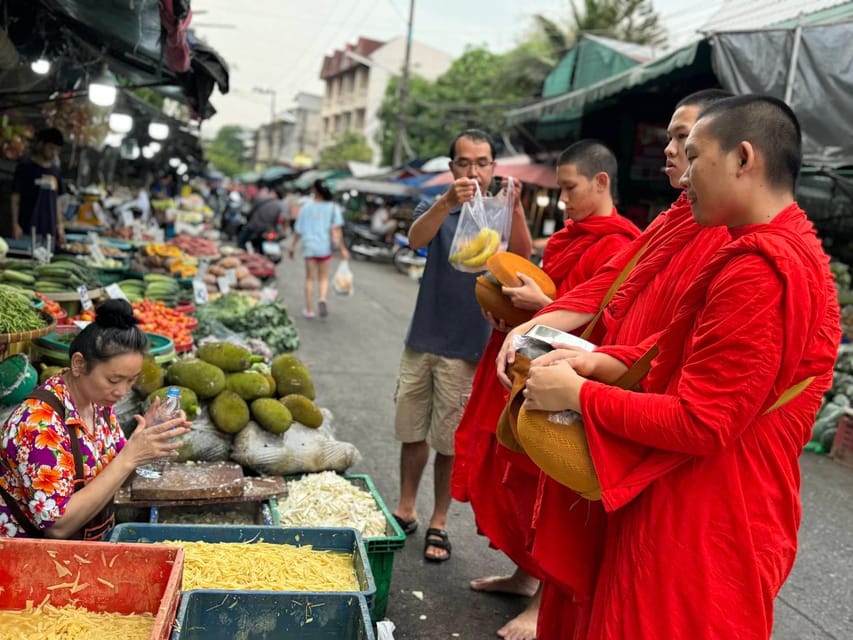
At $20 per person for about 147 minutes, this is good value for one core reason: you’re paying mainly for an experienced guide and access to a structured cultural moment.
You’re not just buying “a walk.” You’re getting:
- an ex monk guide (listed as included)
- a small-group setting (max 6 participants)
- guided interpretation while you move through the market
- dialogue time back at the temple
The cost also makes more sense when you compare the alternatives. You could visit temples on your own, but you likely wouldn’t get the same explanations on monk life, the meaning of alms giving, and how to interact respectfully with monks during a structured time.
Your money also isn’t going into extras that the tour doesn’t provide. The listing clearly says no food and no drink are included, and donation to the temple isn’t included either. So you’re paying for the cultural instruction and guided access, not for a full meal deal.
If you like hands-on cultural learning with a real teacher, this price is pretty fair.
Timing and logistics: what to plan for so the morning goes smoothly
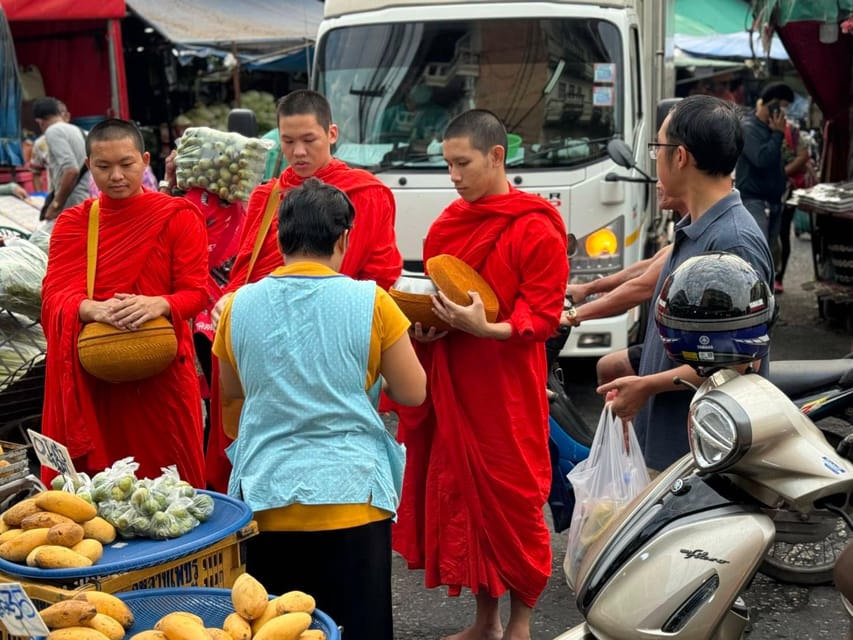
The schedule is tight and simple:
- 5:45 AM assemble at Wat Chai Sri Phum (front of chanting hall)
- around 6:00 AM start walking with the monks collecting food
- around 7:30 AM return to the temple for dialogue
- total duration is listed as 147 minutes
Because it’s early, you’ll want to build your day backward. If you’re staying far out, don’t gamble on waking up late and rushing. This trip is designed for calm start time, not last-minute scrambling.
Also note the small-group format means you shouldn’t expect lots of flexibility once you meet up. Arrive on time so the guide can start the briefing and keep the group together.
Finally, language support is listed as Chinese and English. If you’re comfortable in either, you’ll probably follow the teaching more easily and feel better about asking questions.
Etiquette rules you’ll want to know before you go
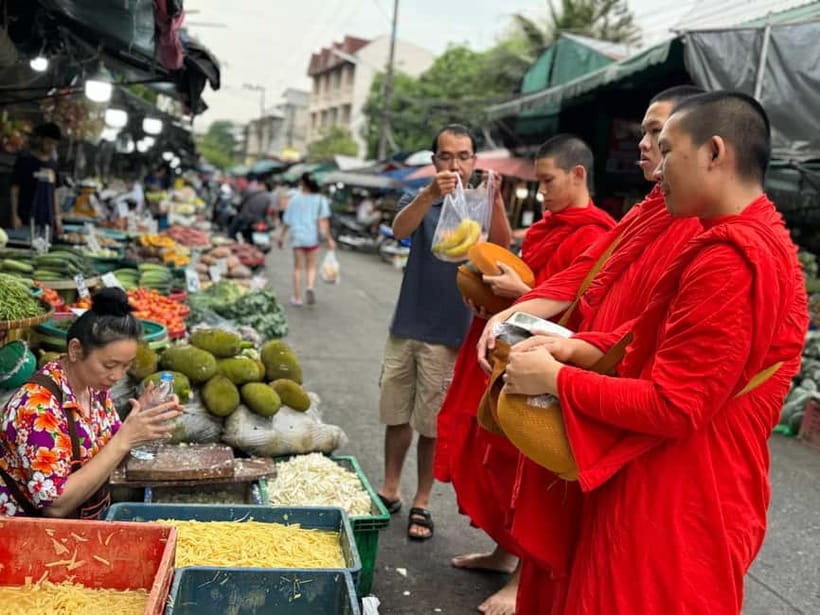
The tour’s rules are very clear, and honestly, they’re there to protect the respectful nature of the ritual.
What you should expect to avoid:
- weapons or sharp objects
- baby strollers (and the listing separately mentions baby carriages)
- wearing a costume
- headphones
- alcohol and drugs
- fishing and explosive substances
- drinks
This “no headphones” rule matters. It keeps the group listening to the guide during explanations. If you’re hoping to half-listen while taking calls, this isn’t that kind of tour.
What to bring:
- a change of clothes
Even if the tour doesn’t spell out why, I treat that as a sign you’ll likely want to freshen up after standing and moving outside in the morning.
Who should book this monks-and-alms walk in Chiang Mai
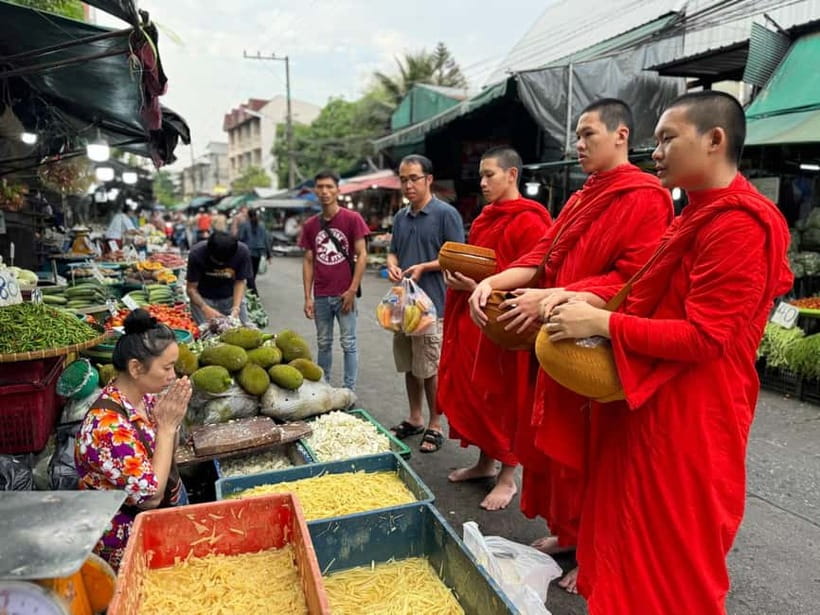
This trip is best for you if you want:
- a morning cultural experience focused on Buddhism, not just temple photos
- an ex monk perspective (the guide is the main reason this works)
- a small group where questions are welcome
It’s also ideal if you like seeing local life in action—especially through the lens of how Thai Buddhist practice shows up at street level and in community routines.
But be aware of the limits. The tour accepts only men. There are also age and height restrictions listed (and it is not suitable for wheelchair users). So check your eligibility carefully before you book, especially if you’re traveling with kids or if mobility is a concern.
If you fit the basic requirements, this is the kind of experience that gives you more than a photo album. It gives you context.
Should you book this Chiang Mai monks collecting alms tour?
Yes, I think you should book it if you’re looking for a structured, respectful Buddhist morning experience with real teaching from an ex monk guide. The value isn’t in fancy extras—it’s in the access, the pacing, and the chance to talk with monks after the walk.
Skip it (or at least reconsider) if you:
- don’t want a men-only format
- hate early starts and aren’t willing to show up on time
- expect food and drinks to be included during the activity
If you do book, go in with a simple goal: understand what alms giving represents and how to behave respectfully while you watch it happen.
FAQ
What is the duration of the Walk With Monks Collecting Alms tour?
The tour lasts 147 minutes.
How much does it cost?
It costs $20 per person.
Where do we meet for the tour?
You meet at the front of the chanting hall where the tourist guide is waiting at Wat Chai Sri Phum. The location may be subject to change.
What time does the tour start?
You assemble at 5:45 AM, and the walk starts around 6:00 AM. The group returns around 7:30 AM.
Who is the tour guide, and what languages are spoken?
The tour includes an ex monk guide. The live tour guide speaks Chinese and English.
Is food or drink included?
No. Food and drink are not included.
Is a donation included?
Donation to the temple is not included.
Is this tour open to everyone?
No. The trip accepts only men, and there are listed age, height, and wheelchair restrictions.
More Walking Tours in Chiang Mai
- Chiang Mai: 3 Hour Old City and Temples Guided Walking Tour★ 4.6 · 1,568 reviews
- Chiang Mai: Historic Temples and City Guided Walking Tour★ 4.7 · 650 reviews
- Chiang Mai: Temple And City Walking Tour Part I★ 4.7 · 244 reviews
- Chiang Mai: Local Food and Markets Guided Walking Tour★ 4.3 · 175 reviews
- Chiang Mai Untouched Elephant: Nature Walk & Waterfall Trek★ 4.7 · 77 reviews
More Tour Reviews in Chiang Mai
- Half-Day Thai Cooking Class at Organic Farm in Chiang Mai★ 5.0 · 19,087 reviews
- Chiang Mai: Elephant Sanctuary, Waterfall & Bamboo Rafting★ 4.9 · 9,160 reviews
- Chiang Mai: Doi Inthanon National Park Eco-Friendly Tour★ 4.6 · 6,667 reviews
- Chiang Mai: Elephant Sanctuary & Waterfall Group Tour★ 4.9 · 5,780 reviews
- Chiang Mai: Chiang Rai Temples, Karen Tribe and Hot Springs★ 4.7 · 5,401 reviews
More Sunrise and Meditation Mornings
- Chiang Mai: Doi Suthep, Wat Umong, and Pha Lat Sunrise Tour★ 4.7 · 1,425 reviews
- Wat Phra That Doi Suthep spiritual Sunrise Tour with an Ex-monk★ 5.0 · 798 reviews
- Spiritual Sunrise Wat Doi Suthep, Pha Lat, Alms & Meditation★ 4.9 · 674 reviews
- Doi Suthep and Wat Pha Lat Sunrise Tour (Small Group Only)★ 5.0 · 70 reviews
- Mount Doi Inthanon National Park Sunrise and Hiking★ 5.0 · 52 reviews
Fresh off the pile: Chiang Mai tours we have just written up


Sunrise & Meditation Tours, compared.
 ★ 4.7Doi Suthep, Wat Umong, and Pha Lat Sunrise TourFrom $321,425 reviews
 ★ 5.0Wat Phra That Doi Suthep spiritual Sunrise Tour with an Ex-monkFrom $64798 reviews
 ★ 4.9Spiritual Sunrise Wat Doi Suthep, Pha Lat, Alms & MeditationFrom $59674 reviews
 ★ 5.0Doi Suthep and Wat Pha Lat Sunrise Tour (Small Group Only)From $2970 reviews
 ★ 5.0Mount Doi Inthanon National Park Sunrise and HikingFrom $12652 reviews
 ★ 5.0Meditation Retreat and Self-Care in NatureFrom $4846 reviews
 ★ 5.0Half-Day Yoga, Meditation, and Thai Cultural Immersion in Chiang MaiFrom $7140 reviews
 ★ 4.9Full-Day Yoga & Meditation Experience with LunchFrom $8338 reviews
Browse the lists this tour appears in