
Reviewed · CHIANG MAI COOKING CLASSES
Authentic Thai Cooking Class and Farm Visit in Chiang Mai
Your Thai lunch starts at the market. I love the market-to-stove flow that shows where ingredients really come from, and I love the small-group size that keeps things hands-on. One watch-out: the day can run a little longer than you expect, so keep your evening open.
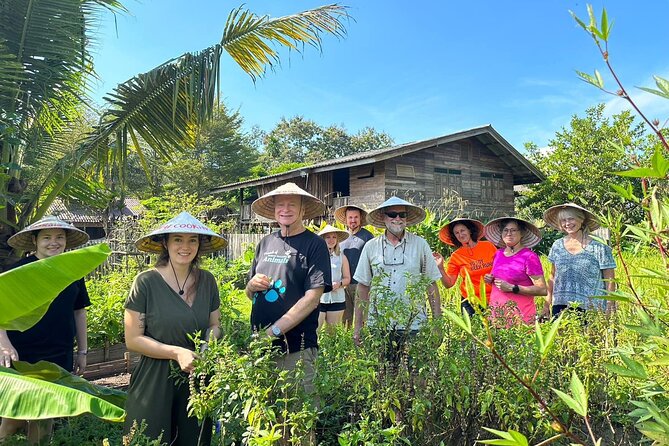
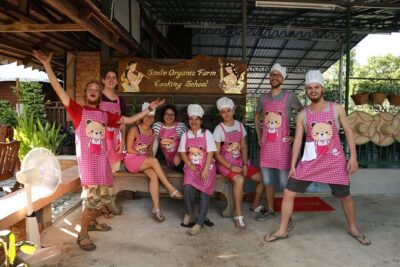
This is a half-day class in central Chiang Mai that starts with pickup near Tha Phae Gate and ends back at the meeting point. You’ll work with a chef—in reviews, names like Chef Nune, Tommy, and Chef Olive show up—then eat what you make in an outdoor setting.
You’ll also get a welcome snack or fruit, a recipe book, and a choice of dishes. That mix is why this feels more like learning Thai cooking than just following instructions.
In This Review
- Key things to know before you go
- Why Chiang Mai’s market-to-farm cooking format makes sense
- Pickup, meeting point, and what the start feels like
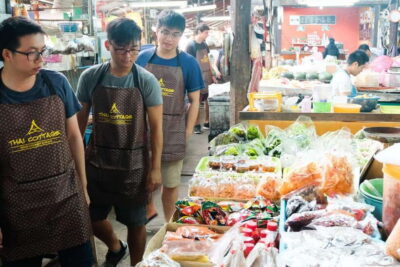
- The local market stop: where the class becomes real cooking
- Organic farm visit: herbs, pacing, and a calmer kind of “Thai”
- Open-air kitchen cooking: your hands on, your mouth ready
- What you can cook: a dish list with real variety
- Eating in a bamboo hut: why the meal is part of the lesson
- Price and value: what $48.06 really buys you
- Timing, group size, and how to get the smoothest experience
- Who should book this class (and who might pass)
- What you’ll learn that sticks after you leave Chiang Mai
- Should you book the Authentic Thai Cooking Class and Farm Visit?
- FAQ
- How many dishes do I cook in this class?
- Is pickup included from central Chiang Mai?
- Is the class small?
- What kind of food experience is included besides cooking?
- What dishes can I choose from?
- What’s included in the price besides cooking?
- Is this class family-friendly for kids?
Key things to know before you go
- Market shopping that teaches ingredient logic, not just shopping baskets
- Organic farm time for herbs and flavors you’ll use in class
- Open-air kitchen cooking for up to 12 people
- Pick 6 dishes from a set list, with sticky rice included
- Lunch in a locally styled bamboo hut
- Multiple chef styles, including Nune, Tommy, and Olive
Pick your Thai cooking class: farm kitchens and market runs
- Half-Day Thai Cooking Class at Organic Farm in Chiang Mai
★ 5.0 · 19,087 reviews - Chiang Mai: Cooking Class, Market & Thai Herbs Garden Tour
★ 4.9 · 4,824 reviews - Chiang Mai: Authentic Cooking Class with Market & Farm Visit
★ 4.9 · 4,546 reviews - Thai and Akha Cooking Class in Chiang Mai
★ 5.0 · 4,358 reviews
Why Chiang Mai’s market-to-farm cooking format makes sense
Most Thai cooking classes in Chiang Mai fall into two buckets: you either cook, or you visit a place that looks nice. This one ties those together, so your ingredients make sense when you’re cutting, grinding, and seasoning.
You start by learning what locals actually buy and how they think about flavors. Then you see (and often handle) herbs and produce from an organic farm. By the time you’re standing at the stove, you’re not asking, What is this herb again? You already saw it, smelled it, and learned what it does in Thai dishes.
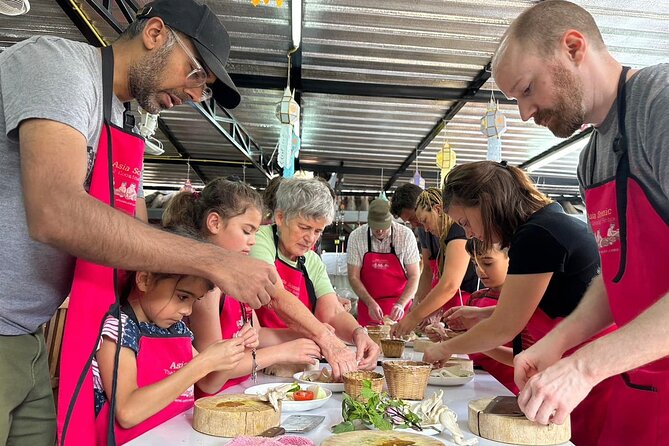
The payoff for you: you’ll cook with more confidence because you understand the “why” behind the “how.” And since the class is limited to a maximum of 12 travelers, you’re more likely to get real help when something goes sideways—like getting sticky rice to turn out right on the first attempt.
Pickup, meeting point, and what the start feels like
The activity kicks off around Tha Phae Gate (Tha Phae Road). Pickup is offered within about 3 km of Chiang Mai downtown, and you return to the meeting point afterward.
In practice, that matters because you’re not trying to navigate Chiang Mai logistics on an empty stomach. You also don’t need to plan your own transport between the city market and the cooking location.
One small detail that can save you time: the team sends an app message with the exact pickup time. If you’re traveling with spotty phone signal, make sure your notifications are turned on and your phone is charged.
The local market stop: where the class becomes real cooking
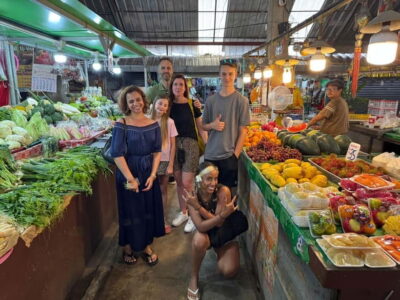
This tour begins with a fresh market visit. You don’t go only to buy a few items. You go to see how locals choose ingredients and prepare food day to day.
Here’s what that does for you:
- You learn how Thai dishes depend on specific herbs, vegetables, and spices—not random substitutes.
- You get a better sense of which flavors should be “front and center” versus background notes.
- You start building a mental map of how Thai cooking is assembled: sour, salty, sweet, spicy, and aromatic all in the same orbit.
It’s also where the class sets expectations. The instructor isn’t just going to hand you recipes and hope you succeed. You’ll be guided through ingredients so you know what to look for later, either at home or on your next Thai meal.
If you’re picky about authenticity, this market part is a big deal. If you’ve ever watched someone cook pad Thai without tasting a sauce first, you’ll appreciate the approach here: learn ingredients early, then cook with purpose.
Nothing jumping out yet? More Chiang Mai trips are just down the page
Organic farm visit: herbs, pacing, and a calmer kind of “Thai”
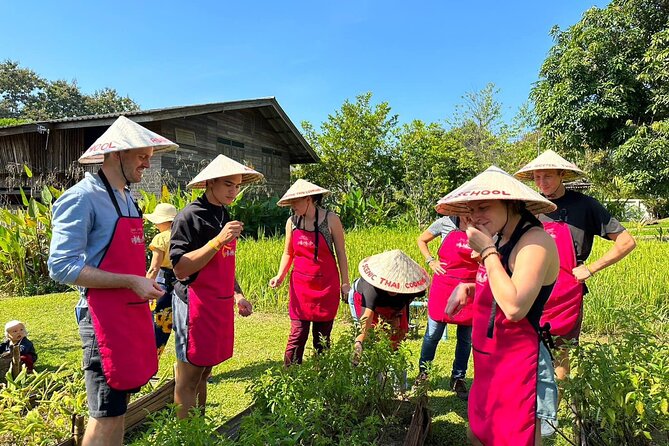
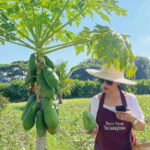
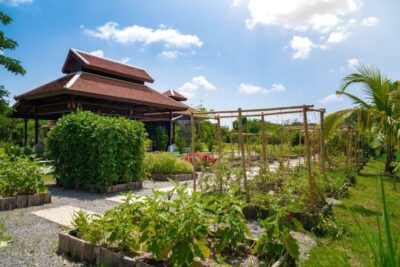
Next comes an organic farm tour. In the time you have, you’re not going to turn into a farm scientist—but you will pick up the ingredient side of Thai cooking that most cooking classes skip.
In the reviews and description, the farm is tied to herbs and ingredients that you’ll use. That connection is valuable. Thai cooking is aromatic. The difference between “good” and “wow” is often a handful of fresh leaves or a plant used at the right moment—not just heat level or salt.
You should also expect the farm segment to slow the day down a bit. That’s not a problem; it’s part of the value. The setting tends to be more relaxed than the market. Just plan to stay flexible with time, because farm-and-kitchen schedules can run long.
Practical tip: come hungry. One review specifically warns not to eat beforehand, and that tracks. You’ll want room for the lunch you cook.
Open-air kitchen cooking: your hands on, your mouth ready
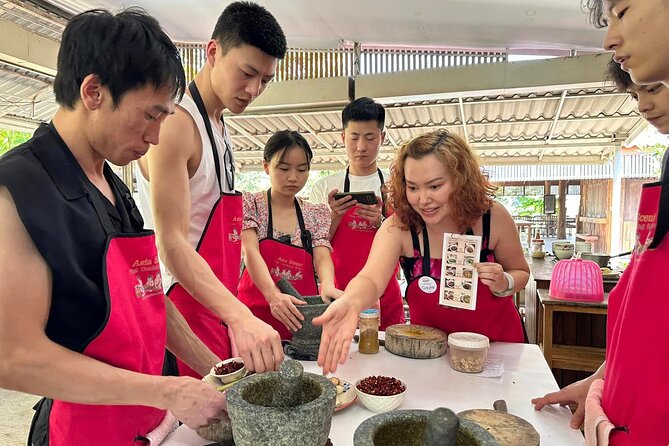
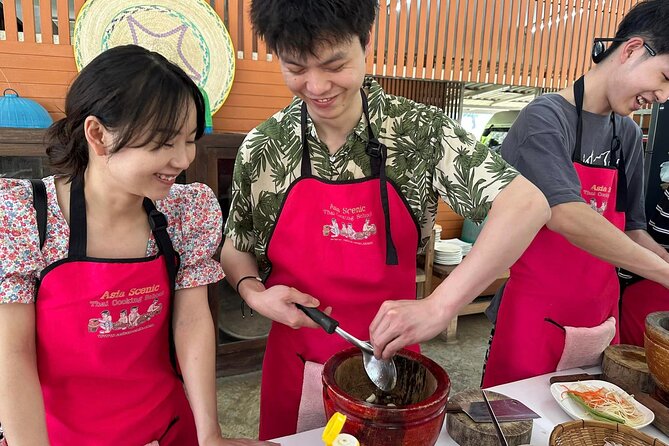
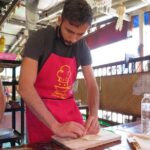
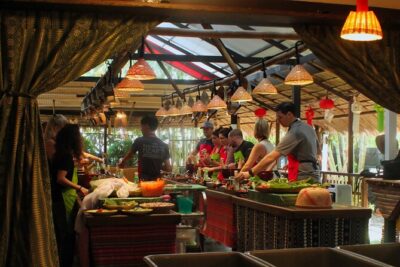
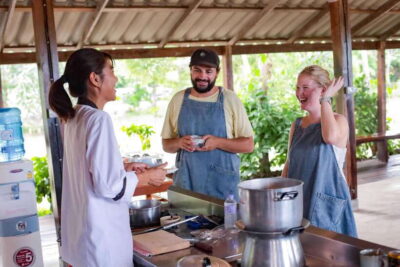
After the market and farm, it’s cooking time in an open-air kitchen. You’ll cook and then eat in a locally styled bamboo hut.
The class is set up around 6 dishes, and you can choose which dishes you’ll make from a defined list. That choice matters because you can steer the day toward what you actually want to eat in Thailand.
You’ll learn in a step-by-step way from an experienced chef. Reviews mention energetic, funny instruction styles—Chef Nune gets praise for being fun and knowledgeable in the kitchen, while Tommy is singled out for humor and energy. Chef Olive also shows up in reviews with strong marks for being the best.
And yes: sticky rice is part of the cooking plan, including instruction on how to make it. That alone is worth something. Sticky rice is one of those foods that can look simple and still fail if the timing or method is off.
What I’d watch for as you cook:
- Don’t rush early steps. Thai dishes often depend on having aromatics and sauces ready before heat goes on.
- Taste as you go when your instructor cues it. Thai flavor balance isn’t guesswork—it’s quick tasting and adjusting.
What you can cook: a dish list with real variety
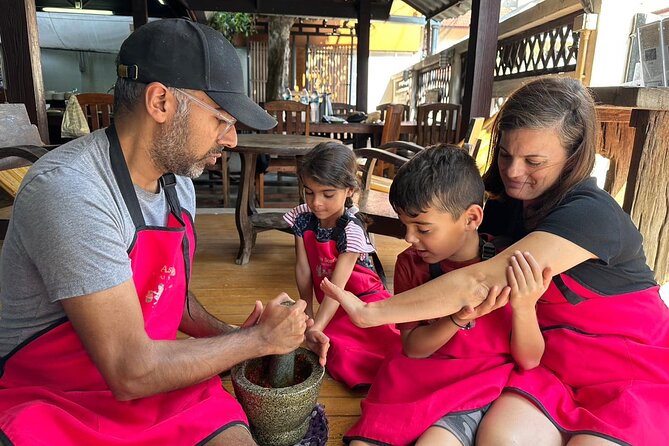
You’ll cook 6 dishes total, selected from this menu:
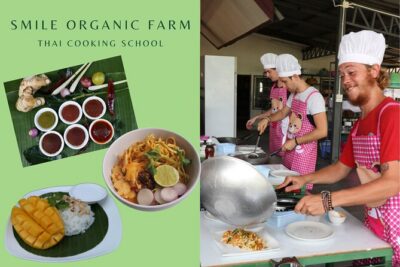
- Stir-Fried: Pad Thai, Pad See Uw, Hot Basil Stir Fried, Cashewnut With Chicken
- Soup: Coconut Milk Soup, Tom Yum, Tom Sab
- Curry Pastes/Curries: Red, Green, Massaman, Panang, Khaw Soi (plus the corresponding curry dishes listed: Red Curry, Green Curry, Massaman Curry, Panang Curry, Khaw Soi)
- Dessert: Deep Fried Banana, Banana in Coconut Milk, Sticky Rice With Mango
- Salad: Spicy Chicken Salad, Papaya Salad, Glass noodle Salad
This list is a strong sign of good value. You aren’t stuck with only one cooking style like stir-fry all day. You cover:
- noodles (pad Thai and pad see uw),
- aromatic stir-fry (hot basil),
- soups with very different flavor profiles (tom yum versus coconut milk soup),
- curry systems (past and curry dishes across multiple styles),
- salads and fresh crunch,
- and dessert with sticky rice.
If you love variety, you can build your 6 choices around a balanced Thai meal. If you already know your favorites from Thai restaurants—like Khaw Soi—you’ll likely want to include that. One review mentioned choosing Khaw Soi specifically.
Eating in a bamboo hut: why the meal is part of the lesson
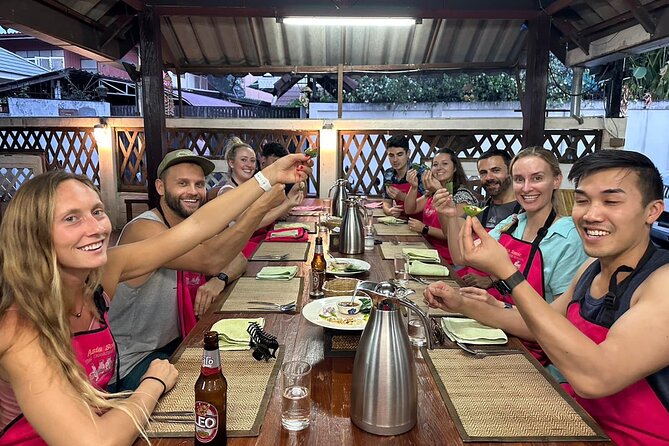
You don’t just cook; you eat what you make in a locally styled bamboo hut. That setting matters more than you’d think.
First, it reinforces the workflow. You’ll smell your own food while it’s still fresh, then taste it in a social, relaxed space. That helps you remember which step created which flavor.
Second, it makes the lunch feel like a finish line—not a random pause. A cooking class should end with a meal that proves the method worked. Here, your finished dishes are served in the same environment where you cooked.
And because the day includes a welcome snack or fruit, you get a small break before the main meal. That helps if you’re sensitive to long gaps between eating and cooking.
Price and value: what $48.06 really buys you
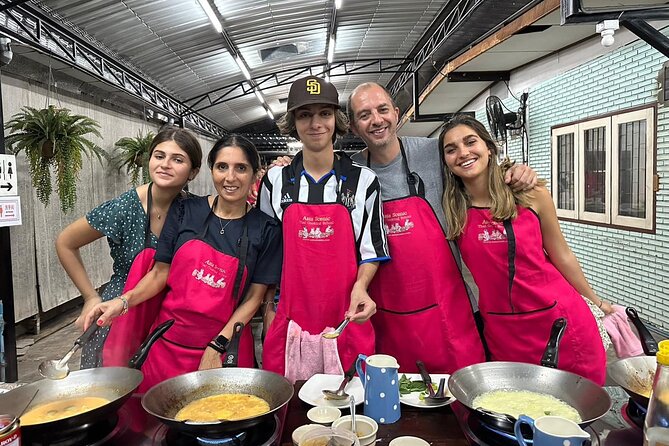
At $48.06 per person, this sits in the mid-range for Chiang Mai cooking classes. What makes it feel fair isn’t just the price tag—it’s the structure.
You get:
- pickup from central Chiang Mai (within about 3 km),
- market visit for ingredient context,
- organic farm tour,
- open-air kitchen cooking for 6 dishes,
- a recipe book,
- welcome snack or fruit,
- and transfers back.
Many cheaper classes skip at least one of those pieces. You might pay a similar amount and only get cooking, or only get a market visit without real meal-making. Here, the day is built around learning and eating.
Group size also affects value. Up to 12 people means you’re less likely to be stuck watching while someone else cooks. For a hands-on food class, that matters.
Bottom line: if you want an experience that includes both Thai ingredients and Thai cooking, the math works.
Timing, group size, and how to get the smoothest experience
Duration is listed at about 5 hours. But one practical note from the experience feedback: the activity may last longer than the details suggest. So treat it as a flexible half-day, not a strict schedule.
Group size is capped at 12 travelers, which is great for attention. You’ll likely do better in the class if you’re ready to work with others—sharing counter space, tasting together, asking questions when the instructor stops at your station.
A few things to do before you go:
- Plan to eat after the class, not before. Keep it light beforehand.
- Bring whatever you use for photos if that matters to you. Just remember: the main point is cooking.
- Keep your phone charged in case you need pickup time instructions via the app.
If you’re a solo traveler, this kind of small-group format can be friendly. You’ll be interacting during cooking and while eating together.
Who should book this class (and who might pass)
This experience is a great fit if you:
- want more than just a cooking demonstration,
- enjoy food education (ingredients, herbs, spices),
- like the idea of cooking dishes you’d actually order,
- and want to leave with a recipe book you can use.
It’s also ideal if you don’t have much time in Chiang Mai. A half-day format gives you a full culinary day without taking over your entire schedule.
Who might consider a different option:
- If your schedule is painfully tight, the farm + market + cooking flow might stretch longer than you want.
- If you only care about eating and nothing about cooking, you might find a food tour more direct.
What you’ll learn that sticks after you leave Chiang Mai
The best part of this class is what you’ll carry home.
You’ll learn how Thai cooking leans on:
- the balance of aromatic ingredients,
- how sauces and pastes behave differently depending on dish,
- and how sticky rice fits into the sweet side of Thai food.
Even if you only cook one or two dishes again later, you’ll understand the ingredient logic behind the rest. That means you can order Thai food with more clarity, too—you’ll recognize what to ask for and what to pay attention to.
Should you book the Authentic Thai Cooking Class and Farm Visit?
If you want a Thai cooking class that actually teaches, not just feeds, I’d book this.
Choose it if you like the idea of:
- market shopping that explains ingredients,
- a genuine organic farm visit tied to what you cook,
- and 6 dish options so you can steer the day toward your favorites.
If your main goal is a super-fast stop with no extra context, you might feel the market-and-farm time is more than you need. But if you’re here for Thai food culture and you like learning by doing, this is a strong value.
Go hungry, keep your schedule flexible, and you’ll leave with food, techniques, and a recipe book you’ll actually use.
FAQ
How many dishes do I cook in this class?
You cook 6 dishes. You can choose which 6 from the list provided when you book.
Is pickup included from central Chiang Mai?
Pickup is offered for hotels within about 3 km of Chiang Mai downtown. The activity also includes transfers back.
Is the class small?
Yes. The group is capped at a maximum of 12 travelers, which helps with more hands-on attention.
What kind of food experience is included besides cooking?
Besides the cooking in an open-air kitchen, you’ll visit a local market to select ingredients and tour an organic farm. You’ll also eat the meal you make in a locally styled bamboo hut.
What dishes can I choose from?
The available dishes include stir-fries like Pad Thai and Pad See Uw, soups like Tom Yum and coconut milk soup, curries like Massaman and Panang (plus Khaw Soi), salads like papaya salad and spicy chicken salad, and desserts like deep fried banana and sticky rice with mango.
What’s included in the price besides cooking?
The experience includes a welcome snack or fruit, a recipe book, and transfers from central Chiang Mai. You’ll also be provided the meal you cook.
Is this class family-friendly for kids?
Children ages 5–11 can participate. If the booking details don’t match reality for the child, you’re responsible for paying any additional charge upfront for the show/tour.
More Cooking Classes in Chiang Mai
- Half-Day Thai Cooking Class at Organic Farm in Chiang Mai★ 5.0 · 19,087 reviews
- Chiang Mai: Cooking Class, Market & Thai Herbs Garden Tour★ 4.9 · 4,824 reviews
- Chiang Mai: Authentic Cooking Class with Market & Farm Visit★ 4.9 · 4,546 reviews
- Thai and Akha Cooking Class in Chiang Mai★ 5.0 · 4,358 reviews
- Chiang Mai: Cooking Class with Market and Pickup★ 4.9 · 1,365 reviews
More Tour Reviews in Chiang Mai
- Half-Day Thai Cooking Class at Organic Farm in Chiang Mai★ 5.0 · 19,087 reviews
- Chiang Mai: Elephant Sanctuary, Waterfall & Bamboo Rafting★ 4.9 · 9,160 reviews
- Chiang Mai: Doi Inthanon National Park Eco-Friendly Tour★ 4.6 · 6,667 reviews
- Chiang Mai: Elephant Sanctuary & Waterfall Group Tour★ 4.9 · 5,780 reviews
- Chiang Mai: Chiang Rai Temples, Karen Tribe and Hot Springs★ 4.7 · 5,401 reviews
More Chiang Mai Cooking Classes
- Half-Day Thai Cooking Class at Organic Farm in Chiang Mai★ 5.0 · 19,087 reviews
- Chiang Mai: Cooking Class, Market & Thai Herbs Garden Tour★ 4.9 · 4,824 reviews
- Chiang Mai: Authentic Cooking Class with Market & Farm Visit★ 4.9 · 4,546 reviews
- Thai and Akha Cooking Class in Chiang Mai★ 5.0 · 4,358 reviews
- Chiang Mai: Cooking Class with Market and Pickup★ 4.9 · 1,365 reviews
Fresh off the pile: Chiang Mai tours we have just written up

Chiang Mai Cooking Classes, compared.
 ★ 5.0Half-Day Thai Cooking Class at Organic Farm in Chiang MaiFrom $2919,087 reviews
 ★ 4.9Cooking Class, Market & Thai Herbs Garden TourFrom $314,824 reviews
 ★ 4.9Authentic Cooking Class with Market & Farm VisitFrom $344,546 reviews
 ★ 5.0Thai and Akha Cooking Class in Chiang MaiFrom $424,358 reviews
 ★ 4.9Cooking Class with Market and PickupFrom $251,365 reviews
 ★ 4.9Cooking Class with Organic Farm at Mama NoiFrom $321,151 reviews
 ★ 5.0Full Day Thai Cooking at Farm (Chiang Mai)From $391,127 reviews
 ★ 4.9HALF-DAY COOKING COURSE at a Thai Cooking FarmFrom $28705 reviews
Browse the lists this tour appears in