Reviewed · CHIANG MAI COOKING CLASSES
Chiang Mai: HALF-DAY COOKING COURSE at a Thai Cooking Farm
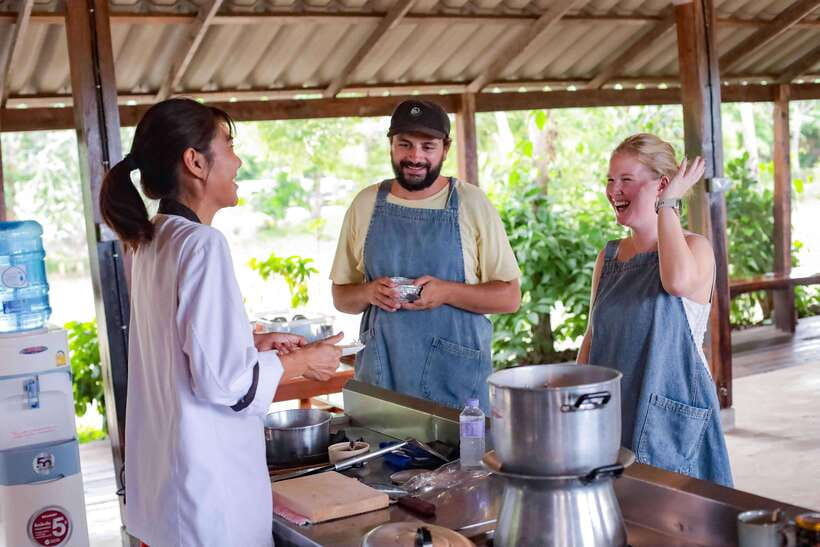
Thai cooking gets real fast. This half-day course at The Rice Barn Thai Cooking Farm pairs a market walk with a hands-on kitchen class, so the flavors make sense in your head and on your plate. I like that each person works at their own station, and I also like the clear, English-taught guidance from instructors like Oily and Timi.
One thing to consider: you’ll likely leave very full, so don’t plan a big dinner right after.
In This Review
- Quick hits
- From hotel pickup to the farm kitchen: how the day flows
- The Rice Barn setup: why the kitchen matters more than you think
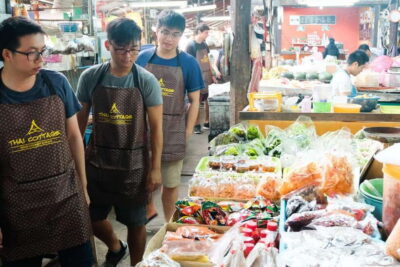
- Market learning: the quick way to understand Thai ingredients
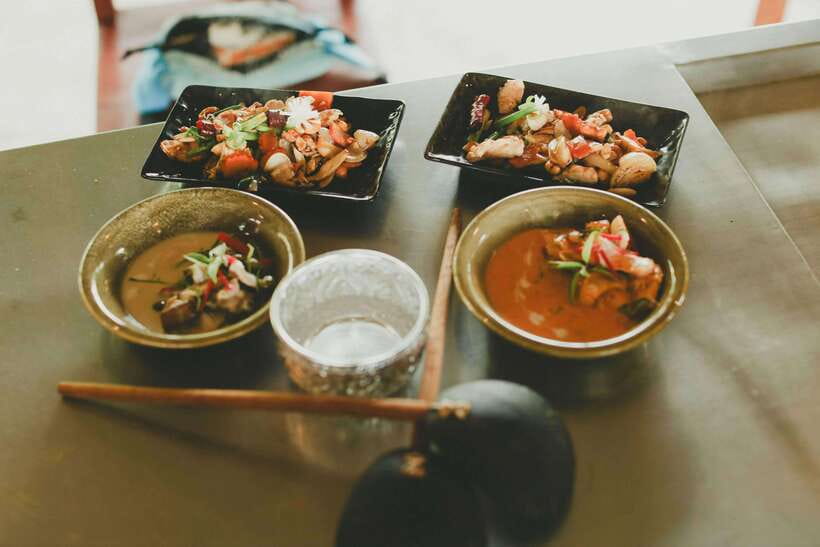
- What you’ll cook: classic dishes you can repeat at home
- Why these dishes are good practice
- Instructors in action: English teaching that actually sticks
- Food, pacing, and that post-class full stomach
- Price and value: why $28 feels fair for what you get
- Who should book this class in Chiang Mai?
- Should you book The Rice Barn Thai Cooking Farm cooking course?
- FAQ
- How long is the Chiang Mai half-day cooking course?
- What is the price per person?
- Is the cooking class hands-on or mostly a demonstration?
- Where does the course start and what happens first?
- Do I get hotel pickup and transportation?
- Is the instructor available in English?
- What dishes will I cook?
- What’s included in the price?
- Can I cancel for a full refund?
- Is there a reserve now and pay later option?
Quick hits
- Market stop that teaches what Thai cooking actually starts with (spices, herbs, and key ingredients you’ll use later)
- Own workstation, not just watching: the course is built for you to cook each dish
- A top farm setting: outdoor kitchen areas with gardens and produce growing nearby
- English instruction with humor and hands-on feedback from guides such as Oily, Timi, Katie, and Gobby
- Food volume that’s the real deal: multiple dishes cooked and eaten on-site
Pick your Thai cooking class: farm kitchens and market runs
- Half-Day Thai Cooking Class at Organic Farm in Chiang Mai
★ 5.0 · 19,087 reviews - Chiang Mai: Cooking Class, Market & Thai Herbs Garden Tour
★ 4.9 · 4,824 reviews - Chiang Mai: Authentic Cooking Class with Market & Farm Visit
★ 4.9 · 4,546 reviews - Thai and Akha Cooking Class in Chiang Mai
★ 5.0 · 4,358 reviews
From hotel pickup to the farm kitchen: how the day flows
This is a 6-hour Thai cooking class in Chiang Mai Province that runs either in the morning or the evening (you choose based on what fits your schedule). You’ll be picked up from your hotel in an air-conditioned vehicle, which matters here because Chiang Mai can feel hot and humid, and you start the day on the move.
The rhythm is simple: you go out first to learn ingredients, then you return to the farm for the main event—cooking. The market part isn’t a random detour. It’s there to help you understand what you’re buying and why certain flavors show up again and again in Thai dishes: the balance of sour, salty, sweet, and heat, plus the herbs and pastes that create that signature taste.
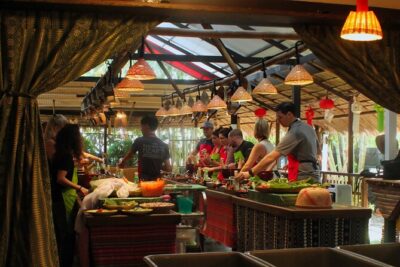
Once you reach The Rice Barn, everything shifts into a practical mode. The kitchen is set up for individual cooking. Think more like a well-run workshop than a demo. When instructors show you what to do, it’s immediately followed by you doing it yourself.
The Rice Barn setup: why the kitchen matters more than you think
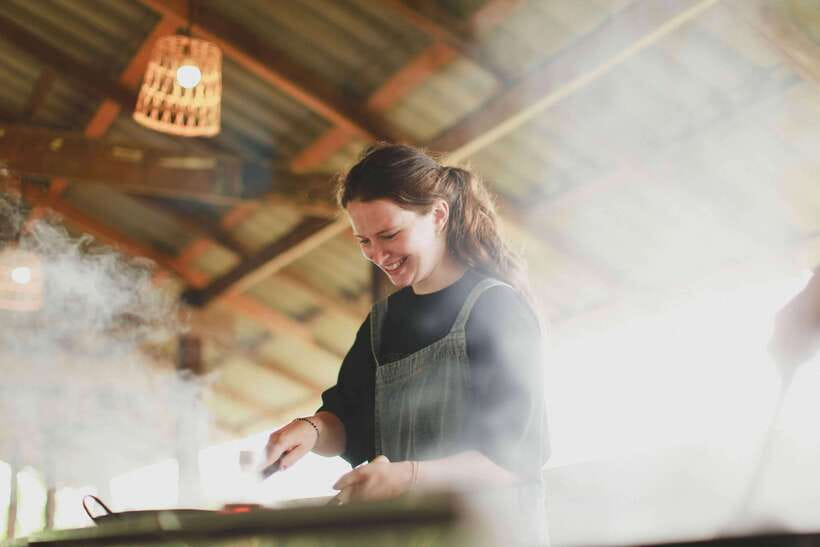
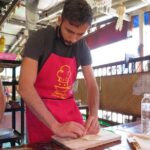
A lot of Thai cooking classes promise hands-on time. This one actually runs like it. Each participant has an organized cooking station with what you need, and that’s a big deal if you’re cooking for the first time. It reduces confusion and lets you focus on technique: chopping, balancing flavors, and getting the heat right for stir-fries and curry pastes.
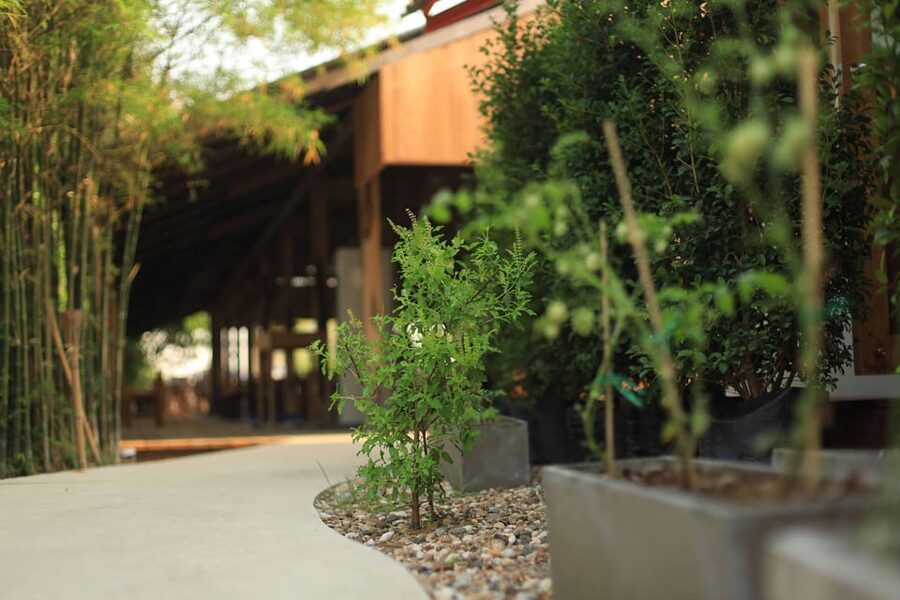
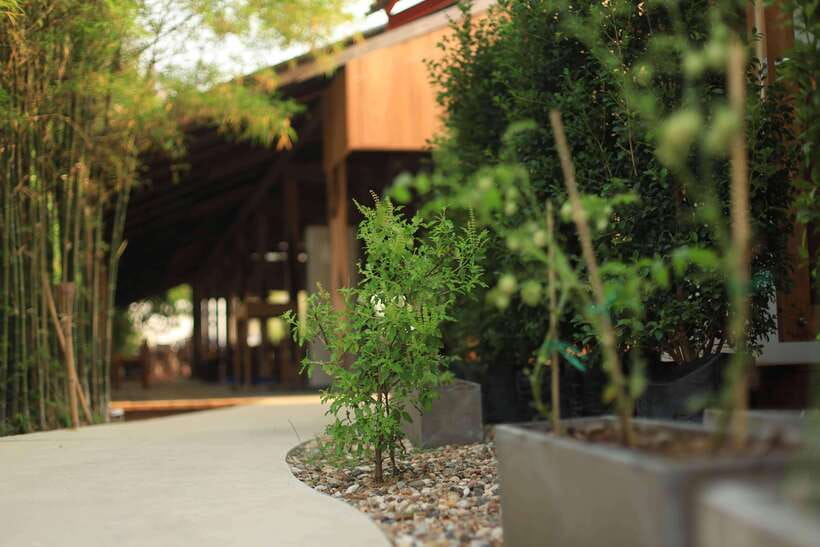
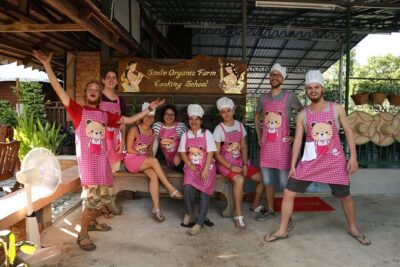
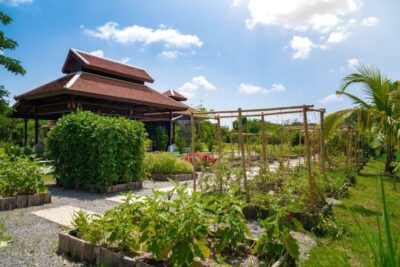
You’ll also notice the farm context. Several course moments happen in a clean, open-air kitchen area surrounded by gardens and growing produce. That setting does more than look nice on photos. It helps you connect the ingredients to where they come from, especially when the team points out plants and spices and you see how fresh produce fits into the dishes.
And the operational side is handled well. Based on the consistent feedback, the facilities are kept orderly and clean, the flow feels planned, and you aren’t standing around wondering what happens next.
Market learning: the quick way to understand Thai ingredients
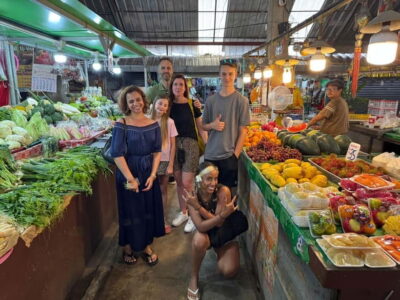
The market stop is one of the most useful parts of the day because Thai cooking is ingredient-driven. You’ll meet the main players: herbs, aromatics, chilies, sauces, and other essentials that you can’t replace with an “almost right” pantry swap.
What I like about this approach is that it trains your eye. By the time you’re back at the farm kitchen, you’re not guessing what a paste should smell like or how an herb should behave in a dish. You’re working from a mental map you built at the market.
In the course experience, you’ll also get a chance to learn about ingredients used in classic Thai cooking and how they show up later in dishes like tom yum and pad Thai. Some sessions include extra food education moments, such as learning about fruit and vegetables and even processes like coconut milk preparation.
If you’re the type who loves browsing food stalls, this part adds real value. If you’re more cautious about markets, it still works because the team guides you toward ingredients tied directly to what you’ll cook.
Nothing jumping out yet? More Chiang Mai trips are just down the page
What you’ll cook: classic dishes you can repeat at home
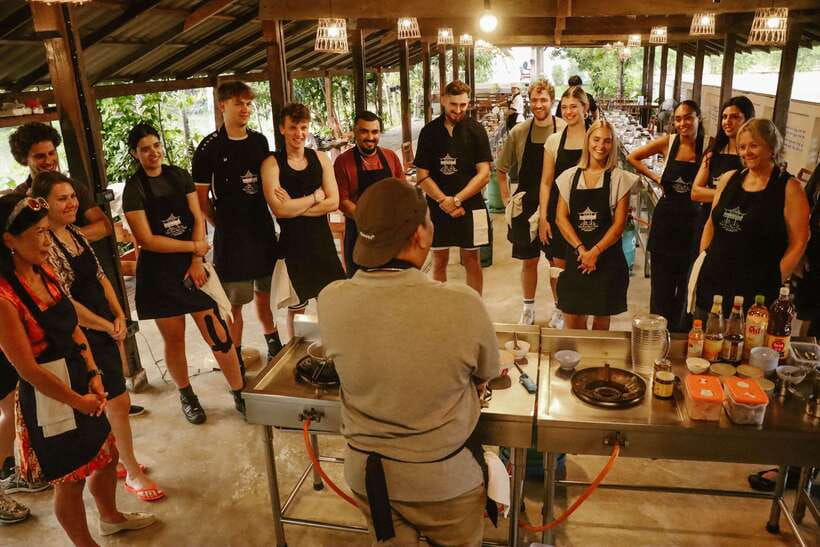
The best part of any cooking class is whether you can recreate it later. This course is designed around multiple Thai dishes with enough repetition that you actually learn the method, not just the steps.
Across sessions, the lineup often includes these crowd favorites:
- Tom Yum Kung (spicy-sour shrimp soup)
- Pad Thai
- Mango Sticky Rice
- Cashew stir-fried chicken
- A curry choice, commonly between Panang and Green Curry
The course also references other classic dishes during different runs, and instructors may guide you through additional items depending on the schedule and what’s planned. The consistent theme is Thai staples: soups, stir-fries, curries, and a sweet finish.
Why these dishes are good practice
These choices aren’t random. They teach different Thai “building blocks”:
- Tom yum helps you understand balancing sour and spicy, and how herbs and aromatics create depth quickly.
- Pad Thai teaches stir-fry timing and sauce integration.
- Curries show you how paste, coconut milk, and seasoning work together for a smooth, fragrant result.
- Sticky rice + mango makes the sweet side feel less mysterious, because you see preparation and serving methods.
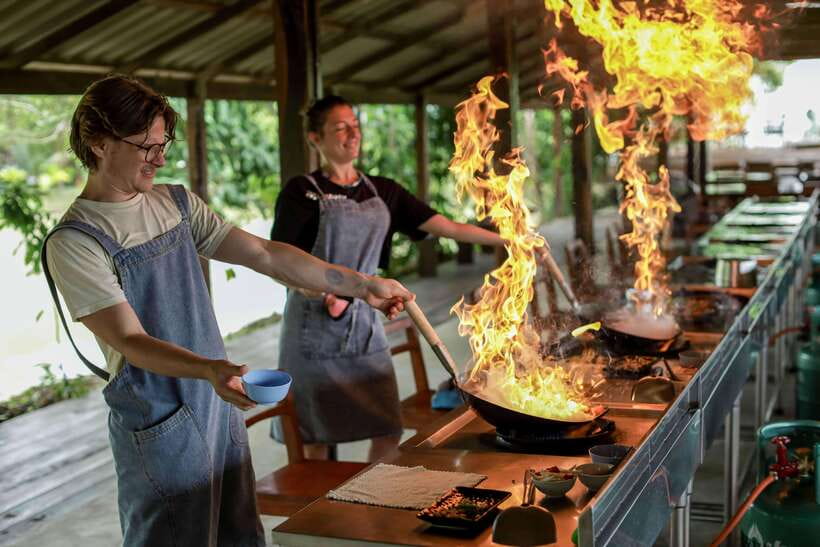
And yes, the class can get fun-skill moments. One example mentioned is a flambé-style presentation with a cashew chicken dish. Even if your version is calmer, you’ll learn the technique you can use at home—heat control, sauce thickening cues, and when to stop cooking.
Instructors in action: English teaching that actually sticks
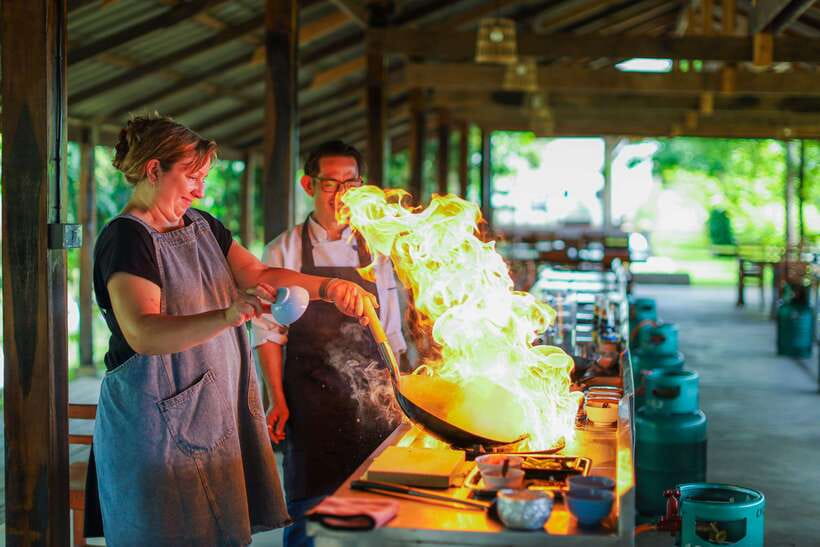
The teaching style is one reason this course earns such high ratings. Instructors like Oily, Timi, Katie, and Gobby are known for clear instruction plus humor, and the key is that they keep it practical. You’re not just listening; you’re cooking along with them.
You’ll often see a pattern:
- The instructor explains the recipe logic.
- They demonstrate steps in front of you.
- You move to your station and cook.
- They circulate, watch, and correct.
That circulation matters. It’s where you avoid common rookie problems like uneven chopping, sauce that’s too thick or too thin, or flavors that don’t taste balanced. Because you have an individual station, corrections are immediate instead of delayed while you wait your turn.
Language is English, so you won’t have to translate techniques in your head. The group dynamic also tends to be upbeat. Even solo travelers report making friends quickly, largely because everyone is doing the same hands-on work at the same time.
If you have dietary needs, you should communicate them ahead of time. One account specifically noted attention to gluten-free needs, which suggests the team may be willing to help when possible—just don’t assume every substitution will be offered without asking.
Food, pacing, and that post-class full stomach
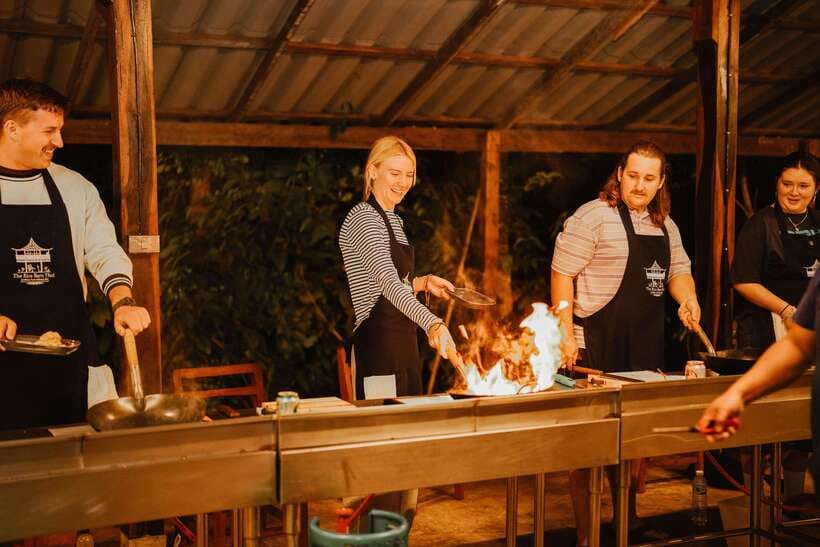
This is not a light snack class. Plan on eating what you cook, and plan on eating a lot. Multiple accounts mention leaving with a full belly and too much food to finish comfortably.
The pacing is built around getting you through several dishes without feeling rushed. In a good cooking class, you should feel busy but not frantic. Here, the operation seems to keep things moving: market learning, then cooking, then eating.
Practical tip: don’t eat a big meal beforehand. A good rule is to arrive hungry enough that you can enjoy everything, especially the sweet finish like mango sticky rice.
Also consider what you do after. If you’re planning a night market stroll, this is fine. If you’re planning a formal dinner, you may want to lighten the plan or schedule it later.
Price and value: why $28 feels fair for what you get
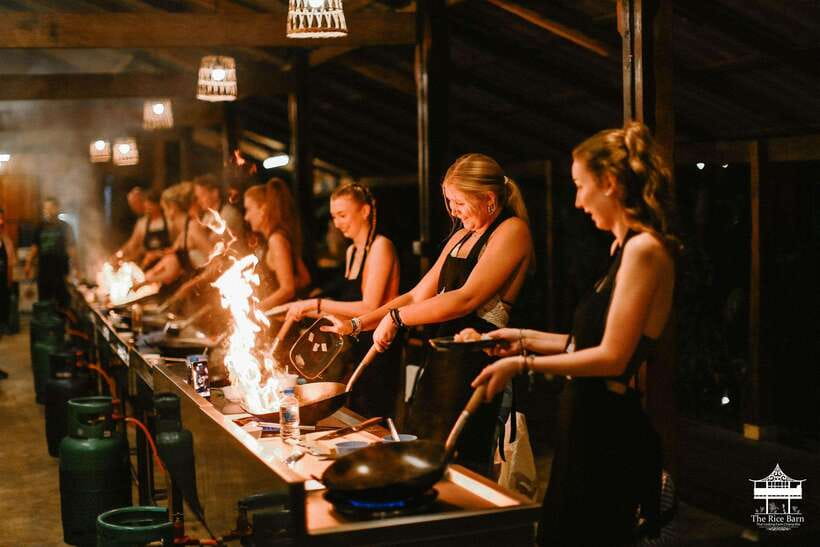
At about $28 per person for a 6-hour experience with hotel pickup, A/C transportation, ingredients, coffee or tea, and a colored recipe e-book, the price looks competitive for Chiang Mai—especially because the class is genuinely hands-on.
Here’s what makes the value hold up:
- You’re paying for time with an instructor who guides you through technique, not just a photo opportunity.
- You cook multiple dishes and eat them on-site.
- Transportation is included, which saves you time and hassle.
- You leave with a written recipe e-book, which helps you repeat the dishes later.
If you’ve done cooking classes elsewhere and felt like you paid mostly to watch, this one is a better fit. The individual stations are a major value component because they turn the course into real practice.
One note: a few cooking classes focus on fewer dishes with more complexity. This course leans toward cooking several classics within the time window. If you’re looking for advanced, highly complex menu work, you might crave even more sauce-mixing or ingredient-selection challenges. But as a first Thai cooking class—or as a fun way to build confidence—it works well.
Who should book this class in Chiang Mai?
I’d point you here if you:
- want a hands-on cooking experience, not just a demonstration
- like structured learning with an ingredient focus from the market
- want to go from “I love Thai food” to “I can cook some of this myself”
- travel as a couple, solo, or with friends and you want a friendly, active shared experience
It’s also a strong choice if you want a break from temples and tours—this gives you a different kind of cultural connection: food habits, flavor balancing, and practical cooking steps.
If you’re traveling with kids, one family account highlighted that the instructor was great with children, which suggests it can work for family groups when schedules align.
Should you book The Rice Barn Thai Cooking Farm cooking course?
I think you should book this if you want the best mix of Thai flavor learning and real kitchen time in a single half day. The market stop adds meaning, and the farm kitchen structure keeps it organized enough that you can actually learn instead of just get fed.
Skip it or reconsider only if you’re hoping for a super-advanced culinary workshop with lots of deep customization beyond the core dishes. This class is built around mastering classic Thai dishes you can recreate, and that’s exactly why it’s such a popular option.
If you’re in Chiang Mai and you like food that tastes like Thailand—not like a bland imitation—you’ll likely feel happy you did it.
FAQ
How long is the Chiang Mai half-day cooking course?
The course lasts 6 hours.
What is the price per person?
The price is $28 per person.
Is the cooking class hands-on or mostly a demonstration?
It’s designed to be completely hands-on. Each person cooks at their own cooking station.
Where does the course start and what happens first?
You start with a market visit where you learn about common Thai ingredients, then you return to The Rice Barn Thai Cooking Farm to cook.
Do I get hotel pickup and transportation?
Yes. You’re picked up at your hotel in Chiang Mai and transported round trip in an air-conditioned vehicle.
Is the instructor available in English?
Yes. The instructor teaches in English.
What dishes will I cook?
You’ll prepare multiple classic Thai dishes. Common examples include tom yum kung, pad thai, mango sticky rice, cashew stir-fried chicken, and a curry choice such as panang or green curry.
What’s included in the price?
Included are cooking materials and all ingredients, round trip transportation, coffee and/or tea, and a color recipe e-book.
Can I cancel for a full refund?
Yes. You can cancel up to 24 hours in advance for a full refund.
Is there a reserve now and pay later option?
Yes. You can reserve your spot and pay later to keep your plans flexible.
More Cooking Classes in Chiang Mai
- Half-Day Thai Cooking Class at Organic Farm in Chiang Mai★ 5.0 · 19,087 reviews
- Chiang Mai: Cooking Class, Market & Thai Herbs Garden Tour★ 4.9 · 4,824 reviews
- Chiang Mai: Authentic Cooking Class with Market & Farm Visit★ 4.9 · 4,546 reviews
- Thai and Akha Cooking Class in Chiang Mai★ 5.0 · 4,358 reviews
- Chiang Mai: Cooking Class with Market and Pickup★ 4.9 · 1,365 reviews
More Tour Reviews in Chiang Mai
- Half-Day Thai Cooking Class at Organic Farm in Chiang Mai★ 5.0 · 19,087 reviews
- Chiang Mai: Elephant Sanctuary, Waterfall & Bamboo Rafting★ 4.9 · 9,160 reviews
- Chiang Mai: Doi Inthanon National Park Eco-Friendly Tour★ 4.6 · 6,667 reviews
- Chiang Mai: Elephant Sanctuary & Waterfall Group Tour★ 4.9 · 5,780 reviews
- Chiang Mai: Chiang Rai Temples, Karen Tribe and Hot Springs★ 4.7 · 5,401 reviews
More Chiang Mai Cooking Classes
- Half-Day Thai Cooking Class at Organic Farm in Chiang Mai★ 5.0 · 19,087 reviews
- Chiang Mai: Cooking Class, Market & Thai Herbs Garden Tour★ 4.9 · 4,824 reviews
- Chiang Mai: Authentic Cooking Class with Market & Farm Visit★ 4.9 · 4,546 reviews
- Thai and Akha Cooking Class in Chiang Mai★ 5.0 · 4,358 reviews
- Chiang Mai: Cooking Class with Market and Pickup★ 4.9 · 1,365 reviews
Fresh off the pile: Chiang Mai tours we have just written up

Chiang Mai Cooking Classes, compared.
 ★ 5.0Half-Day Thai Cooking Class at Organic Farm in Chiang MaiFrom $2919,087 reviews
 ★ 4.9Cooking Class, Market & Thai Herbs Garden TourFrom $314,824 reviews
 ★ 4.9Authentic Cooking Class with Market & Farm VisitFrom $344,546 reviews
 ★ 5.0Thai and Akha Cooking Class in Chiang MaiFrom $424,358 reviews
 ★ 4.9Cooking Class with Market and PickupFrom $251,365 reviews
 ★ 4.9Cooking Class with Organic Farm at Mama NoiFrom $321,151 reviews
 ★ 5.0Full Day Thai Cooking at Farm (Chiang Mai)From $391,127 reviews
 ★ 4.9Evening Cooking Class and Local Market VisitFrom $28648 reviews
Browse the lists this tour appears in