

Reviewed · ETHICAL ELEPHANT SANCTUARIES
Chiang Mai: 2-Day Tour with Rafting, Elephants, and Waterfall
Rafting and elephants in two days. I like the way this trip strings together bamboo rafting on the Mae Wang River and then keeps going into jungle trekking with waterfalls. Best of all, I really like the hands-on elephant care portion: you feed elephants and join a bathing routine that’s part of their daily life. One drawback to plan for: this is not a dry, neat-and-tidy day trip. You’ll get wet, and mud is part of the experience.
You start with pickup from your hotel in Chiang Mai around 8:30–9:00 a.m., then spend day one outdoors and day two continuing the trek after elephant time. I also like that the group stays small (up to 12), with a live English-speaking guide plus a local Karen guide on the trek. If you’re hoping for a soft, low-fitness stroll, it’s worth checking the trip’s limits first.
In This Review
- Key highlights worth your attention
- Getting picked up near 8:30 a.m. (and why timing matters)
- Bamboo rafting on the Mae Wang River: the cool start you’ll remember
- The countryside drive: farms, rice fields, and hill tribe villages
- Jungle trekking with a local Karen guide and waterfall stops
- Where the day ends: dinner and sleep beside a waterfall
- Karen village visit: seeing daily life, not just a photo stop
- Elephant sanctuary day: feeding and bathing as part of daily care
- A quick reality check on “hands-on”
- Second-day trekking to more waterfalls (and another river stop)
- Transport, meals, and what’s actually included
- Price and value: what you’re really paying for
- Who this tour fits best (and who should skip it)
- Guide energy and communication: Chin, plus the team
- Practical tips so you enjoy the rafting, trekking, and bathing
- Should you book this Chiang Mai tour with elephants, rafting, and waterfalls?
- FAQ
- What time is pickup in Chiang Mai?
- How long is the bamboo rafting portion?
- Can I swim during the trek?
- What meals are included in the price?
- Are drinks included?
- How large is the group?
- Where will I sleep on the first day?
- What elephant activities are included?
- Is the guide English-speaking?
Key highlights worth your attention
- Bamboo rafting (about 30 minutes) that’s made for jungle views on the Mae Wang River
- Karen village + Karen-guided trekking, including stops at multiple waterfalls where you can swim
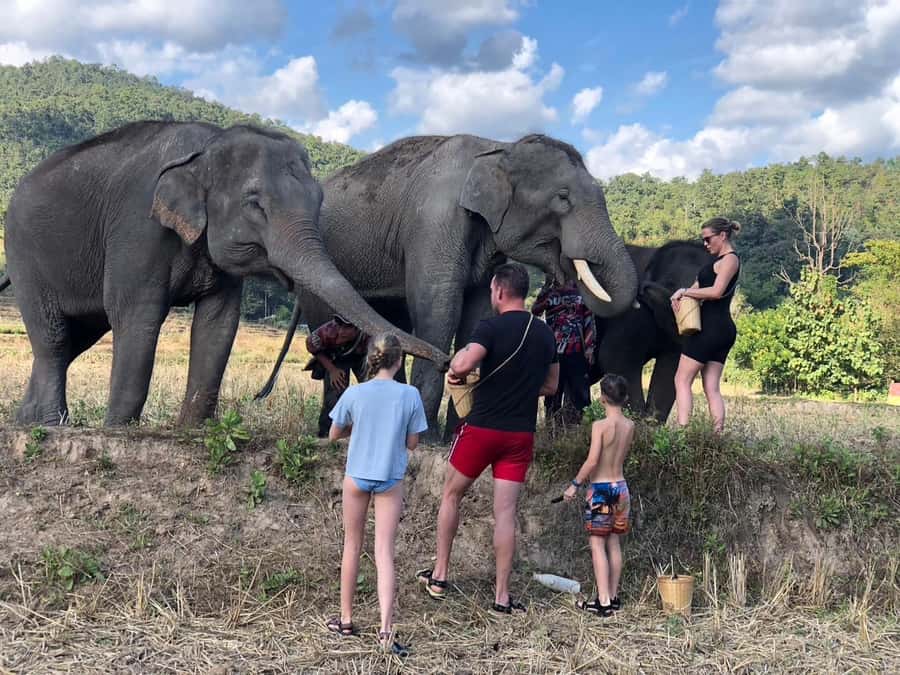
- Elephant sanctuary time focused on daily care, including feeding and bathing
- Sleeping right by a waterfall, then waking up to jungle views with breakfast
- Small group size (12 max), which helps the whole flow feel less chaotic
More ethical elephant sanctuaries around Chiang Mai, side by side
- Chiang Mai: Elephant Sanctuary, Waterfall & Bamboo Rafting
★ 4.9 · 9,160 reviews - Chiang Mai: Elephant Sanctuary & Waterfall Group Tour
★ 4.9 · 5,780 reviews - Chiang Mai: Elephant Sanctuary Feeding Program Half-Day Tour
★ 4.8 · 4,527 reviews - Chiang Mai: Elephant Sanctuary, Long Neck & Sticky Waterfall
★ 4.9 · 2,262 reviews
Getting picked up near 8:30 a.m. (and why timing matters)
This tour starts early from your Chiang Mai hotel—between 8:30 a.m. and 9:00 a.m. Pickups depend on how many groups are running that day, and if your hotel is farther out, you may wait a bit longer while they complete routes.
You’ll want to be ready at the hotel lobby roughly 10 minutes before the scheduled pickup time. Then look for a grey mini-bus from Temple of Elephants. Getting this right helps everything else go smoothly, because day one is packed: drive, rafting, trek, waterfalls, dinner, sleep.
Bamboo rafting on the Mae Wang River: the cool start you’ll remember
The first major activity is bamboo rafting on the Mae Wang River. It lasts about 30 minutes, and it’s paced more like a scenic adventure than a long grind. The point isn’t just the thrill. It’s the contrast—jungle and river right away, before the day gets more physical.
From the way this experience is described, you should expect to get splashed a bit. One of the fun factors that stands out in feedback is that the rafting feels refreshing at the start, and for some people it brings a bit of adrenaline. If you’re the type who likes to get moving early, this opening does a good job setting the mood.
The countryside drive: farms, rice fields, and hill tribe villages
Between rafting and the trekking day, you’ll take a scenic drive to the southwest of Chiang Mai. Along the way, you can spot local farms, hill tribe villages, and rice fields.
This drive is more than a transfer. It’s the slow warm-up to the real outdoors part of Chiang Mai. It gives your brain a chance to switch from city rhythm to country rhythm, so when the trek starts, it doesn’t feel like you got dropped into the deep end with no context.
Overnight treks and village homestays, if you have the days
Jungle trekking with a local Karen guide and waterfall stops
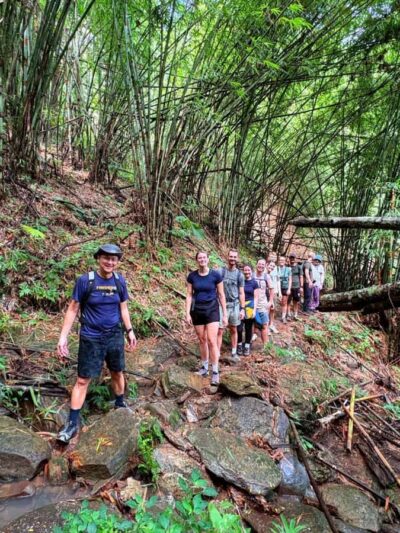
Day one transitions into a jungle trek with stops at several waterfalls. At those stops, you’ll get chances to take breaks and swim. Lunch happens during the trek as well, which matters because you’re building time on uneven paths while staying fed and hydrated.
What makes this trekking portion feel more personal is the way the guide shares practical nature info. During the hike, you’ll hear why caring for elephants matters, plus small jungle lessons—things like plants that can look different when you touch them and where birds in the region nest.
A real-world detail from the experience: communication can be a mix. One review notes that some staff members might not speak fluent English, but the team still manages by using a lot of nonverbal cues—hands and feet go a long way when you’re outside doing hands-on work.
Where the day ends: dinner and sleep beside a waterfall
Later on day one, you arrive at a local house in the middle of the jungle, on the bank of a river with an impressive waterfall nearby. You’ll get time to relax and settle in while your native guide prepares an authentic Thai meal for dinner.
Then you sleep there, and the next morning you start with breakfast with incredible views. This is one of the spots where the experience feels most different from standard day tours. Instead of racing back to town, you get that “we’re living in the rhythm of the jungle” feeling.
And yes—comfort is built in. The accommodation includes air conditioning, plus towels, a TV, a fridge, a kettle for tea and coffee, and an en-suite bathroom. So even though you’re far from the city, you’re not doing primitive camping.
Karen village visit: seeing daily life, not just a photo stop
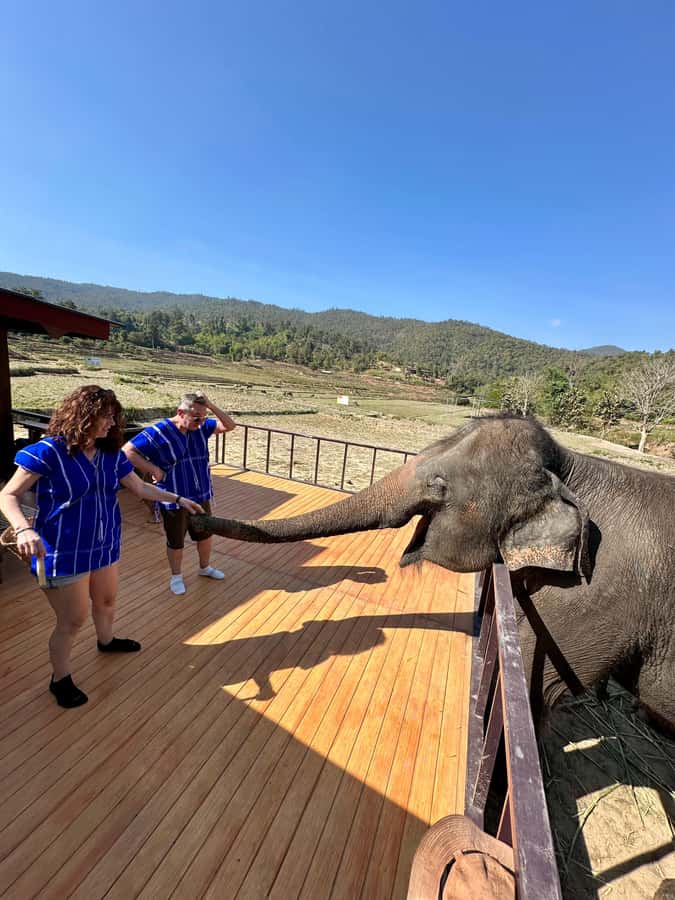
After breakfast, you’ll visit the Karen village. This is included in the itinerary, and it fits naturally between trekking and elephant time—like an in-between chapter that adds cultural context.
What you can take from this part is simple: you’re not only moving through nature. You’re also meeting communities connected to it. Even if your time there is limited, it helps keep the elephant story grounded in how people live and work in this region.
Elephant sanctuary day: feeding and bathing as part of daily care
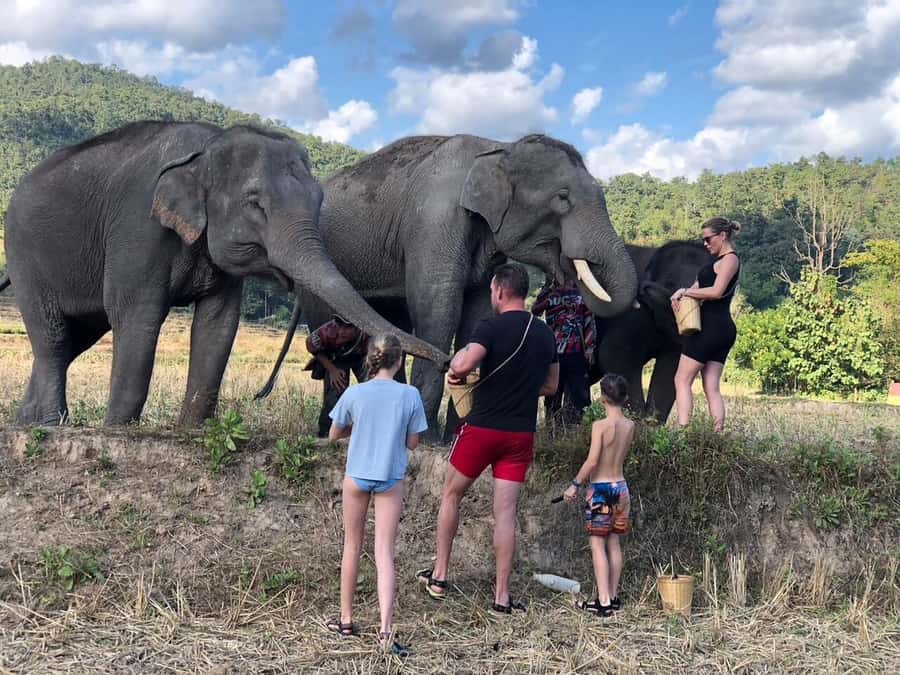
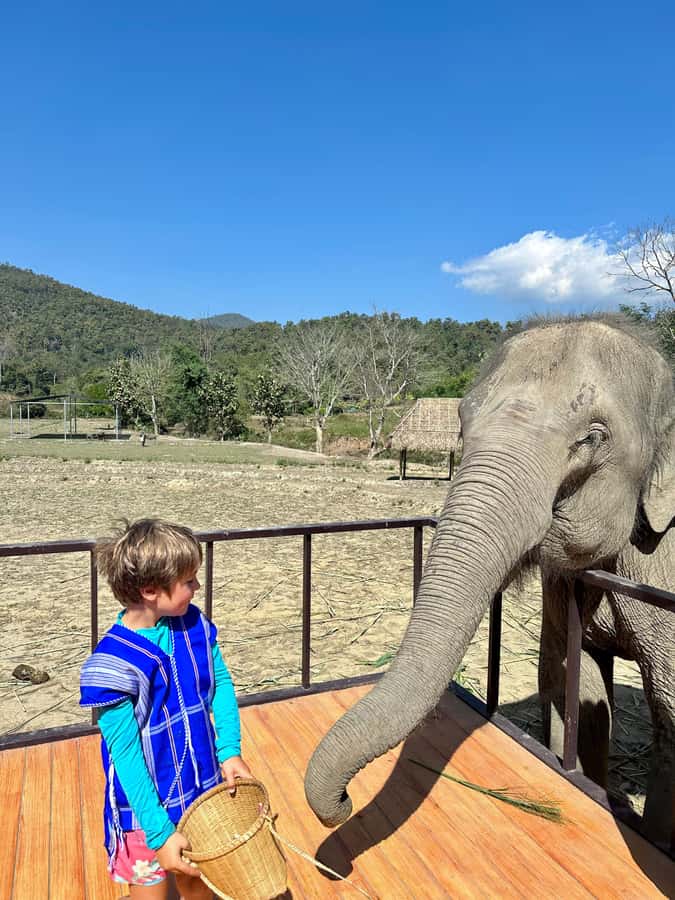
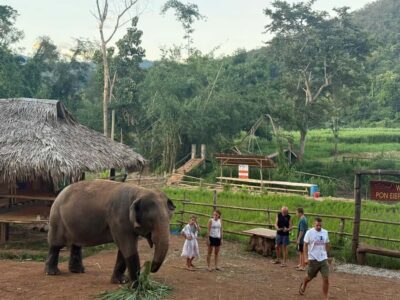
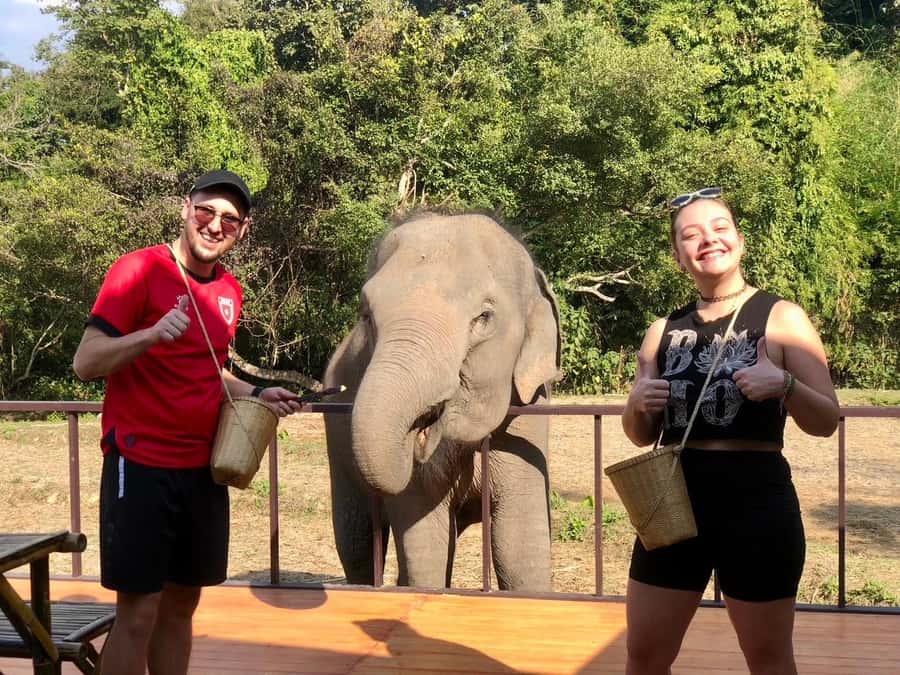
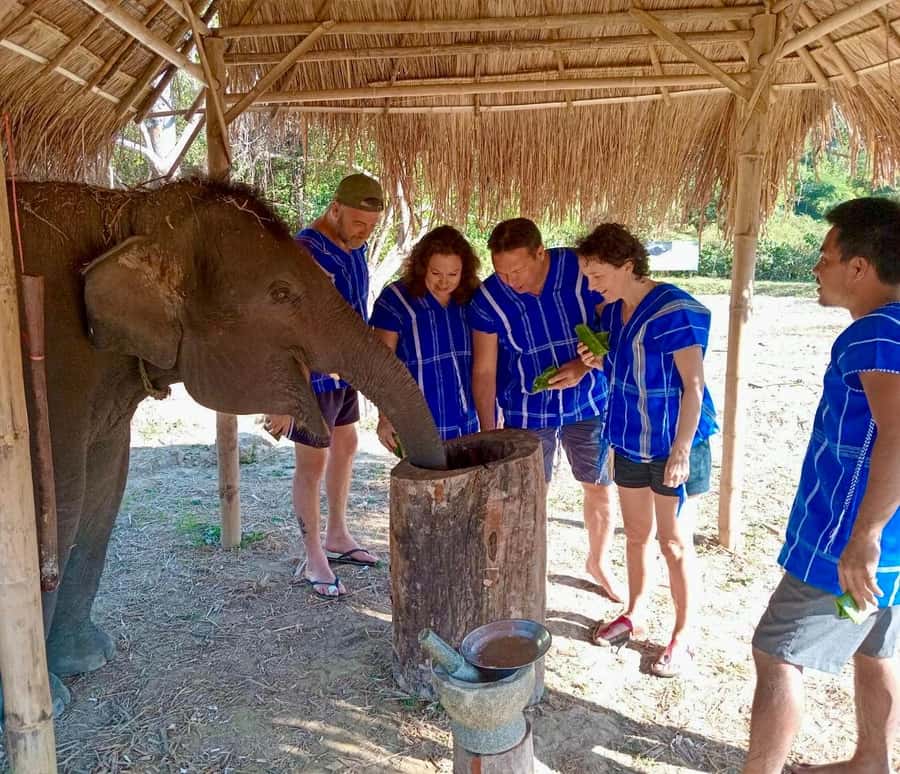
The heart of this trip is the elephant experience. You’ll head to the elephant camp and interact with the elephants—feeding them and observing them in their natural habitat. You’ll also have time that includes mud play and washing elephants in the river, based on experience descriptions.
This matters because it’s not framed as a short “pet the elephant and leave” moment. The bathing routine is specifically explained as something tied to the elephants’ wellbeing. The information provided highlights four angles:
- emotional connection (elephants are intelligent and sensitive),
- fun and play (they often splash and enjoy the water),
- learning (you hear why daily baths matter),
- natural environment (it happens in rivers or lagoons).
A guide name that comes up in feedback is Chin, described as fun and with a super positive attitude. That kind of energy matters here, because elephant time can feel emotional and intense. Having someone keep things upbeat while still focusing on care helps you stay present.
A quick reality check on “hands-on”
This is where you should be honest with yourself. You may get mud and water on you. If you’re very strict about cleanliness, you might find the experience less comfortable. One review specifically flags that this isn’t ideal for people who dislike dirt. If you can handle wet clothes and a little mess, the elephant day usually becomes the highlight.
Second-day trekking to more waterfalls (and another river stop)
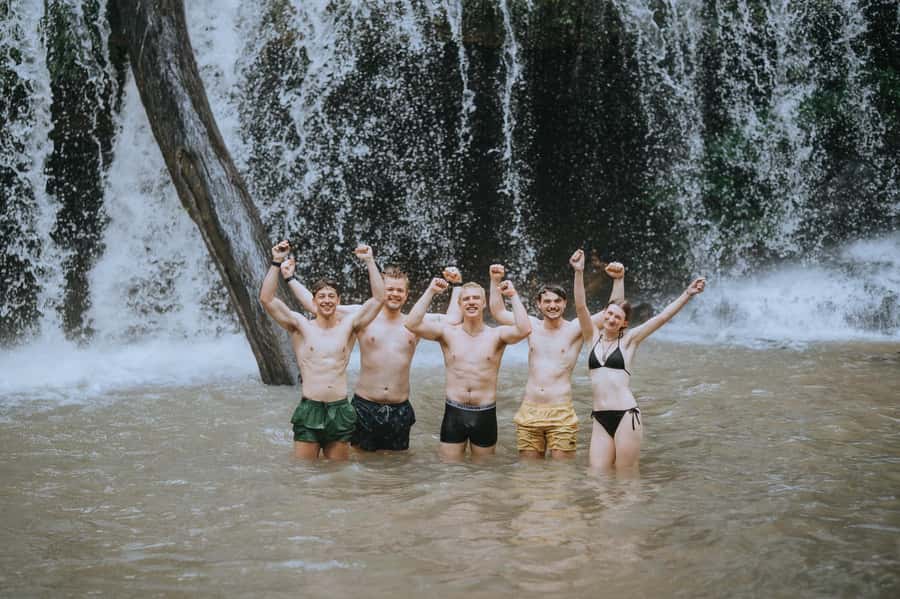
After the elephant camp, you continue the trek on day two with additional waterfall stops. One stop is at a river with a waterfall, and this is where you’ll spend time with the elephants and learn again about the role of daily baths.
Then you keep going to more waterfalls. There’s also a rest and eat stop at one of them. The timing here is designed so you end back in Chiang Mai with energy left for photos—lots of them—without feeling like you spent both days just walking.
Transport, meals, and what’s actually included
For $173 per person over 2 days, you’re not just paying for a ticket. You’re paying for a bundle of guided outdoor activities plus a real stay.
Included:
- Transport (pickup and getting around)
- Bamboo rafting (about 30 minutes)
- Guided trekking with an authentic local Karen guide
- Multiple waterfall stops, including sleep in front of a waterfall
- Elephant feeding and time observing elephants
- Karen village visit
- Accommodation with air conditioning and en-suite bathroom
- Meals: 1 breakfast, 1 dinner, and 1–2 lunches
Not included:
- Drinks (so plan for water and any sodas/juices you want)
This is a key value point: the price folds in transport, guiding, activities, and meals. If you were to book rafting, elephant interactions, trekking guiding, and a jungle overnight separately, the total usually climbs fast.
Price and value: what you’re really paying for
At $173 for two days, the best way to judge value is to count what’s wrapped together:
- rafting + trekking on different terrain,
- waterfall time with swimming opportunities,
- elephant sanctuary care time (feeding and bathing),
- a Karen village visit,
- and a night in a place that’s actually in the jungle setting—without sacrificing basic comfort thanks to AC and an en-suite bathroom.
Where it may not be “great value” is if you want only one highlight and nothing else. This tour is built as a full package: river, jungle, culture, elephants, then more river and waterfalls. If you love variety, that’s a plus. If you want a single activity day, you may feel it’s too much.
Who this tour fits best (and who should skip it)
This trip isn’t for everyone, and the limits are clear. It’s not suitable for:
- children under 5 years,
- pregnant women,
- people with heart problems,
- wheelchair users,
- people with low level of fitness,
- babies under 1 year,
- people over 95 years,
- people over 70 years.
If you’re generally healthy and comfortable walking on uneven jungle paths, you’ll likely handle it. The main personal check is this: you should feel okay with outdoor time, possible mud, and swimming at waterfalls.
Guide energy and communication: Chin, plus the team
Two-day tours live and die by their guides. In feedback, Chin gets praised for being fun and upbeat, with a positive attitude that helps keep momentum during the hike and transitions between activities.
You’ll also work with a Karen guide during trekking. And language support can be practical rather than perfect. One review notes that some guides may not have strong English, but communication still happens through hands-on teaching and nonverbal cues. If you’re patient and curious, that’s usually not a problem.
Practical tips so you enjoy the rafting, trekking, and bathing
Because the itinerary includes bamboo rafting, waterfall swimming, and elephant bathing/mud play, you should assume you’ll be in wet-and-muddy conditions at times. So plan with that mindset:
- set expectations for getting wet,
- bring a plan for keeping essentials reasonably dry,
- and wear something you don’t mind after a day in the river and jungle.
If you’re the type who hates any mess, this is the one point where you may feel friction.
Should you book this Chiang Mai tour with elephants, rafting, and waterfalls?
If you want a true two-day Chiang Mai nature break—river adventure first, then waterfalls and trekking, then hands-on elephant care—this is a strong option. The mix of activities, the small group size, and the fact you sleep near a waterfall (with real comfort like AC and an en-suite bathroom) makes it feel like more than a checklist tour.
I’d skip it if you:
- need a low-fitness outing,
- can’t do wet and muddy conditions,
- or fall into the listed “not suitable” categories.
If your dream is elephants plus jungle time, and you’re okay getting a little dirty while you’re there, I think this is worth booking.
FAQ
What time is pickup in Chiang Mai?
Pickup is between 8:30 a.m. and 9:00 a.m., and it can vary depending on how many groups are scheduled that day. You should wait in the hotel lobby about 10 minutes before pickup.
How long is the bamboo rafting portion?
The bamboo rafting on the Mae Wang River lasts about 30 minutes.
Can I swim during the trek?
Yes. During the jungle trek, you’ll stop at several waterfalls where you can swim and take breaks.
What meals are included in the price?
You’ll get 1 breakfast, 1 dinner, and 1–2 lunches included.
Are drinks included?
No. Drinks are not included in the price.
How large is the group?
It’s a small group, limited to 12 participants.
Where will I sleep on the first day?
You’ll sleep in accommodation in a local house in the jungle, on the bank of a river, with a waterfall nearby. The room includes air conditioning and an en-suite bathroom.
What elephant activities are included?
You’ll visit the elephant camp, feed the elephants, observe them, visit a Karen village, and experience an elephant bathing routine. Mud play and washing in the river are part of the elephant day experience.
Is the guide English-speaking?
Yes, there is a live tour guide and the language provided is English. You’ll also have a Karen guide on the trekking portion.
More Tour Reviews in Chiang Mai
- Half-Day Thai Cooking Class at Organic Farm in Chiang Mai★ 5.0 · 19,087 reviews
- Chiang Mai: Elephant Sanctuary, Waterfall & Bamboo Rafting★ 4.9 · 9,160 reviews
- Chiang Mai: Doi Inthanon National Park Eco-Friendly Tour★ 4.6 · 6,667 reviews
- Chiang Mai: Elephant Sanctuary & Waterfall Group Tour★ 4.9 · 5,780 reviews
- Chiang Mai: Chiang Rai Temples, Karen Tribe and Hot Springs★ 4.7 · 5,401 reviews
More Overnight Treks and Homestays
- Chiang Mai: 2-Day Jungle Trek with Elephant Farm & Raft Ride★ 4.7 · 881 reviews
- Chiang Mai 2-Day: Good Morning Elephant & Overnight Homestay★ 4.9 · 224 reviews
- Chiang Mai: 2-Days Jungle Trek, Waterfalls and Karen Village★ 4.8 · 103 reviews
- Chiang Mai 2-Day: Trekking, Tubing & Elephant Observation★ 4.9 · 95 reviews
- Private Tour: 2-Day Authentic Hill Tribe Villages and Karen Hill Tribe Homestay★ 5.0 · 40 reviews
More Elephant Sanctuaries Near Chiang Mai
- Chiang Mai: Elephant Sanctuary, Waterfall & Bamboo Rafting★ 4.9 · 9,160 reviews
- Chiang Mai: Elephant Sanctuary & Waterfall Group Tour★ 4.9 · 5,780 reviews
- Chiang Mai: Elephant Sanctuary Feeding Program Half-Day Tour★ 4.8 · 4,527 reviews
- Chiang Mai: Elephant Sanctuary, Long Neck & Sticky Waterfall★ 4.9 · 2,262 reviews
- From Chiang Mai: Elephant Care Program and Nursery Tour★ 4.8 · 1,899 reviews
Fresh off the pile: Chiang Mai tours we have just written up



Ethical Elephant Sanctuaries, compared.
 ★ 4.9Elephant Sanctuary, Waterfall & Bamboo RaftingFrom $609,160 reviews
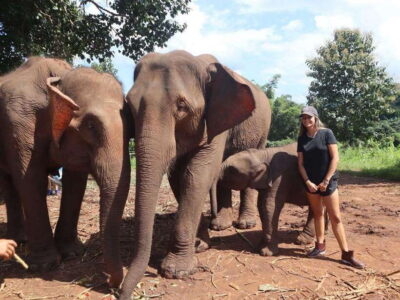 ★ 4.9Elephant Sanctuary & Waterfall Group TourFrom $505,780 reviews
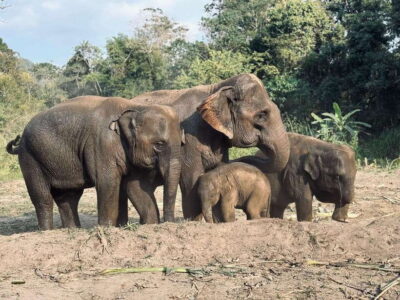 ★ 4.8Elephant Sanctuary Feeding Program Half-Day TourFrom $274,527 reviews
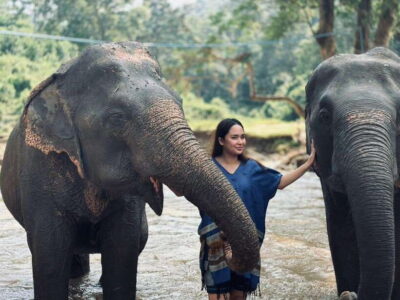 ★ 4.9Elephant Sanctuary, Long Neck & Sticky WaterfallFrom $632,262 reviews
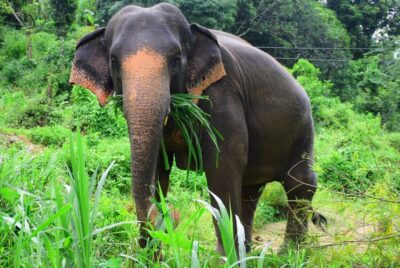 ★ 4.8Elephant Care Program and Nursery TourFrom $531,899 reviews
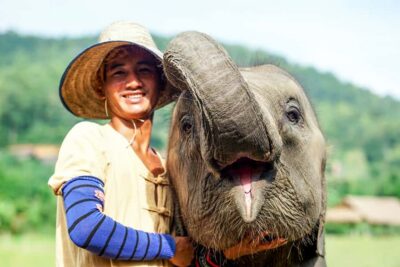 ★ 4.9Small Group Ethical Elephant Sanctuary TourFrom $771,572 reviews
 ★ 5.0Half Day Visit Smile Elephant Chiang MaiFrom $501,216 reviews
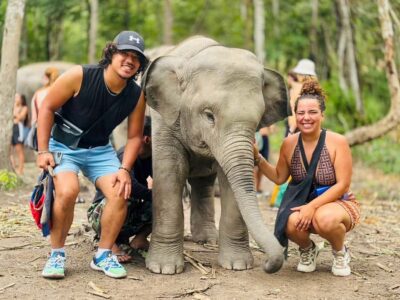 ★ 4.9Doi Inthanon and Elephant Sanctuary TourFrom $811,091 reviews
Browse the lists this tour appears in