Reviewed · CHIANG MAI COOKING CLASSES
Chiang Mai: Asia Scenic Thai Cooking School
A market morning in Chiang Mai turns into dinner in front of you. I like that this Thai cooking school pairs ingredient shopping with real hands-on lessons, and that you get to choose the dishes you cook. I also love the small-group vibe, which means you’re not stuck watching from the sidelines. One thing to plan around: the day can feel a bit time-pinched on the transfers between the market and the farm, so if you want a long wander, you’ll want to pace it.
In practice, I like the structure: you start with a local market and a stop at an organic garden or farm, then move into an open-air kitchen to cook at your own station. I also like the way guides translate Thai flavor into steps you can repeat later, with standouts in the staff line-up such as Noon, Thai (Thaï), Olive, Tommy, Nan, Dev, Sue, Marium, Nami, and Kade mentioned in past classes. A possible drawback is simple: you won’t have unlimited flexibility on what you cook, because you pick five dishes from a set list, and the rest of the menu comes from the class plan.
If you’re trying to learn Thai cooking without buying a pile of random ingredients and hoping, this class gives you a focused path. At around $41 for roughly 270 minutes, it’s strong value for the time, the meal you make, the coffee/tea, and the take-home recipe book.
In This Review
- Key things that make this Thai cooking school worth your time
- Where the day starts: downtown pickup and a simple flow
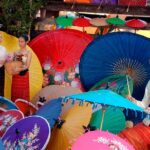
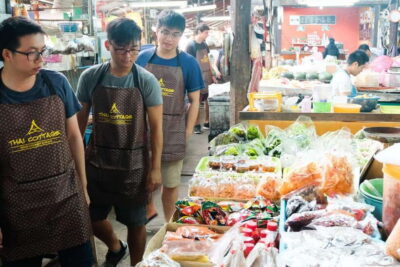
- The market tour: learning Thai flavor starts with your basket
- The organic farm/garden stop: why herbs matter in Thai cooking
- The open-air kitchen: where the class turns practical
- Cooking time: you choose five dishes from the menu
- Sticky rice: the hands-off lesson that still sticks
- The meal itself: you eat what you cooked, in a calm setting
- Guides: the human factor that makes or breaks cooking lessons
- Price and value: $41 for a full cooking day that you can repeat
- Who this suits best (and who might want something else)
- Should you book this Chiang Mai cooking school?
- FAQ
- What is the duration of the Chiang Mai cooking class?
- How much does it cost?
- Is pickup included?
- What time do I need to be ready for pickup?
- How big is the group?
- What language is the class taught in?
- Do I choose what dishes I cook?
- Which dishes are available to choose from?
- What’s included besides the cooking?
- Is sticky rice included?
- Is the class suitable for young children?
Key things that make this Thai cooking school worth your time
- Market-first learning: You pick real ingredients before you touch a pan.
- Organic farm and herb spotting: You see where key Thai flavors come from.
- Small group coaching (up to 10): More chances to ask why a step works.
- Choose your dishes: You cook five dishes from an official menu (plus sticky rice viewing).
- Open-air kitchen: Food-making in a relaxed, less “classroom” setting.
- Take-home cookbook: You leave with recipes for your exact choices.
Pick your Thai cooking class: farm kitchens and market runs
- Half-Day Thai Cooking Class at Organic Farm in Chiang Mai
★ 5.0 · 19,087 reviews - Chiang Mai: Cooking Class, Market & Thai Herbs Garden Tour
★ 4.9 · 4,824 reviews - Chiang Mai: Authentic Cooking Class with Market & Farm Visit
★ 4.9 · 4,546 reviews - Thai and Akha Cooking Class in Chiang Mai
★ 5.0 · 4,358 reviews
Where the day starts: downtown pickup and a simple flow
The day begins with a complimentary pickup for hotels within a 3 km radius of Chiang Mai’s downtown. That matters because you avoid the “how do we get there?” headache that can sink cooking classes before they even start. Plan to meet your guide at your hotel lobby at least 10 minutes early—arrive late and you can get marked as a no-show.
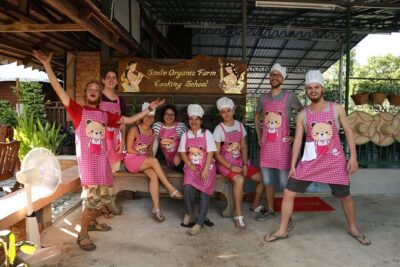
The small group size (limited to 10 participants) is a big deal for how the day feels. In a group that size, guides can usually correct technique in real time—like how to stir curry paste or manage heat for stir-fried dishes—without turning everything into a lecture.
And the language support is practical: classes run with an English-speaking guide, plus Thai. Even if your Thai is zero (mine is), the translation support makes it easier to follow steps and ingredient names.
The market tour: learning Thai flavor starts with your basket
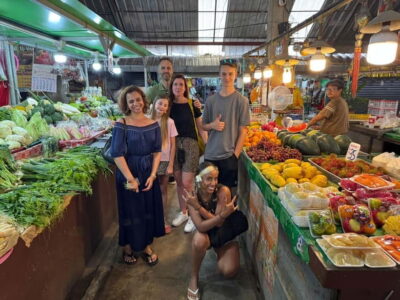
You’ll begin with a market visit where you hand-pick ingredients for the dishes you plan to cook. This is one of the most valuable parts of the day because Thai cooking is ingredient-driven. If you guess wrong on something as basic as a chili type, the dish can still be good—but it won’t taste like the one you’re learning.
Here’s what you’re really training your eye for during the market:
- Aromatics (the start of flavor): herbs, leaves, and fragrant roots that give Thai dishes their “first bite” identity.
- Fresh produce: the crunch and balance in stir-fries and salads.
- Chili and spice choices: Thai cooking relies on heat plus fragrance, not just one or the other.
- Sauce and paste components: many dishes hinge on a sauce base or curry paste building block.
From the way guides described their teaching in past classes, you’re not just walking through the market—you’re getting guided meaning. In multiple classes, the guide’s explanations were the highlight, whether it was the humor and energy mentioned with Tommy or the clarity and friendliness described with hosts like Nan, Olive, and Sue.
One note: one past class feedback pointed out that the trip from market to the farm could feel like a bit of a transfer time crunch. If you’re the type who loves roaming markets slowly, treat this as a learning tour first. You can always schedule a separate free market stroll on another day in Chiang Mai.
The organic farm/garden stop: why herbs matter in Thai cooking
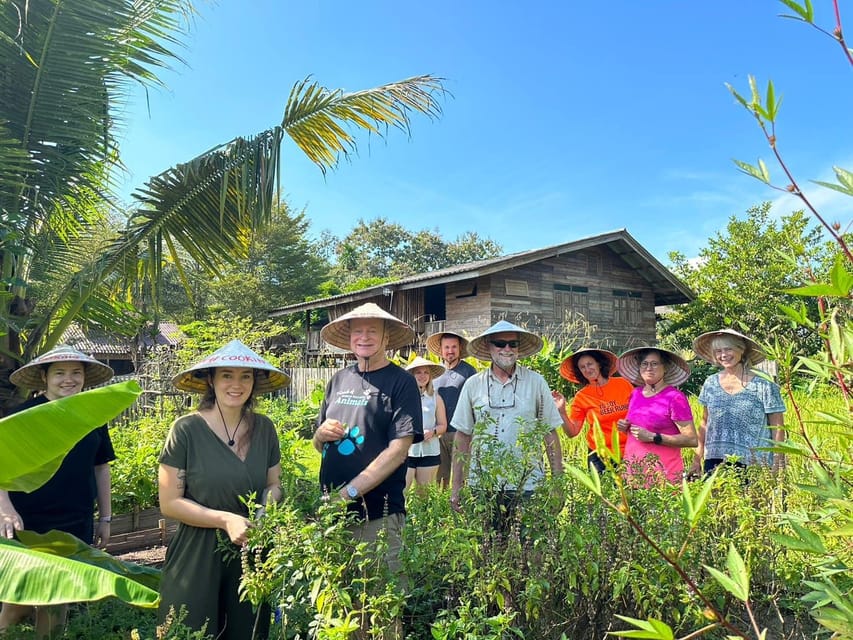
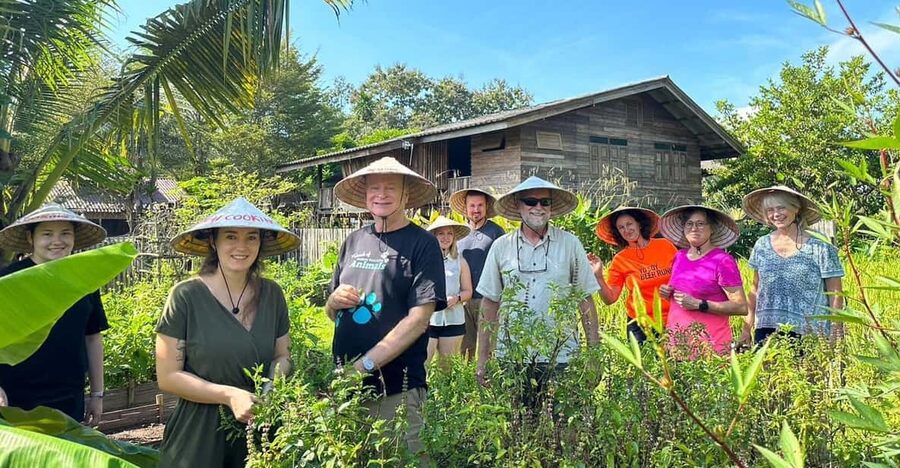
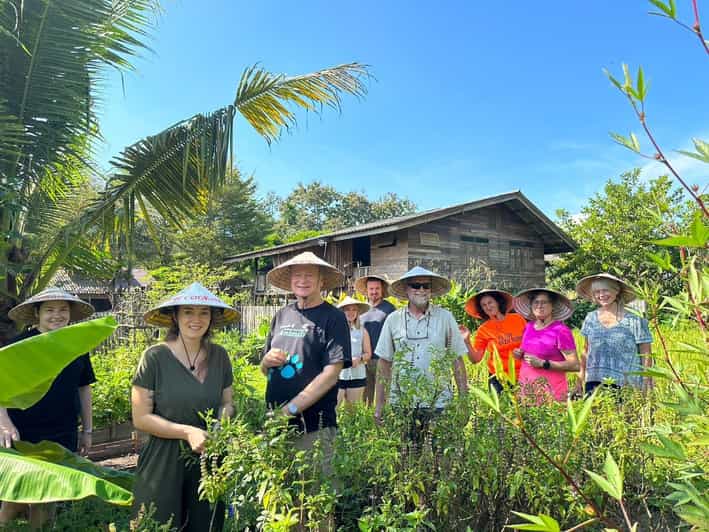
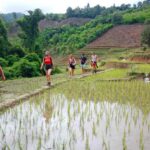
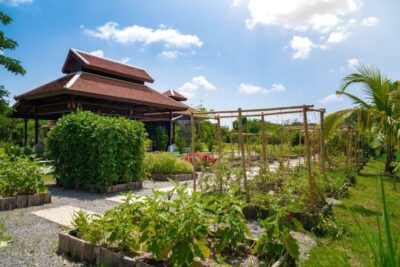
Next comes the organic kitchen garden or organic farm stop. You’ll visit and taste some herbs, and you’ll see ingredients growing in a way that explains why Thai cooks care so much about freshness.
This part clicks if you want your cooking to taste alive instead of “staple-based.” A lot of Thai recipes depend on herbs for aroma—so when you understand what you’re working with, you’re more likely to recreate the dish well at home.
You’ll also notice the class uses this farm stop to connect ingredient to technique. In past farm-focused versions of the experience, people highlighted how the instructor explained why each ingredient mattered for flavor balance and how substitutions can change the final dish. That kind of teachable logic is what helps you cook beyond memorizing recipes.
If you’re traveling in a hot season, remember: farm walking can be warm. Bring a light layer if you get cold in air-conditioned vehicles, and wear shoes you don’t mind getting slightly dusty.
Nothing jumping out yet? More Chiang Mai trips are just down the page
The open-air kitchen: where the class turns practical
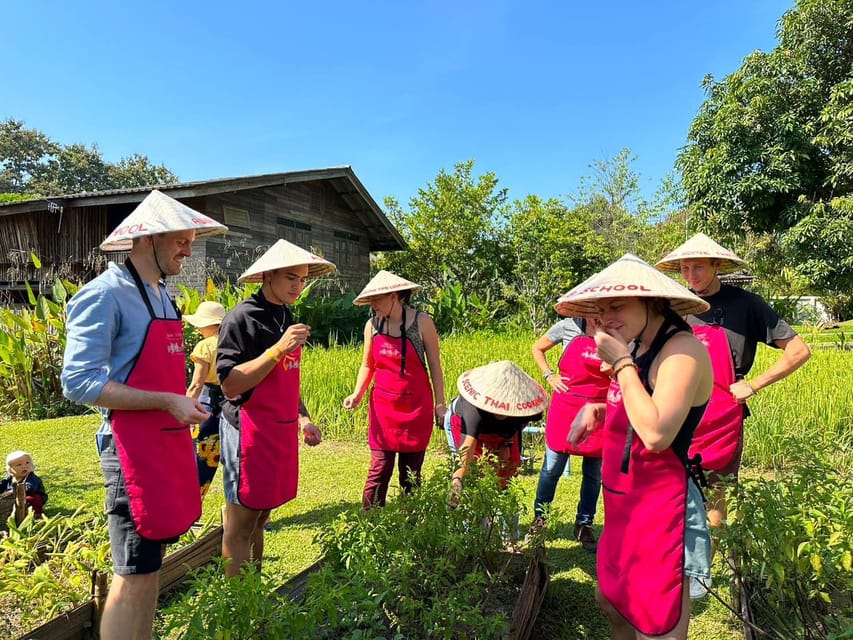
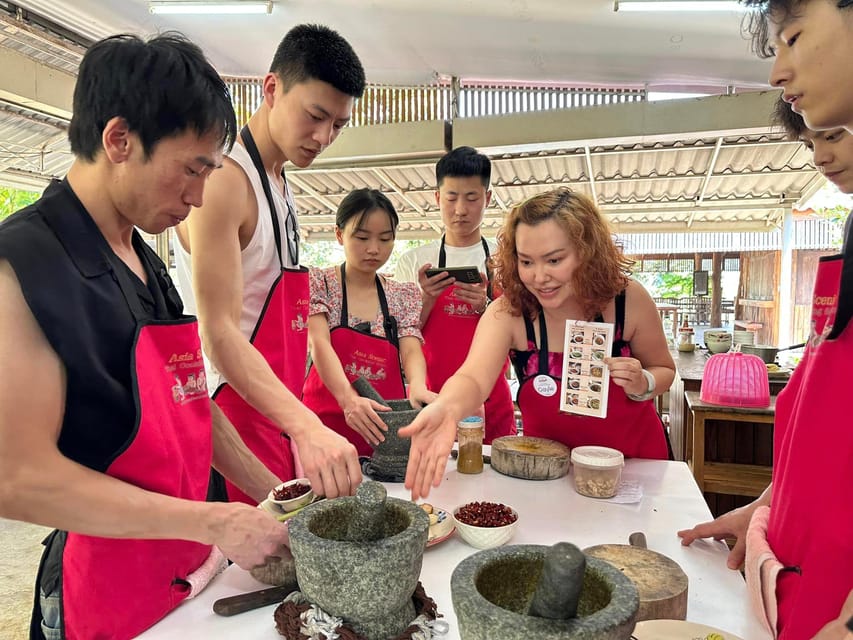
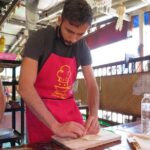
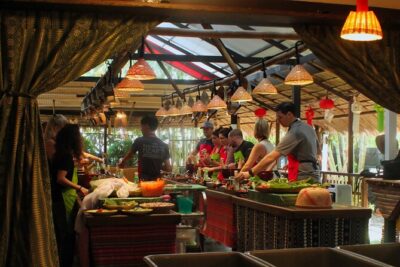
After the market and farm/garden stops, you move to an open-air kitchen with individual cooking stations. This format works because it keeps you close to the action and gives you space to cook your portion instead of crowding around one shared setup.
You’ll cook enough food to feel like the day is about eating as much as learning. The included welcome snack or fruit in season helps you settle in without arriving hungry.
Coffee and herbal tea are also included, which sounds small, but it changes the rhythm. You get breaks that feel like part of the day rather than a pause between steps.
And the staff guidance seems to be a consistent strength. Past classes praised instructors for being:
- friendly and encouraging,
- funny without losing control,
- and good at explaining the “why,” not just the “do this.”
If you have dietary needs, read this as a plus. One class description specifically mentioned recipe adaptation for vegan and vegetarian preferences.
Cooking time: you choose five dishes from the menu
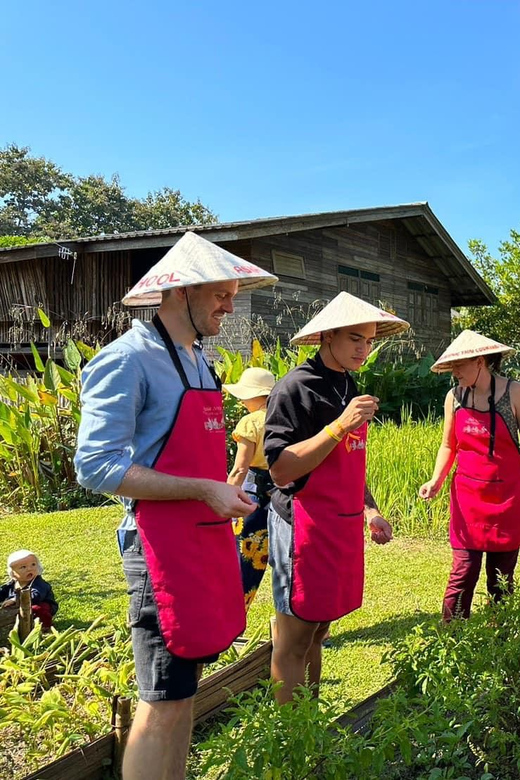
The class is built around a selection system. You can choose five dishes from the listed options, and you’ll learn to cook them and eat what you make. That choice is part of the value. You’re not just paying to cook what the school wants; you’re paying to cook what you actually crave.
Here are the dish categories you can choose from:
- Stir-fried: Pad Thai, Pad See Uw, Hot Basil Stir Fried, Cashewnut With Chicken
- Soup: Coconut Milk Soup, Tom Yum, Tom Sab
- Curry paste: Red, Green, Massaman, Panang, Khaw Soi
- Curry: Red Curry, Green Curry, Massaman Curry, Panang Curry, Khaw Soi
- Spring rolls: Spring Rolls
Most classes of this length focus tightly on getting you through technique efficiently. In this experience, you’ll learn six traditional dishes and also watch how sticky rice is cooked. That means even if sticky rice doesn’t appear in your chosen five, you’ll still learn the method through observation.
One small practical tip: when you choose your dishes, think about variety. Pick a mix that covers:
- one noodle/stir-fry style,
- one soup or curry,
- and something crunchy or wrapping-related (like spring rolls).
That gives you a “toolkit” of flavors you can repeat later.
Sticky rice: the hands-off lesson that still sticks
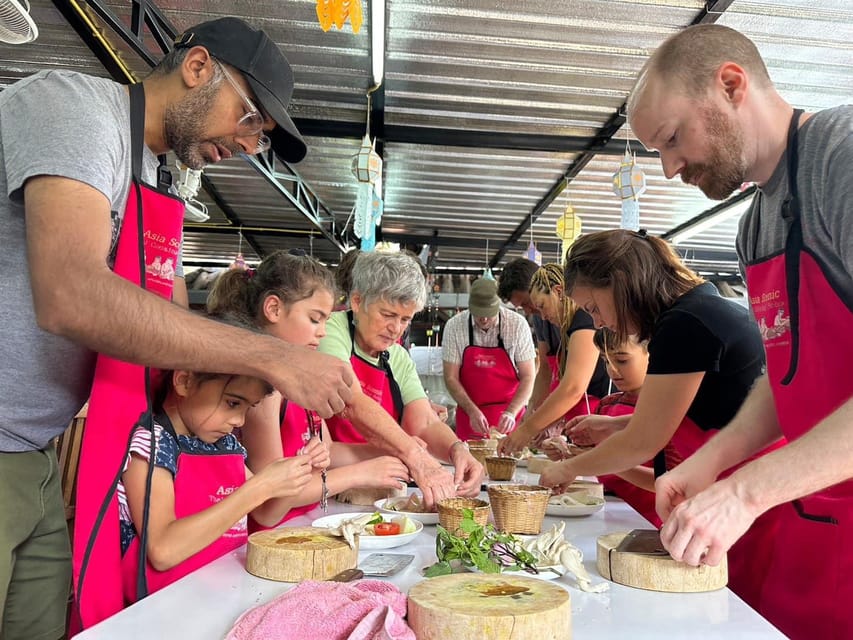
Thai sticky rice is its own skill set, and it’s the kind of dish people often mess up at home because they don’t know what step matters. In this cooking school experience, you’ll watch how sticky rice is cooked, even as you focus on your chosen dishes.
Why this matters: sticky rice isn’t just about ingredients. It’s timing and texture management. Watching it in a real Thai setup helps you understand what you’re aiming for when you try again at home.
If you plan to cook Thai later, this is the small skill that can make everything feel more authentic.
The meal itself: you eat what you cooked, in a calm setting
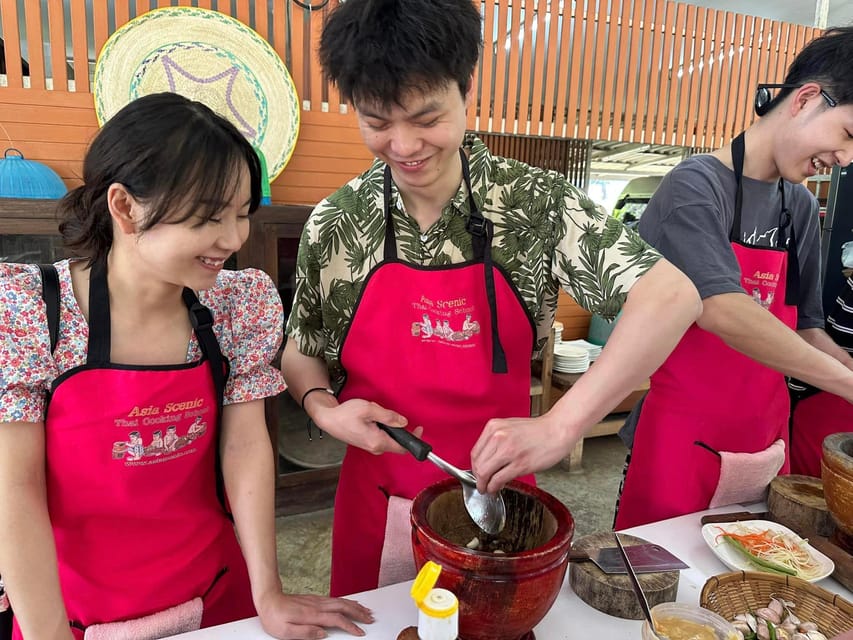
The payoff is eating your handmade meal in the relaxing atmosphere of the kitchen. This is where you confirm whether the instructions made sense. When your food tastes right, you trust the method. When it’s slightly off, you can ask what caused it and how to correct it next time.
Previous participants praised the food as delicious and satisfying—so you should expect a real lunch or meal, not tiny tasting portions.
Some classes also noted extra comfort details during breaks, like hammocks and a chilled pace. That kind of downtime matters because cooking needs a breather. If you’re moving too fast, your technique suffers.
Guides: the human factor that makes or breaks cooking lessons
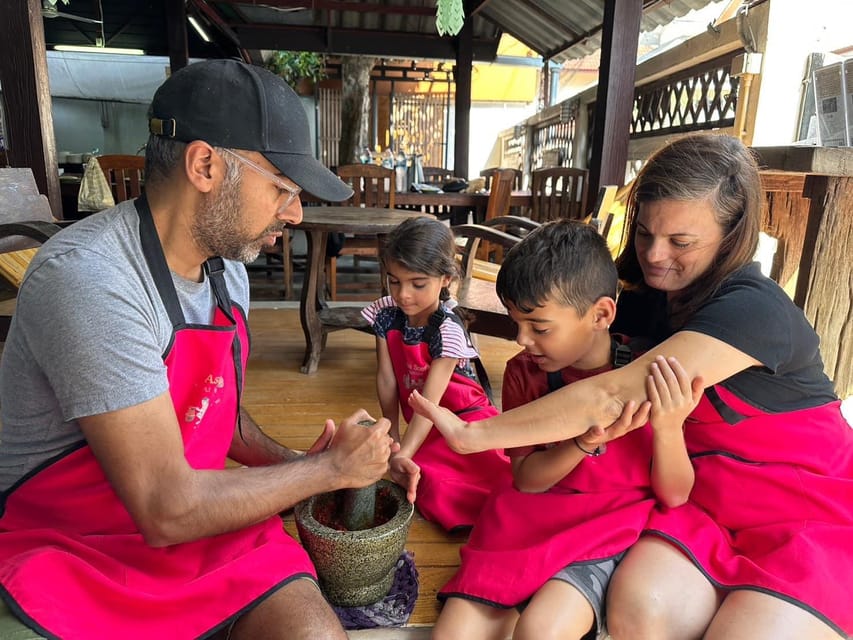
In a good Thai cooking class, the recipe is only half the story. The other half is the guide—how they explain steps, manage the pace, and keep the room comfortable.
Past experiences for this school included praise for multiple guides by name, including:
- Noon (described as highly professional and a true masterclass teacher),
- Marium (friendly and well-spoken),
- Olive (knowledgeable with a strong teaching presence),
- Tommy (hilarious, great at both teaching and energy),
- Nan (5-star friendliness, humor, and know-how),
- Dev (helpful with a sense of humor),
- Sue (funny and encouraging across mixed skill levels),
- Kade (clear explanations, ingredient importance, and solid pacing).
You don’t need the guide to be theatrical to enjoy the class, but you do benefit from someone who can keep instructions simple while still being specific. That seems to be the recurring theme.
Price and value: $41 for a full cooking day that you can repeat
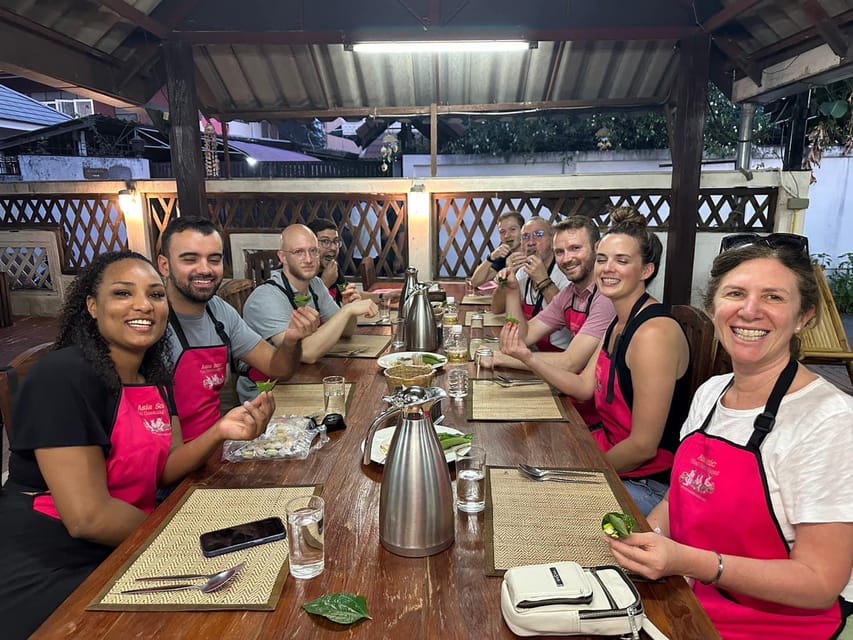
At about $41 per person for roughly 6 hours, this is one of those prices that feels fair because you’re paying for multiple things at once:
- market learning time,
- organic farm/garden access and herb tasting,
- a hands-on cooking station,
- ingredients for your selected dishes,
- coffee and herbal tea,
- and a recipe book you take home.
The recipe book is a big value multiplier. Many cooking classes give you vague recollections and a blurry phone photo. Here, you leave with a cookbook that matches your dish choices, so you can cook again without reverse-engineering the process.
Is it perfect value for everyone? Not if you’re only interested in eating. This is best if you want to learn technique and ingredients.
Also, remember the dish selection system. If your must-cook list includes a dish that isn’t on the menu for your choice, you might not get it this time.
Who this suits best (and who might want something else)
This experience fits well if you:
- want a practical Chiang Mai Thai cooking class with market and farm context,
- like structured learning but still want a fun vibe,
- cook at home and want repeatable recipes,
- travel solo or with a partner and want small-group attention,
- have dietary preferences like vegan or vegetarian and want recipes adjusted.
It may feel less ideal if you:
- want a very long, free-form market wander (the transfer timing can be tighter than some people expect),
- only want a purely luxury restaurant meal with no teaching,
- are traveling with very young children (it’s not suitable for children under 4).
Should you book this Chiang Mai cooking school?
I’d book it if your goal is simple: learn Thai cooking in a way you can redo at home. The market + organic herb step gives the flavors a foundation, and the open-air kitchen + individual stations makes it hands-on, not passive.
Before you book, pick your five dishes with intention. Choose ones that teach different techniques (stir-fry, soup or curry, something crunchy or wrapping-based). Then you’ll get the most value from the recipe book when you’re back in your own kitchen.
If you want, tell me your dietary preferences and which Thai dishes you’re craving most (like Pad Thai, Tom Yum, Massaman curry, or Khaw Soi). I can suggest a smart dish mix from the available menu so your class output covers the widest range of Thai flavors.
FAQ
What is the duration of the Chiang Mai cooking class?
It runs about 270 minutes, around 6 hours.
How much does it cost?
The price listed is $41 per person.
Is pickup included?
Yes. Pickup is included for hotels within a 3 km radius of Chiang Mai downtown.
What time do I need to be ready for pickup?
You should meet your guide at least 10 minutes before the scheduled pickup time. If you arrive more than 10 minutes late, you may be considered a no-show.
How big is the group?
It’s a small group limited to 10 participants.
What language is the class taught in?
The live tour guide is available in English and Thai.
Do I choose what dishes I cook?
Yes. You can choose 5 dishes from the available list, and you’ll cook and eat those dishes.
Which dishes are available to choose from?
Options include Pad Thai, Pad See Uw, Hot Basil Stir Fried, Cashewnut With Chicken, Coconut Milk Soup, Tom Yum, Tom Sab, Red/Green/Massaman/Panang/Khaw Soi curry paste and curries, and Spring Rolls.
What’s included besides the cooking?
You’ll get transportation within the 3 km radius, organic herb/garden tasting, individual cooking stations, a welcome snack or fruit, coffee and herbal tea, and a cookbook with your class.
Is sticky rice included?
You’ll watch how sticky rice is cooked as part of the experience.
Is the class suitable for young children?
No. It’s not suitable for children under 4 years old.
More Cooking Classes in Chiang Mai
- Half-Day Thai Cooking Class at Organic Farm in Chiang Mai★ 5.0 · 19,087 reviews
- Chiang Mai: Cooking Class, Market & Thai Herbs Garden Tour★ 4.9 · 4,824 reviews
- Chiang Mai: Authentic Cooking Class with Market & Farm Visit★ 4.9 · 4,546 reviews
- Thai and Akha Cooking Class in Chiang Mai★ 5.0 · 4,358 reviews
- Chiang Mai: Cooking Class with Market and Pickup★ 4.9 · 1,365 reviews
More Tour Reviews in Chiang Mai
- Half-Day Thai Cooking Class at Organic Farm in Chiang Mai★ 5.0 · 19,087 reviews
- Chiang Mai: Elephant Sanctuary, Waterfall & Bamboo Rafting★ 4.9 · 9,160 reviews
- Chiang Mai: Doi Inthanon National Park Eco-Friendly Tour★ 4.6 · 6,667 reviews
- Chiang Mai: Elephant Sanctuary & Waterfall Group Tour★ 4.9 · 5,780 reviews
- Chiang Mai: Chiang Rai Temples, Karen Tribe and Hot Springs★ 4.7 · 5,401 reviews
More Chiang Mai Cooking Classes
- Half-Day Thai Cooking Class at Organic Farm in Chiang Mai★ 5.0 · 19,087 reviews
- Chiang Mai: Cooking Class, Market & Thai Herbs Garden Tour★ 4.9 · 4,824 reviews
- Chiang Mai: Authentic Cooking Class with Market & Farm Visit★ 4.9 · 4,546 reviews
- Thai and Akha Cooking Class in Chiang Mai★ 5.0 · 4,358 reviews
- Chiang Mai: Cooking Class with Market and Pickup★ 4.9 · 1,365 reviews
Fresh off the pile: Chiang Mai tours we have just written up

Chiang Mai Cooking Classes, compared.
 ★ 5.0Half-Day Thai Cooking Class at Organic Farm in Chiang MaiFrom $2919,087 reviews
 ★ 4.9Cooking Class, Market & Thai Herbs Garden TourFrom $314,824 reviews
 ★ 4.9Authentic Cooking Class with Market & Farm VisitFrom $344,546 reviews
 ★ 5.0Thai and Akha Cooking Class in Chiang MaiFrom $424,358 reviews
 ★ 4.9Cooking Class with Market and PickupFrom $251,365 reviews
 ★ 4.9Cooking Class with Organic Farm at Mama NoiFrom $321,151 reviews
 ★ 5.0Full Day Thai Cooking at Farm (Chiang Mai)From $391,127 reviews
 ★ 4.9HALF-DAY COOKING COURSE at a Thai Cooking FarmFrom $28705 reviews
Browse the lists this tour appears in