
Reviewed · CHIANG MAI COOKING CLASSES
Chiang Mai: Evening Cooking Class and Local Market Visit
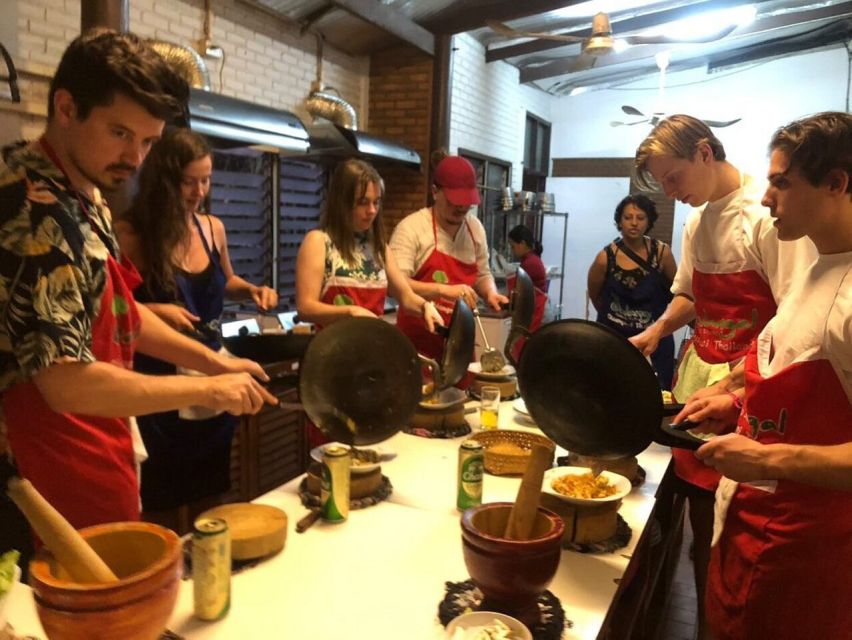
Fresh curry paste lessons are my kind of fun. This Chiang Mai evening class pairs market shopping with hands-on Thai cooking, ending with the meal you made. I especially like the way the instructors (often New, and Aoy shows up in many sessions) explain ingredients clearly, and the fact you leave with a recipe book PDF to cook at home. The main catch: you really need to come hungry, because the schedule is built around dinner timing and you’ll be eating what you cook.
You start with hotel pickup in central areas, then head out before the class gets busy. I like that the menu is flexible, with options for vegan, vegetarian, halal, and gluten-free needs (plus ingredient substitutions when needed). One consideration: if you’re sensitive to spicy food or unsure what you’ll pick, spend a few minutes thinking through your choices before class starts.
In This Review
- Key things I’d bet on (before you book)
- Hotel pickup, timing, and why the evening starts around 4 pm
- Market shopping and the organic garden walk (it’s more than a photo stop)
- Choosing your dishes: Pad Thai, Tom Yum, Som Tam, and curry paste work
- Stir-fry category examples
- Soup category examples
- Appetizer category examples
- Curry and curry paste category examples
- Dietary needs are handled in real ways
- Inside the air-conditioned kitchen: what you actually do at the stove
- Eating the results: dinner together, then take-home food and recipes
- Price and value: why $28 can feel like a bargain
- Transport coverage: where pickup is easy and where you might need a backup plan
- Who should pick this class, and who should skip it
- Should you book the Chiang Mai Evening Cooking Class with Market Visit?
- FAQ
- How long is the Chiang Mai evening cooking class?
- What time does pickup happen?
- What dishes will I cook?
- Is the class taught in English?
- Can vegetarians, vegans, or halal diners join?
- Do I get a recipe book?
- Is food included?
- Do I need to bring anything?
- What if someone in my group wants to observe instead of cook?
Key things I’d bet on (before you book)
- Hotel pickup and drop-off in central Chiang Mai makes it easy to fit into your evening
- Market + organic garden walk helps you understand where Thai herbs and veggies actually come from
- You choose your dishes from a wide list, including options like Pad Thai, Tom Yum, Som Tam, and Massaman curry
- Curry paste work is part of the learning, not just a shortcut version
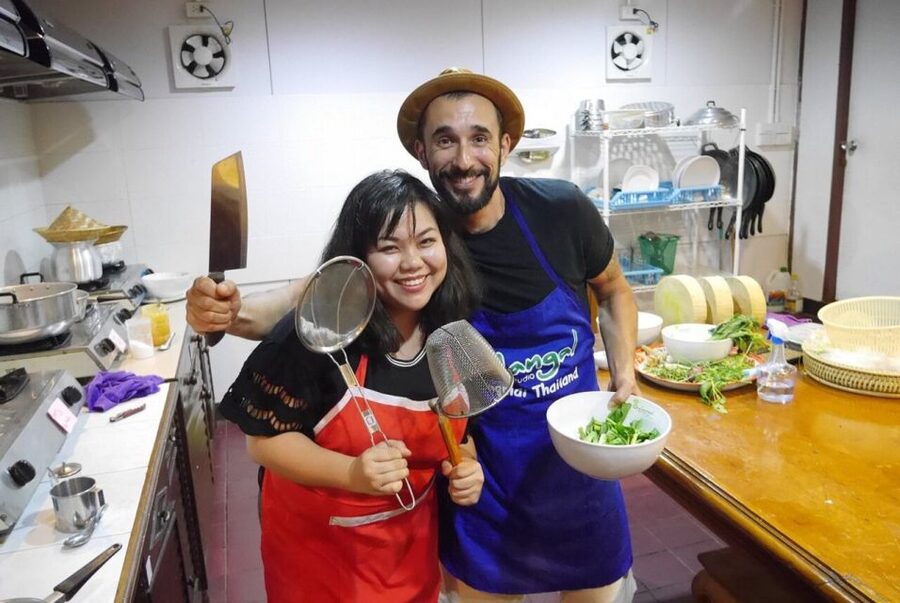
- Clear, step-by-step English instruction keeps first-timers comfortable at the stove
- A recipe book PDF helps you recreate what you cooked after you get home
Pick your Thai cooking class: farm kitchens and market runs
- Half-Day Thai Cooking Class at Organic Farm in Chiang Mai
★ 5.0 · 19,087 reviews - Chiang Mai: Cooking Class, Market & Thai Herbs Garden Tour
★ 4.9 · 4,824 reviews - Chiang Mai: Authentic Cooking Class with Market & Farm Visit
★ 4.9 · 4,546 reviews - Thai and Akha Cooking Class in Chiang Mai
★ 5.0 · 4,358 reviews
Hotel pickup, timing, and why the evening starts around 4 pm
This is an evening program that’s designed around Thai dinner hours. Pickup runs from about 3:15–3:45 PM in central Chiang Mai, with the understanding that traffic and multiple pickup points can shift things a bit. The driver is expected to arrive before the later end of that window, but you should still be ready in the hotel lobby a little early.
Once you’re at the school, the “start dinner at 4 or 5 pm” rhythm kicks in. The class setup runs roughly 4:00 PM to 8:30 PM for larger groups (around 10–12 people). If your group is smaller, you can often finish earlier, which is a nice way to avoid feeling like you’re trapped until late.
The practical side I like: you’re not doing logistics while hungry. Food time is the schedule, and hotel transfers do the heavy lifting.
Market shopping and the organic garden walk (it’s more than a photo stop)
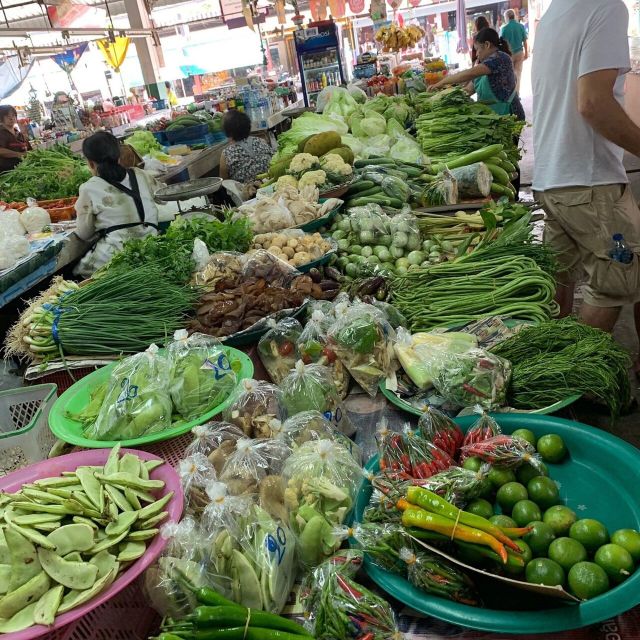
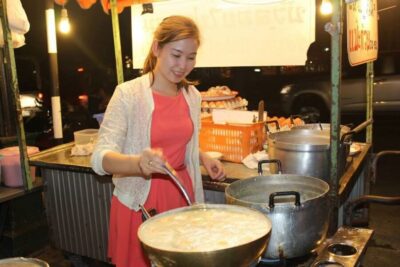
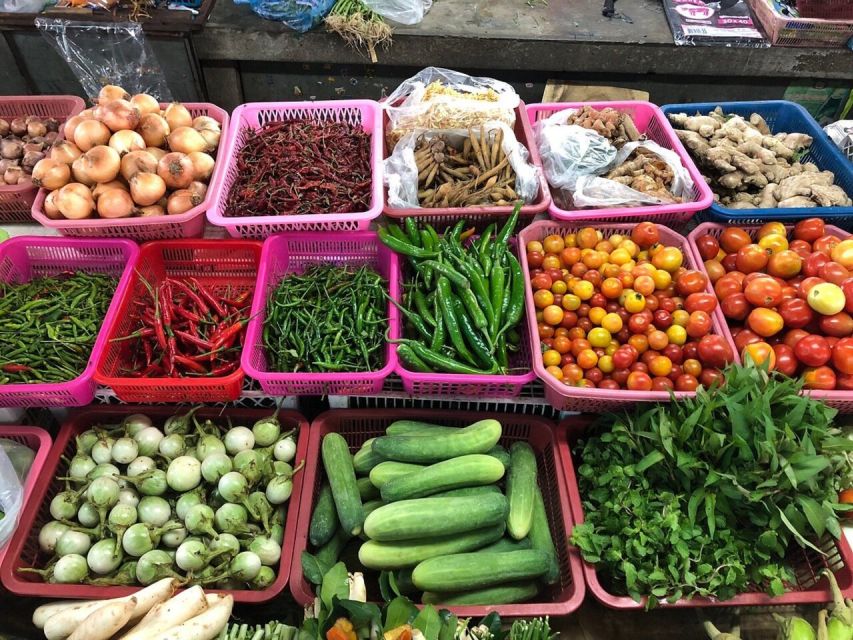
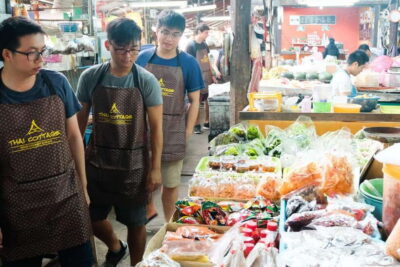
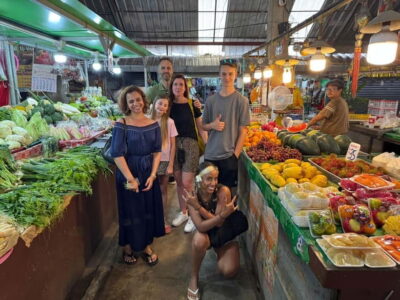
Before you cook, you’ll shop for ingredients like a local. You’ll visit a market where you can see fresh vegetables and key items used in Thai cooking, and you’ll also have time for browsing depending on the session flow.
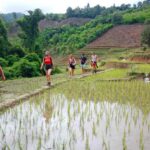
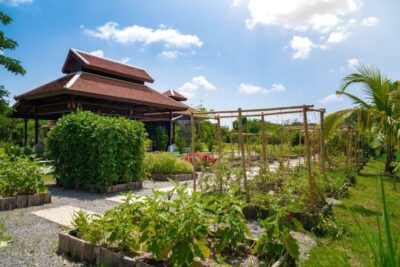
Then comes the organic garden component. You stroll through where herbs and vegetables are grown, and that matters because Thai dishes rely on specific flavors from plants, not just “whatever greens are around.” Even if you don’t consider yourself a “plant person,” it helps you connect the dots between what’s in your bowl and what you saw earlier.
One small benefit people often miss: market time is where you learn to spot the ingredients that drive taste. You’ll be better prepared to pick your dishes confidently, especially for things like curry pastes, papaya salad, or the sour profile in soups like Tom Yum.
Choosing your dishes: Pad Thai, Tom Yum, Som Tam, and curry paste work
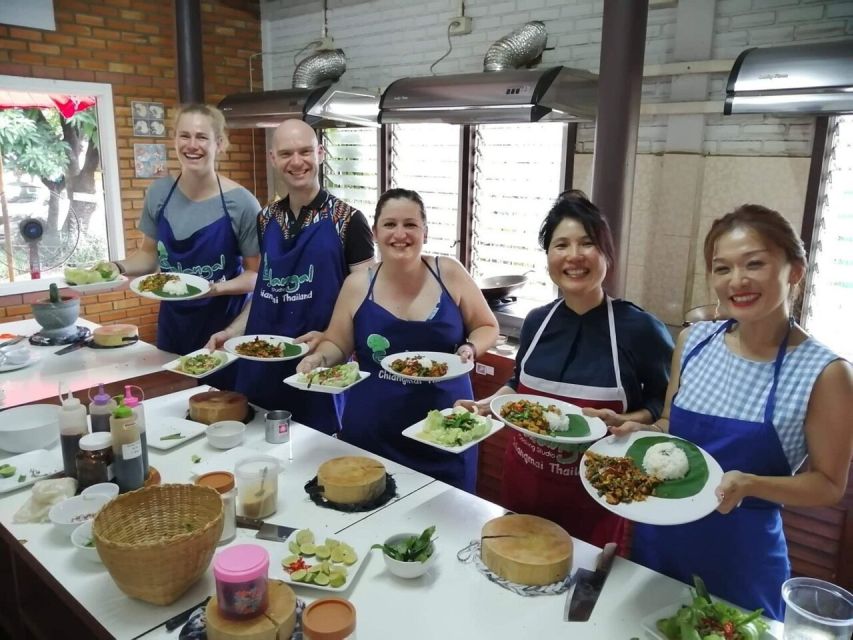
Here’s the structure that usually makes this class feel personal. You can select options across categories, and the class teaches dishes built around a stir-fry, soup, appetizer, and a curry/curry paste component. Many people walk away with about four cooked dishes plus curry paste learning tied into the curry session.
Nothing jumping out yet? More Chiang Mai trips are just down the page
Stir-fry category examples
- Pad Thai (fried noodles Thai style)
- Pad See Ew (stir-fried chicken with fresh noodles)
- Kai Pad Med Mamuang Him Ma Pan (chicken cashew nut)
- Pad Kaphao Kai (minced chicken with holy basil)
Soup category examples
- Tom Yum Kung (hot and sour prawn)
- Tom Kha Kai (chicken in coconut milk)
- Tom Kha Je (vegetarian/vegan in coconut milk)
- Tom Zap Kai (hot and sour with chicken)
Appetizer category examples
- Som Tam (papaya salad)
- Por Pia Thod (spring roll)
- Larb Kai (chicken salad)
- Yam Woon Sen (glass noodle salad)
Curry and curry paste category examples
- Kaeng Massaman (Massaman curry)
- Kaeng Kieaw Wan Kai (green curry)
- Kaeng Panaeng Kai (Panang curry)
- Kaeng Ped (red curry)
- Kaeng Karee (yellow curry)
- Pad Prik Kaeng (dry red curry)
- Khao Soi (Chiangmai noodle with chicken)
A note on curry paste: the class is built to teach it, not just assemble a pre-made base. If you’re the type who loves recreating flavors from scratch, that’s one of the main reasons to pick this style of class.
Dietary needs are handled in real ways
This isn’t a vague promise. The class states it’s available for vegan, vegetarian, halal, and gluten-free needs and can address allergies. In practice, that means you can choose menu options that fit, and instructors can substitute ingredients when possible. If someone in your group can’t eat seafood, this flexibility becomes a big deal.
Inside the air-conditioned kitchen: what you actually do at the stove
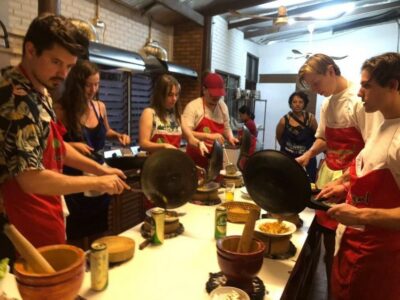
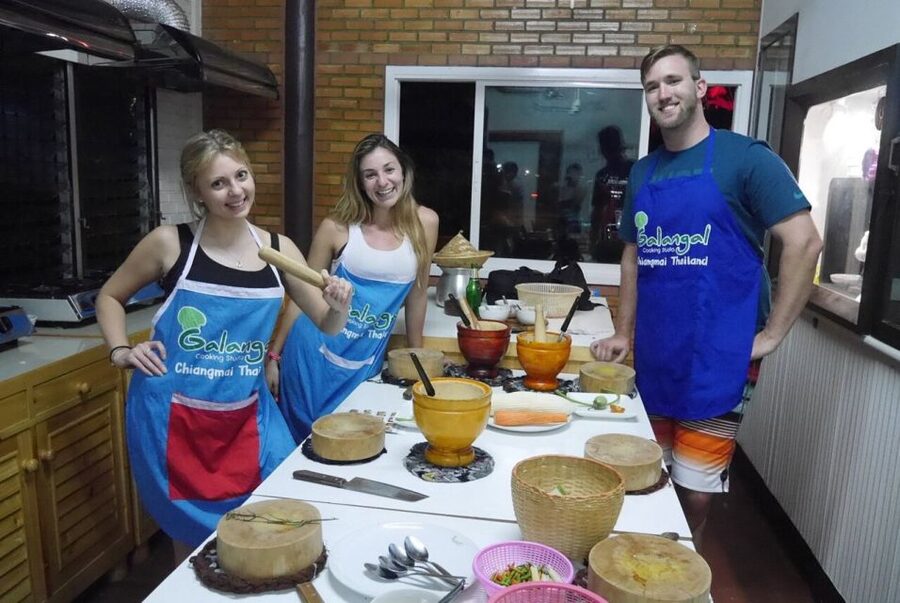
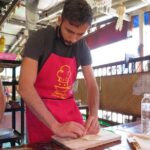
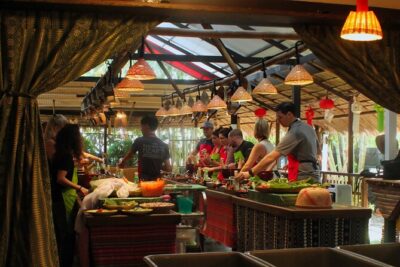
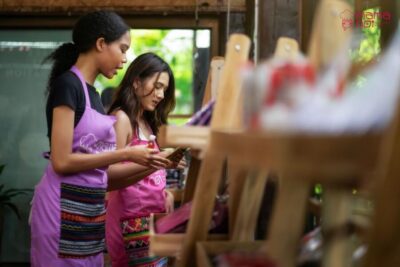
You’ll cook in an indoor, air-conditioned dining/kitchen setting, and that’s a real comfort factor in Chiang Mai’s evening warmth. You’re also not stuck staring at instructions from across the room. The format is hands-on: you roll up your sleeves and follow steps while the instructor keeps you on track.
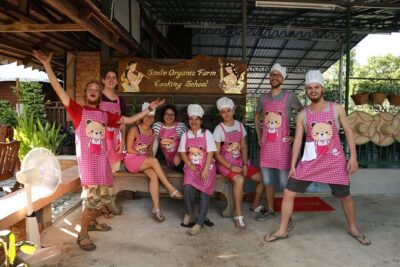
In many sessions, the teaching team works in a friendly, organized way. People highlight that instructors stay attentive, remember names, and explain why ingredients matter—not just what to do next. I like this approach because Thai cooking is pattern-based. Once you learn the logic behind flavors and timing, you can adapt dishes later.
You’ll be using provided equipment and ingredients, so you’re not hunting for specialty items before you start. And because the menu choices are structured, first-timers usually feel like they’re not “behind.” The cooking tasks aren’t described as overly complicated, but you still come away with real skills.
One practical perk: the class includes water, tea, and coffee. You won’t feel like you’re paying extra to keep your energy up during a longer evening.
Eating the results: dinner together, then take-home food and recipes
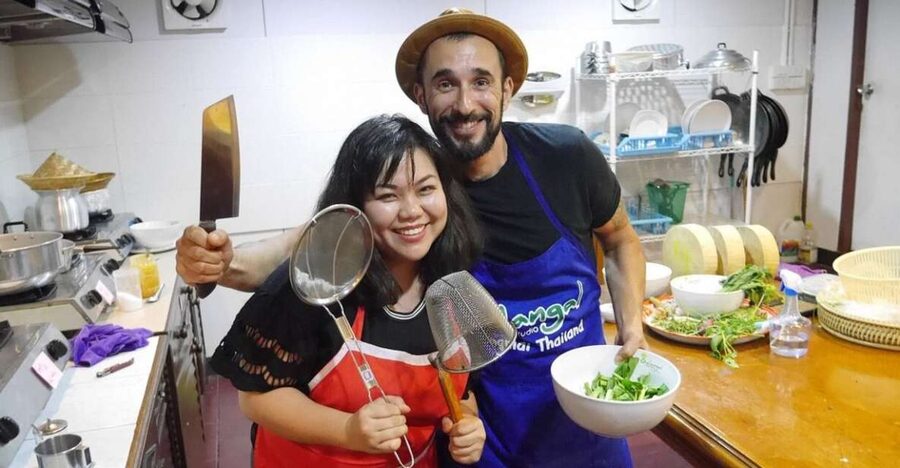
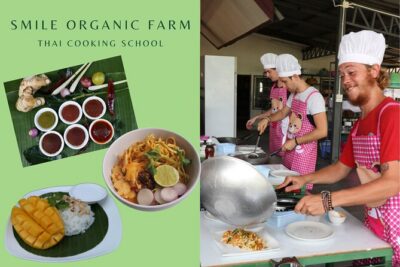
The best part is the payoff. You cook your chosen dishes and then savor what you made together at the end. It’s the kind of dinner where you can taste differences between dishes you picked yourself, not just sample small bites.
Many people also say they can pack up leftovers. That’s not always something you assume with cooking classes, so it’s worth knowing: if you’ve made too much (a common problem here), you may still leave with extra food for later.
Then there’s the recipe book. You receive a PDF version of the recipe book, which makes home cooking easier right away. Some sessions are also described as sending recipes after class, but either way, the key is that you’re not relying only on memory.
If you want value, this is where it shows. A cooking class is fun in the moment, but it becomes worth it long after if you can recreate the dishes with confidence.
Price and value: why $28 can feel like a bargain
At $28 per person for about 5 hours, the value is largely driven by what’s included.
You’re getting:
- Hotel pickup and drop-off in many central areas
- Market ingredient shopping and the organic garden walk (depending on interest and session flow)
- Cooking instruction in English
- All ingredients and equipment
- Water, tea, and coffee
- A recipe book PDF
If you’re comparing this to other Chiang Mai food experiences, you’re not just paying for one meal. You’re paying for transportation, ingredient learning, active cooking time, and take-home recipes.
Also, the class has dietary accommodation options. When a class can genuinely adjust for vegan, vegetarian, halal, gluten-free, or allergies, that’s real savings in time and stress. You don’t have to find a different tour just to eat safely.
One consideration for value: make sure you come ready to participate. The class starts with a dinner-style schedule, and the guidance is to come with an empty stomach because the Thai dinner timing is the main event.
Transport coverage: where pickup is easy and where you might need a backup plan
Pickup is offered to hotels in key zones like the old city, Santitham, and parts of Huay Keaw Road, from Kad Suan Keaw to Maya Shopping Mall. It also covers some areas of Nimmanhaemin Road, Sirimongkrajan Road, Wat Ket Road, Chang Pheuk, Changklan, and Changmoi, but it depends on distance.
The important practical point: they check your accommodation address. If your hotel isn’t in the pickup area, you’ll be informed, and you’ll need to arrange your own transport to the cooking school or market by yourself (the alternative includes the address and arrival time info).
This matters most if you’re staying farther out. If you are, double-check your pickup eligibility early so you’re not scrambling at the last minute.
Who should pick this class, and who should skip it
This is a great fit if:
- You want a structured evening plan that includes real ingredient shopping
- You like learning by doing, with English instruction that keeps first-timers comfortable
- You want Chiang Mai flavors across multiple categories: stir-fries, soups, salads, spring rolls, and curry dishes
- You need dietary flexibility (vegan/vegetarian/halal/gluten-free/allergies)
It’s not a fit if:
- You have altitude sickness (the info says it’s not suitable for people with altitude sickness)
If you’re already a strong cook, you might still enjoy the ingredient-focused learning and curry paste work, but you should expect a friendly teaching pace rather than a “pro chef only” workshop.
Should you book the Chiang Mai Evening Cooking Class with Market Visit?
I think you should book this if you want an evening that mixes Thai market culture with actual cooking skill you can repeat at home. The combination of hotel pickup, market + organic garden context, and curry paste learning makes it feel like more than a one-off dinner.
Skip it if you want a laid-back, observation-only experience. There’s no “just watch” vibe built in for free. If you plan to bring someone who wants to observe, there are fees for observers, and you’ll need to factor that in.
My final advice: pick a dish you’re genuinely curious about, not just the safest option. Come hungry, choose thoughtfully, and you’ll leave with both full stomach and usable recipes for your next Thai night at home.
FAQ
How long is the Chiang Mai evening cooking class?
The duration is listed as 5 hours.
What time does pickup happen?
Pickup in central areas is typically scheduled between 3:15 and 3:45 PM, and drivers may arrive a bit earlier due to traffic and multiple pickup points.
What dishes will I cook?
You can select dishes across categories: stir-fried, soup, appetizer, and curry/curry paste making. The class also includes curry paste learning as part of the curry section.
Is the class taught in English?
Yes. The instructor and audio guide are provided in English.
Can vegetarians, vegans, or halal diners join?
Yes. The class states it is available for vegan, vegetarian, halal, and also gluten-free needs, with options and substitutions where possible.
Do I get a recipe book?
Yes. You receive a PDF version of a recipe book.
Is food included?
Yes. All ingredients and equipment for the class are included, and you’ll also be provided with water, tea, and coffee. The class ends with you eating the dishes you cooked.
Do I need to bring anything?
The only listed item to bring is personal medication. You’re also advised to come with an empty stomach because dinner starts around 4 or 5 pm.
What if someone in my group wants to observe instead of cook?
Observers are welcome, but an observer adult fee applies (and observer children 6–12 also have a fee). These observer fees are not included in the class price.
More Shopping Tours in Chiang Mai
- Chiang Mai: Cooking Class, Market & Thai Herbs Garden Tour★ 4.9 · 4,824 reviews
- Chiang Mai: Authentic Cooking Class with Market & Farm Visit★ 4.9 · 4,546 reviews
- Chiang Mai: Cooking Class with Market and Pickup★ 4.9 · 1,365 reviews
- Chiang Mai: Evening Local Street Food Market Tour★ 4.8 · 604 reviews
- Chiang Mai: Kalare Night Bazaar Boxing Stadium Muay Thai★ 4.7 · 507 reviews
More Tour Reviews in Chiang Mai
- Half-Day Thai Cooking Class at Organic Farm in Chiang Mai★ 5.0 · 19,087 reviews
- Chiang Mai: Elephant Sanctuary, Waterfall & Bamboo Rafting★ 4.9 · 9,160 reviews
- Chiang Mai: Doi Inthanon National Park Eco-Friendly Tour★ 4.6 · 6,667 reviews
- Chiang Mai: Elephant Sanctuary & Waterfall Group Tour★ 4.9 · 5,780 reviews
- Chiang Mai: Chiang Rai Temples, Karen Tribe and Hot Springs★ 4.7 · 5,401 reviews
More Chiang Mai Cooking Classes
- Half-Day Thai Cooking Class at Organic Farm in Chiang Mai★ 5.0 · 19,087 reviews
- Chiang Mai: Cooking Class, Market & Thai Herbs Garden Tour★ 4.9 · 4,824 reviews
- Chiang Mai: Authentic Cooking Class with Market & Farm Visit★ 4.9 · 4,546 reviews
- Thai and Akha Cooking Class in Chiang Mai★ 5.0 · 4,358 reviews
- Chiang Mai: Cooking Class with Market and Pickup★ 4.9 · 1,365 reviews
Fresh off the pile: Chiang Mai tours we have just written up

Chiang Mai Cooking Classes, compared.
 ★ 5.0Half-Day Thai Cooking Class at Organic Farm in Chiang MaiFrom $2919,087 reviews
 ★ 4.9Cooking Class, Market & Thai Herbs Garden TourFrom $314,824 reviews
 ★ 4.9Authentic Cooking Class with Market & Farm VisitFrom $344,546 reviews
 ★ 5.0Thai and Akha Cooking Class in Chiang MaiFrom $424,358 reviews
 ★ 4.9Cooking Class with Market and PickupFrom $251,365 reviews
 ★ 4.9Cooking Class with Organic Farm at Mama NoiFrom $321,151 reviews
 ★ 5.0Full Day Thai Cooking at Farm (Chiang Mai)From $391,127 reviews
 ★ 4.9HALF-DAY COOKING COURSE at a Thai Cooking FarmFrom $28705 reviews
Browse the lists this tour appears in