
Reviewed · SUNRISE & MEDITATION TOURS
Chiang Mai Temples Visit Walking Tour with Ex-Monk Guide Part 2
Temples make more sense with the right guide. This Chiang Mai walking tour, led by a TAT-licensed guide (often an ex-monk like Katoon), focuses on explaining Buddhism in plain language while you visit major temple sites in a set loop. I especially like the ex-monk perspective and that temple entry is free for the stops on this route.
One possible drawback: the schedule is fairly tight—about 3 hours 30 minutes with set time windows—so if you want lots of free roaming, you’ll feel a bit guided (in a good way, but still guided).
In This Review
- Key highlights you’ll feel fast
- Entering The Tour at Three Kings Monument
- Wat Chiang Man: a 1296 starting point for Lanna Buddhism
- Wat Pa Pao: Tai Yai heritage and a specific founding story
- Wat Chiang Yuen: the Burmese colonial gate and pavilion
- Wat Lok Molee: Lanna wooden chanting hall you can actually picture
- The ex-monk guide factor: why the explanations feel personal
- Walking route and timing: plan for a guided pace
- Price and value: what $25.92 really buys you
- Who this tour fits best (and who might want something else)
- A quick booking checklist before you go
- Should you book Chiang Mai Temples Visit Walking Tour with Ex-Monk Guide Part 2?
- FAQ
- How long is the Chiang Mai Temples Visit Walking Tour Part 2?
- Where does the tour meet, and where does it end?
- What time does the tour start?
- What language is the guide?
- How many people are in the group?
- Is bottled water included?
- Are temple admissions included?
Key highlights you’ll feel fast
- Ex-monk guided explanations that answer real questions, not just slogans
- Free admission at each of the four temple stops on the itinerary
- A smart temple mix: classic origins, ethnic heritage, Burmese influence, and Lanna wooden craftsmanship
- Small group size (up to 20) so you can ask follow-ups
- Mobile ticket for easy check-in
Dawn at the temple: sunrise and monk-blessing visits
- Chiang Mai: Doi Suthep, Wat Umong, and Pha Lat Sunrise Tour
★ 4.7 · 1,425 reviews - Wat Phra That Doi Suthep spiritual Sunrise Tour with an Ex-monk
★ 5.0 · 798 reviews - Spiritual Sunrise Wat Doi Suthep, Pha Lat, Alms & Meditation
★ 4.9 · 674 reviews - Doi Suthep and Wat Pha Lat Sunrise Tour (Small Group Only)
★ 5.0 · 70 reviews
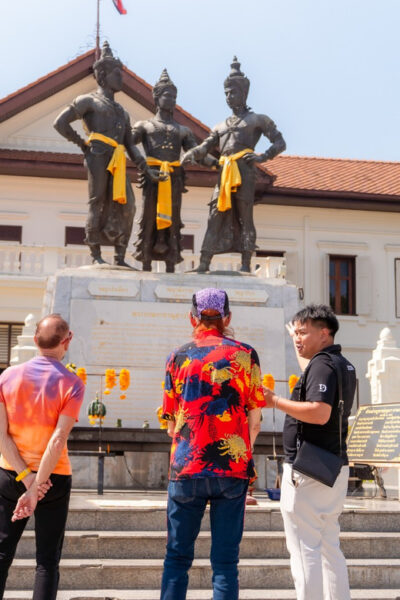
Entering The Tour at Three Kings Monument
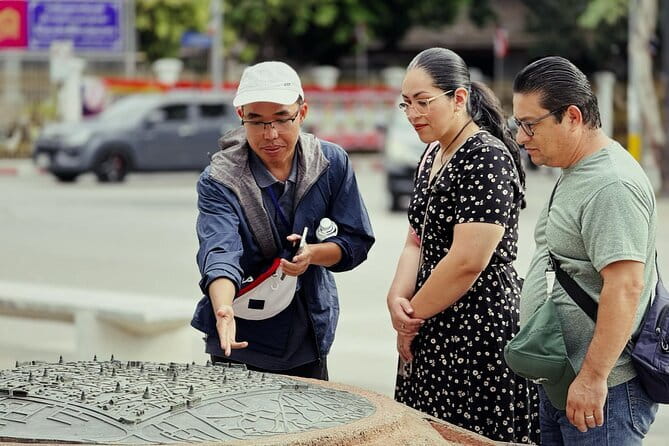
Most walking tours in Chiang Mai start with a quick orientation, and this one does it right. You meet at Three Kings Monument (Prapokklao Road area). There’s about 10 minutes to get the setup from your guide before you head out.
That little pre-walk moment matters more than it sounds. Temples can look similar if you’re just sightseeing; once the guide frames what you’re seeing, the buildings start telling stories—religion, power, migration, and art—rather than just looking pretty.
Also, you’re starting at a central landmark, which makes it easier to plan your day around the 1:00 pm start time. You’ll be back at the meeting point at the end, so you don’t need to rebuild your route afterward.
Wat Chiang Man: a 1296 starting point for Lanna Buddhism
Your first real temple stop is Wat Chiang Man, often described as one of the oldest and most iconic temples in Chiang Mai. This site dates to 1296, and it’s commonly associated with the earliest temple presence in the city.
What I like about putting Wat Chiang Man early is that it gives you a baseline. By the time you reach the later temples—each with its own style and cultural influences—you’ll have a clearer sense of what feels “old Chiang Mai,” what feels like an added layer, and what feels like a shift in emphasis over time.
The time here is about 45 minutes, which is long enough to see the main points without rushing. Admission is free for this stop, which helps keep the day feeling like value, not an add-on fee marathon.
One practical note: older temple sites can be visually complex. If you love asking questions, this is a good place to do it early—your guide can connect the basics of Buddhist practice and temple purpose to what you’re physically standing in front of.
Wat Pa Pao: Tai Yai heritage and a specific founding story
Next you go to Wat Pa Pao (about 30 minutes). This isn’t one of those temples that only gets mentioned because it’s famous on a map. It’s recognized as the first temple of the Ngiaw or Tai Yai community in Chiang Mai.
Here’s the kind of detail that makes a guided stop worth paying for: the tour points out that Wat Pa Pao was constructed during the reign of Prachao Intawichayont and built in 1883 by Lady Bua Lhai, described as a Tai Yai concubine of the king. That’s not just trivia—it gives context for why certain artistic and ritual elements may reflect a distinct community within the larger Lanna world.
This stop is a reminder that Thai Buddhism is not one single uniform story. It’s shaped by communities settling, building, and adapting their religious life in the places they call home.
If you’re the type of traveler who likes cultural anthropology in a human scale, you’ll probably enjoy this one. It’s the stop where the tour starts to feel less like a checklist and more like a living social history.
Nothing jumping out yet? More Chiang Mai trips are just down the page
Wat Chiang Yuen: the Burmese colonial gate and pavilion
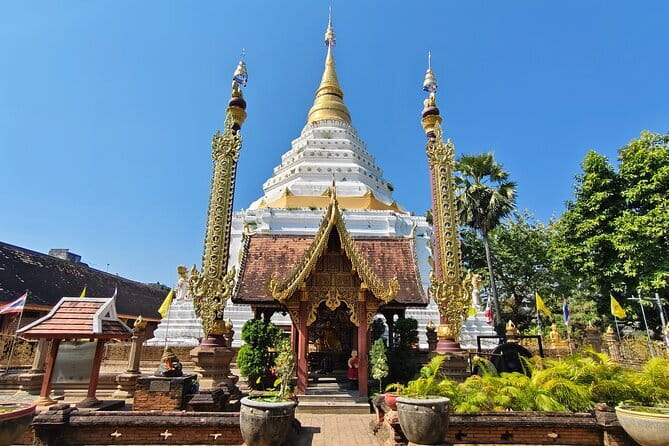
After Wat Pa Pao, the route moves to Wat Chiang Yuen (another 30 minutes). This temple is especially known for an ancient Burmese colonial gate and a beautiful pavilion, but the tour also highlights that it has other unique attributes tied to its role in the region.
The Burmese influence is a big theme here. You’ll get a chance to understand how political and cultural connections show up in architecture, not just in written records. Gates and pavilion spaces are designed for movement, meeting, and ritual emphasis, so they can act like physical “chapters” in a larger story.
This is also one of the stops where you might find you’re seeing symbols from different angles. A guide can help you connect what you’re looking at—entrances, structural forms, and temple layouts—to the practical reason temples were built and used, not just the aesthetic value.
Admission is free for this stop too, which keeps momentum and helps the tour stay focused on the human explanation rather than ticket spending.
Wat Lok Molee: Lanna wooden chanting hall you can actually picture
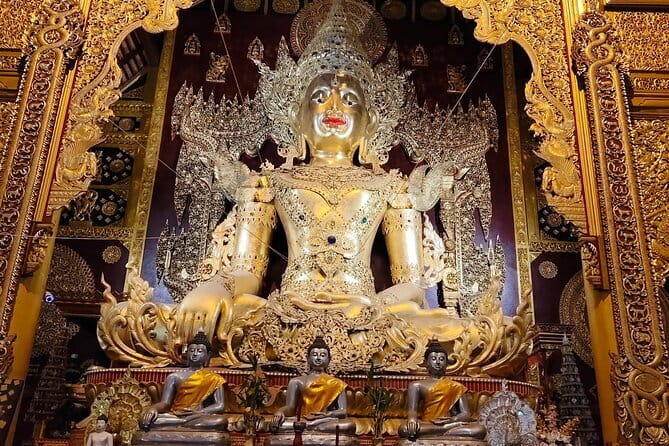
Your final temple stop is Wat Lok Molee (about 45 minutes). Here, the focus shifts from gates and origins to Lanna craft and ritual space. The highlight is a wooden chanting hall with traditional Lanna architecture.
This is the stop where I think many people slow down without meaning to. A wooden hall feels different from stone-heavy temples, and it’s easier to imagine how chanting and ceremonies would fill the space. Even without deep technical architecture knowledge, you can usually feel the purpose of the room: it’s built for sound, gathering, and shared practice.
Because you get 45 minutes here—longer than some other stops—you have time to really look instead of just passing by key features. That extra time also helps if you’re someone who likes to ask a lot of questions, since the tour doesn’t feel like it’s racing toward a next photo spot.
Again, admission is listed as free for this itinerary’s stops, so you’re not paying extra to slow down and pay attention.
The ex-monk guide factor: why the explanations feel personal
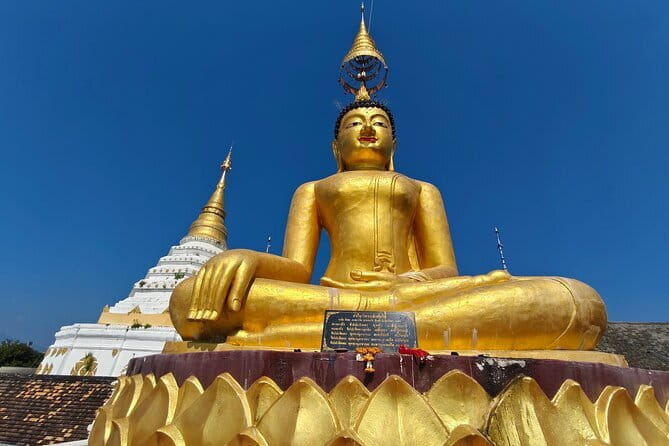
This tour is explicitly built around a guide who can speak to Buddhism from lived experience. It’s an ex-monk style guide for this part of the series, and the tour information also notes your guide holds a TAT license and speaks English or Chinese.
If you get a guide like Katoon, you’ll likely notice the difference right away. The tone is patient and question-friendly. He’s described as answering questions and explaining temple meaning in a way that sticks, including how people think about prayer in a Buddhist context (with the note that it’s not always the same as what many visitors expect).
You also get that rare combo: history that’s specific, plus teaching that stays practical. Instead of treating temples like museums, the guide frames them as places tied to how people live, practice, and interpret the Buddha’s teachings.
If you care about personal growth or mindfulness, this kind of guided interpretation can do more than give facts. It can help you understand what your eyes are seeing while you stand in the place that shaped the tradition.
Walking route and timing: plan for a guided pace
This is a walking tour with an approximate total duration of 3 hours 30 minutes. The itinerary uses set time blocks: 10 minutes at the start, then 45 minutes at Wat Chiang Man, 30 minutes at Wat Pa Pao, 30 minutes at Wat Chiang Yuen, and 45 minutes at Wat Lok Molee.
So yes, it’s active, but it’s not a forced march. The pacing seems designed to keep the temples from blending together. You’ll have enough time at each stop to understand the key theme of that location.
Weather matters. The tour notes it requires good weather, and if it gets canceled for poor weather, you’ll be offered a different date or a full refund. That’s a big deal in Chiang Mai, where plans can shift quickly.
Also, bottled water is not included. Bring your own bottle or plan to buy water separately. And since you’ll be outside for several hours, comfortable walking shoes are a smart idea.
Price and value: what $25.92 really buys you
At $25.92 per person, this tour sits in the “fair price for a guide-led experience” range—especially because the temple stops list free admission. You’re mainly paying for the interpretation, not paying again at each site.
The value equation is pretty clear:
- You get a licensed guide (TAT license)
- You get English or Chinese support
- You visit four major temples in one loop
- You have a small group limit (max 20)
- You get a mobile ticket, which makes check-in easier
If you were trying to do all four sites on your own, you’d still spend time figuring out what matters at each stop. Here, you’re buying time and understanding in one package.
One caution about value: if your priority is pure free time or flexible wandering, you may feel the structure more than you feel the benefit. This tour is meant for guided learning, not a casual stroll where you can skip stops.
Who this tour fits best (and who might want something else)
You’ll probably love this tour if:
- You want Buddhism explained in a way that connects meaning to what you’re seeing
- You’re curious about temple origins, including community stories like the Tai Yai connection at Wat Pa Pao
- You like asking questions and getting direct answers
- You want a manageable half-day plan starting at 1:00 pm
You might skip it if you’d rather travel temple-to-temple without a structured route. The time windows are real, and the tour is designed to keep you moving between sites.
This also works well for a family setup, since the guide format is described as patient and caring. If you’re traveling with kids, a guide can help translate what temples represent into something that doesn’t feel like nonstop rules and silence.
A quick booking checklist before you go
Before you book, here’s what you should know from the tour details:
- You get confirmation at booking
- You’ll use a mobile ticket
- The meeting point is Three Kings Monument
- The tour ends back at the same place
- It has a max group size of 20
- It runs only if weather is good
If you’re planning your day in Chiang Mai, treat this like a focused afternoon. Build in a little buffer around the start time so you can meet calmly at the monument and get the pre-walk intro.
Should you book Chiang Mai Temples Visit Walking Tour with Ex-Monk Guide Part 2?
If you want temples with meaning—not just photos—this is an excellent pick. The big strength is how the guide connects Buddhism to specific temple features, and the itinerary spreads that learning across four different kinds of temple stories: early Chiang Mai roots, Tai Yai heritage, Burmese-influenced architecture, and Lanna wooden ritual space.
On the other hand, if you dislike being on a schedule, or you’re looking for a low-structure wandering day, you may find the set stop times limiting.
My practical advice: book it if you can spare a half-day and you’re curious about what temples represent. This tour is built for understanding, and it gives you that understanding while you’re standing in the right places.
FAQ
How long is the Chiang Mai Temples Visit Walking Tour Part 2?
The tour is approximately 3 hours 30 minutes.
Where does the tour meet, and where does it end?
It meets at Three Kings Monument and ends back at the same meeting point.
What time does the tour start?
The start time is 1:00 pm.
What language is the guide?
The guide provides English or Chinese-speaking interpretation and holds a TAT license.
How many people are in the group?
The tour has a maximum group size of 20 travelers.
Is bottled water included?
No. Bottled water is not included.
Are temple admissions included?
The itinerary lists free admission tickets for the temple stops. However, the tour states that all fees and taxes are not included, so you should plan on only the listed stop admissions being free.
More Tours in Chiang Mai
- Chiang Mai: Doi Inthanon National Park Eco-Friendly Tour★ 4.6 · 6,667 reviews
- Chiang Mai: Elephant Sanctuary & Waterfall Group Tour★ 4.9 · 5,780 reviews
- Chiang Mai: Cooking Class, Market & Thai Herbs Garden Tour★ 4.9 · 4,824 reviews
- Chiang Mai: Elephant Sanctuary Feeding Program Half-Day Tour★ 4.8 · 4,527 reviews
- Chiang Rai White Temple and Blue Temple Day Tour★ 4.6 · 3,366 reviews
More Tour Reviews in Chiang Mai
- Half-Day Thai Cooking Class at Organic Farm in Chiang Mai★ 5.0 · 19,087 reviews
- Chiang Mai: Elephant Sanctuary, Waterfall & Bamboo Rafting★ 4.9 · 9,160 reviews
- Chiang Mai: Doi Inthanon National Park Eco-Friendly Tour★ 4.6 · 6,667 reviews
- Chiang Mai: Elephant Sanctuary & Waterfall Group Tour★ 4.9 · 5,780 reviews
- Chiang Mai: Chiang Rai Temples, Karen Tribe and Hot Springs★ 4.7 · 5,401 reviews
More Sunrise and Meditation Mornings
- Chiang Mai: Doi Suthep, Wat Umong, and Pha Lat Sunrise Tour★ 4.7 · 1,425 reviews
- Wat Phra That Doi Suthep spiritual Sunrise Tour with an Ex-monk★ 5.0 · 798 reviews
- Spiritual Sunrise Wat Doi Suthep, Pha Lat, Alms & Meditation★ 4.9 · 674 reviews
- Doi Suthep and Wat Pha Lat Sunrise Tour (Small Group Only)★ 5.0 · 70 reviews
- Mount Doi Inthanon National Park Sunrise and Hiking★ 5.0 · 52 reviews
Fresh off the pile: Chiang Mai tours we have just written up


Sunrise & Meditation Tours, compared.
 ★ 4.7Doi Suthep, Wat Umong, and Pha Lat Sunrise TourFrom $321,425 reviews
 ★ 5.0Wat Phra That Doi Suthep spiritual Sunrise Tour with an Ex-monkFrom $64798 reviews
 ★ 4.9Spiritual Sunrise Wat Doi Suthep, Pha Lat, Alms & MeditationFrom $59674 reviews
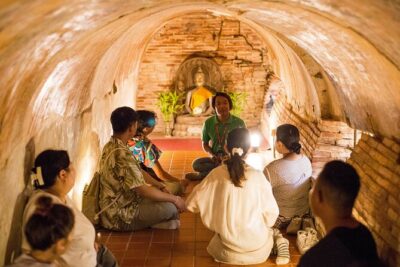 ★ 5.0Doi Suthep and Wat Pha Lat Sunrise Tour (Small Group Only)From $2970 reviews
 ★ 5.0Mount Doi Inthanon National Park Sunrise and HikingFrom $12652 reviews
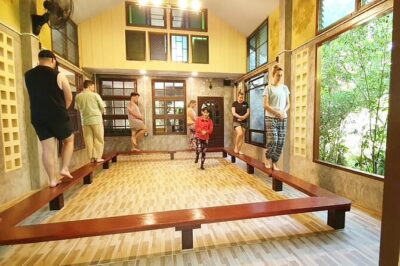 ★ 5.0Meditation Retreat and Self-Care in NatureFrom $4846 reviews
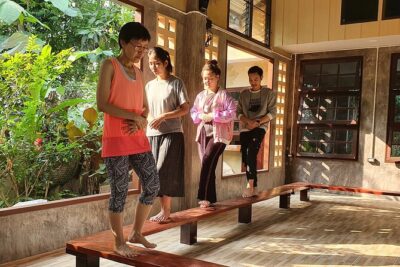 ★ 5.0Half-Day Yoga, Meditation, and Thai Cultural Immersion in Chiang MaiFrom $7140 reviews
 ★ 4.9Full-Day Yoga & Meditation Experience with LunchFrom $8338 reviews
Browse the lists this tour appears in