
Reviewed · CHIANG RAI & WHITE TEMPLE
Chiang Rai Temples Tour & Golden Triangle Including Boat to Laos
Temples, borders, and a boat in one day. I like the way this tour stacks the big Northern-Thai sights into a single White Temple-to-Golden Triangle day, then adds a Mae Khong river cruise that takes you right toward Laos. You also get a guide who can keep the story straight and the photos coming, plus a comfortable AC ride while you watch northern countryside pass by.
Two things I really like: first, the art-first feel of Wat Rong Khun, where the white surfaces and intricate details make you slow down and look. Second, the Golden Triangle area around Sop Ruak, because seeing where Thailand, Myanmar, and Laos meet turns geography into something you can point at. The main consideration is simple: it’s an early start and a full schedule, with about 3 hours each way by car from Chiang Mai.
In This Review
- Key points at a glance
- Morning departure from Chiang Mai: the 7:00am start you’ll feel
- Wat Rong Khun White Temple: modern Thai art in pure white
- Golden Triangle at Sop Ruak: where borders become real
- Blue Temple Wat Rong Seur Ten: a cooler tone after white
- Wat Huay Pla Kang’s 76-meter Buddha: the “new landmark” moment
- Mae Khachan Hot Spring: a short break that actually helps
- Laos border crossing plus Mae Khong river cruise: the part that changes the mood
- Lunch in a local Thai-food style: fueling the day without fuss
- Price and value: what $145 gets you (and what it doesn’t)
- Who this tour fits best (and who might want something else)
- Tips that make the day smoother
- Should you book this Chiang Rai Temples Tour & Golden Triangle with Laos boat?
- FAQ
- What time does the tour start?
- How long is the tour?
- Is pickup and drop-off included?
- Is this a private tour?
- What language is the guide?
- What’s included in the price?
- Does it include temple entrance fees?
- Is there a boat ride and Laos border crossing?
Key points at a glance
- Private group day tour: only your group, with pickup and drop-off and an AC vehicle
- Wat Rong Khun and Wat Huay Pla Kang included: entry tickets are part of the package
- Golden Triangle + Sop Ruak: free admission stop at the Thailand-Myanmar-Laos meeting point area
- Blue Temple and hot spring: both timed as lighter stops so you can catch your breath
- Mae Khong river cruise toward Laos: includes crossing to the Laos border as part of the experience
- Guide support that helps: an English or Mandarin speaking guide, with mineral water and local Thai lunch included
Day trips north to Chiang Rai and the White Temple
- Chiang Mai: Chiang Rai Temples, Karen Tribe and Hot Springs
★ 4.7 · 5,401 reviews - Chiang Rai White Temple and Blue Temple Day Tour
★ 4.6 · 3,366 reviews - Chiang Rai Temples: Private Tour from Chiang Mai
★ 5.0 · 1,267 reviews - From Chiang Mai: White Temple & Golden Triangle Day Trip
★ 4.6 · 1,193 reviews
Morning departure from Chiang Mai: the 7:00am start you’ll feel
This is a long day, built around early pickup. The start time is 7:00am, and the drive to Chiang Rai takes about 3 hours. That means you’ll want to treat the morning like a real departure day: have breakfast beforehand, bring water (you get mineral water on tour, but extra helps), and keep your phone charged for photos.
The schedule also means you’re not just “doing temples.” You’re doing a road trip through northern Thailand. You’ll see roadside communities, paddy fields, farm lands, and mountain scenery along the way, which is a big part of why this day works even if you’re not chasing every single temple photo.
The upside of the early start: you’re not fighting the busiest hours at each site. The downside: by the time you roll back into Chiang Mai, you’ll be ready for a shower and dinner, not a second activity.
Wat Rong Khun White Temple: modern Thai art in pure white
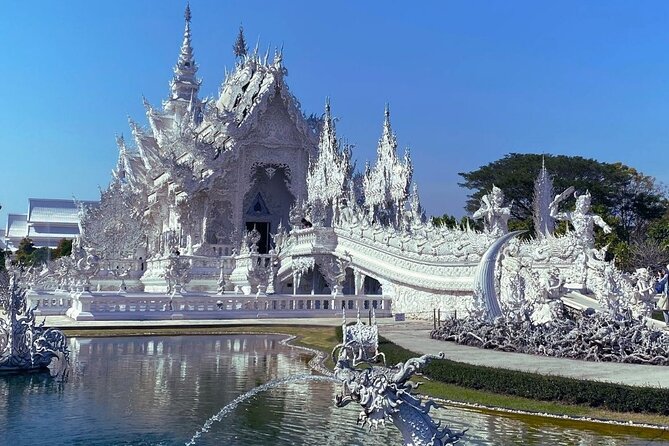
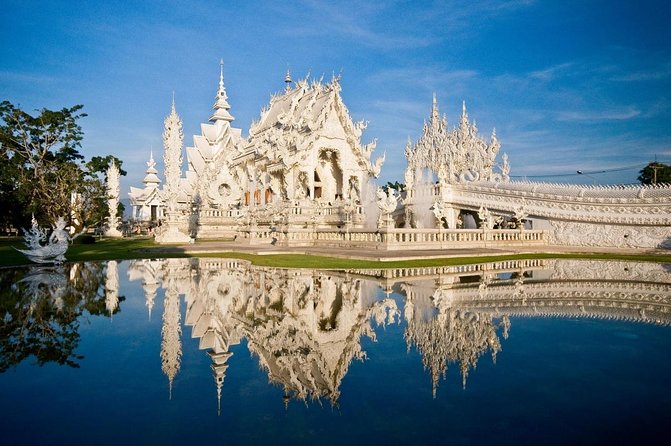
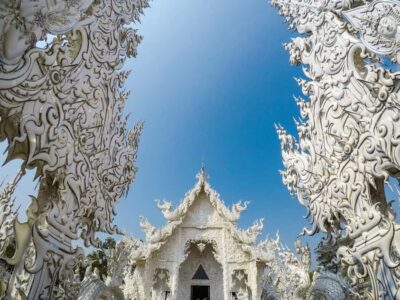
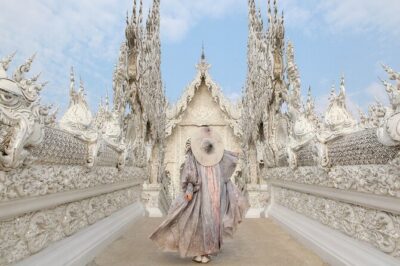
Wat Rong Khun (the White Temple) is the headline stop for a reason. It was founded in 1997 by Chalermchai Kositpipat, and the look is instantly recognizable: a temple complex covered in striking white surfaces. What makes it satisfying isn’t just the color. It’s the feeling that the whole place is built like a piece of modern religious art, with lots of details that reward patience.
You’ll have about 1 hour here, with admission included. That time is enough to get your bearings, walk the key areas, and take photos without turning it into a long slog. Still, if you’re the type who likes to read the symbolism and zoom in on patterns, 1 hour can feel tight—so focus on getting a mix of wide shots and close-up texture shots.
Practical note: white stone and bright sky can fry your eyes. Bring sunglasses, and consider taking photos early or later in the day slot so the light doesn’t wash everything out.
Golden Triangle at Sop Ruak: where borders become real
Next up is the Golden Triangle area near Sop Ruak, where the border of three countries meets: Thailand, Myanmar, and Laos. The stop is about 1 hour and admission is free.
Even if you’ve seen photos before, this stop hits differently because you’re standing in a location tied to real river geography—this is the Mekong riverside road area. The information here matters: Sop Ruak is the place connected to where the Mekong River forms the setting for the three-country meeting point.
What I like about this stop is that it’s simple and visual. You don’t need a lecture to understand why people come. It’s the kind of place where your guide’s explanation helps you connect what you’re seeing to why it matters—especially when you’ll later cross toward Laos and take the Mae Khong cruise.
The consideration: this is a short stop. If you’re hoping for a lot of roaming time or multiple viewpoints, you’ll have to rely on your guide to choose the best angles quickly.
Nothing jumping out yet? More Chiang Mai trips are just down the page
Blue Temple Wat Rong Seur Ten: a cooler tone after white
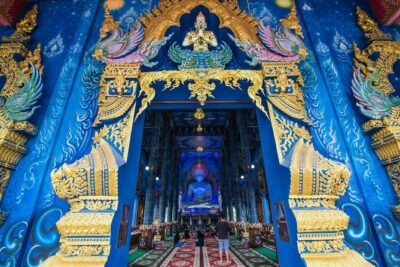
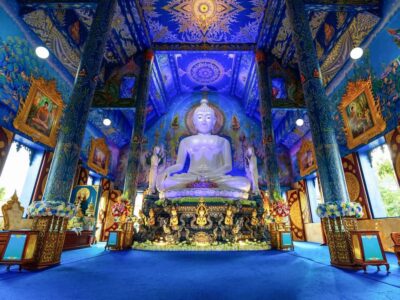
Wat Rong Seur Ten (often called the Blue Temple) is timed for about 1 hour and admission is free. The story is part of the appeal: construction started in 1996 by the local community to replace an older abandoned temple, and actual construction didn’t begin until 2005. That kind of timeline gives the site a sense of local effort behind the design, not just a one-person vision.
The architecture is also a key draw. The tour description points to the temple’s distinctive design, and it’s known for a style connected to Chinese-Lanna influences. That blend is part of what makes northern Thai temple design feel current and experimental compared with more traditional, older layouts.
If you’re doing photos, be ready for different lighting than Wat Rong Khun. Blues and dark tones can look amazing, but they can also hide fine details if the sun is harsh. Take a few shots, then walk slowly—your eyes adjust, and the designs start to pop.
Wat Huay Pla Kang’s 76-meter Buddha: the “new landmark” moment
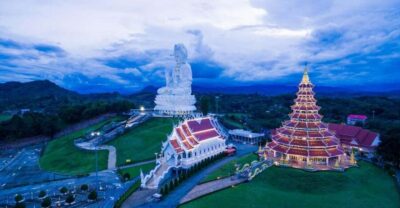
Wat Huay Pla Kang is where the day gets big and memorable. This temple was founded in 2005 and is described as having unusual architecture with Chinese-Lanna style. The main attraction people come for is the 76-meter Buddha, which the tour notes as a new landmark of Chiang Rai.
You’ll get about 1 hour here, with admission included. I like this stop because it’s a strong visual anchor after the more delicate temple art moments. It’s also a chance to reset your photo style: think wide composition and respectful pacing, rather than chasing tiny details.
The practical part: you’ll want comfortable shoes here. Even with guided timing, temple complexes can include steps and uneven areas. Plan for it so you don’t end up rushing at the exact moment you want to slow down.
Mae Khachan Hot Spring: a short break that actually helps
Halfway between Chiang Mai and Chiang Rai, the tour stops at Mae Khachan Hot Spring. It’s about 30 minutes, admission is free.
This is a smart timing choice. After hours of driving and temple walks, a short reset makes the rest of the day feel less relentless. Even if you don’t plan to soak, the setting is described as mountain-surrounded and meant as a nature sight + coffee-break kind of pause.
The only thing to watch is that 30 minutes goes fast. Treat it as a refresh stop—use it for a bathroom break, quick stretch, and a calm moment before you move on to the border-related portion of the day.
Laos border crossing plus Mae Khong river cruise: the part that changes the mood
One of the signature elements here is the combination of a boat ride and a move toward Laos. The tour includes cruising a boat along the Mae Khong River, and it also notes crossing to the Laos border.
That changes the emotional feel of the day. Temples are quiet and reflective. A border-and-river segment tends to be more energetic, more about movement, and more about seeing how the area functions at street level. It also makes the Golden Triangle stop feel less abstract: you’re not only looking at a map concept; you’re experiencing the geography tied to the water.
What to do practically: keep your passport or required documents ready and within reach, and listen closely to your guide about what’s needed for the crossing portion. Since the tour description doesn’t spell out steps, you’ll want to treat any border-related time as “follow the plan, don’t improvise.”
Also, dress for comfort on a boat. Even when it’s warm on land, the air on the water can feel different.
Lunch in a local Thai-food style: fueling the day without fuss
Lunch is included, described as local Thai food. In a day like this, the best meal is usually the one you don’t have to search for. You get a break in the middle where you can sit, eat, and stop thinking about logistics.
I like that the tour includes lunch as part of the package along with all fees and taxes and mineral water. It reduces decision fatigue when you’re already up early and crisscrossing through multiple stops.
If you have a sensitive stomach, go easy at the first meal and stick to what you know at lunch. You still have a full day ahead.
Price and value: what $145 gets you (and what it doesn’t)
The price is $145.00 per person for an 11-hour private day tour experience from Chiang Mai. On paper, that’s not a cheap day. In practice, it can be good value if you care about comfort, timing, and not losing time to planning.
Here’s where the value comes from:
- Pickup and drop-off: the tour moves you between Chiang Mai and Chiang Rai without you organizing anything
- AC vehicle: long drives feel more tolerable
- Guide included: English or Mandarin speaking support so you’re not just sightseeing blankly
- Entry tickets covered: Wat Rong Khun and Wat Huay Pla Kang admissions are included, and the other major stops are noted as free at the time slots
- Lunch + fees: lunch and the listed fees and taxes reduce surprise costs
What’s not covered is simply your own expenses. That usually means snacks, drinks beyond the included water, and any extras you choose to buy on your own.
One more value note: the tour is private, meaning your group size stays controlled. That usually improves pacing at stops like Wat Rong Khun, where it’s easy to get swallowed by crowds on bigger group tours.
Who this tour fits best (and who might want something else)
This is a strong fit if you want a single-day route through Chiang Rai’s most famous temple stops plus the Golden Triangle area, and you also want the special twist of a Mae Khong boat segment and a Laos border crossing element.
It’s especially good for:
- couples or small groups who want a calmer pace and a guide to manage the route
- first-timers to Chiang Rai who want the major sights without building a multi-day plan
- people who enjoy architecture and photo stops but also want the river/border dimension
It may not fit as well if you hate early mornings or if you want lots of free time at each site. The schedule is packed, and the driving is a big chunk of the day.
Tips that make the day smoother
If you want the best day possible, here’s how I’d play it:
- Bring a light layer. Early starts and boats can feel cooler than the midday sun.
- Charge your phone before pickup. You’ll likely take a lot of photos at Wat Rong Khun and the big Buddha at Wat Huay Pla Kang.
- Wear shoes you can walk in comfortably for temple grounds.
- Ask your guide what the best photo angles are for each stop. This tour’s format is fast enough that good guidance really matters.
Also, two guide names show up in the kinds of experiences people report: John is praised for being patient and turning complex info into something you can actually use, and Mr. Big is described as friendly and helpful with local context while keeping the day moving. If either is available for your date, that’s a nice sign.
Should you book this Chiang Rai Temples Tour & Golden Triangle with Laos boat?
I’d book it if you want a single, well-structured day that hits Chiang Rai’s top temple icons (White Temple, Blue Temple, and the 76-meter Buddha at Wat Huay Pla Kang), then adds the Golden Triangle geography at Sop Ruak and the Mae Khong river cruise with a Laos border crossing element. The $145 price makes sense when you value convenience, included entry fees, lunch, and a guide.
I would hesitate if you’re the type who needs long downtime or you dislike road time. You’re trading flexibility for a packed route, and the day starts early.
If your goal is a big, varied Northern Thailand day with real sights and real logistics handled for you, this tour is a solid choice.
FAQ
What time does the tour start?
It starts at 7:00am.
How long is the tour?
It runs for about 11 hours.
Is pickup and drop-off included?
Yes, hotel pickup and drop-off are included.
Is this a private tour?
Yes. It’s listed as private, so only your group participates.
What language is the guide?
The guide is available in English or Mandarin.
What’s included in the price?
Lunch (local Thai food), all fees and taxes, an air-conditioned vehicle, an English-speaking guide, travel insurance, and mineral water.
Does it include temple entrance fees?
Entry tickets are included for Wat Rong Khun and Wat Huay Pla Kang. Golden Triangle, Wat Rong Seur Ten, and Mae Khachan Hot Spring are listed as free at the stops shown.
Is there a boat ride and Laos border crossing?
Yes. The tour includes a cruise along the Mae Khong River and includes crossing to the Laos border as part of the experience.
More Tours in Chiang Mai
- Chiang Mai: Doi Inthanon National Park Eco-Friendly Tour★ 4.6 · 6,667 reviews
- Chiang Mai: Elephant Sanctuary & Waterfall Group Tour★ 4.9 · 5,780 reviews
- Chiang Mai: Cooking Class, Market & Thai Herbs Garden Tour★ 4.9 · 4,824 reviews
- Chiang Mai: Elephant Sanctuary Feeding Program Half-Day Tour★ 4.8 · 4,527 reviews
- Chiang Rai White Temple and Blue Temple Day Tour★ 4.6 · 3,366 reviews
More Tour Reviews in Chiang Mai
- Half-Day Thai Cooking Class at Organic Farm in Chiang Mai★ 5.0 · 19,087 reviews
- Chiang Mai: Elephant Sanctuary, Waterfall & Bamboo Rafting★ 4.9 · 9,160 reviews
- Chiang Mai: Doi Inthanon National Park Eco-Friendly Tour★ 4.6 · 6,667 reviews
- Chiang Mai: Elephant Sanctuary & Waterfall Group Tour★ 4.9 · 5,780 reviews
- Chiang Mai: Chiang Rai Temples, Karen Tribe and Hot Springs★ 4.7 · 5,401 reviews
More Chiang Rai Day Trips
- Chiang Mai: Chiang Rai Temples, Karen Tribe and Hot Springs★ 4.7 · 5,401 reviews
- Chiang Rai White Temple and Blue Temple Day Tour★ 4.6 · 3,366 reviews
- Chiang Rai Temples: Private Tour from Chiang Mai★ 5.0 · 1,267 reviews
- From Chiang Mai: White Temple & Golden Triangle Day Trip★ 4.6 · 1,193 reviews
- From Chiang Mai: Chiang Rai’s Temples Exploration Day Trip★ 4.5 · 871 reviews
Fresh off the pile: Chiang Mai tours we have just written up
Chiang Rai & White Temple, compared.
 ★ 4.7Chiang Rai Temples, Karen Tribe and Hot SpringsFrom $355,401 reviews
 ★ 4.6Chiang Rai White Temple and Blue Temple Day TourFrom $273,366 reviews
 ★ 5.0Chiang Rai Temples: Private Tour from Chiang MaiFrom $1441,267 reviews
 ★ 4.6White Temple & Golden Triangle Day TripFrom $801,193 reviews
 ★ 4.5Chiang Rai’s Temples Exploration Day TripFrom $51871 reviews
 ★ 4.5Chiangmai to Chiangrai: 3 Temples, Hot Springs& Lalitta CafeFrom $41659 reviews
 ★ 4.5Chiang Rai White Temple, Blue Temple and more from Chiang MaiFrom $39605 reviews
 ★ 4.5Chiang Rai Day Trip from Chiang Mai City with Golden TriangleFrom $81531 reviews
Browse the lists this tour appears in