
Reviewed · CHIANG MAI COOKING CLASSES
Evening Cooking Class in Traditional Pavilion with Beautiful Garden – Chiang Mai
Thai food tastes better when you make it.
This evening cooking class turns that idea into a real plan: you start with hotel pickup, then head outside Chiang Mai to an open pavilion in an organic farm’s gardens. I like the small group size (max 8) because you actually get hands-on help, and the focus on making your own curry paste means the flavors make sense, not just the final dishes.
One thing to consider: the schedule is weather- and ingredient-dependent, and the menu can shift with the season. If you’re going on a day with iffy conditions, plan to be flexible about timing and what specific dishes you’ll cook.
In This Review
- Key highlights at a glance
- A 4:00 pm Chiang Mai dinner class at an organic farm pavilion
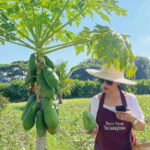
- Walking the organic gardens and learning what ends up in your wok
- How the small-group setup (max 8) changes everything
- Tom Yam or Tom Kha, Pad Thai stir-fry, and curry: building flavor step by step
- From the pan to the table: tasting your meal and comparing notes
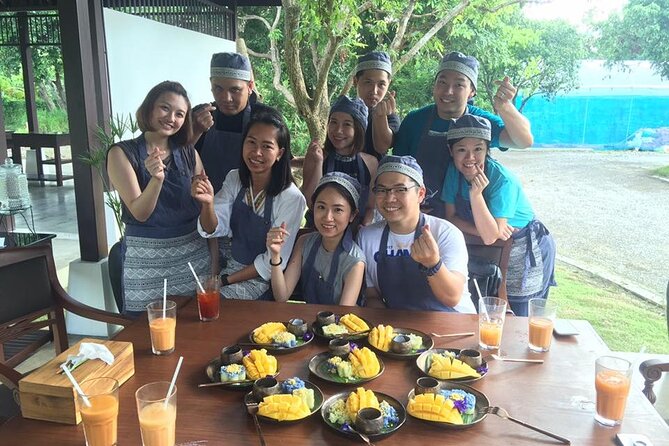
- Mango sticky rice for dessert: ending with the right Thai finish
- Value, timing, and who should book this class
- Quick practical tips before you go
- Should you book this Chiang Mai cooking class?
- FAQ
- What time does the evening cooking class start?
- Is hotel pickup included?
- How many dishes will I cook?
- Is it a large group?
- What if the weather is bad?
- Can I cancel for free?
Key highlights at a glance
- Organic farm gardens you can walk through before cooking starts
- Small group of up to 8 with your own cooking station
- Hands-on curry paste guidance from an English-speaking instructor
- Four dishes in a practical arc: soup, stir-fry, curry, dessert
- Built-in tasting time with your group, then you head back after the meal
Pick your Thai cooking class: farm kitchens and market runs
- Half-Day Thai Cooking Class at Organic Farm in Chiang Mai
★ 5.0 · 19,087 reviews - Chiang Mai: Cooking Class, Market & Thai Herbs Garden Tour
★ 4.9 · 4,824 reviews - Chiang Mai: Authentic Cooking Class with Market & Farm Visit
★ 4.9 · 4,546 reviews - Thai and Akha Cooking Class in Chiang Mai
★ 5.0 · 4,358 reviews
A 4:00 pm Chiang Mai dinner class at an organic farm pavilion
This is the kind of Chiang Mai experience that feels like dinner with purpose. You’re not just sampling Thai food; you’re learning the logic behind it, starting with ingredients you see (and in some cases gather) on an organic farm just outside town.
The timing helps a lot. The class starts at 4:00 pm and runs about 4 hours, which means you’re cooking in the late afternoon and eating as the light fades. It’s a nice switch from the usual evening routine of markets and temples because you’ll sit down with the meal you made, not just something you bought.
Logistics are also straightforward. Pickup is offered from your hotel, and the activity ends back at the meeting point. The meeting point is at Tha Phae Gate, so even if you’re not using pickup, you’ll have a clear reference point near a well-known Chiang Mai landmark. You’ll also get a mobile ticket, which keeps it low-stress when you’re juggling plans for the rest of your day.
Price-wise, at about $51.46 per person, the main question is whether you’re getting teaching time, ingredients, and a full meal. You are. You’ll cook multiple dishes with guided instruction, eat what you make, and get a repeatable skill (curry paste) that can last long after your trip.
Walking the organic gardens and learning what ends up in your wok
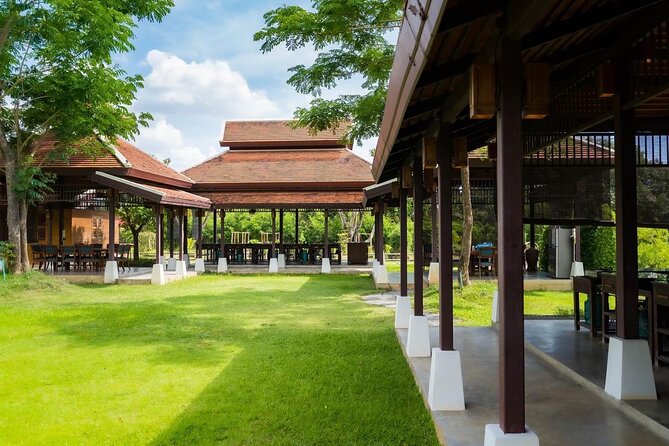
The farm walk is not just scenic filler. It sets you up to understand why Thai cooking tastes the way it does.
Here’s what you should expect: you’ll tour the organic farm with your instructor, learning about Thai herbs and vegetables as you go. Depending on the season, you may also collect eggs and some fresh ingredients. That part matters more than it sounds. When you’ve handled or seen the ingredient at the source, you stop thinking of Thai food as a list of dishes and start seeing it as a system of flavor.
Thai cooking is heavily driven by fresh aromatics, and this experience tries to connect that to something real. If you’ve ever tried to replicate Thai flavors at home and ended up with meals that taste close but not quite right, it’s often because the aromatics and paste components weren’t treated as core ingredients. The farm walk is where you’ll start getting that mindset.
A practical note: the menu is subject to change based on what’s available. That’s not a downgrade. It’s a reminder that you’re learning a living kitchen, not a fixed theme-park menu. The downside is that the exact ingredients and dishes may differ slightly day to day.
How the small-group setup (max 8) changes everything
Small-group cooking classes can be hit or miss. The best ones feel like a guided workshop. This one leans that way.
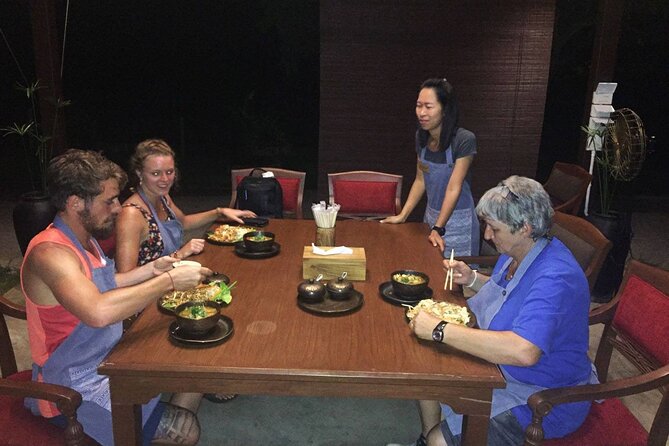
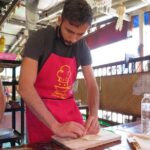
The key detail is the maximum of 8 travelers, and each person has an individual cooking station. In practice, that means you’re not standing around waiting while someone else does the work. You also get more attention when a question pops up, like how something should look at each stage or what to do if a sauce thickens faster than expected.
Group size also affects the fun part. At the end, you share the meal with your group. That’s a natural conversation moment: you compare what you thought was going to happen versus what actually happened in the pan. One thing I value about this kind of setup is that it turns the class into something social without turning it into chaos.
Another small but important plus: pickup and drop-off are organized. Evening classes are easier when you don’t spend your night negotiating transportation. If you’re tired from a day of sightseeing, that structure helps you get to the class in good shape.
Nothing jumping out yet? More Chiang Mai trips are just down the page
Tom Yam or Tom Kha, Pad Thai stir-fry, and curry: building flavor step by step
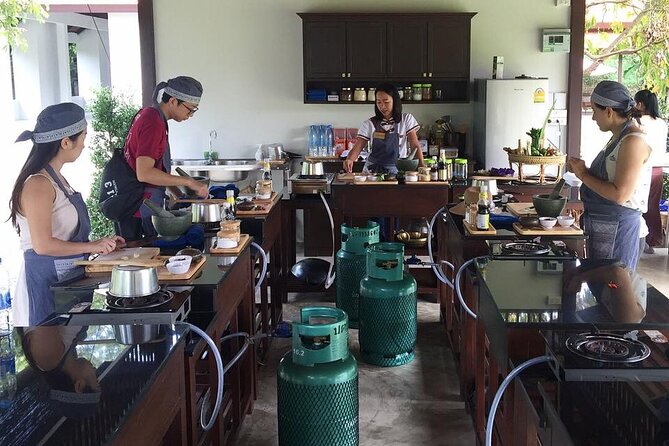
You cook four dishes during the evening, following a flow that covers the biggest Thai flavor categories: soup, a stir-fried noodle dish, a curry, and dessert.
The soups commonly include Tom Yam (hot and sour soup) and/or Tom Kha (coconut soup). Even if you’ve had both before, making them is a different story. You learn how the balance shifts when you adjust spice, acidity, and richness. Thai soups are one of the quickest ways to tell whether you truly understand the flavor targets, so it’s a smart first skill set.
Next comes a Thai stir-fried dish using rice noodles, listed as Pad Thai (Thai stir-fried rice noodles). This is where timing and texture matter. Rice noodles can go from perfect to mushy if you treat them like regular pasta, so you’ll get real guidance on what to watch for.
Then the centerpiece: curry. You’ll cook a green curry and/or red curry depending on what’s on the menu that night. The highlight here is that you create your own curry paste with help from your English-speaking instructor. That’s the skill you’ll remember, because curry paste isn’t just one step. It’s a flavor foundation that you build from scratch.
If you’ve only ever bought curry paste in a jar, this is where the lesson pays off. You’ll see how the paste’s aroma and balance affect everything downstream: the coconut milk feel, the heat level, and how the curry tastes once it relaxes on the stove.
A bonus in the real-world learning: one past participant specifically called out learning a curry style from scratch they loved, and that kind of feedback is usually a sign that the instruction wasn’t generic. You’re getting something you can actually reproduce, not just a one-off dish.
From the pan to the table: tasting your meal and comparing notes
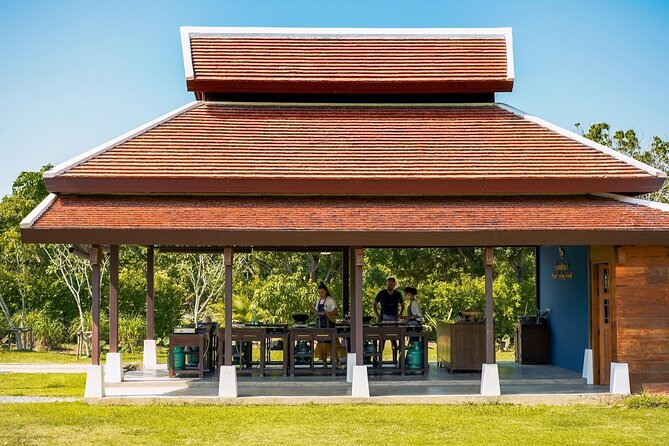
Once your dishes are finished, you get to enjoy them as a group meal. This is more than eating. It’s quality control.
You’ll share the meal with your group, and there’s time to exchange stories as you sample each other’s cooking. That part helps because Thai cooking often has small variations that still taste “correct.” For example, two bowls of soup can be equally delicious while one is slightly sourer or spicier, depending on how each person adjusted ingredients and timing.
If you like food experiences where you leave with confidence instead of just a full stomach, this is a strong format. You’ll taste, reflect, and realize what changes mattered. That makes it easier to take your notes later when you’re shopping for ingredients at home.
Mango sticky rice for dessert: ending with the right Thai finish
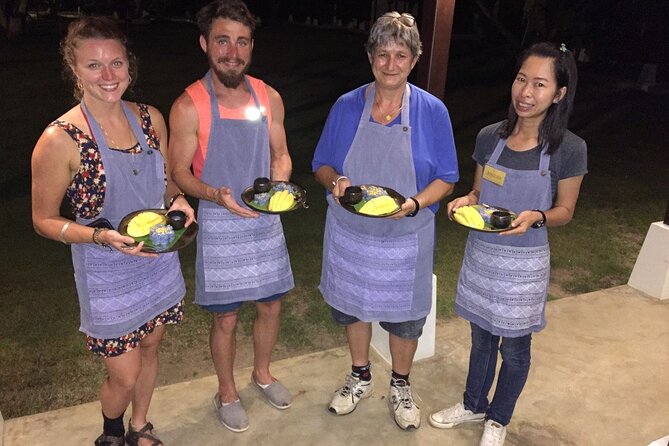
A good Thai meal needs a clean dessert finish, and this class includes Mango Sticky Rice (Khao Niao Mamuang).
Even if you’ve had it before, making sticky rice and pairing it properly helps you understand why it’s comfort food in Thailand. You’ll close out the meal with something familiar but also more meaningful because you cooked it yourself.
Dessert is also a good “reset” after curry. Curry can linger on your palate. Sweet, coconutty mango sticky rice balances the experience so you remember the class as a full journey, not just a heavy main course.
Value, timing, and who should book this class
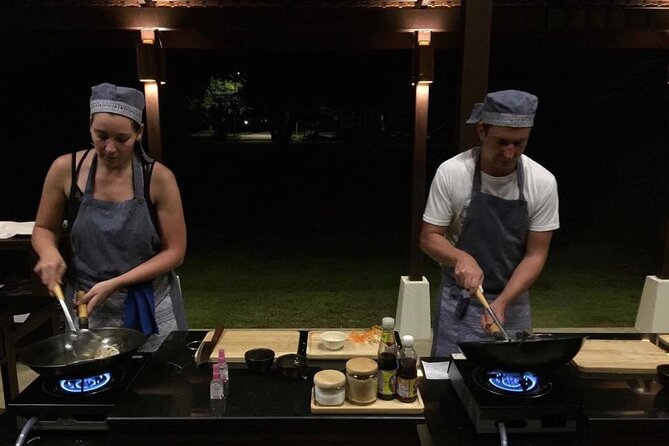
At about $51.46 per person for roughly 4 hours, this class offers good value if you want skills, not just a one-time meal.
Here’s how I see the deal:
- You get a full meal from dishes you made
- You cook four dishes, not just one
- You practice the hardest part (curry paste) with guidance
- You’re in a small group with your own station, so you’re not stuck watching
You’ll likely get the most from this experience if:
- You want to bring Thai cooking home in a practical way
- You prefer guided, hands-on learning over food tours where you only taste
- You’re traveling with a pace that allows for pickup, cooking time, and a relaxed dinner
You might want to think twice if:
- You’re only interested in eating quickly and moving on
- You need an entirely fixed menu regardless of weather or ingredient availability
- You have a tight schedule and can’t handle a weather-dependent evening plan
One last scheduling consideration: confirmation happens at booking, and the operator notes that if your booking details don’t match reality (for example a child’s age/height), you may be asked to pay an additional charge upfront. It’s rare, but it’s worth double-checking details when you reserve.
Quick practical tips before you go
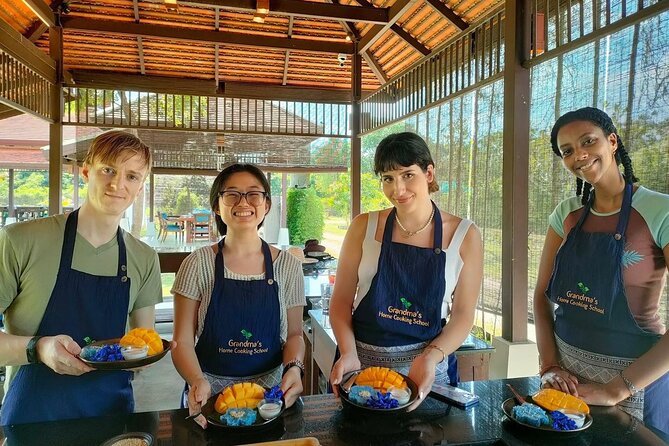
Keep your expectations grounded and you’ll enjoy this even more.
- Plan to arrive with a relaxed mindset. This is cooking time, not a museum sprint.
- Wear something you don’t mind getting splashed near ingredients. Cooking stations are hands-on.
- If you want to recreate the dishes later, bring a notebook or notes app ready to capture the key steps. One of the best things you can take home is the ingredient logic and the timing cues.
And remember the reality check: the experience requires good weather, and menu items can change with seasonal availability.
Should you book this Chiang Mai cooking class?
Book it if you want a fun evening that teaches real technique. This class is strongest when your goal is to learn how Thai flavors are built—especially through curry paste and a step-by-step cooking flow that ends in a meal you can actually evaluate and improve.
Skip it or pick something different if your priority is only to eat and you don’t care about learning the process. You’ll still leave fed, but the value is in the skills.
If you’re the type who likes structured hands-on experiences, small groups, and learning that you can repeat later, this is one of the better ways to spend a Chiang Mai afternoon turning curiosity into a dinner you can’t forget.
FAQ
What time does the evening cooking class start?
The class starts at 4:00 pm and runs for about 4 hours.
Is hotel pickup included?
Pickup is offered from your hotel in Chiang Mai.
How many dishes will I cook?
You’ll cook four dishes. They can include soups such as Tom Yam (hot and sour soup) or Tom Kha (coconut soup), Pad Thai (stir-fried rice noodles), a green curry or red curry, and Mango Sticky Rice. The exact menu can change by season and ingredient availability.
Is it a large group?
No. This experience has a maximum of 8 travelers, and each participant has an individual cooking station.
What if the weather is bad?
The experience requires good weather. If it’s canceled due to poor weather, you’ll be offered a different date or a full refund.
Can I cancel for free?
Yes. Free cancellation is available, and you can cancel up to 24 hours in advance for a full refund. If you cancel less than 24 hours before the start time, the amount paid is not refunded.
More Cooking Classes in Chiang Mai
- Half-Day Thai Cooking Class at Organic Farm in Chiang Mai★ 5.0 · 19,087 reviews
- Chiang Mai: Cooking Class, Market & Thai Herbs Garden Tour★ 4.9 · 4,824 reviews
- Chiang Mai: Authentic Cooking Class with Market & Farm Visit★ 4.9 · 4,546 reviews
- Thai and Akha Cooking Class in Chiang Mai★ 5.0 · 4,358 reviews
- Chiang Mai: Cooking Class with Market and Pickup★ 4.9 · 1,365 reviews
More Tour Reviews in Chiang Mai
- Half-Day Thai Cooking Class at Organic Farm in Chiang Mai★ 5.0 · 19,087 reviews
- Chiang Mai: Elephant Sanctuary, Waterfall & Bamboo Rafting★ 4.9 · 9,160 reviews
- Chiang Mai: Doi Inthanon National Park Eco-Friendly Tour★ 4.6 · 6,667 reviews
- Chiang Mai: Elephant Sanctuary & Waterfall Group Tour★ 4.9 · 5,780 reviews
- Chiang Mai: Chiang Rai Temples, Karen Tribe and Hot Springs★ 4.7 · 5,401 reviews
More Chiang Mai Cooking Classes
- Half-Day Thai Cooking Class at Organic Farm in Chiang Mai★ 5.0 · 19,087 reviews
- Chiang Mai: Cooking Class, Market & Thai Herbs Garden Tour★ 4.9 · 4,824 reviews
- Chiang Mai: Authentic Cooking Class with Market & Farm Visit★ 4.9 · 4,546 reviews
- Thai and Akha Cooking Class in Chiang Mai★ 5.0 · 4,358 reviews
- Chiang Mai: Cooking Class with Market and Pickup★ 4.9 · 1,365 reviews
Fresh off the pile: Chiang Mai tours we have just written up

Chiang Mai Cooking Classes, compared.
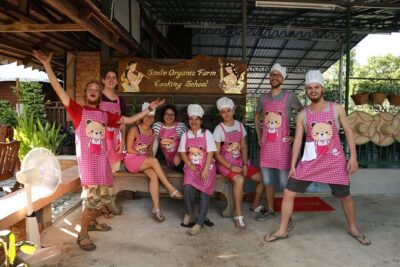 ★ 5.0Half-Day Thai Cooking Class at Organic Farm in Chiang MaiFrom $2919,087 reviews
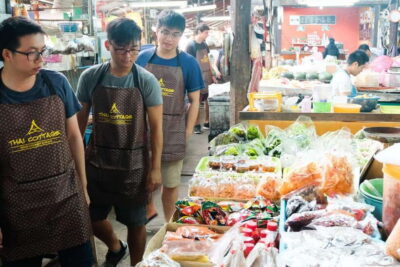 ★ 4.9Cooking Class, Market & Thai Herbs Garden TourFrom $314,824 reviews
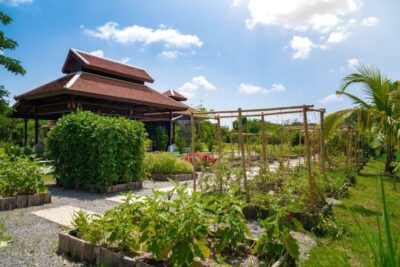 ★ 4.9Authentic Cooking Class with Market & Farm VisitFrom $344,546 reviews
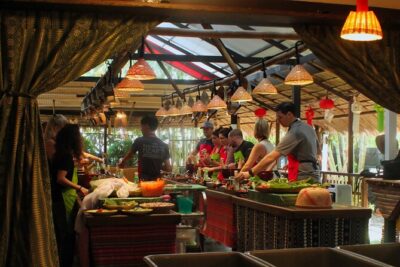 ★ 5.0Thai and Akha Cooking Class in Chiang MaiFrom $424,358 reviews
 ★ 4.9Cooking Class with Market and PickupFrom $251,365 reviews
 ★ 4.9Cooking Class with Organic Farm at Mama NoiFrom $321,151 reviews
 ★ 5.0Full Day Thai Cooking at Farm (Chiang Mai)From $391,127 reviews
 ★ 4.9HALF-DAY COOKING COURSE at a Thai Cooking FarmFrom $28705 reviews
Browse the lists this tour appears in