
Reviewed · TOURS
From Chiang Mai: Lamphun and Lampang Temples Tour
Northern temples are at their best when they’re quieter. This day trip swaps Chiang Mai crowds for classic sites around Lamphun and Lampang, with guided context that makes the architecture and legends click. The route also includes an optional horse cart loop in Lampang, where these carriages are still part of daily life.
What I like most is how the stops feel spread out and intentional, not like a rushed checklist. I also really value the guide-led history in plain English, with time to ask questions (and help finding your way through local markets). One thing to consider: lunch isn’t included, and the optional horse-cart ride costs extra, so you’ll want cash ready.
If you’re sensitive to heat, plan for it. Even with air-conditioned transport, temple visits and market time mean long stretches in the sun, so sunscreen and long sleeves are more than nice-to-have.
In This Review
- Key Things I’d Put on Your Shortlist
- Lamphun and Lampang from Chiang Mai: The Quiet North Route
- How the 9-Hour Plan Really Works (and Where Time Goes)
- Wat Chammathewi: The Square Pagoda and 60 Buddha Arches
- Lamphun’s River Temple: Hariphunchai and Mon Kingdom Roots
- Lamphun Lunch Break: Where to Refuel Without Losing the Day
- Wat Phra That Lampang Luang: Lanna Architecture You Can Actually Read
- Lampang Horse Cart City: A Short Ride That Changes the Perspective
- Wat Phra Chedi Sao: One More Temple Stop, Right Before Market Time
- Lampang Province Food Market Stop: Eat Local, Not Just Read the Menu
- Transport Comfort, Small-Group Pace, and Guide Style
- Price and Value: What You’re Paying For at $106
- Responsible Touring: Glass Bottles and Carbon Offsets
- Who Should Book This Tour, and Who Might Skip It
- Should You Book This Lamphun and Lampang Day Trip?
- FAQ
- FAQ
- What’s the duration of the Lamphun and Lampang temples tour?
- Where does pickup happen?
- How big is the group?
- Is the guide available in English?
- Which temples are included in the entry price?
- Is lunch included?
- How much is the horse-cart ride, if I want to do it?
- Does the tour provide drinking water?
- What should I bring?
- Is the tour low-impact, and does it include carbon offset?
Key Things I’d Put on Your Shortlist
- Lanna and Mon-era temple stops in two cities that most people skip for bigger Chiang Mai highlights
- Wat Chammathewi: a stepped square pagoda tied to Dvaravati-period tradition, plus the stupa with 60 Buddha statues
- Wat Phra That Lampang Luang: one of the best-known examples of Lanna-style architecture, with museum-like details in the complex
- Horse Cart City in Lampang: a unique town loop (usually 15–30 minutes) along the Wang River area
- Small-group pace (max 9) that helps you actually absorb the place, not just pass through
- Low-impact touring with glass-bottled water and carbon emissions offset credits
A first trip to Chiang Mai fills up fast. Start with the tours everyone books.
- Half-Day Thai Cooking Class at Organic Farm in Chiang Mai
★ 5.0 · 19,087 reviews - Chiang Mai: Elephant Sanctuary, Waterfall & Bamboo Rafting
★ 4.9 · 9,160 reviews - Chiang Mai: Doi Inthanon National Park Eco-Friendly Tour
★ 4.6 · 6,667 reviews - Chiang Mai: Elephant Sanctuary & Waterfall Group Tour
★ 4.9 · 5,780 reviews
Lamphun and Lampang from Chiang Mai: The Quiet North Route
This is the kind of day trip that makes you feel like you’re traveling sideways across northern Thailand, not just ticking off temples. Lamphun and Lampang sit close enough to Chiang Mai for a one-day plan, but they draw fewer tour crowds, which changes the whole experience at the sites.
You’ll spend most of the day in two historical cities along old cultural routes. That matters because the temples aren’t just pretty buildings. They’re markers of different eras and kingdoms, from Dvaravati influence to Lanna-period artistry.
How the 9-Hour Plan Really Works (and Where Time Goes)
The tour runs about 9 hours door-to-door from Chiang Mai. After pickup, you ride in an air-conditioned vehicle for roughly 75 minutes, then begin temple time, followed by lunch in Lamphun and a final stretch that includes more temples and a Lampang food market stop.
A typical flow looks like this:
- First temple stop: Wat Chammathewi
- Next: Wat Phra That Hariphunchai Woramahawihan in Lamphun
- Lamphun lunch time (you choose what fits your budget)
- Then you head to Lampang for Wat Phra That Lampang Luang, plus Wat Phra Chedi Sao
- Finish with a food market visit in Lampang province
- Return transfer back to Chiang Mai
You’ll notice there’s room to slow down. Temple visits are short enough to stay comfortable, but long enough that your guide can explain what you’re seeing before you move on.
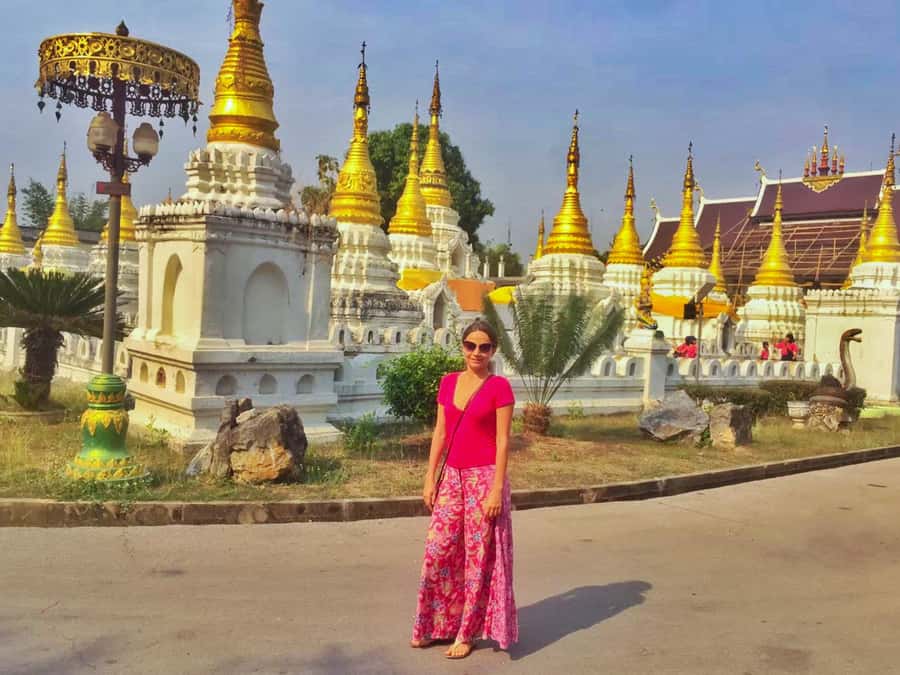
Wat Chammathewi: The Square Pagoda and 60 Buddha Arches
Wat Chammathewi is an unusual first stop because it hits you with details right away. You’re looking at a stupa area where arches are said to hold 60 Buddha statues. There’s also a major local legend connected to Queen Chama Devi’s ashes, which are said to be inside.
What really grabs attention is the pagoda form. The square, stepped-pyramid style is described as the oldest surviving example from the Dvaravati period, a family/realm that ruled much of Thailand from the 6th to 11th centuries. Even if you don’t memorize dates, it helps you see how religious art travels across time.
Practical tip: go in with a quick question in mind—like what makes Dvaravati-style structure different from later Thai temple layouts—and your guide can steer you toward the right details.

Lamphun’s River Temple: Hariphunchai and Mon Kingdom Roots
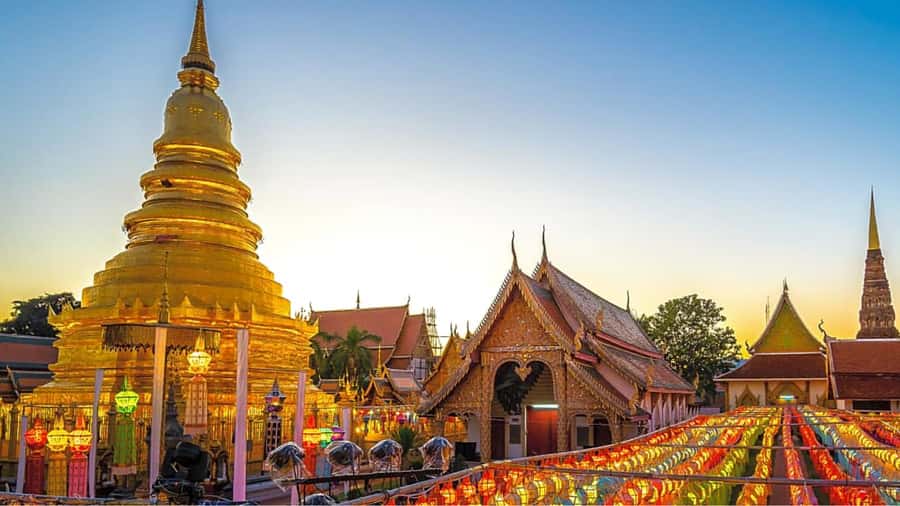
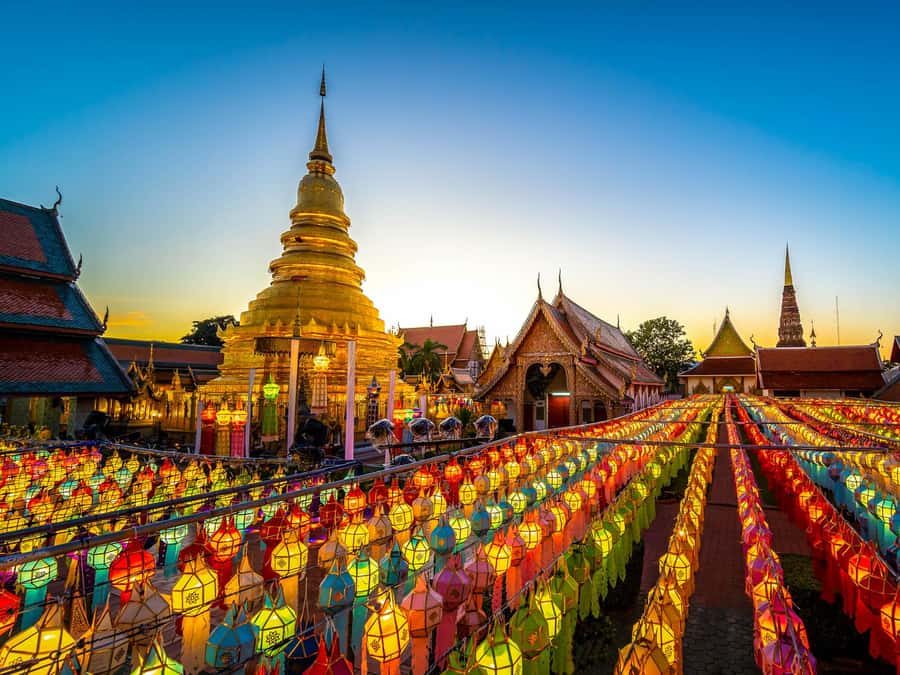
Next up is Wat Phra That Hariphunchai Woramahawihan, often treated as Lamphun’s anchor temple. This complex is tied to the 9th century, and it’s associated with the Mon Kingdom—power in the region from about the 9th to 13th centuries.
The name itself matters. Hariphunchai gets its identity from the Mon Kingdom city that ruled this part of northern Thailand. When you hear that explanation during your visit, the architecture stops feeling random. It becomes a clue to who controlled culture and trade here, and how religious styles were shaped.
This stop is listed for about one hour, which is the right amount of time for a place like this. You’ll have time to look slowly, not just snap photos and bolt.
Lamphun Lunch Break: Where to Refuel Without Losing the Day
Lunch time is built into the schedule for about one hour in Lamphun. The tour doesn’t include lunch, so you’ll pay your own way here. That sounds like a hassle, but it’s also a choice: you can eat something simple and local without feeling locked into a single tourist menu.
This lunch break also works like a reset button after temple walking. If the weather is hot, use this time to cool down, refill water, and get ready for the second half of the day in Lampang.
What I recommend: bring cash. You might want to grab a drink and a snack quickly without looking for card payments.
Wat Phra That Lampang Luang: Lanna Architecture You Can Actually Read
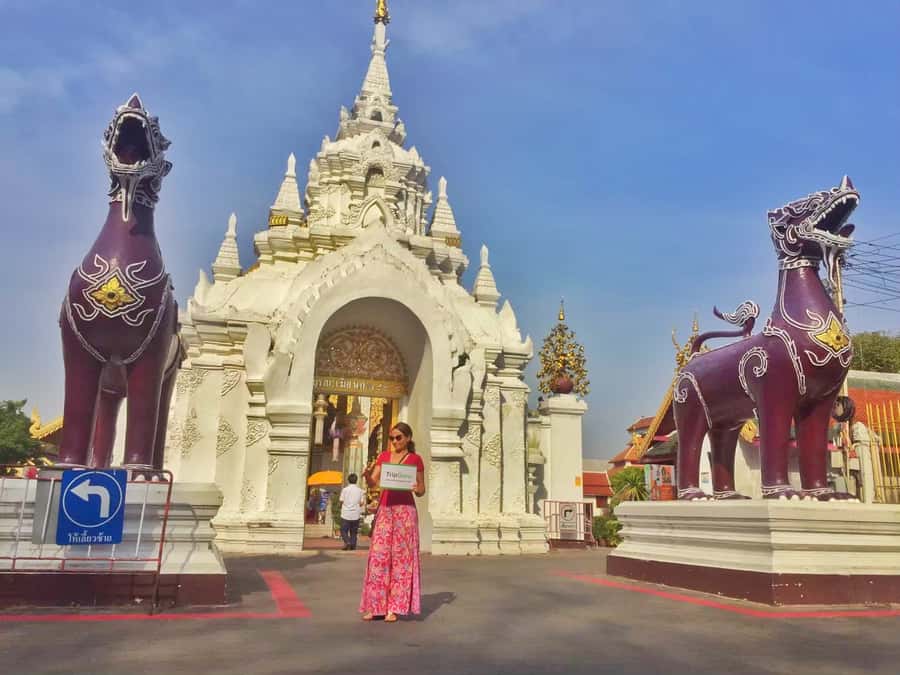
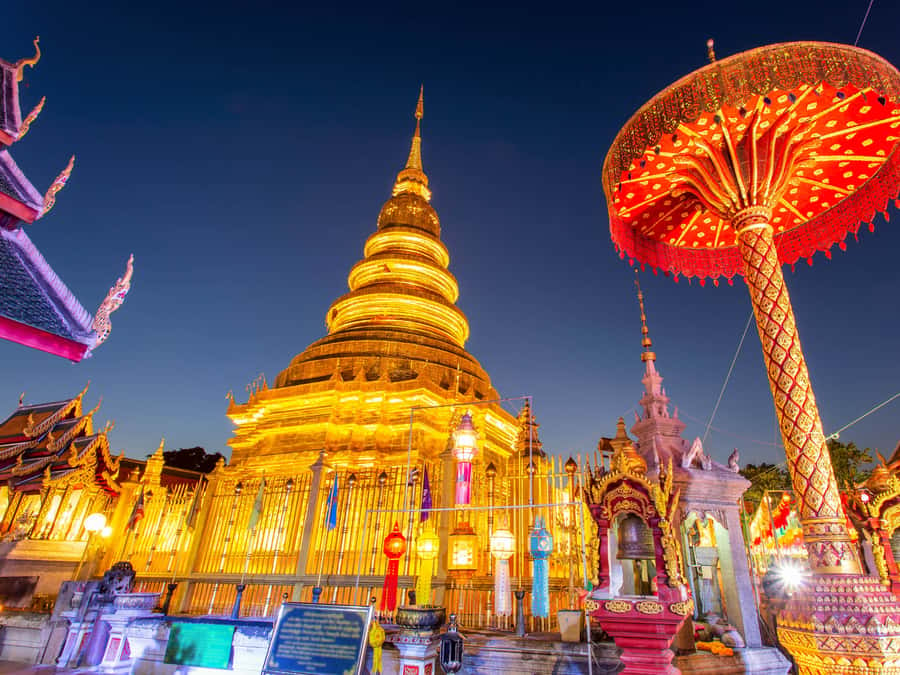
Then you move into Lampang’s most famous temple stop: Wat Phra That Lampang Luang. It’s described as a 13th-century Lanna-style Buddhist temple and one of the best examples of this style in Thailand.
What I like about this temple complex is that it’s not just one main stupa you glance at. The grounds include a historical museum element, a massive brick gate, intricately painted viharas, a sand-filled courtyard, and multiple bronze and copper stupas.
When you’re touring with an English-speaking guide, the value is in translating the visual “parts list.” Lanna-style details can be easy to miss if you don’t know what to look for. With guidance, you start noticing how the structure is organized and why it feels so balanced.
This stop is listed at around 30 minutes. That’s enough time if you pace yourself: look at the gate and courtyard first, then shift focus to the viharas and stupa areas your guide points out.
Lampang Horse Cart City: A Short Ride That Changes the Perspective
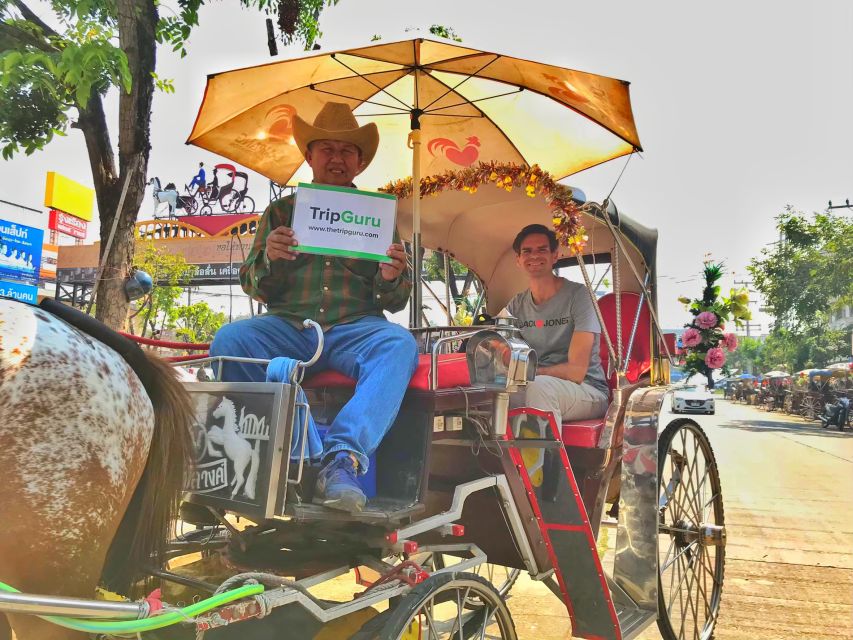
One of the most distinctive parts of this day is the optional horse-cart ride in Lampang. Lampang is known across Thailand as Horse Cart City, and it’s said to be the only town in the country where these carriages are still found.
You’ll typically have 15 to 30 minutes for the ride, with a route that can include the Wang River area and key sights in town. The best part of a short cart ride is that it gives you a “moving street-level” view without spending the whole day in transit.
Cost note: the horse-cart ride is not included. It’s listed as 500 THB for a two-person cart. If you’re traveling as a solo rider, you may still be charged based on cart pricing rather than per person.
Wat Phra Chedi Sao: One More Temple Stop, Right Before Market Time
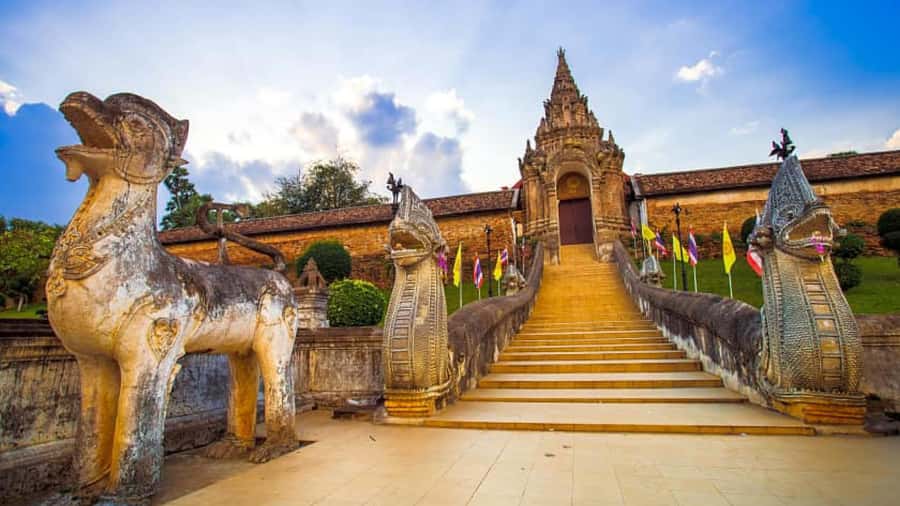
After Lampang Luang, you’ll also visit Wat Phra Chedi Sao for about 30 minutes. The schedule gives it the same tight timing as the other main temples, which suggests the intent is variety without burning you out.
Because the tour time here is shorter, this is a good moment to treat the stop like a visual comparison. You can ask your guide how this temple’s features relate back to what you saw at Hariphunchai and Lampang Luang—style differences, era cues, and how religion shows up in local building choices.
Practical tip: if you’re feeling temple fatigue, this is where you look for one or two standout details rather than trying to take everything in.
Lampang Province Food Market Stop: Eat Local, Not Just Read the Menu
The tour includes a food market visit in Lampang province for about one hour. Lunch is separate in Lamphun, so this market time becomes your chance to snack, try something small, or pick up a simple bite between temple stops.
Even if you don’t love markets, this segment is useful because it anchors the day in daily life. Temples are the spiritual past. Markets show the living present.
Bring cash again. Also, if you’re unsure what to order, lean on your guide’s help. A good guide can help you figure out what’s safe, what’s popular, and what’s worth the money.
Transport Comfort, Small-Group Pace, and Guide Style
A big part of why this tour works is the group size: limited to 9 participants. That matters because you’re not fighting for attention when your guide explains what you’re seeing. A small group also usually means less waiting around at each stop.
Transport is air-conditioned, and the ride from Chiang Mai is about 75 minutes each way (depending on traffic). The tour’s comfort rating is strong, too, with a high percentage of reviewers giving perfect marks for the vehicle.
Guide quality is where you’ll feel the difference most. In the past, guides like Wassana, Del, Jackie, Sunny, and Sam have been praised for clear English, steady explanations, and not rushing. In plain terms: you get context, not just names of places.
Price and Value: What You’re Paying For at $106
At $106 per person for a 9-hour trip, you’re paying for more than entrances. The value is the package of:
- Hotel pickup and drop-off in Chiang Mai city areas
- Air-conditioned transport
- An English-speaking guide
- Included entry to Wat Phra That Lampang Luang and Wat Phra That Hariphunchai Woramahawihan
- A glass bottle of drinking water
- Travel insurance
- Carbon emissions offset credits
What’s not included:
- Lunch
- The horse-cart ride (500 THB for a two-person cart)
So the real question is whether you want this as a guided day instead of DIY. If you like history explained in real time, and if you don’t want to coordinate drivers and temple admissions yourself, the price becomes easier to justify. If you plan to DIY, expect to spend time figuring out routes and timing—and you’ll still need someone to help translate what you’re seeing.
Responsible Touring: Glass Bottles and Carbon Offsets
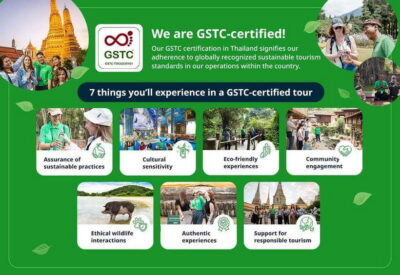
This is also a “how you travel” tour, not only a “where you go” tour. It’s described as a GSTC-certified approach and aims to keep the impact lower.
Two concrete things are mentioned:
- Water is provided in glass bottles
- Carbon emissions are offset with credits for every tour
You won’t change the world in one day, but these small choices add up. I like tours that at least think about footprint and waste reduction instead of treating it as an afterthought.
Who Should Book This Tour, and Who Might Skip It
This tour is a strong fit if:
- You want temples with context, not just photos
- You like quieter alternative day trips that still feel substantial
- You’d enjoy a short cultural ride in Lampang Horse Cart City
- You prefer a small group over a big bus crowd
You might want to consider a different option if:
- You want full control over lunch and shopping (since lunch isn’t included)
- You hate heat exposure, because you’ll still be outside for temple and market time
- You’re traveling with a tight budget and also plan to do the horse-cart ride, which adds cost
Should You Book This Lamphun and Lampang Day Trip?
My decision checklist is simple. Book it if you want a guided, low-crowd-style day that connects Dvaravati, Mon-era, and Lanna influences in a single route—and you like the idea of finishing with a Lampang market stop. Skip or look elsewhere if your priority is only the biggest Chiang Mai-style attractions, or if you prefer to set your own schedule without any structured timing.
If you do book, come prepared with cash and sun protection. Then let the guide do the heavy lifting: that’s how you’ll get the most out of the temple details and legends, even in a 9-hour window.
FAQ
FAQ
What’s the duration of the Lamphun and Lampang temples tour?
It lasts about 9 hours.
Where does pickup happen?
Pickup is included from major areas in downtown Chiang Mai within a 5 km radius of Tha Pae Gate, including the Old City Wall areas and nearby roads such as Chang Klan Road, Thapae Road, and Wualai Road.
How big is the group?
The tour is limited to 9 participants.
Is the guide available in English?
Yes, the tour includes an English-speaking tour guide.
Which temples are included in the entry price?
Entry is included for Wat Phra That Lampang Luang and Wat Phra That Hariphunchai Woramahawihan.
Is lunch included?
No. Lunch is not included.
How much is the horse-cart ride, if I want to do it?
The horse-cart ride costs 500 THB for a two-person cart and is not included.
Does the tour provide drinking water?
Yes. You receive a glass bottle of drinking water.
What should I bring?
Bring water, cash, sunscreen, long pants, and a long-sleeved shirt.
Is the tour low-impact, and does it include carbon offset?
Yes. It’s described as GSTC-certified and includes carbon emissions offset credits for every tour.
More Tours in Chiang Mai
- Chiang Mai: Doi Inthanon National Park Eco-Friendly Tour★ 4.6 · 6,667 reviews
- Chiang Mai: Elephant Sanctuary & Waterfall Group Tour★ 4.9 · 5,780 reviews
- Chiang Mai: Cooking Class, Market & Thai Herbs Garden Tour★ 4.9 · 4,824 reviews
- Chiang Mai: Elephant Sanctuary Feeding Program Half-Day Tour★ 4.8 · 4,527 reviews
- Chiang Rai White Temple and Blue Temple Day Tour★ 4.6 · 3,366 reviews
More Tour Reviews in Chiang Mai
- Half-Day Thai Cooking Class at Organic Farm in Chiang Mai★ 5.0 · 19,087 reviews
- Chiang Mai: Elephant Sanctuary, Waterfall & Bamboo Rafting★ 4.9 · 9,160 reviews
- Chiang Mai: Doi Inthanon National Park Eco-Friendly Tour★ 4.6 · 6,667 reviews
- Chiang Mai: Elephant Sanctuary & Waterfall Group Tour★ 4.9 · 5,780 reviews
- Chiang Mai: Chiang Rai Temples, Karen Tribe and Hot Springs★ 4.7 · 5,401 reviews
Fresh off the pile: Chiang Mai tours we have just written up

Tours, compared.
 ★ 4.9Elephant Sanctuary & Waterfall Group TourFrom $505,780 reviews
 ★ 4.9Cooking Class, Market & Thai Herbs Garden TourFrom $314,824 reviews
 ★ 4.8Elephant Sanctuary Feeding Program Half-Day TourFrom $274,527 reviews
 ★ 4.6Chiang Rai White Temple and Blue Temple Day TourFrom $273,366 reviews
 ★ 4.2White, Red/Black & Blue Temples Tour with LunchFrom $332,017 reviews
 ★ 4.8Elephant Care Program and Nursery TourFrom $531,899 reviews
 ★ 4.6Doi Suthep and Wat Umong Enchanting Evening TourFrom $271,811 reviews
 ★ 4.9Small Group Ethical Elephant Sanctuary TourFrom $771,572 reviews