
Reviewed · CHIANG MAI TUK TUK TOURS
Half day Best of Chiang Mai City by Tuk-Tuk Private tours
Chiang Mai looks best when you start with a plan. This half-day Best of Chiang Mai tour is a fast orientation ride that threads together the old-city walls, famous temples, and a major local market. I especially like the relaxed private tuk-tuk pickup-and-drop setup (you don’t need to figure out routes on arrival), and I like the mix of stops: Wat Chedi Luang, the 3 Kings Monument, and the silversmithing-focused Wat Srisuphan (Wat Srisupan Aram). One possible drawback: the whole experience is only about 3 hours, so if you’re hoping for lots of variety beyond the headline sights, you may feel a bit rushed.
Timing is flexible, with morning and afternoon departures, and the pace is designed for your first day: photo-friendly gates and canals, then temple time, then market time before you’re sent back to your hotel. You’ll get drinking water and seasonal fruit along the way, plus accident travel insurance, but you’ll still handle personal shopping and any souvenir photo purchases yourself.
In This Review
- Key Things That Make This Tuk-Tuk Tour Worth It
- The 3-Hour Timing That Turns Chiang Mai From Confusing Into Clear
- Private Tuk-Tuk Pickup: Easy Start, City Views Without the Stress
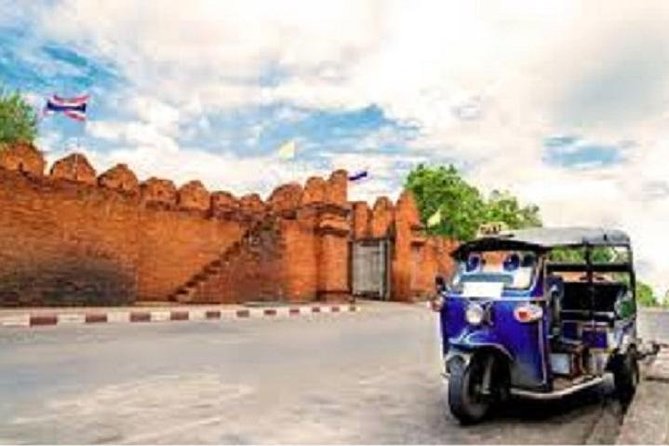
- Old-City Canals and Gates: Chiang Mai Gate and Tae Pae Gate Photos
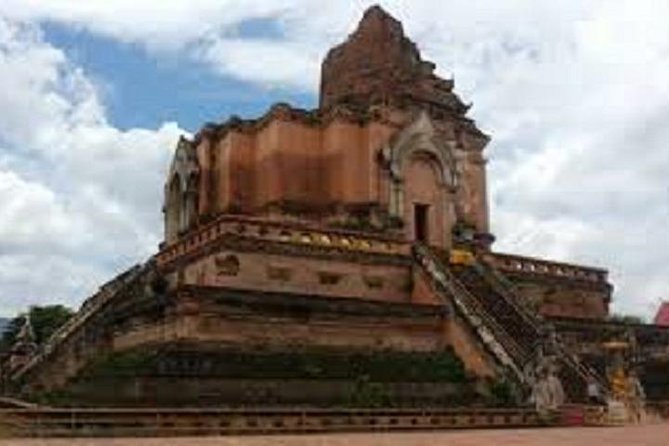
- Wat Chedi Luang: The Emerald Buddha Story and the 1545 Earthquake
- 3 Kings Monument: Quick Landmark Break Between Temples and Market Time
- Wat Srisuphan (Wat Srisupan Aram): The Silver Temple and the Silversmith Tradition
- Warorot Market: Where Local Shopping, Lower Prices, and Big Energy Collide
- What’s Included for $55, and What You’ll Still Pay For
- Best Fit: Who This Tour Works For
- A Quick Reality Check: The Two Common Tradeoffs
- Should You Book This Best of Chiang Mai Tuk-Tuk Tour?
- FAQ
- How long is the half-day tour?
- What times are the departure options?
- How many temples and markets are visited?
- Is hotel pickup and drop-off included?
- What is included in the tour price?
- What should I know about dress code?
- Is the tour limited to small groups?
- Are photos and shopping included?
Key Things That Make This Tuk-Tuk Tour Worth It
- Hotel pickup and drop-off by tuk-tuk so you can start seeing the city immediately
- Four temples plus Warorot Market in one short, focused circuit
- Old-city gates by canal including Chiang Mai Gate and Tae Pae Gate
- Wat Chedi Luang context: the Emerald Buddha link and the 1545 earthquake damage
- Wat Srisuphan’s silver tradition and the chance to see artisans work
Around town by tuk tuk, more open-air city loops
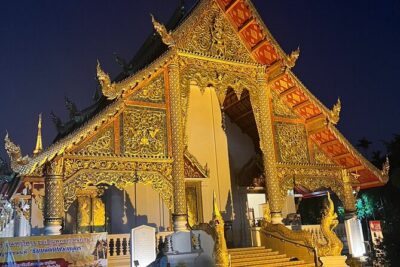
- Chiang Mai Temples and Market Tuk-Tuk Evening Night Tour
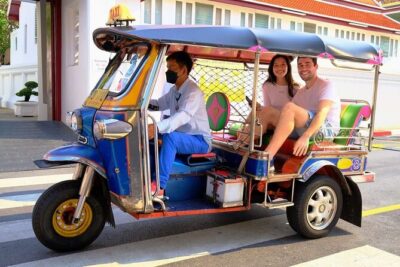
★ 4.5 · 201 reviews - Private Chiang Mai Old City Half Day Tuk Tuk Tour
★ 4.5 · 157 reviews - Full-Day Guided Tuk Tuk Chiang Mai Adventure and Rafting
★ 5.0 · 140 reviews - Chiang Mai: Exploration of Old City by Private Tuk-Tuk
★ 4.3 · 127 reviews
The 3-Hour Timing That Turns Chiang Mai From Confusing Into Clear
This is built for orientation. You’ll be out for roughly 3 hours, then back at your hotel before your day really heats up. Morning runs start with pickup around 8:30am. The afternoon option is listed with a departure time around 12:30pm to 1:30pm, and in both cases you’re back around 11:30am or 4:30pm.
That short window is the whole point. If you’re new to Chiang Mai, the city can feel like a puzzle: old-city walls here, neighborhoods spreading outward, and a market scene that doesn’t behave like a single “thing.” This tour gives you a mental map quickly, using the canal, the gates, and then the inner-city temple cluster. It’s not trying to be everything. It’s trying to help you decide what to revisit later.
Private Tuk-Tuk Pickup: Easy Start, City Views Without the Stress
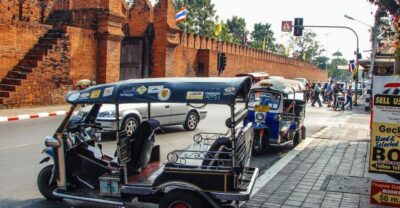
You don’t just meet at some corner and figure it out. Your driver picks you up from your hotel or guesthouse, and you’ll ride around in a tuk-tuk during the circuit. That matters more than it sounds, because Chiang Mai’s best first-day experience is usually the one where you don’t spend the first hour negotiating transport.
Inside the tour, the tuk-tuk also sets expectations for comfort. A private vehicle is convenient, but it’s still a tuk-tuk. One caution worth keeping in mind: the vehicle condition can vary. If you’re sensitive to seat comfort, you might want to do a quick check at pickup before you settle in.
On the upside, tuk-tuks are great for the “look and learn” stage. You’ll be able to take in the street layout, the canals around the old city, and the gate areas without staring at a phone map every few minutes.
Old-City Canals and Gates: Chiang Mai Gate and Tae Pae Gate Photos
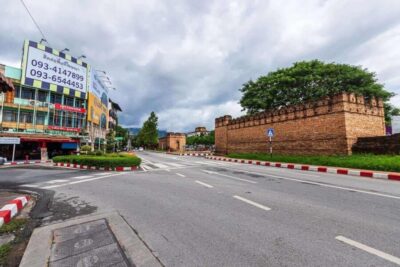
Your route begins with the canal that surrounds the old city area. This is one of those practical sightseeing moves that also makes future exploring easier. When you understand where the water line and walls used to be, it’s easier to navigate later on foot or by motorbike.
Then you’ll stop at key historical gates, especially Chiang Mai Gate and Tae Pae Gate. These aren’t just dramatic backdrops for photos. They’re also visual markers for how the city used to be protected, and the stops help you connect the temples you’ll see later to the city’s defensive layout.
If you like architecture or city planning, this part is a small payoff that makes the rest of the day click.
Nothing jumping out yet? More Chiang Mai trips are just down the page
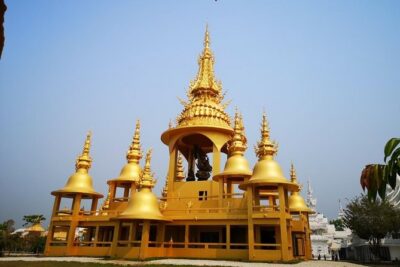
Wat Chedi Luang: The Emerald Buddha Story and the 1545 Earthquake
Next comes Wat Chedi Luang, a temple stop with real story behind it. You’ll hear the meaning tied to the site itself: it’s associated with the Temple of the big stupha, and it was constructed during the 14th and 15th centuries.
Here’s what makes this temple more than a stop-and-photo moment:
- It was once home to the Emerald Buddha, which now is in Bangkok’s Grand Palace.
- In 1545, an earthquake destroyed the top 30 meters of the temple.
- Even after later repairs, you can still spot signs of the damage around the lower edges.
That earthquake detail is the kind of fact that changes how you look at ruins. Instead of thinking it’s just old, you start seeing time layers: what broke, what got fixed, and what remains visible.
If you’re visiting on your first day, this stop also anchors the entire tour. Wat Chedi Luang is a major reference point, so you’ll understand the city’s temple significance faster than you would by picking temples at random.
3 Kings Monument: Quick Landmark Break Between Temples and Market Time
After Wat Chedi Luang, you’ll see the 3 Kings Monument. It’s a smaller stop in the flow, but it works as a “reset moment” between big temple impressions and the more chaotic energy of a market.
Think of it as a landmark you can remember later when you’re walking around. If you end up exploring on your own after the tour, a monument like this gives you one more fixed point to orient yourself.
Wat Srisuphan (Wat Srisupan Aram): The Silver Temple and the Silversmith Tradition
One reason I like this tour’s temple selection is that it avoids the feeling of doing the same kind of temple stop over and over. The switch from Wat Chedi Luang to the silversmith-connected Wat Srisuphan Aram (also written as Wat Srisupan) adds a different angle.
Key facts you’ll hear and likely notice:
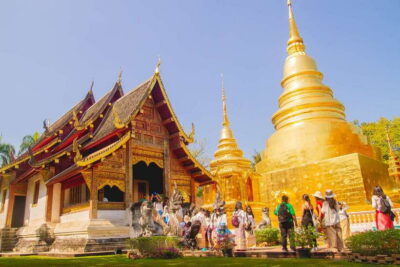
- The temple was first founded in 1501 under King Mengrai.
- It was originally named Wat Srisuphan Aram.
- It was renovated in 2004.
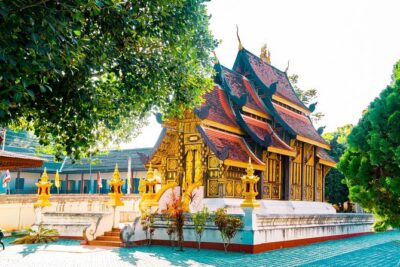
- The main visual hook is a silver-colored building that shimmers in sunlight.
This stop also ties directly to local craft culture. The temple is described as a center that helps preserve Chiang Mai’s silversmith tradition, with techniques passed down to new generations at the Ancient Lanna Arts Study Centre, also known as Sala Sip Mu Lanna. Even if you’re not shopping, watching artisans at work (when you’re encouraged to do so) gives the tour a more human feel than just temple viewing.
If you care about traditional crafts, this is one of the best value parts of the day. You’ll leave with more context about why Chiang Mai is known for certain handmade goods.
Warorot Market: Where Local Shopping, Lower Prices, and Big Energy Collide
Then you head to Warorot Market. This is a major local market where many residents do everyday shopping, so it feels different from tourist-focused souvenir rows.
Before you even step fully into the market, you’ll get a quick view of where Chiang Mai’s Sunday Market and the Night Bazaar are located. That’s helpful because those events can feel like separate universes if you don’t know where they sit in the city.
Inside Warorot Market, you’ll see a long list of everyday and specialty items, including:
- fresh and dried fruit and vegetables
- souvenirs
- clothing
- fireworks
- jewelry and watches
- beauty supplies
- a large flower market
- fresh seafood
The tour also emphasizes that prices are lowest in Chiang Mai, which is exactly what you want to hear if you’re trying to balance budget with variety.
Two practical tips for making this market stop enjoyable:
- Wear shoes that can handle crowds and uneven surfaces.
- Don’t expect a calm browsing experience. This is a working market.
You’ll be given time for exploring, and the tuk-tuk returns you to your hotel after you’re done, around 11:30am or 4:30pm depending on your departure.
What’s Included for $55, and What You’ll Still Pay For
For a $55 half-day tour, the included value is pretty clear:
- Hotel pickup and drop-off by tuk-tuk
- an English-speaking tour guide
- drinking water and season fruits
- accident travel insurance
What’s not included:
- souvenir photos for purchase
- personal shopping
For many first-timers, the biggest hidden value is the guide’s route logic. You get a compact set of city anchors—gates, major temples, and Warorot Market—without spending your limited vacation time figuring out what’s closest and most worth repeating.
Best Fit: Who This Tour Works For
This tour is a strong match if you:
- are arriving in Chiang Mai and want a quick, organized overview
- want four temple stops plus a major market without building a plan from scratch
- like mixing culture with practical shopping awareness (especially Warorot’s variety and price reputation)
It’s also a decent option if you don’t want to commit a full day. But if you crave deep exploration at each temple, this may feel like a highlight reel rather than a slow immersion.
A Quick Reality Check: The Two Common Tradeoffs
First, the 3-hour duration. It’s short by design. That’s great for orientation, but not ideal if you want extra time to linger in each place or expand into side streets on your own.
Second, tuk-tuk comfort can be hit or miss. The tour relies on a private tuk-tuk, but vehicle condition isn’t something a tour operator can fully control. If you’re picky about comfort, mentally budget a little “tuk-tuk roughness,” and ask to adjust if something feels off at pickup.
Should You Book This Best of Chiang Mai Tuk-Tuk Tour?
Book it if you want a smart first-day framework: gates and canals for orientation, Wat Chedi Luang for historical weight, Wat Srisuphan for craft culture, and Warorot Market for a real local shopping hit. At $55 with pickup, guide, water, and fruit included, it’s hard to beat as a time-saver.
Skip it only if you already know Chiang Mai well and you’re looking for a longer, more varied route. Or if you hate short temple visits and prefer to spend hours at fewer sites.
If you’re traveling with limited time and want your bearings fast, this tour does exactly that—then you can come back later for the places you want to see again.
FAQ
How long is the half-day tour?
It runs for about 3 hours.
What times are the departure options?
There is a morning start and an afternoon start. Pickup begins around 8:30am for the morning option, and the afternoon option is listed with a start around 12:30pm / 1:30pm.
How many temples and markets are visited?
You’ll visit four temples and one market, with Warorot Market as the market stop.
Is hotel pickup and drop-off included?
Yes. You get pickup and drop-off from your hotel or guesthouse by tuk-tuk.
What is included in the tour price?
The price includes an English-speaking guide, drinking water and seasonal fruit, and accident travel insurance.
What should I know about dress code?
The tour states a formal dress code.
Is the tour limited to small groups?
Yes. The tour has a maximum of 10 travelers.
Are photos and shopping included?
No. Souvenir photos are available for purchase, and personal shopping is not included.
More Tours in Chiang Mai
- Chiang Mai: Doi Inthanon National Park Eco-Friendly Tour★ 4.6 · 6,667 reviews
- Chiang Mai: Elephant Sanctuary & Waterfall Group Tour★ 4.9 · 5,780 reviews
- Chiang Mai: Cooking Class, Market & Thai Herbs Garden Tour★ 4.9 · 4,824 reviews
- Chiang Mai: Elephant Sanctuary Feeding Program Half-Day Tour★ 4.8 · 4,527 reviews
- Chiang Rai White Temple and Blue Temple Day Tour★ 4.6 · 3,366 reviews
More Tour Reviews in Chiang Mai
- Half-Day Thai Cooking Class at Organic Farm in Chiang Mai★ 5.0 · 19,087 reviews
- Chiang Mai: Elephant Sanctuary, Waterfall & Bamboo Rafting★ 4.9 · 9,160 reviews
- Chiang Mai: Doi Inthanon National Park Eco-Friendly Tour★ 4.6 · 6,667 reviews
- Chiang Mai: Elephant Sanctuary & Waterfall Group Tour★ 4.9 · 5,780 reviews
- Chiang Mai: Chiang Rai Temples, Karen Tribe and Hot Springs★ 4.7 · 5,401 reviews
More Tuk Tuk City Loops
- Chiang Mai Temples and Market Tuk-Tuk Evening Night Tour★ 4.5 · 201 reviews
- Private Chiang Mai Old City Half Day Tuk Tuk Tour★ 4.5 · 157 reviews
- Full-Day Guided Tuk Tuk Chiang Mai Adventure and Rafting★ 5.0 · 140 reviews
- Chiang Mai: Exploration of Old City by Private Tuk-Tuk★ 4.3 · 127 reviews
- Chiang Mai Temples and Market Tuk Tuk Night Tour★ 5.0 · 95 reviews
Fresh off the pile: Chiang Mai tours we have just written up




Chiang Mai Tuk Tuk Tours, compared.
 ★ 4.5Chiang Mai Temples and Market Tuk-Tuk Evening Night TourFrom $34201 reviews
 ★ 4.5Private Chiang Mai Old City Half Day Tuk Tuk TourFrom $37157 reviews
 ★ 5.0Full-Day Guided Tuk Tuk Chiang Mai Adventure and RaftingFrom $193140 reviews
 ★ 4.3Exploration of Old City by Private Tuk-TukFrom $50127 reviews
 ★ 5.0Chiang Mai Temples and Market Tuk Tuk Night TourFrom $3495 reviews
 ★ 4.4Private Tuk Tuk Tour of City Temples With PickupFrom $5184 reviews
 ★ 4.3Temples and Street Food Night Tour by Tuk TukFrom $4181 reviews
 ★ 5.011 Day Tuk Tuk Adventure in Northern ThailandFrom $2,14875 reviews
Browse the lists this tour appears in