
Reviewed · CHIANG MAI COOKING CLASSES
Lean cooking in A Thai atmosphere with Cookventure Home Cooking Studio
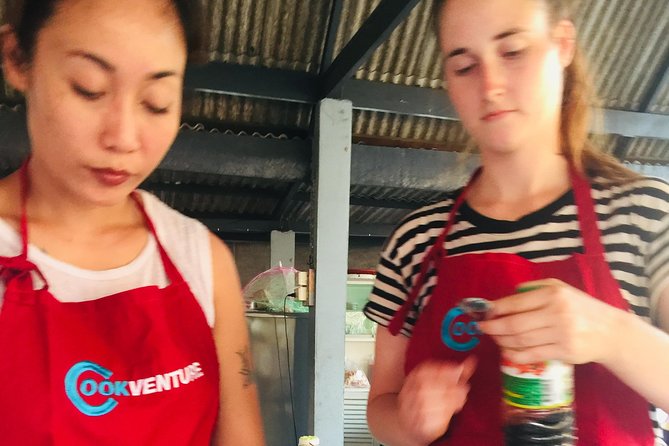
Thai flavors start at the market. I like the Lanna-style home atmosphere and the hands-on five-course structure at your own station. One thing to consider: you’ll need to match your schedule to the morning or evening class times.
Expect hotel pickup (when offered), a short market stop in the old city where you can handle ingredients and taste seasonings, then back to the studio to cook and eat. After the meal, you’ll get a recipe book with 24 dishes and exact measurements, so you can actually repeat what you made instead of guessing.
In This Review
- Key things that make Cookventure stand out
- Lanna-style cooking class: what the warm studio experience really means
- Hotel pickup and the Tha Phae Gate start: timing and meeting points
- Old-city market walk: learning ingredients by touch and taste
- Back to the studio: how the five-course structure teaches Thai balance
- Eating like a guest: Lanna dining room vs the private garden
- The recipe book with 24 dishes: why it’s not just a souvenir
- Price and value in Chiang Mai: what $37.64 buys you
- Who this class fits best (and who might want something else)
- Practical tips before you go: get more out of the market-to-meal flow
- Should you book Cookventure in Chiang Mai?
- FAQ
- Where does the cooking class start?
- Does the class offer hotel pickup?
- How long is the class?
- What are the class times?
- How many dishes will I cook?
- Where will I eat after cooking each course?
- Will I receive recipes to take home?
- Can I cancel and get a full refund?
Key things that make Cookventure stand out
- Lanna-style studio feel that’s warm, not showroom-cold
- Old-city market time where you touch and taste ingredients and seasonings
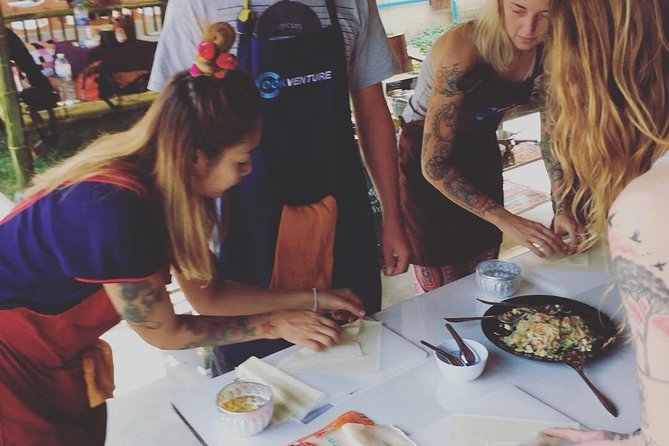
- Five courses, cooked step by step with your own prep station
- Two ways to eat: traditional Lanna dining room or a private garden
- You leave with a recipe book covering 24 dishes with measurements
- Private group setup, so the pace stays comfortable
Pick your Thai cooking class: farm kitchens and market runs
- Half-Day Thai Cooking Class at Organic Farm in Chiang Mai
★ 5.0 · 19,087 reviews - Chiang Mai: Cooking Class, Market & Thai Herbs Garden Tour
★ 4.9 · 4,824 reviews - Chiang Mai: Authentic Cooking Class with Market & Farm Visit
★ 4.9 · 4,546 reviews - Thai and Akha Cooking Class in Chiang Mai
★ 5.0 · 4,358 reviews
Lanna-style cooking class: what the warm studio experience really means
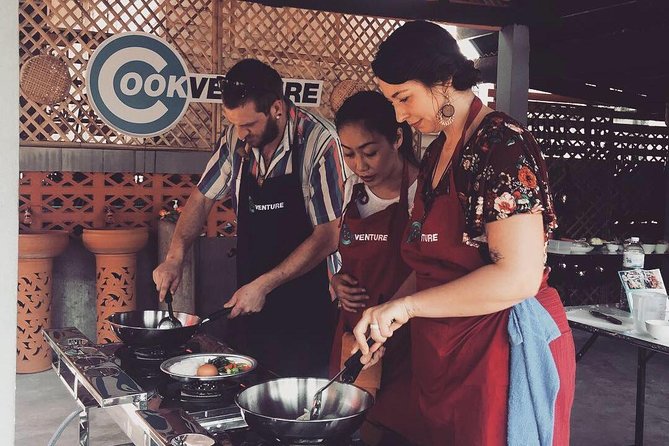
Cookventure Home Cooking Studio is built around a simple idea: cooking lessons should feel like visiting someone who actually cooks. The class is described as Lanna style, with a warm, home-like atmosphere that fits Chiang Mai well. If you don’t want a loud, conveyor-belt tour of recipes, this setup is the kind that helps you focus.
What I’d look for here is the teaching style. The owner-chef has been teaching Thai food history and techniques for about 10 years, and the classes are set up to be step by step. That matters because Thai cooking depends on balance—sweet, salty, sour, heat—and it’s hard to learn from a menu card.
You’ll also be set up to cook for yourself, not just watch. Each participant has a cooking and prep station, so you’re doing the chopping, mixing, and assembling, which is where the real learning happens.
A small practical note: you’re signing up for a structured experience. That’s good for results, but it also means you’re tied to the class schedule (morning or evening).
Hotel pickup and the Tha Phae Gate start: timing and meeting points
The class in Chiang Mai starts around Tha Phae Gate on Tha Phae Road. That’s your baseline meeting spot, and it’s easy to find on a map if you’re self-guiding.
On top of that, pickup is offered. In practice, the experience includes transport so you can get to the market and return afterward. If you’re staying nearby, you might appreciate pickup because traffic and tuk-tuk negotiations can eat time fast—especially when the class is only about five hours.
Morning runs from 8:00am to 1:30pm, and evening runs from 3:00pm to 8:30pm. Choose based on your energy level. Morning is often best if you want to shop while it’s still reasonable outside, and evening can be great if you plan to explore Chiang Mai in the afternoon first.
One more detail that affects how the experience feels: there’s a welcome snack before the class starts. It’s a small touch, but it helps if you’re arriving hungry.
Old-city market walk: learning ingredients by touch and taste
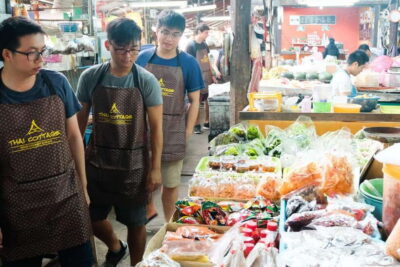
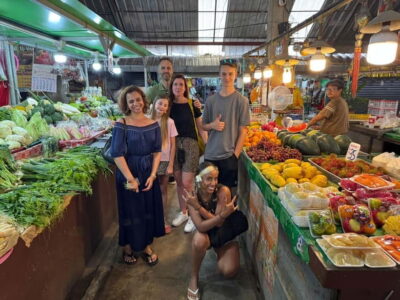
The market stop is a key part of why this class feels like more than just cooking. You’ll head to a local market inside the old city, and the goal is not just shopping—it’s learning what ingredients are, what they do, and how they change in a dish.
You should expect time to touch and taste ingredients and seasoning. That’s valuable in Thai food because flavors can be subtle until you smell them or taste them at the right point. It also helps you understand why a dish works, not just what goes into it.
This is where the teacher’s approach shows up in real life. The instruction focuses on herbs, ingredients, and techniques passed down through generations—explained in a way meant for everyday cooks, not only advanced chefs. You’ll also see how the market shapes the menu, which is part of how Thai home cooking stays practical.
If you’re the type who likes to cook with intention—meaning you want to pick ingredients you can recognize—this market portion is worth your time. It’s also great if you’ve never tasted things like fresh herbs or Thai seasonings before.
Nothing jumping out yet? More Chiang Mai trips are just down the page
Back to the studio: how the five-course structure teaches Thai balance
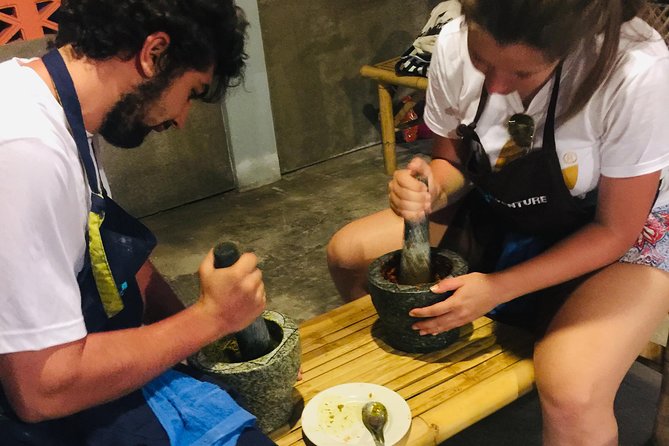
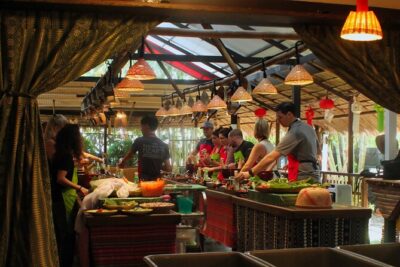
Once you return to the cooking school, you’ll cook five popular Thai dishes over the session. The teaching format is step by step, and it’s designed so you build each course in a logical order.
Each person works at their own prep station. That sounds basic, but it’s a big deal. When you’re doing the prep yourself, you start learning timing and texture—like how long herbs should be added, when sauces thicken, and when you need to adjust saltiness or acidity. Watching only gets you a recipe. Doing gets you confidence.
A helpful detail is that after you cook each course, you get a choice on where to sit and eat. You can stay in the traditional Lanna dining room or move outside to the private garden. That means the class doesn’t feel like one long “kitchen shift.” It’s more like a guided meal with breaks.
You’ll also be told what each dish’s herbs and ingredients are doing. That’s one of the most practical outcomes of a class like this: when you know the role of each ingredient, you can swap brands later, or substitute ingredients at home without ruining the dish.
Food choices can also be personal. In reviews, people talk about selecting what they cook—so you may have some flexibility within the five-course framework. If you have dietary needs or strong preferences, ask early so the menu can be adjusted.
Eating like a guest: Lanna dining room vs the private garden
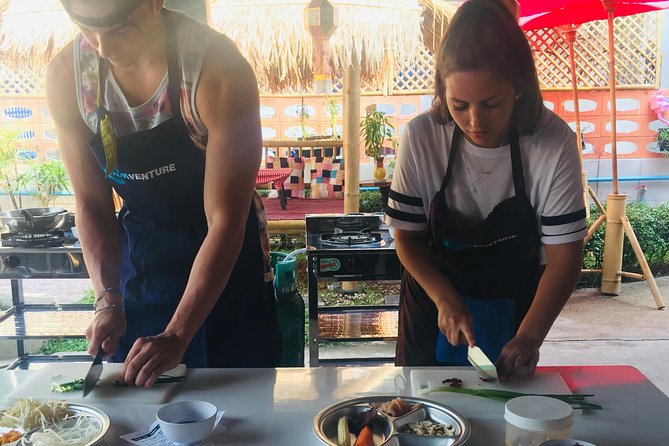
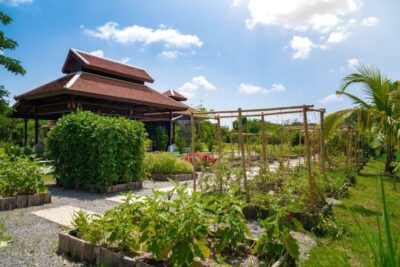
After each dish is made, you’re not stuck standing over a cutting board. You can eat in the traditional Lanna style dining room or take your meal to a beautiful private garden.
That option matters more than it sounds. Indoor dining is calmer and sometimes more comfortable in heat or light rain. The garden gives you a more relaxed, airy feel—like the class is taking place in a home kitchen plus backyard meals.
For many people, this part is the most enjoyable. You get to taste what you made right away, compare it to what the teacher described, and feel the difference between a theory recipe and a dish that’s actually balanced.
It’s also a good moment to ask questions while the food is still in front of you. If you’re trying to learn how to recreate the flavors later, this is when you’ll care about the details.
The recipe book with 24 dishes: why it’s not just a souvenir
At the end, transport back to your hotel is provided, and you also receive a recipe book. This is one of the strongest value points.
The recipe book includes 24 different dishes, with ingredients and step-by-step preparation and exact measurements. That’s the difference between a class that teaches you how to cook and a class that only gives you a list of ingredients.
If you’ve ever brought home a cookbook from a tour and then realized it doesn’t match how Thai food tastes when made correctly, you’ll appreciate the measurement detail here. Thai curries, stir-fries, and salads depend on ratios. Even a small measurement shift changes the flavor balance.
Also, 24 dishes is a lot of extra practice beyond the five courses you cook during the class. It’s like getting both the live lesson and a plan for your next experiments at home.
Price and value in Chiang Mai: what $37.64 buys you
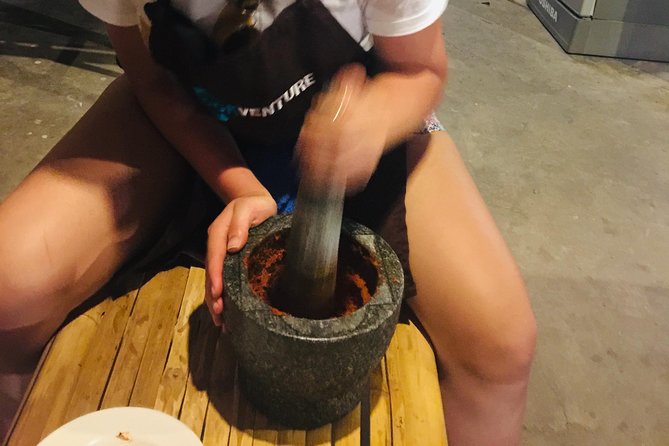
At $37.64 per person for about five hours, this class is positioned as good value—especially because you’re not just learning recipes. You’re getting:
- Market time in the old city with tasting and ingredient education
- Step-by-step cooking for five courses
- Your own prep station
- A full meal experience with both indoor and garden seating
- A recipe book covering 24 dishes with exact measurements
- Pickup and return transport (when offered)
If you compare that to the cost of a basic cooking class that only provides a worksheet and a short demo, the market + guided tasting + recipe book combo pushes it toward “learn something real” territory.
The other value angle: you’re in a private activity setup, so the class pace is less likely to feel rushed. And because you’re cooking, you leave with muscle memory, not just photos.
The only time value may be weaker is if your schedule is tight and you’d prefer a shorter, no-market class. But if you want Thai flavors that make sense, the structure here is a solid deal.
Who this class fits best (and who might want something else)
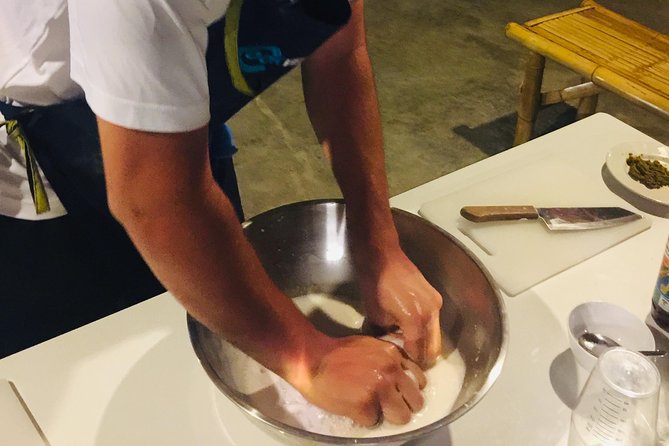
This experience fits many kinds of travelers:
- If you’re new to Thai cooking, the step-by-step format and ingredient explanations help you get started without fear.
- If you like hands-on learning, the own-station approach keeps you active.
- If you’re traveling with kids, reviews describe that the teacher works well with them, including letting them participate in the cooking process.
- If you want plant-based Thai food, there’s evidence this can be done in a vegan version, including making coconut milk in a plant-based way.
It may feel less perfect if you’re the type who wants only tasting and minimal cooking, or if you’re avoiding scheduled times. The class is structured, and you’ll be happiest if you embrace that.
Practical tips before you go: get more out of the market-to-meal flow
A few practical things will help your class go smoothly.
First, come hungry enough to appreciate the welcome snack and the market tastes. Then commit to tasting during the market walk, even if a flavor sounds intense. Thai cooking is built on contrasts—sweet/sour/salty/heat—and those contrasts start at the ingredients.
Second, bring a curious mindset. The teaching style is about why ingredients work, especially herbs and seasoning. Ask questions while the ingredients are fresh and right in front of you.
Third, if you’re vegan or have specific dietary needs, raise it when you book. The class seems able to adapt based on reviews, but you’ll want to align your request early so the five courses work for your menu.
Finally, treat the recipe book like a tool. Don’t just take photos. Use the measurements at home. That’s what makes this class worth repeating.
Should you book Cookventure in Chiang Mai?
If you want a Thai cooking class that actually teaches you how the flavors get built, Cookventure is a strong pick. The market stop, the hands-on five-course cooking, and the recipe book with exact measurements create a “learn-and-recreate” experience instead of a one-day memory.
Book it if you like a warm, Lanna-style home atmosphere and you’re okay committing to the morning or evening time slots. Pass if you want a super short class or you prefer only tasting with no real cooking.
If you’re unsure, this is the kind of experience where asking about dietary needs or dish choices ahead of time can make the difference between a good trip and a useful skill you still use months later.
FAQ
Where does the cooking class start?
The experience starts at Tha Phae Gate on Tha Phae Road in the Chang Khlan area of Chiang Mai.
Does the class offer hotel pickup?
Pickup is offered, and the experience also includes transport back to your hotel afterward.
How long is the class?
It’s about 5 hours (approx.).
What are the class times?
Morning is 8:00am to 1:30pm, and evening is 3:00pm to 8:30pm.
How many dishes will I cook?
You’ll cook five courses of popular Thai dishes during the class.
Where will I eat after cooking each course?
After each course, you can choose to eat in the traditional Lanna dining room or outside in the private garden.
Will I receive recipes to take home?
Yes. You’ll get a recipe book with 24 different dishes, including ingredients and step-by-step instructions with exact measurements.
Can I cancel and get a full refund?
Yes. You can cancel for free up to 24 hours in advance of the experience’s start time for a full refund.
More Cooking Classes in Chiang Mai
- Half-Day Thai Cooking Class at Organic Farm in Chiang Mai★ 5.0 · 19,087 reviews
- Chiang Mai: Cooking Class, Market & Thai Herbs Garden Tour★ 4.9 · 4,824 reviews
- Chiang Mai: Authentic Cooking Class with Market & Farm Visit★ 4.9 · 4,546 reviews
- Thai and Akha Cooking Class in Chiang Mai★ 5.0 · 4,358 reviews
- Chiang Mai: Cooking Class with Market and Pickup★ 4.9 · 1,365 reviews
More Tour Reviews in Chiang Mai
- Half-Day Thai Cooking Class at Organic Farm in Chiang Mai★ 5.0 · 19,087 reviews
- Chiang Mai: Elephant Sanctuary, Waterfall & Bamboo Rafting★ 4.9 · 9,160 reviews
- Chiang Mai: Doi Inthanon National Park Eco-Friendly Tour★ 4.6 · 6,667 reviews
- Chiang Mai: Elephant Sanctuary & Waterfall Group Tour★ 4.9 · 5,780 reviews
- Chiang Mai: Chiang Rai Temples, Karen Tribe and Hot Springs★ 4.7 · 5,401 reviews
More Chiang Mai Cooking Classes
- Half-Day Thai Cooking Class at Organic Farm in Chiang Mai★ 5.0 · 19,087 reviews
- Chiang Mai: Cooking Class, Market & Thai Herbs Garden Tour★ 4.9 · 4,824 reviews
- Chiang Mai: Authentic Cooking Class with Market & Farm Visit★ 4.9 · 4,546 reviews
- Thai and Akha Cooking Class in Chiang Mai★ 5.0 · 4,358 reviews
- Chiang Mai: Cooking Class with Market and Pickup★ 4.9 · 1,365 reviews
Fresh off the pile: Chiang Mai tours we have just written up

Chiang Mai Cooking Classes, compared.
 ★ 5.0Half-Day Thai Cooking Class at Organic Farm in Chiang MaiFrom $2919,087 reviews
 ★ 4.9Cooking Class, Market & Thai Herbs Garden TourFrom $314,824 reviews
 ★ 4.9Authentic Cooking Class with Market & Farm VisitFrom $344,546 reviews
 ★ 5.0Thai and Akha Cooking Class in Chiang MaiFrom $424,358 reviews
 ★ 4.9Cooking Class with Market and PickupFrom $251,365 reviews
 ★ 4.9Cooking Class with Organic Farm at Mama NoiFrom $321,151 reviews
 ★ 5.0Full Day Thai Cooking at Farm (Chiang Mai)From $391,127 reviews
 ★ 4.9HALF-DAY COOKING COURSE at a Thai Cooking FarmFrom $28705 reviews
Browse the lists this tour appears in