
Reviewed · HILL TRIBE VILLAGES
6-Hour Akha Tribe Culture and Cooking Class in Chiang Mai
Food teaches culture fast. This 6-hour Akha tribe cooking class in Chiang Mai starts with a local market run and then turns ingredients into a Thai-Akha food lesson centered on the Akha community.
I really like that your session isn’t just chopping and stirring. It pairs food with culture, and the teacher (On) keeps the whole class fun and clear, plus you get an easy recipe book to take home. The one consideration: the kitchen setup is outdoors and the experience needs good weather, so plan around that if you hate heat or sudden rain.
In This Review
- Key highlights worth your time
- Morning vs Evening in Chiang Mai: which 6 hours fits best
- From Wat Pan Whean to the local market: getting the ingredients the Thai way
- Akha culture in the food: why the teaching part is more than decoration
- Cooking station rundown: how the class delivers hands-on results
- The dishes you’ll cook and how they fit together
- The meal at the end: eating what you made, not samples
- Price and value: what $48.83 buys you in Chiang Mai
- Who should book this Akha cooking class
- Should you book it?
- FAQ
- What is included in the 6-hour Akha tribe culture and cooking class?
- Do I get pickup, and where does the tour start?
- What dishes will I make and eat?
- Is the class offered in the morning and evening?
- Can the class handle dietary restrictions?
- Is there a limit on group size?
- What happens if the weather is bad?
Key highlights worth your time
- Local market shopping like a local, with the same items priced differently depending on where you go
- Akha dishes on the menu, including Akha Soup and Akha Salad, plus a tomato dipping sauce (Sapi Thong)
- Cook about 10 dishes, then sit down to eat what you make in a proper meal
- Outdoor cooking, indoor dining, so you cook in the open but eat in air-conditioning
- Up to 15 people, which usually means less waiting and more hands-on time
- On teaches with energy, and you leave with a written recipe guide
Visits to the Karen, Hmong and Akha villages in the hills
- Chiang Mai: Chiang Rai Temples, Karen Tribe and Hot Springs
★ 4.7 · 5,401 reviews - Thai and Akha Cooking Class in Chiang Mai
★ 5.0 · 4,358 reviews - Chiang Mai: Elephant Sanctuary, Long Neck & Sticky Waterfall
★ 4.9 · 2,262 reviews - 4-Hour Doi Suthep & Hmong Hill Tribe Village from Chiang Mai
★ 4.7 · 696 reviews
Morning vs Evening in Chiang Mai: which 6 hours fits best
You choose either a morning or evening class, and that choice matters more than you’d think. The main difference is the lead-in: the morning option leans harder into the local market trip, while the evening option is built for convenience—cooler weather, a straightforward dinner plan, and a chill cooking flow.
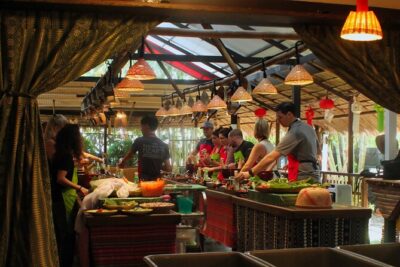
The evening class is the smart move if your Chiang Mai day is already packed. It’s basically your in-town reset button: you don’t have to hunt for dinner afterward, and you’ll cook it yourself. The kitchen is set up outdoors with a Thai-Akha cultural atmosphere, but your dining area is air-conditioned, which makes the end of the meal feel easier on your body.
The morning class is better if you want to start understanding food culture immediately—before the cooking begins. You’ll see ingredients at their source and watch how local people shop in real time. If you’re the type who loves markets and doesn’t mind a little early activity, this option can feel like your fastest way to get your bearings in Chiang Mai.
One practical tip: whichever you pick, come ready to eat. This isn’t a small tasting session; it’s a full meal built from multiple dishes, including soups, stir-fries, curries, and dessert.
From Wat Pan Whean to the local market: getting the ingredients the Thai way
The experience starts at Wat Pan Whean, located at 50 Phra Pok Klao Rd Soi 4 in Tambon Phra Sing (Amphoe Mueang Chiang Mai). Pickup is offered, and the meeting point is near public transportation, which helps if you’re not staying right beside it.
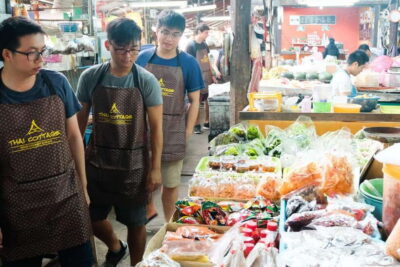
After you meet up, the morning course heads into the market. The idea is simple: you shop for ingredients you’ll actually cook, and you do it in the way local people do. The tour calls it “same same, but different,” and that phrase is accurate in the best way. You’ll see familiar foods alongside Thai staples you may not have handled before, and you’ll notice how pricing and shopping habits work differently than what you might be used to.
What I like about a market-first approach is that it changes how you cook afterward. When you pick your ingredients, you’re not just following steps—you understand what they do. That matters with Thai food, where balance (sweet, salty, sour, spicy) often comes from the right ingredient and the right timing.
Also, you’re not treated like a walking wallet. You’ll be handled more like an actual shopper, not like someone paraded around for photos. If you want the food experience to feel real instead of scripted, this part is where you’ll feel it most.
Akha culture in the food: why the teaching part is more than decoration
This class doesn’t treat Akha food as a side dish to Thai cooking. It’s framed as a cultural connection. You’ll learn about the Akha people—an ethnic community that immigrated to Thailand in the 1900s—and how their traditions show up in the way people prepare and season food.
Here’s the practical value for you: when a class explains where something comes from, you cook it differently. Even if you’re not trying to recreate it perfectly at home, you start understanding the logic behind the flavor. That makes the dishes more interesting while you’re eating them, and more useful when you’re cooking later.
In the teaching portion, you’ll also learn Thai cuisine alongside Akha influences. The goal isn’t just cultural facts—it’s showing you how food travels across communities and how techniques and ingredients get adapted. If you care about authentic experiences, this is one of the strongest ways to do it without turning the day into a museum visit.
And because the learning is attached to real dishes—soup, salads, dipping sauces, stir-fries, and curries—it’s easier to remember. The food becomes your notes.
Pick your Thai cooking class: farm kitchens and market runs
Cooking station rundown: how the class delivers hands-on results
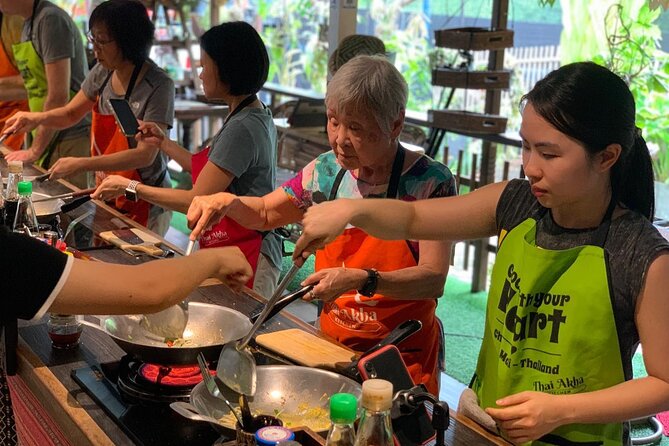
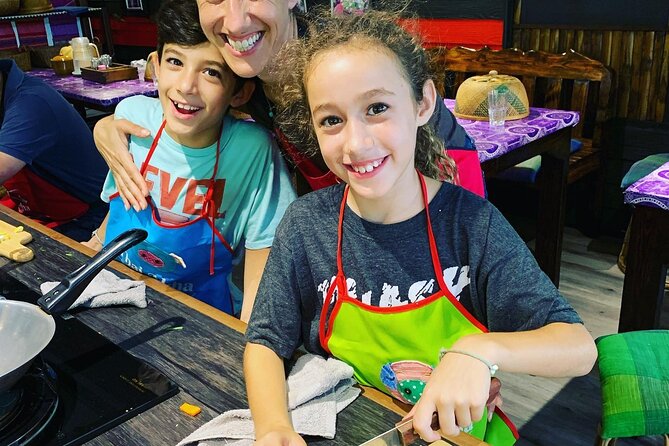
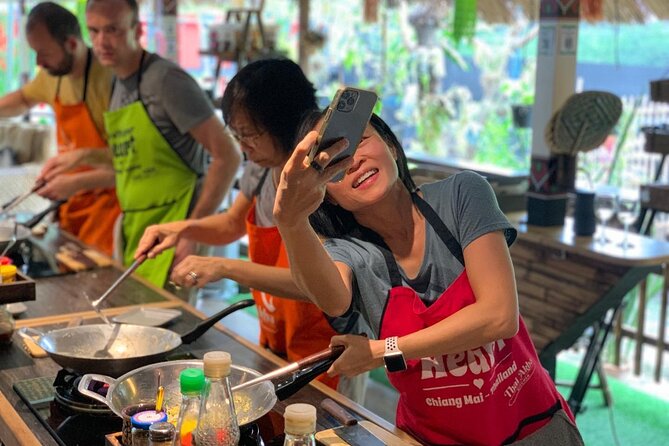
The class is built around a cooking session where you create about 10 dishes. You won’t just watch. You’ll be doing the prep and learning the steps as you go, and the teacher (On) is the kind of instructor who keeps things lively while still making the process feel doable.
One big reason this class works well for regular visitors is that the recipes are explained in a practical way. From what I’ve learned about how the class is run, you’re not stuck with complicated instructions you can’t follow later. You’ll likely find the techniques straightforward, and the provided recipe book makes it easier to remember what you made and how you made it.
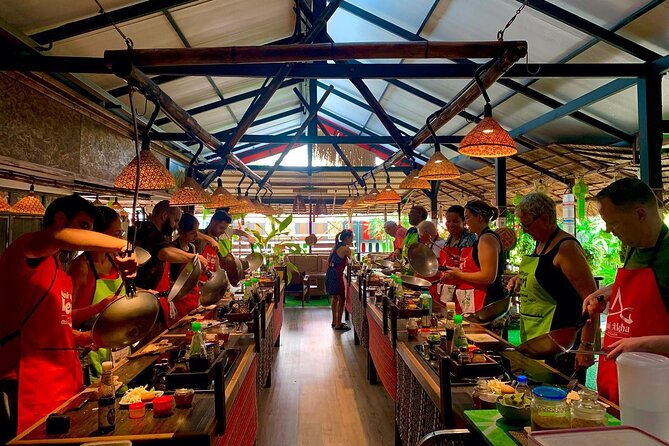
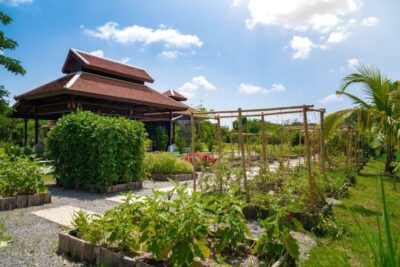
The kitchen setup is outdoor, with an atmosphere that blends Thai and Akha culture. That’s a plus for authenticity. It also explains why good weather is important. You’re cooking in the open air, so if the day is too hot or rainy, the comfort level can change.
As for group dynamics, the experience caps at 15 travelers. That number matters because it usually means you get more direct attention and less waiting for your turn. When you’re cooking curries and stir-fries, waiting is the enemy of a fun class.
The dishes you’ll cook and how they fit together
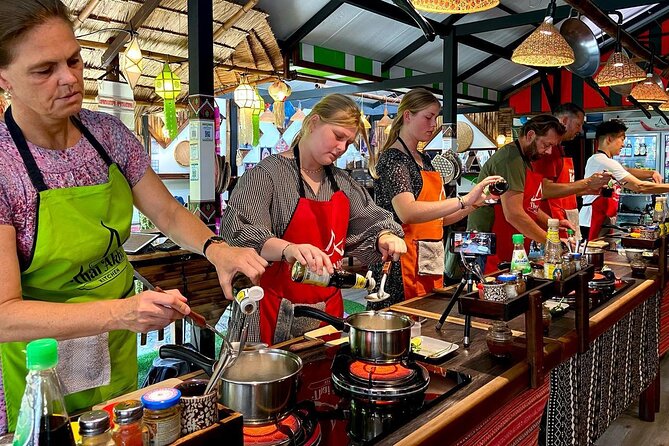
Here’s the structure of what you’re working with. The menu includes appetizers, soups, stir-fries, curries, Akha dishes, plus desserts—and your final meal is built from these categories.
Appetizers often start with things like papaya salad and spring rolls. These are the dishes that teach you about contrast: crunchy textures, bright sour notes, and the reason Thai food often feels layered rather than single-note.
For soups, you may see options such as chicken in coconut milk, hot & sour prawn soup, and clear soup with egg tofu. Soups are a great training ground because Thai flavor depends on how you balance richness (often from coconut) with acidity and heat.
Stir-fries in the lineup include sweet & sour vegetables, cashew nut with chicken, chicken with hot basil, and Pad Thai. These tend to reward technique and timing. You learn why Thai cooking moves fast and why sauce consistency matters.
Curry is the heavy hitter section, with curry pastes and multiple styles. The class includes options like chicken green curry, chicken red curry, panaeng curry, and Massaman curry. Even if you don’t choose every curry variation that day, it’s useful to see how the flavors differ. Massaman and panaeng often feel more rounded and comforting, while red and green curry lean into brighter chili flavors.
Akha dishes are part of the core set, including Sapi Thong (tomato dipping sauce), Akha Salad, and Akha Soup. This is your chance to taste how the Akha menu slots into the overall cooking day. It’s not random. It gives you a sense of regional identity within the bigger Thai food picture.
Because the class says you’ll make 10 dishes, but also lists multiple dishes, the exact mix on your day may vary. Either way, you should expect a broad spread that hits different cooking styles—not just one type of dish.
The meal at the end: eating what you made, not samples
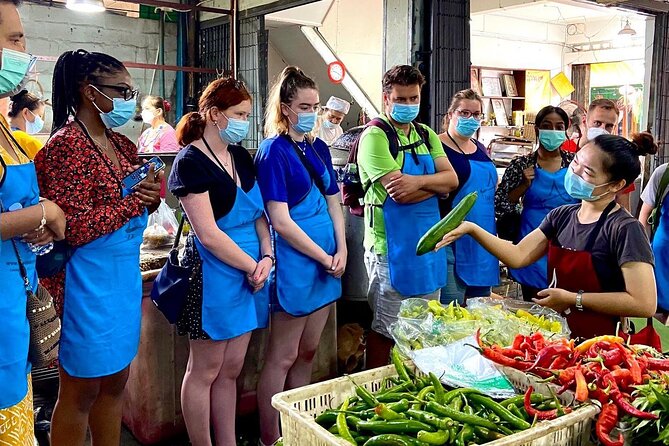
After the cooking, you eat what you made, and that’s a big part of the value. This isn’t a classroom where you taste two bites and disappear. The meal is meant for you to stuff yourself in a good way—soups, spring rolls, stir-fries, curries, and more.
The meal also includes desserts like mango with sticky rice and pumpkin in coconut milk. Dessert matters here because sticky rice and coconut-forward desserts show up constantly in Thai cooking. If you’ve been wondering how sweetness and texture work together in Thailand, this is a clear answer—chewy rice, mellow coconut, and fruit sweetness.
What I like about the dining setup is the split approach:
- Cooking is outdoor and atmospheric.
- Dining is in an air-conditioned room.
That means you can enjoy the culture during prep without sacrificing comfort once it’s time to relax and eat.
And because you’ll be focused on a single cooking session rather than ordering around town, you get variety without decision fatigue. You’re not stuck choosing which restaurant looks best. Your dinner is already built.
Price and value: what $48.83 buys you in Chiang Mai
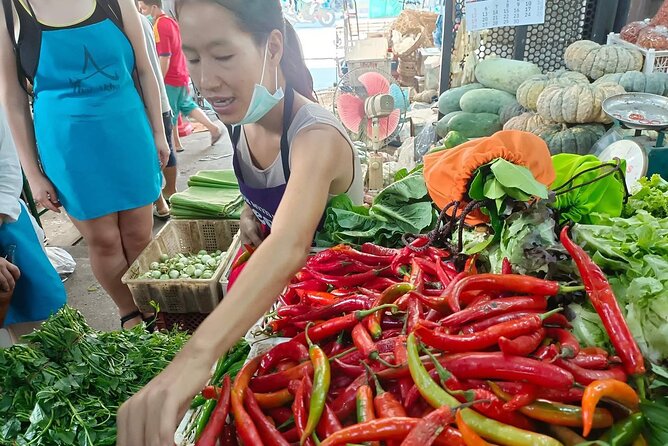
At $48.83 per person for around 6 hours, you’re paying for more than a recipe. You’re paying for:
- Market shopping (for ingredients used in your dishes)
- A multi-dish cooking experience (about 10 dishes)
- A full meal featuring soups, stir-fries, curries, appetizers, and dessert
- A recipe book you can take home
- Cultural teaching tied to the food you cook
The biggest value booster is that you don’t just learn how to cook—you also eat what you make. Many cooking classes stop short of that. Here, the structure pushes you to understand ingredients, then rewards you with the results.
Also, the class is capped at 15 travelers, and pickup is offered. That helps you spend less time coordinating and more time doing. In a place like Chiang Mai, reducing logistics friction is part of what makes a tour feel worth it.
One more practical note: the class can accommodate special dietary requirements, including allergies, gluten intolerance, and vegetarian diets (and other needs). If you tell them your requirements in advance, you’re more likely to get dishes adjusted without feeling like you’re stuck with plain substitutions.
Who should book this Akha cooking class
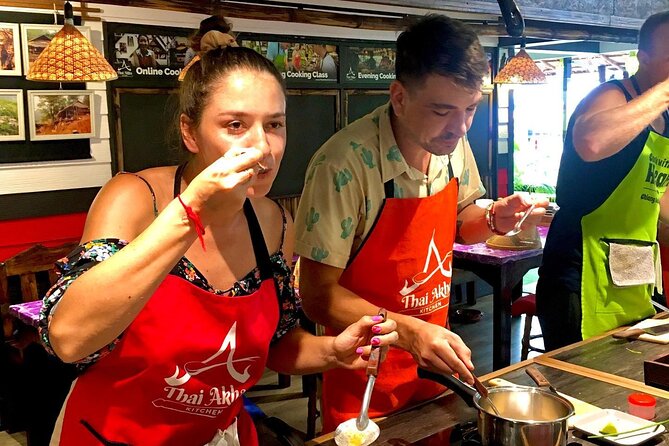
This is a strong fit if you want an experience that feels both practical and culturally grounded. Specifically, you should book if:
- You like cooking classes, but you want more than a one-note Thai menu
- You care about Akha culture and want it taught through food
- You’re hungry for a full meal, not just a tasting
- You want a market component without spending the whole day planning it
- You prefer small-group settings (up to 15)
It’s also a great choice for couples and solo travelers who want a guided structure without feeling locked into a long travel day. And if you’re short on time, the evening option can work like a dinner plan that solves two problems at once.
The main reason to pause is weather. Since the kitchen is outdoors and the experience needs good weather, you’ll be happier if your travel dates include a stable forecast.
Should you book it?
Yes—if you want a Thai cooking class that actually teaches culture through what you cook and eat. The market-first approach (morning) and the dinner-friendly timing (evening) both make sense, and the mix of Thai dishes with Akha dishes gives the menu meaning, not just variety.
Book it especially if you’re the kind of person who remembers flavors better than facts. You’ll leave with a recipe book, a fuller understanding of how ingredients connect to taste, and enough food to feel like you had a real meal day—not just a class.
FAQ
What is included in the 6-hour Akha tribe culture and cooking class?
You’ll take part in a market trip (morning course), then cook and learn Thai and Akha dishes. The class includes preparing about 10 dishes and eating a full meal afterward, plus desserts.
Do I get pickup, and where does the tour start?
Pickup is offered. The meeting point is Wat Pan Whean, 50 Phra Pok Klao Rd Soi 4, Tambon Phra Sing, Amphoe Mueang Chiang Mai, Chang Wat Chiang Mai 50200, Thailand.
What dishes will I make and eat?
The class menu includes appetizers like papaya salad and spring rolls, soups such as chicken in coconut milk and hot & sour prawn soup, stir-fries like cashew nut with chicken and chicken with hot basil, curries including green curry, red curry, panaeng curry, and Massaman curry, Akha dishes such as Akha Soup and Akha Salad, plus desserts like mango with sticky rice and pumpkin in coconut milk.
Is the class offered in the morning and evening?
Yes. You can choose either a morning or an evening course, each designed around a different daily schedule.
Can the class handle dietary restrictions?
Yes. The experience is able to accommodate special dietary requirements like allergies, gluten intolerance, vegetarian diets, or other dietary needs.
Is there a limit on group size?
Yes. The maximum group size is 15 travelers.
What happens if the weather is bad?
The experience requires good weather. If it’s canceled due to poor weather, you’ll be offered a different date or a full refund.
More Tour Reviews in Chiang Mai
- Half-Day Thai Cooking Class at Organic Farm in Chiang Mai★ 5.0 · 19,087 reviews
- Chiang Mai: Elephant Sanctuary, Waterfall & Bamboo Rafting★ 4.9 · 9,160 reviews
- Chiang Mai: Doi Inthanon National Park Eco-Friendly Tour★ 4.6 · 6,667 reviews
- Chiang Mai: Elephant Sanctuary & Waterfall Group Tour★ 4.9 · 5,780 reviews
- Chiang Mai: Chiang Rai Temples, Karen Tribe and Hot Springs★ 4.7 · 5,401 reviews
More Chiang Mai Cooking Classes
- Half-Day Thai Cooking Class at Organic Farm in Chiang Mai★ 5.0 · 19,087 reviews
- Chiang Mai: Cooking Class, Market & Thai Herbs Garden Tour★ 4.9 · 4,824 reviews
- Chiang Mai: Authentic Cooking Class with Market & Farm Visit★ 4.9 · 4,546 reviews
- Thai and Akha Cooking Class in Chiang Mai★ 5.0 · 4,358 reviews
- Chiang Mai: Cooking Class with Market and Pickup★ 4.9 · 1,365 reviews
More Hill Tribe Village Visits
- Chiang Mai: Chiang Rai Temples, Karen Tribe and Hot Springs★ 4.7 · 5,401 reviews
- Thai and Akha Cooking Class in Chiang Mai★ 5.0 · 4,358 reviews
- Chiang Mai: Elephant Sanctuary, Long Neck & Sticky Waterfall★ 4.9 · 2,262 reviews
- 4-Hour Doi Suthep & Hmong Hill Tribe Village from Chiang Mai★ 4.7 · 696 reviews
- Chiang Mai: Long Neck Village & Chiang Rai’s Iconic Temples★ 4.3 · 338 reviews
Fresh off the pile: Chiang Mai tours we have just written up

Hill Tribe Villages, compared.
 ★ 4.7Chiang Rai Temples, Karen Tribe and Hot SpringsFrom $355,401 reviews
 ★ 5.0Thai and Akha Cooking Class in Chiang MaiFrom $424,358 reviews
 ★ 4.9Elephant Sanctuary, Long Neck & Sticky WaterfallFrom $632,262 reviews
 ★ 4.74-Hour Doi Suthep & Hmong Hill Tribe Village from Chiang MaiFrom $36696 reviews
 ★ 4.3Long Neck Village & Chiang Rai’s Iconic TemplesFrom $55338 reviews
 ★ 5.0Chiang Dao Cave & 5 Hill Tribe villagesFrom $52181 reviews
 ★ 5.04 in 1 Elephants Long Neck Rafting and Sticky Waterfall TourFrom $88126 reviews
 ★ 4.0Chiang Rai Full Day Tour with Boat Trip and Longneck VillageFrom $55112 reviews
Browse the lists this tour appears in