
Reviewed · MARKETS
Chiang Mai : Cook in Farm, Market tour & Go by a Local Train
A short train ride changes everything. I love the market-to-farm ingredient hunting and the hands-on cooking guidance from instructors like Cat and Mac, and you also get a recipe PDF so you can remake the dishes later; the trade-off is that the train portion is brief, so it is not the kind of rail excursion where you lose a whole afternoon to scenic track-watching.
This is a Thai cooking day that actually explains where the flavors come from. You start with a hotel pickup, head to Lamphun by local train for a quick countryside look, then shop for ingredients at a very local market before returning to a village home and organic garden. One part feels like a food errand with a friend; the next part feels like a relaxed outdoor lesson.
If you are sensitive to heat or long waits between steps, build in patience. The experience runs about 5 hours, and it includes a couple of transitions (train, market, then the farm), so the pacing might feel a little “moving” compared with a purely kitchen-based class.
In This Review
- Key Things You’ll Remember
- Why This Chiang Mai Cooking Day Feels Like More Than a Kitchen Class
- Hotel Pickup, Lamphun Bound: The Local Train Part That Changes the Mood
- Lamphun’s Old-Market Stop: Herbs, Ingredients, and How to Think Like a Cook
- A Quick Cultural Pause at Chama Dhevi Monument
- Welcome Drinks, Snacks, and Designing Your Menu First
- The Organic Farm Garden: Harvesting Herbs You’ll Actually Recognize
- Cooking in a Thai Home Style: Balance, Paste-Making, and Tasting
- The PDF Recipe Book Online: Your Real Souvenir
- Alcohol Policy and What to Expect From the Meal Style
- Price and Value: Is $57 Reasonable for 5 Hours?
- Who Should Book This (and Who Might Skip It)
- Should You Book Chiang Mai Cook in Farm, Market Tour & Local Train?
- FAQ
- How long is the cooking experience in Chiang Mai?
- Is hotel pickup included?
- What’s included in the price?
- Are beer or alcohol included?
- Do I need to speak Thai?
- What should I bring with me?
- Is the train part a big activity or just a short ride?
- Is there a cancellation option?
Key Things You’ll Remember
- Lamphun local market sourcing: you pick ingredients with a real sense of what Thai cooks use day to day.
- Organic kitchen herbs and greens: you cook with produce you can point to in the garden.
- A laid-back outdoor setting: the farm-house pace makes questions and small talk easy with your instructors (like Shisha and Poppy).
- Menu planning at the start: you design your own favorites before you start harvesting and chopping.
- English instruction that stays practical: step-by-step demonstrations plus tasting so you understand the why, not just the how.
- A scenic train interlude: a short ride that breaks up the day and adds genuine Northern Thailand flavor.
Nothing jumping out yet? More Chiang Mai trips are just down the page
- Chiang Mai: Cooking Class, Market & Thai Herbs Garden Tour
★ 4.9 · 4,824 reviews - Chiang Mai: Authentic Cooking Class with Market & Farm Visit
★ 4.9 · 4,546 reviews - Chiang Mai: Cooking Class with Market and Pickup
★ 4.9 · 1,365 reviews - Chiang Mai: Evening Cooking Class and Local Market Visit
★ 4.9 · 648 reviews
Why This Chiang Mai Cooking Day Feels Like More Than a Kitchen Class
If you’ve done cooking classes before, you already know the basics: you eat something good, learn a few techniques, and take home a recipe. This one adds a crucial missing piece—how ingredients move from field to plate.
What I like most is the structure. You do not just arrive, cook, and leave. You start by seeing ingredients in their everyday form (in the market), then you shift to the source (in the organic farm where herbs, spices, and kitchen staples are grown). That order matters because it makes the cooking feel logical. When you later mix a curry paste or balance a stir-fry, you understand why specific herbs and aromatics belong there.
You’ll also notice how the instruction leans practical. In classes led by guides such as Cat and Mac, the focus stays on balance—salt with sweet and sour, heat with flavor, and how Thai cooking uses subtle adjustments instead of one-note seasoning. I love that style because it makes the food more repeatable at home.
Hotel Pickup, Lamphun Bound: The Local Train Part That Changes the Mood
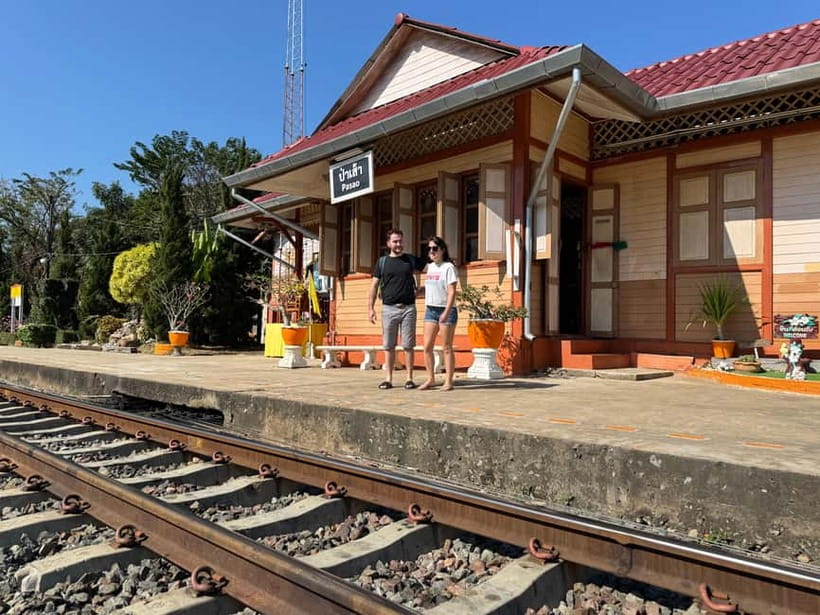
The day starts with pickup from your hotel in Chiang Mai. After that, you head to Lamphun and take a traditional Thai train ride for about 20–30 minutes. It’s not a long journey, but it’s enough time to shift gears mentally from city traffic to the slower countryside rhythm.
This is a great value-add in two ways. First, the train segment gives you a real local experience instead of only going from one restaurant to another. Second, it breaks up the day so you are not mentally stuck in “class mode” the entire time.
One thing to plan for: do not expect a full, long out-and-back train outing. The train experience is short, and depending on how the timing lines up, you may simply ride as part of transferring between stops rather than treating it like a standalone sightseeing rail day. In other words, the train is a bonus, not the main event.
Tip: bring a passport or at least an ID. One class experience included advice to have a passport on hand for the train segment. You might not need it, but it’s an easy thing to pack and it avoids stress if anything is required.
Lamphun’s Old-Market Stop: Herbs, Ingredients, and How to Think Like a Cook
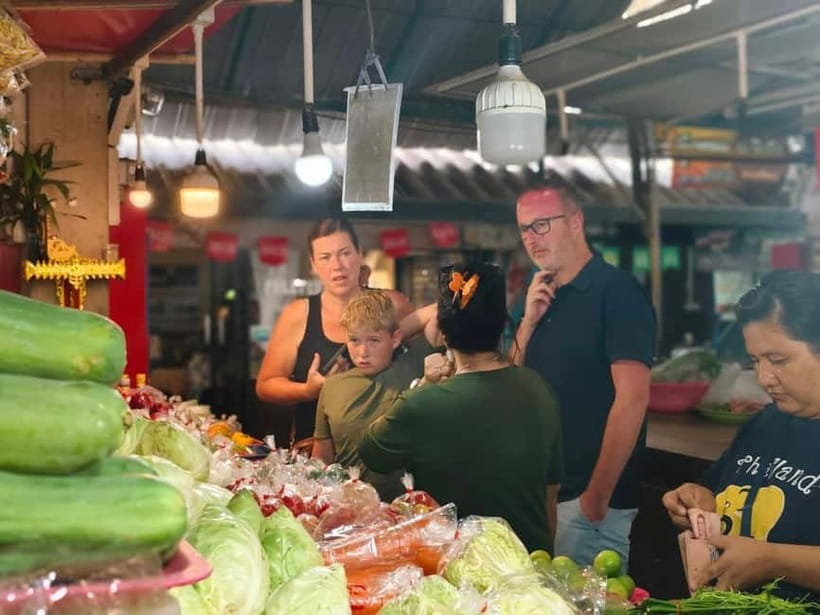
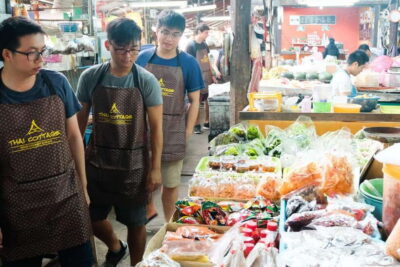
After you arrive at the Lamphun area, you stop at a very local market in the old city. This is the kind of place where you quickly realize Thai cooking is built on layers. You’re not shopping for “a cuisine concept.” You’re choosing herbs and ingredients for texture, aroma, and balance.
Look closely at what’s offered—especially herbs and kitchen greens. The goal here is not to memorize Thai names like a homework assignment. It’s to understand how these herbs smell and taste when they’re fresh, and how cooks decide between similar-looking greens based on flavor and how they hold up in cooking.
You’ll also get the chance to shop some ingredients for your menu. That hands-on part matters because it turns a vague shopping list into something personal. When you later grab those ingredients in the garden and kitchen, you’ll remember why you picked them in the first place.
One practical consideration: markets can be warm, and you’ll likely do some walking. Comfortable clothes help, and it’s smart to wear shoes that handle uneven ground if you step around stalls.
Nothing jumping out yet? More Chiang Mai trips are just down the page
A Quick Cultural Pause at Chama Dhevi Monument
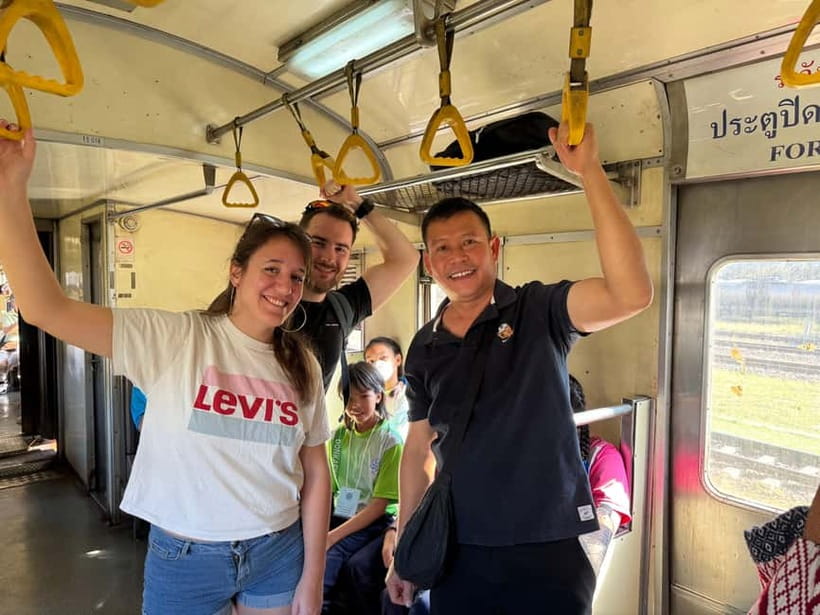
On the way from the train station area toward the village, there’s a stop for sightseeing at the Chama Dhevi monument, described as a key historical landmark in Northern Thailand’s oldest city, Lamphun.
For me, this kind of stop hits the sweet spot. You get a short dose of context without it turning into a long museum day. It gives your cooking experience a geographic story, which is what turns “a class” into “a day in the region.”
Don’t expect a long guided tour here, since the day is mostly about food. But you do get enough of a moment to orient yourself in Lamphun before you head deeper into the countryside.
Welcome Drinks, Snacks, and Designing Your Menu First
Before you start collecting herbs, you head to your host village area and get a welcome drink and snacks. This matters more than it sounds. It keeps the day feeling social, and it gives you time to meet your instructor and settle in.
Then comes one of the most useful parts: you design your own favorite menus before cooking. This turns the class from a fixed “watch me do everything” format into something closer to a guided workshop.
If you want chicken, tofu, seafood, or vegetable-heavy dishes, you can often shape your plan around what you like. Even if you don’t choose every detail, the menu choice makes your cooking feel tailored rather than generic.
You also get to build confidence. When you know what you intend to cook, it is easier to follow the logic behind each step, from ingredient prep to the final tasting and adjustments.
The Organic Farm Garden: Harvesting Herbs You’ll Actually Recognize
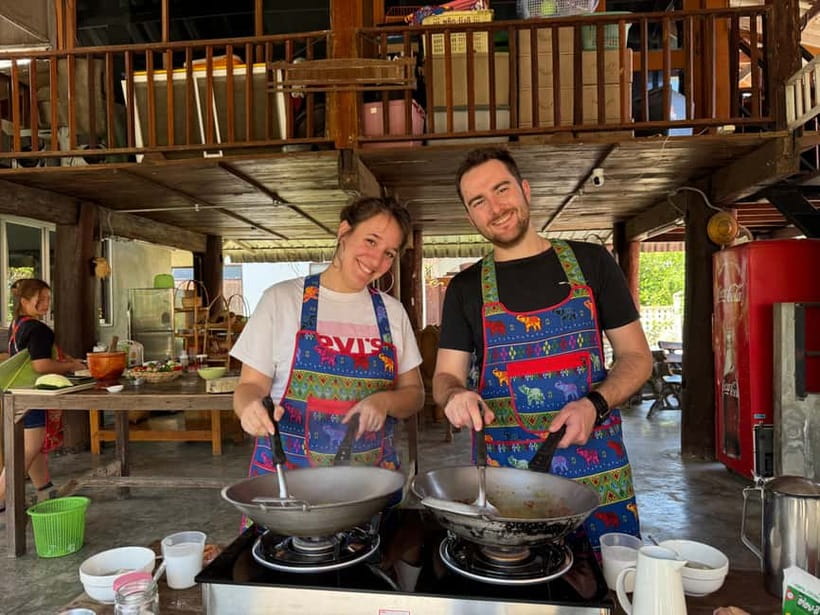
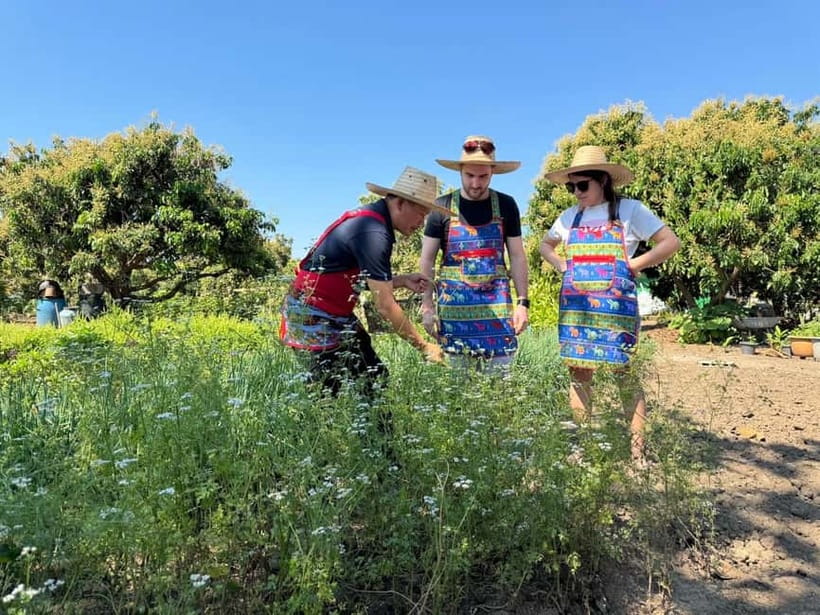
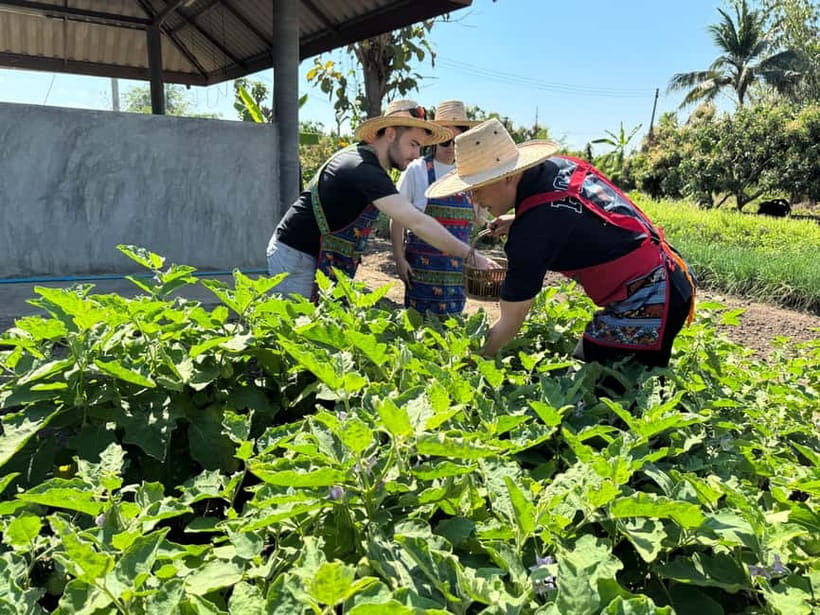
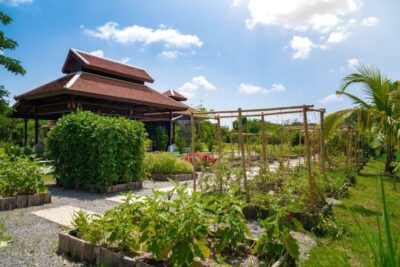
Now we get to the farm-to-table part. You collect fresh herbs and greens right from an organic kitchen herb and spice growing area. You might harvest vegetables and greens too, based on what’s available and what you chose for your menu.
Here’s why this step is so valuable: it teaches you to cook with what is truly fresh. Dried ingredients and store-bought herbs can work, but there’s a big difference in aroma and bite when you pick it right before cooking.
If you’ve ever tried to copy Thai flavors at home and felt like something was missing, this is often the missing piece. Fresh herbs bring a sharper, cleaner flavor profile, and that affects how you perceive salt, sour, sweet, and heat once the dish is combined.
This is also where the class feels most “Thai village” and less like a staged experience. In the garden setting, you have room to ask questions and learn how herbs are used in everyday cooking. Guides such as Shisha and Poppy have been praised for explaining what’s growing and how it’s used, which makes the harvesting feel like education, not just a fun photo moment.
Cooking in a Thai Home Style: Balance, Paste-Making, and Tasting
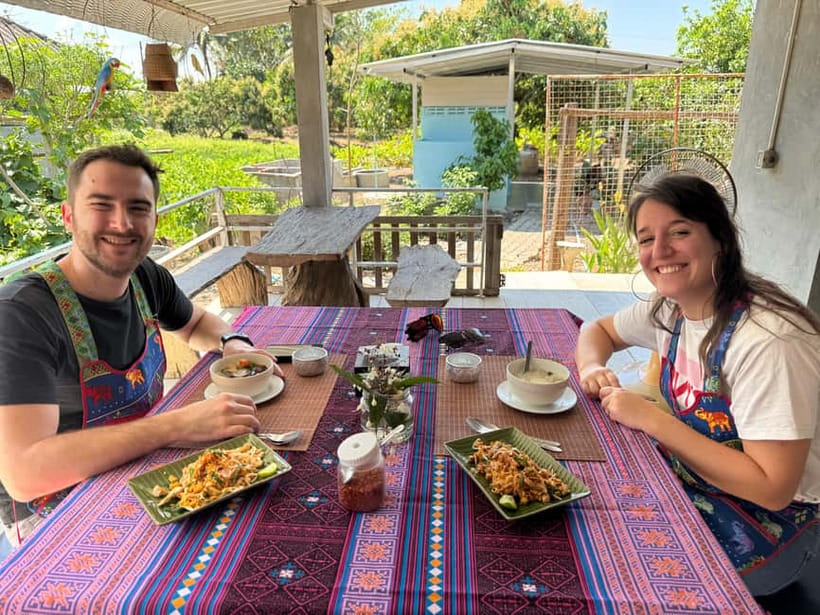
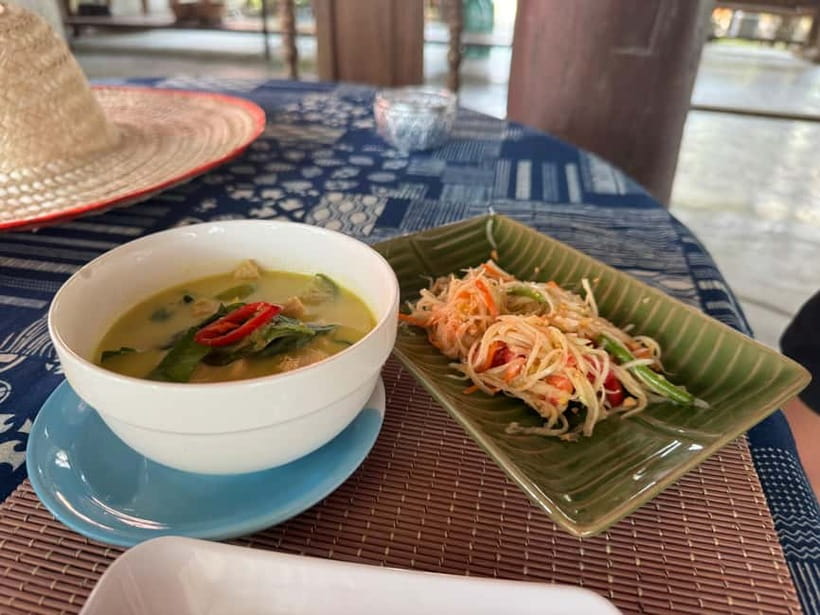
When it’s time to cook, you follow demonstrations and then put your hands to the work. The exact dishes can vary, but the guiding theme stays consistent: Thai cooking is about balance and precision.
The best classes—like those taught by Cat and Mac—focus on the logic of flavors. You learn how salt, sweet, sour, and spicy should work together instead of overpowering each other. That approach is gold for home cooking because it gives you a method. You’re not just memorizing one recipe. You’re learning how to correct a dish if it tastes off.
You’ll also taste what you’ve made. Tasting is where you truly connect the teaching to results. Thai cooking often relies on subtle adjustments, and tasting makes those adjustments obvious.
One more note: the class emphasizes hands-on learning with an authentic local Thai instructor and English instruction. Even if your Thai vocabulary is limited, the teaching stays grounded in process—smell, prep, stir, adjust, taste.
The PDF Recipe Book Online: Your Real Souvenir
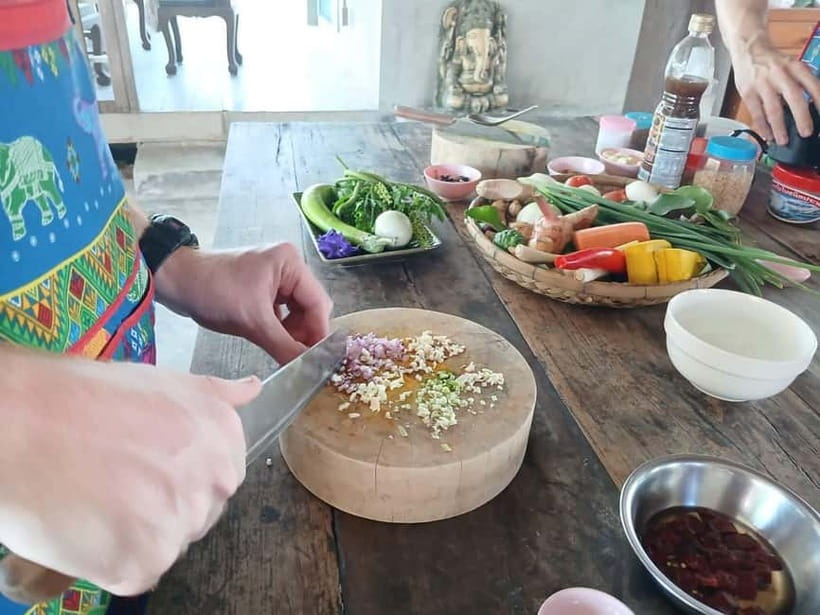
You do not just get a vague takeaway. You receive an authentic Thai recipe book online in PDF form. This is the practical part many people underestimate. A printed souvenir is nice, but a recipe you can search on your phone or laptop is what helps you cook again.
This PDF can be especially helpful for you if you’re the type who wants to recreate the experience over the next few weeks. You’ll remember the flavor ideas from the day, but you might not remember exact ingredient ratios. The recipe book closes that gap.
Also, since you design your own menu, the PDF tends to feel more relevant. You’re not only following someone else’s “perfect lineup.” You’re following your choices.
Alcohol Policy and What to Expect From the Meal Style
Beer and alcohol are not included. That’s not a deal-breaker for most people, but it does affect the overall vibe.
You should expect a food-focused day: you’ll be eating what you cook, tasting for balance, and spending time in the market and garden. If you’re someone who wants a cocktail-late-lunch style experience, you may need to plan differently for drinks.
The day includes drinking water, which helps keep you comfortable during the market and farm parts.
Price and Value: Is $57 Reasonable for 5 Hours?
At $57 per person for about 5 hours, this class sits in a zone where value matters more than bragging rights. Here’s how I’d judge it.
You’re paying for several built-in extras:
- transport to and from your hotel
- a local train ticket
- the market tour experience and ingredient sourcing
- all ingredients for cooking and drinking water
- an online PDF recipe book
- English instruction
When you break it down, you are not just paying for “the kitchen.” You’re paying for transportation, shopping time, farm harvesting, and teaching. That’s why the train ride—even if it’s short—feels like part of the same package rather than an add-on.
The potential drawback is simple: if you’re expecting the train to be a big sightseeing attraction on its own, you might feel the price better spent elsewhere. But if you view the train as a scenic transfer to a market-and-farm day, the cost starts to make sense.
Who Should Book This (and Who Might Skip It)
This is a strong fit if you want a Thai cooking class that teaches you ingredients as much as recipes. If you like markets, fresh herbs, and the idea of building your own menu, you’ll probably enjoy it.
It also suits couples and solo travelers who like small-group, guided experiences with time to talk to the instructor and guides. The farm and garden vibe tends to be relaxed, so it does not feel rigid.
It may be less ideal if:
- you dislike train rides or want them to be a long, scenic activity
- you’re expecting a restaurant-style cooking show with no ingredient sourcing
- you need a fully indoor program (the day includes outdoor garden time)
Age notes: it’s not suitable for children under 5 or people over 95 years, based on the activity info. You should also bring comfortable clothes to handle walking and being outside.
Should You Book Chiang Mai Cook in Farm, Market Tour & Local Train?
I’d book it if you want a Thai cooking day with substance: market shopping, organic herb harvesting, and real instruction that helps you cook the flavors again later. The combination of Lamphun market sourcing, the Chama Dhevi monument stop, and the local train ride gives the experience a regional feel, not just a kitchen focus.
You should consider another option if your main goal is a long train adventure or if you need everything to stay strictly indoors. Also, pack patience. The value comes from moving through multiple parts of the day, not from sitting in one place.
If you’re curious about Thai cooking beyond the final dish—how balance is built, how fresh herbs change taste, and how cooks choose ingredients—this one is a very solid bet.
FAQ
How long is the cooking experience in Chiang Mai?
The duration is 5 hours.
Is hotel pickup included?
Yes. You’ll be picked up from your hotel, and you should wait in the lobby about 20 minutes before the start time.
What’s included in the price?
Round-trip transportation from your hotel is included, along with the local market tour, all ingredients for cooking, drinking water, the recipe book online (PDF), and a local train ticket.
Are beer or alcohol included?
No. Beer and alcohol are not included.
Do I need to speak Thai?
No. The instructor provides English instruction.
What should I bring with me?
Wear comfortable clothes.
Is the train part a big activity or just a short ride?
It’s a short local train segment, about 20–30 minutes, as part of getting to the hometown and related stops.
Is there a cancellation option?
Yes. You can cancel up to 24 hours in advance for a full refund.
More Shopping Tours in Chiang Mai
- Chiang Mai: Cooking Class, Market & Thai Herbs Garden Tour★ 4.9 · 4,824 reviews
- Chiang Mai: Authentic Cooking Class with Market & Farm Visit★ 4.9 · 4,546 reviews
- Chiang Mai: Cooking Class with Market and Pickup★ 4.9 · 1,365 reviews
- Chiang Mai: Evening Cooking Class and Local Market Visit★ 4.9 · 648 reviews
- Chiang Mai: Evening Local Street Food Market Tour★ 4.8 · 604 reviews
More Tours in Chiang Mai
- Chiang Mai: Doi Inthanon National Park Eco-Friendly Tour★ 4.6 · 6,667 reviews
- Chiang Mai: Elephant Sanctuary & Waterfall Group Tour★ 4.9 · 5,780 reviews
- Chiang Mai: Cooking Class, Market & Thai Herbs Garden Tour★ 4.9 · 4,824 reviews
- Chiang Mai: Elephant Sanctuary Feeding Program Half-Day Tour★ 4.8 · 4,527 reviews
- Chiang Rai White Temple and Blue Temple Day Tour★ 4.6 · 3,366 reviews
More Tour Reviews in Chiang Mai
- Half-Day Thai Cooking Class at Organic Farm in Chiang Mai★ 5.0 · 19,087 reviews
- Chiang Mai: Elephant Sanctuary, Waterfall & Bamboo Rafting★ 4.9 · 9,160 reviews
- Chiang Mai: Doi Inthanon National Park Eco-Friendly Tour★ 4.6 · 6,667 reviews
- Chiang Mai: Elephant Sanctuary & Waterfall Group Tour★ 4.9 · 5,780 reviews
- Chiang Mai: Chiang Rai Temples, Karen Tribe and Hot Springs★ 4.7 · 5,401 reviews
Fresh off the pile: Chiang Mai tours we have just written up

Markets, compared.
 ★ 4.9Cooking Class, Market & Thai Herbs Garden TourFrom $314,824 reviews
 ★ 4.9Authentic Cooking Class with Market & Farm VisitFrom $344,546 reviews
 ★ 4.9Cooking Class with Market and PickupFrom $251,365 reviews
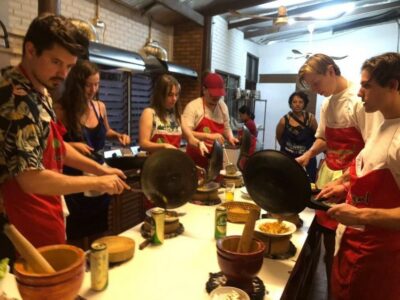 ★ 4.9Evening Cooking Class and Local Market VisitFrom $28648 reviews
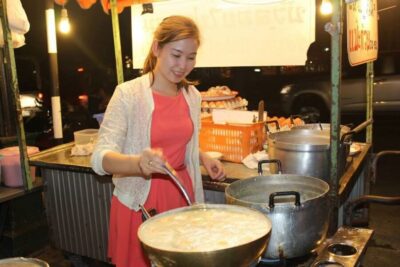 ★ 4.8Evening Local Street Food Market TourFrom $40604 reviews
 ★ 4.7Kalare Night Bazaar Boxing Stadium Muay ThaiFrom $19507 reviews
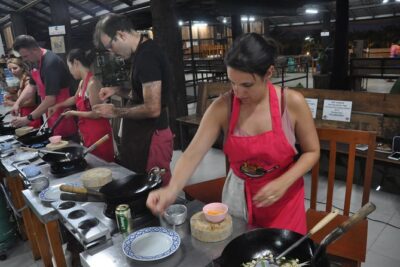 ★ 5.0Evening Cooking Class in Organic Farm with Local Market TourFrom $29394 reviews
 ★ 4.9Elephants, Sticky Waterfalls, Market and TempleFrom $70227 reviews
Browse the lists this tour appears in