
Reviewed · WALKING TOURS
Lanna Heritage Walking Tour: A Journey Through History
History walks beside you in Chiang Mai. On this Lanna Heritage Walking Tour, I like how your guide connects temple carvings, teak-era power, and WWII-era changes into one clear timeline, starting at Tha Pae Gate. I also love the everyday break at Sompet Local Market, where you can snack on local fruit and treats instead of only seeing monuments. The one possible drawback: it is still a walking-and-temple tour, so if you’re not comfortable on your feet or with simple temple dress rules, you may feel impatient.
I keep coming back to Richard’s style: he answers questions without turning it into a lecture, and his explanations make the stone and layout feel meaningful instead of random. The private setup also helps, since the pace can match your questions and attention span. Just know it’s rated for adults and older kids, not little ones.
In This Review
- Lanna Heritage Walking Tour: The Highlights That Matter
- Entering The Lanna Story at Tha Pae Gate
- Wat Chiang Man: Chiang Mai’s Oldest Temple and Its Stone Clues
- The Moat Walk: How City Planning Becomes a History Lesson
- Sompet Local Market: Snacks, Fruit, and How Locals Actually Live
- Three Kings Monument and the Lesson of Changing Power
- The 1900 Government School and a King’s Long Reach
- A Renovation Site With Women’s Prison Past and Palace Possibilities
- Wat Phra Singh: Another Ancient Anchor in the Lanna Timeline
- Wat Pan Tao: Spot the Traditional Lanna Architecture
- The Local Café Break: Coffee, Refreshments, and a Real Pause
- Wat Chedi Luang: Closing the Route With One Big Landmark
- Walking Comfort, Private Group Pace, and Practical Tips
- Price and Value: What You Get for $45
- Who Should Book This Tour (and Who Might Skip It)
- Should You Book the Lanna Heritage Walking Tour?
- FAQ
- FAQ
- How long is the Lanna Heritage Walking Tour?
- Is this tour private?
- What language is the guide?
- What’s included in the price?
- Are meals included?
- Will I have hotel pickup and drop-off?
- What should I wear?
- Is it suitable for children or seniors?
- Is there free cancellation, and can I pay later?
Lanna Heritage Walking Tour: The Highlights That Matter
- Start at Tha Pae Gate: you’ll get the Lanna Kingdom story before the first temple so every stop has context.
- Wat Chiang Man’s carvings: early Lanna stone work is where the era becomes visual, not theoretical.
- Sompet Local Market time: you taste local life with fruit and snacks, not just souvenirs.
- A renovation site with palace clues: you’ll see how the past keeps resurfacing in places you wouldn’t expect.
- Wat Pan Tao’s traditional architecture: great for spotting Lanna design once you know what to look for.
- Wat Chedi Luang to end: it’s the kind of landmark that helps the whole route click together.
Nothing jumping out yet? More Chiang Mai trips are just down the page
- Chiang Mai: 3 Hour Old City and Temples Guided Walking Tour
★ 4.6 · 1,568 reviews - Chiang Mai: Historic Temples and City Guided Walking Tour
★ 4.7 · 650 reviews - Chiang Mai: Temple And City Walking Tour Part I
★ 4.7 · 244 reviews - Chiang Mai: Local Food and Markets Guided Walking Tour
★ 4.3 · 175 reviews
Entering The Lanna Story at Tha Pae Gate
The tour starts at Tha Pae Gate, an iconic city entrance that instantly gives you a sense of place. From there, your guide sets up the big picture of the Lanna Kingdom—how it formed, what made it prosper, and how control shifted over time. You’ll also hear about the city’s abandonment period, the fight for independence, and the revival about 250 years ago.
This matters because Chiang Mai’s temples can look “beautiful and old” at face value. With the political timeline first, you start noticing why certain places were built, what they symbolized, and why power moved the way it did. It’s the difference between sightseeing and understanding.
If you enjoy history but hate getting lost in dates, don’t worry. The tour’s flow is built so the story carries you from one site to the next.
Wat Chiang Man: Chiang Mai’s Oldest Temple and Its Stone Clues
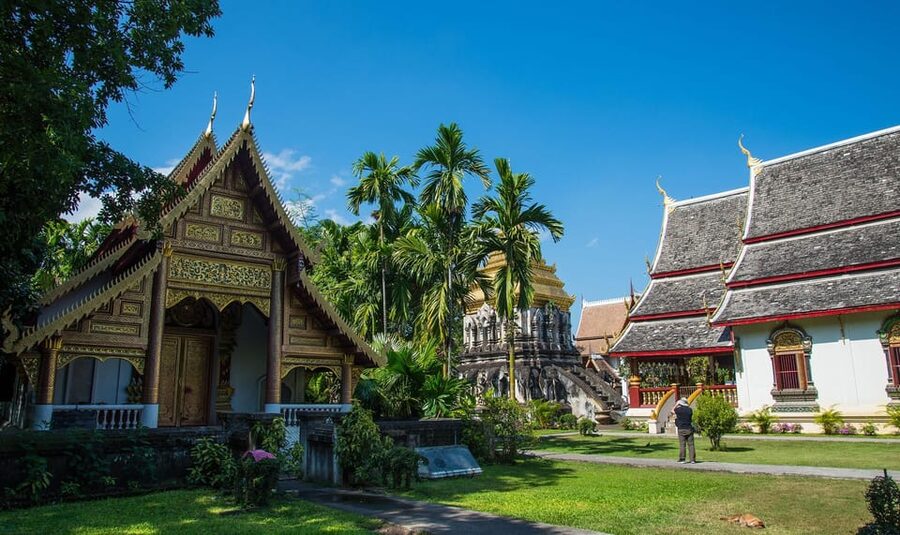
Wat Chiang Man is the first major temple stop, and it’s a smart choice. It’s known as Chiang Mai’s oldest temple, and the focus is on ancient stone carvings that depict early days of the Lanna Kingdom.
What I like here is that you’re not only looking at gold leaf and architecture—you’re looking for meaning. A good guide helps you see carvings as historical storytelling, not just decoration. If you’re the type who notices details in museums, you’ll likely enjoy this stop a lot.
One practical note: temples can mean uneven surfaces and stairs. Wear the sports shoes the tour asks for, and you’ll keep the experience comfortable.
The Moat Walk: How City Planning Becomes a History Lesson
After Wat Chiang Man, you walk along the historic city moat while your guide explains its construction and significance. This is one of those parts that sounds simple until you realize it helps explain how a city defended itself and organized space.
For me, this step is where the tour starts feeling like a real walk through time. You’re moving through the geography people used for centuries, and the guide translates that geography into historical logic.
If you prefer fast stops and minimal walking, this portion might feel slower than some tours. Still, it’s short enough to stay enjoyable.
Nothing jumping out yet? More Chiang Mai trips are just down the page
Sompet Local Market: Snacks, Fruit, and How Locals Actually Live
Then comes the sensory break at Sompet Local Market. This isn’t about hunting for the perfect photo; it’s about tasting local life. You can sample fresh fruit and grab authentic local snacks as you go, with time built in to experience the market rather than just passing it.
I like that this stop balances the temple weight of the morning. You get a “present-day Chiang Mai” moment, which makes the history feel less like a textbook and more like something people lived through.
Keep your expectations realistic: you’ll be walking through an active market area, so wear your patience as well as your shoes.
Three Kings Monument and the Lesson of Changing Power
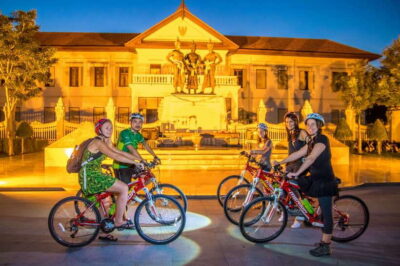
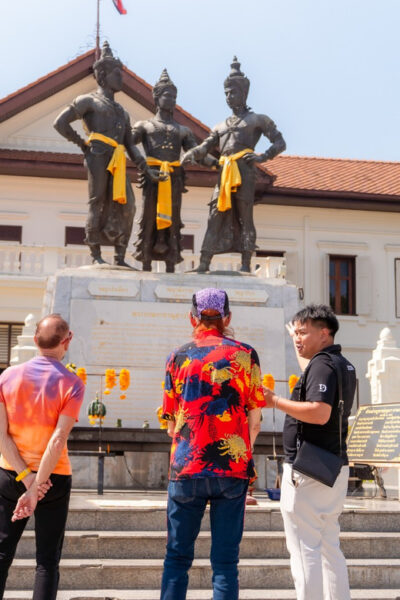
Next up is the Three Kings Monument, where your guide explains why these monarchs matter to Chiang Mai. It’s also near other key references in the city’s timeline, including the role of the monarchy and how that role shifted across eras.
After that, you’ll pass a museum that used to function as a royal palace and later an administrative center. Seeing that kind of reuse helps you understand a pattern: buildings often outlast regimes, and their purpose changes with the politics of the day.
If you love connecting the dots between art, architecture, and government, this segment will feel satisfying.
The 1900 Government School and a King’s Long Reach
The tour includes Chiang Mai’s first government school, established in 1900 during King Rama VI’s reign. This stop can surprise people because it shifts the focus from temples to education and civic development.
It’s a good reminder that “heritage” isn’t only religious buildings. When a city organizes schooling, it’s shaping future generations—and that’s part of cultural continuity.
If your mind tends to race ahead to bigger famous sights, this stop grounds you in how the city modernized. It’s one of the quietly useful moments on the route.
A Renovation Site With Women’s Prison Past and Palace Possibilities
One of the more intriguing stops is the ongoing renovation site where your guide shares evidence of an early Lanna royal palace. The area has a complicated past, including use as a women’s prison, and now it’s becoming a historical park.
I like that the guide doesn’t treat the site like a sealed “before-and-after.” Instead, it highlights how layers of history show up even when the original purpose is gone. You’re seeing how archaeology and preservation work in real time.
The drawback, if you can call it that: since it’s under renovation, the experience may feel less “finished” than the big landmark temples. But that’s also the point—history is still being uncovered.
Wat Phra Singh: Another Ancient Anchor in the Lanna Timeline
Wat Phra Singh comes next, and it’s another temple where your guide explains historical significance across different periods. This kind of temple stop works best when you can compare it to what you already learned at the earlier sites.
Here, you’ll likely appreciate how Lanna identity persisted through changing eras. The guide’s explanation helps you notice that temples can function as both religious spaces and cultural memory.
Take a moment to slow down. If you rush through, you miss the story cues your guide is pointing out.
Wat Pan Tao: Spot the Traditional Lanna Architecture
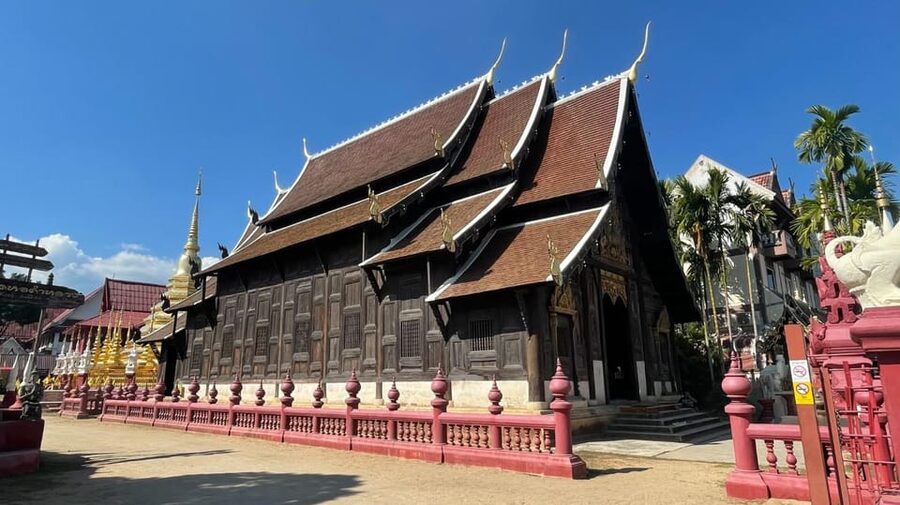
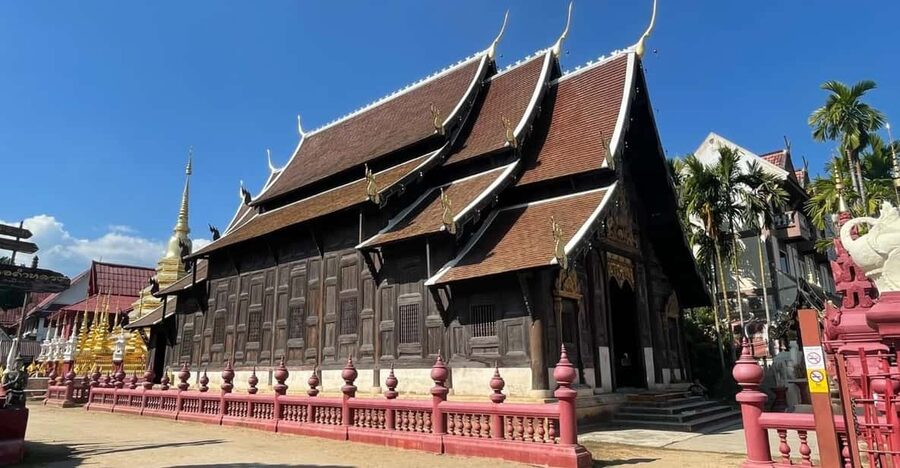
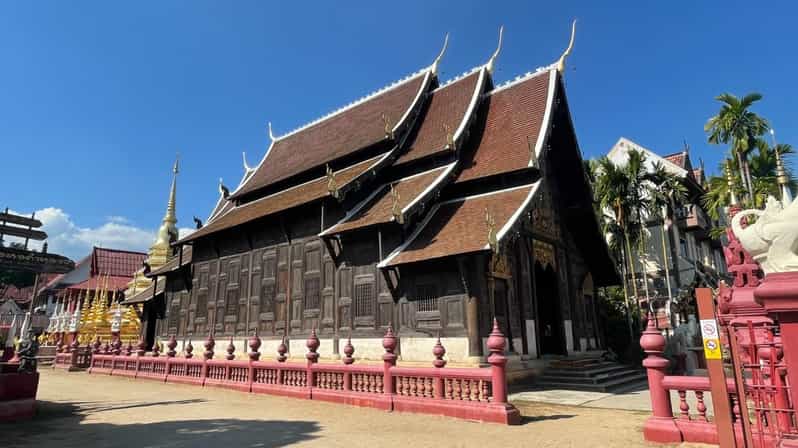
Wat Pan Tao is known for traditional Lanna architecture and was originally part of the old royal palace. This is a great stop if you like architecture you can actually compare from one site to the next.
Once you’ve heard about the Lanna Kingdom and its shifting power, the palace connection makes the architecture feel less random. You start seeing it as intentional design tied to status, community, and identity.
Wear sunscreen if you’re sensitive to sun, too. Even with a guide, you’ll spend time outdoors.
The Local Café Break: Coffee, Refreshments, and a Real Pause
You’ll take a break at a local café for Chiang Mai’s signature coffee and refreshments. The tour includes this beverage, which keeps the “rest” from feeling like another expense you have to plan for.
This stop also gives you a chance to reset. After temples and monuments, your brain benefits from a slower rhythm and a chance to ask questions while you sit.
If caffeine is your travel fuel, this is likely one of your favorite moments.
Wat Chedi Luang: Closing the Route With One Big Landmark
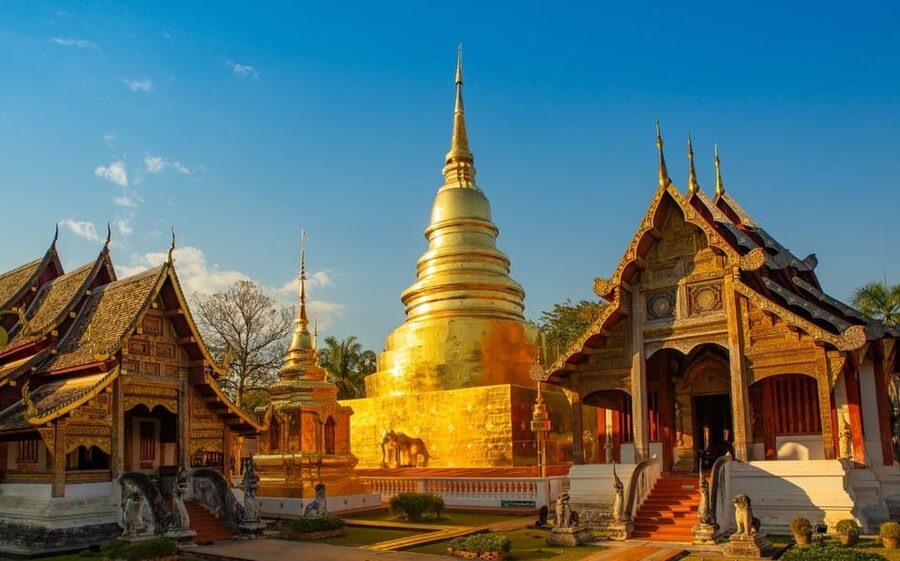
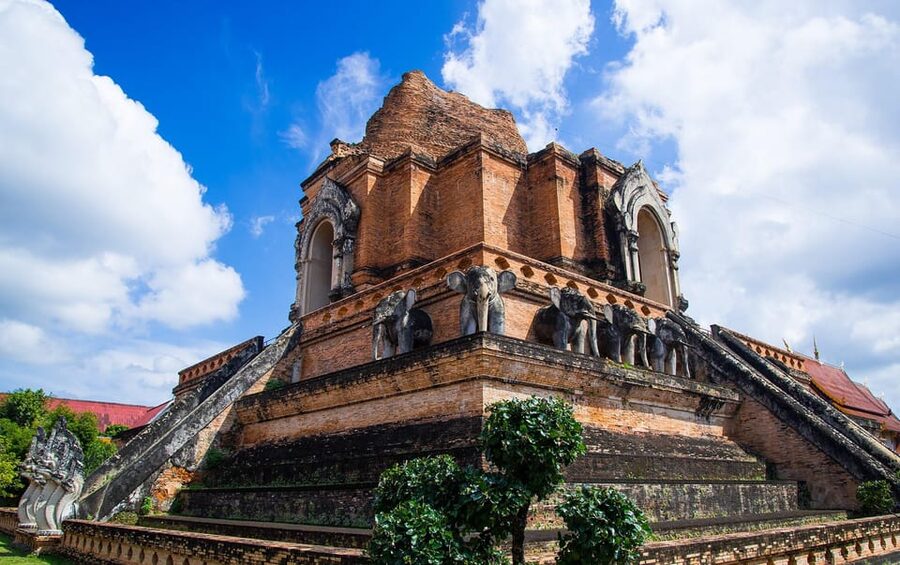
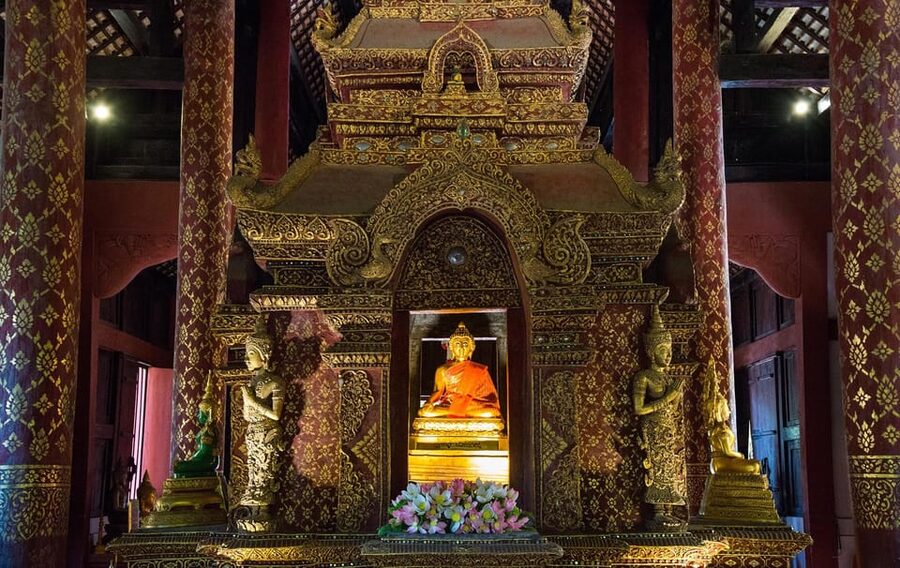
The tour finishes at Wat Chedi Luang, one of Chiang Mai’s most famous symbols of enduring heritage. Your guide shares historical events tied to the temple and explains why it holds such strong significance for the city.
This ending works well because by now you’ve covered enough political context, architectural examples, and everyday local life that the final landmark feels like a conclusion—not just a last stop.
When tours end at the biggest name, it can feel like a rushed finish. Here, the earlier storytelling helps Wat Chedi Luang land with meaning.
Walking Comfort, Private Group Pace, and Practical Tips
This is a 4-hour private group tour with live guide support in English. Private usually means less waiting, more direct question time, and a pace that feels more personal.
The route includes walking between sites and time inside temples and public areas. The tour specifically asks you to bring sports shoes, and I’d treat that as non-negotiable.
Temple etiquette matters too. You can’t wear short skirts, and you’ll want clothes that show respect for Buddhist sites. If you show up with the wrong outfit, it can turn the day into a scramble.
Also note the tour doesn’t include alcohol or drugs on the experience. That’s not just a rule—it’s part of keeping the day focused and respectful.
Price and Value: What You Get for $45
At about $45 per person for a 4-hour, English-speaking private tour, the real value isn’t only the history. It’s the package structure: entry fees for the sites are included, plus you get a bottle of drinking water, local snacks, and a complimentary coffee or other drink at the café.
On top of that, the tour includes two-way hotel transfer. That matters in Chiang Mai because travel time can quietly inflate the real cost of “cheap” tours.
Meals are not included, so you’ll still want to plan for lunch or dinner on your own. But for what you’re paying, the tour covers the hard-to-fix extras—tickets, snacks, and transport.
Who Should Book This Tour (and Who Might Skip It)
This tour is a great fit if you want Chiang Mai history tied to specific places, not just a list of temples. It’s especially good for people who like asking questions and learning how architecture and power connect—Richard’s explanations are a big part of why the tour earns high marks.
It’s also well-suited for visitors who enjoy a mix of old sites and daily life, since the market stop and café pause prevent the day from becoming “temples only.”
It’s not a great match for children under 8, and it isn’t suited for people over 80. That’s mostly about walking and temple environments, even with a private guide.
Should You Book the Lanna Heritage Walking Tour?
I’d book it if you care about context: why Tha Pae Gate matters, what the city moat meant, how Wat Chiang Man’s carvings connect to early Lanna, and how Wat Phra Singh and Wat Pan Tao fit together stylistically. The private format with Richard also makes it easier to steer the day toward what you actually want to know.
Skip it if you want a totally low-effort, mostly-photo itinerary or if you dislike walking around active areas like markets and temple grounds. Otherwise, this is one of the better ways to connect Chiang Mai’s famous sights to the story behind them.
FAQ
FAQ
How long is the Lanna Heritage Walking Tour?
The tour lasts 4 hours.
Is this tour private?
Yes, it’s a private group tour.
What language is the guide?
The live guide is English.
What’s included in the price?
It includes a guided tour by a local expert, entry fees for the sites, a bottle of drinking water, a complimentary beverage at a selected café, and local snacks. Two-way hotel transfer is also included.
Are meals included?
No. Lunch and other meals are not included, so you’ll need to eat on your own.
Will I have hotel pickup and drop-off?
Yes. Two-way hotel transfer is included, and you can also meet at Tha Pae Gate if you prefer.
What should I wear?
You should bring sports shoes. Dress appropriately for Buddhist temples, and avoid short skirts.
Is it suitable for children or seniors?
It isn’t suitable for children under 8 years old, and it isn’t suitable for people over 80.
Is there free cancellation, and can I pay later?
There is free cancellation up to 24 hours in advance for a full refund, and you can reserve now and pay later.
More Walking Tours in Chiang Mai
- Chiang Mai: 3 Hour Old City and Temples Guided Walking Tour★ 4.6 · 1,568 reviews
- Chiang Mai: Historic Temples and City Guided Walking Tour★ 4.7 · 650 reviews
- Chiang Mai: Temple And City Walking Tour Part I★ 4.7 · 244 reviews
- Chiang Mai: Local Food and Markets Guided Walking Tour★ 4.3 · 175 reviews
- Chiang Mai Untouched Elephant: Nature Walk & Waterfall Trek★ 4.7 · 77 reviews
More Tours in Chiang Mai
- Chiang Mai: Doi Inthanon National Park Eco-Friendly Tour★ 4.6 · 6,667 reviews
- Chiang Mai: Elephant Sanctuary & Waterfall Group Tour★ 4.9 · 5,780 reviews
- Chiang Mai: Cooking Class, Market & Thai Herbs Garden Tour★ 4.9 · 4,824 reviews
- Chiang Mai: Elephant Sanctuary Feeding Program Half-Day Tour★ 4.8 · 4,527 reviews
- Chiang Rai White Temple and Blue Temple Day Tour★ 4.6 · 3,366 reviews
More Tour Reviews in Chiang Mai
- Half-Day Thai Cooking Class at Organic Farm in Chiang Mai★ 5.0 · 19,087 reviews
- Chiang Mai: Elephant Sanctuary, Waterfall & Bamboo Rafting★ 4.9 · 9,160 reviews
- Chiang Mai: Doi Inthanon National Park Eco-Friendly Tour★ 4.6 · 6,667 reviews
- Chiang Mai: Elephant Sanctuary & Waterfall Group Tour★ 4.9 · 5,780 reviews
- Chiang Mai: Chiang Rai Temples, Karen Tribe and Hot Springs★ 4.7 · 5,401 reviews
Fresh off the pile: Chiang Mai tours we have just written up



Walking Tours, compared.
 ★ 4.63 Hour Old City and Temples Guided Walking TourFrom $161,568 reviews
 ★ 4.7Historic Temples and City Guided Walking TourFrom $21650 reviews
 ★ 4.7Temple And City Walking Tour Part IFrom $15244 reviews
 ★ 4.3Local Food and Markets Guided Walking TourFrom $48175 reviews
 ★ 4.7Chiang Mai Untouched Elephant: Nature Walk & Waterfall TrekFrom $5177 reviews
 ★ 4.6Historical and Culture Exploration Walking TourFrom $1540 reviews
 ★ 4.8Ex-monk city & temples walking tour: (3.5 hours / 1.7 km.)From $2035 reviews
 ★ 4.5Chiang Mai Old City & Temples Guided Walking Tour – 3 HrsFrom $1634 reviews
Browse the lists this tour appears in