
Reviewed · CHIANG MAI COOKING CLASSES
Cooking class in organic garden and local market tour ThaiCottage
A Thai cooking class in Chiang Mai is usually great. This one adds an organic garden and a market stop, so you understand what you’re cooking before you ever heat a pan. I love the hands-on pace and the fact that you can choose what you’re making.
The second thing I like is that the core skills are the same for everyone: you’ll make curry paste from scratch and learn the sweet-side finish with sticky rice and mango. One possible drawback: some people felt parts of the prep were already done and the market visit could feel more self-guided than explained, so go in ready to ask questions if you want the full ingredient rundown.
In This Review
- Key things I’d prioritize before you book
- ThaiCottage in Chiang Mai: what this is really like
- Pickup that keeps the afternoon from slipping away
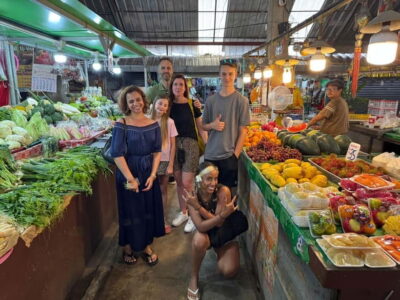
- The local market stop: ingredients, questions, and timing
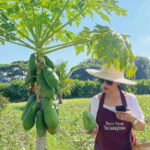
- Organic herb garden: where Thai flavor starts
- Curry paste from scratch: the skill that sticks
- Hands-on Thai family-style cooking with real choice
- The station setup
- Who you’ll likely cook with (and what that means)
- Sticky rice with mango: the sweet finish you’ll remember
- Instructors in the real world: you might meet Toey, Tory, Kat, Mac, or Gataii
- The recipes you’ll actually use later
- Price check: does $35.86 feel fair?
- Where things can fall short (and how to manage it)
- Who should book this cooking class (and who might skip)
- Should you book ThaiCottage with ThaiCottage Home Cookery School?
- FAQ
- How long is the ThaiCottage cooking class?
- Is hotel pickup included?
- What activities are included besides cooking?
- What will I learn to cook?
- Is the class taught in English?
- Is alcohol included?
- What if weather is bad or I need to cancel?
Key things I’d prioritize before you book
- Market first, cook second: you shop the ingredients you’ll use, not just watch someone else do it
- Organic herb garden visit: you see herbs and vegetables that end up in your dishes
- Curry paste from scratch: not just assembling—actually making the paste
- Choose your dishes: the class isn’t one-size-fits-all
- Small group size (up to 8): easier to get help at your station
- Traditional family-style kitchen: cooking feels like a real Thai home meal setup
Pick your Thai cooking class: farm kitchens and market runs
- Half-Day Thai Cooking Class at Organic Farm in Chiang Mai
★ 5.0 · 19,087 reviews - Chiang Mai: Cooking Class, Market & Thai Herbs Garden Tour
★ 4.9 · 4,824 reviews - Chiang Mai: Authentic Cooking Class with Market & Farm Visit
★ 4.9 · 4,546 reviews - Thai and Akha Cooking Class in Chiang Mai
★ 5.0 · 4,358 reviews
ThaiCottage in Chiang Mai: what this is really like
ThaiCottage Home Cookery School runs a group cooking class in Chiang Mai that lasts about four hours. The price is $35.86 per person, which is a fair deal for what’s included: round-trip hotel transfer (within a limited radius), a local market visit, ingredients, English instruction, and time in an organic garden tied directly to your cooking.
This is the kind of class that works best when you want more than recipes. You’re not just learning what to do—you’re learning why certain ingredients matter, how they’re handled, and how Thai flavors are built (especially when you make curry paste yourself). And with a maximum of eight people, you won’t be lost in the shuffle.
Pickup that keeps the afternoon from slipping away
A big practical win: the tour offers round-trip hotel transfers, but only within 3 km of the city area. If your hotel is outside that zone, you’ll want to confirm how that’s handled when you book, since the included transport has that specific limit.
Once you’re picked up, you’re on a simple timeline: market first, then the organic garden, then cooking and eating in the kitchen. For many people, the transfer is what makes this class feel easy—no need to figure out taxis or routing while you’re also trying to shop and cook on the clock.
The local market stop: ingredients, questions, and timing
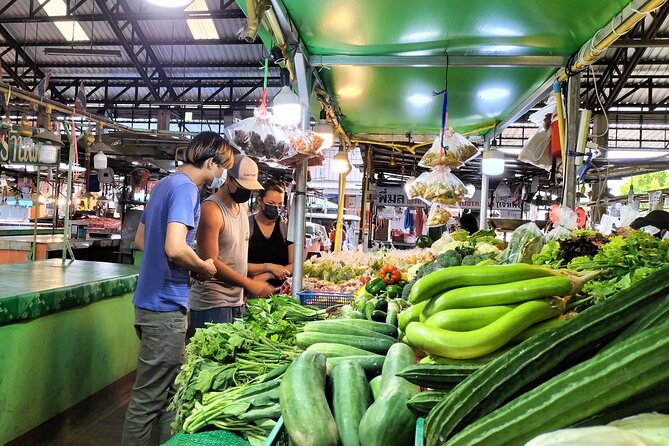
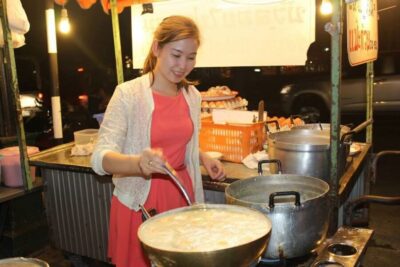
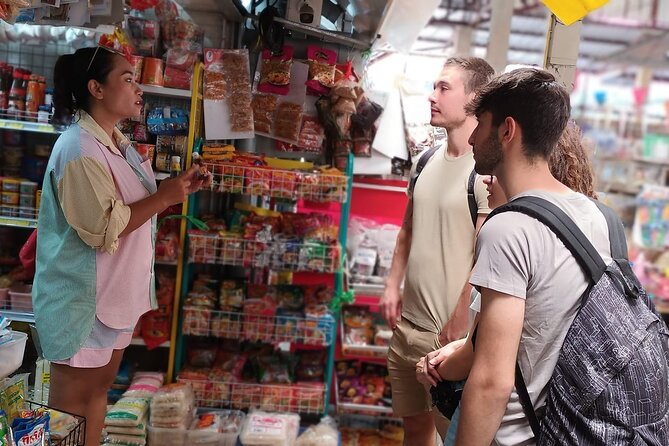
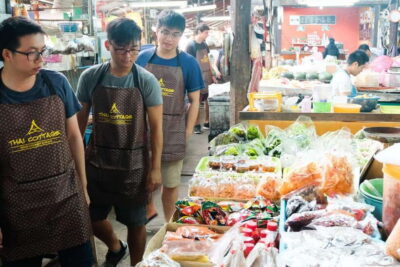
You’ll start at a local market, where you explore the ingredients used by the community and get a sense of what ends up in Thai cooking. Some people enjoy that there’s time to look around, not just a fast walk-through. If your instructor/team talks you through ingredients, you’ll get the why behind common Thai staples—herbs, aromatics, sauces, and other building blocks.
That said, one important reality check from the experience: a couple of people felt the market component was more like independent wandering than a guided education, and that the buying process didn’t feel fully “from market to pan” in the way they expected. So here’s my advice: during the market visit, slow down and ask direct questions. If you care about learning, you can guide the experience by asking what each ingredient does, how it changes the flavor, and what can substitute if you can’t find it back home.
Nothing jumping out yet? More Chiang Mai trips are just down the page
Organic herb garden: where Thai flavor starts
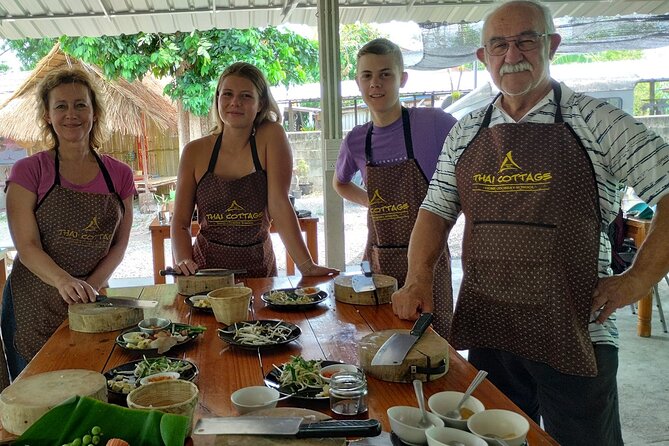
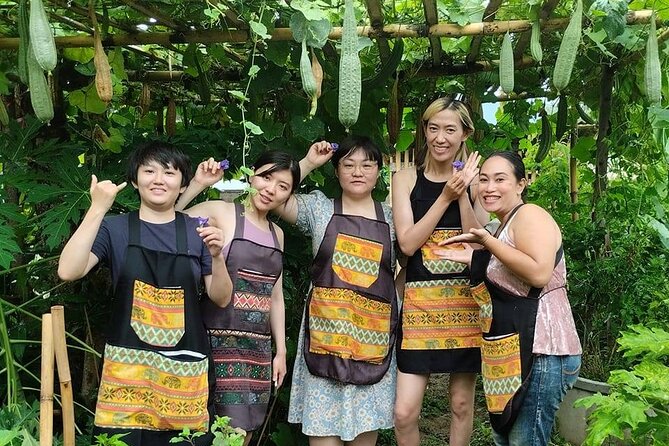
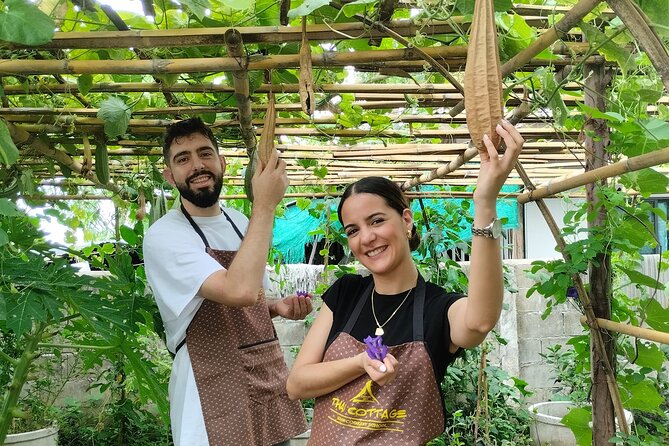
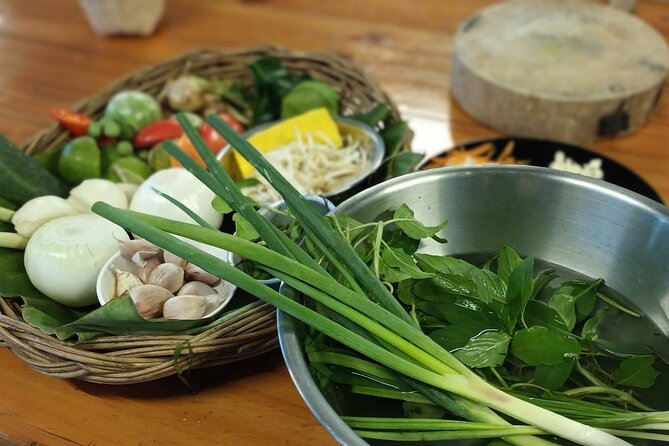
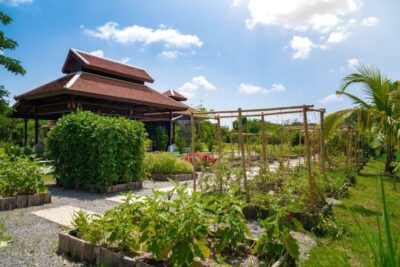
After the market, you head to an organic Thai herb garden. This part is more than decoration. You’ll discover herbs and vegetables that are featured in the cooking class, and you’ll have a chance to choose and learn how to prepare the six Thai dishes from different categories.
If you like the idea of cooking with actual plants you’ve just seen, this stop helps connect the food to the source. It also makes you more confident when you’re chopping later, because you’ve already handled the ingredient in a real growing context.
Curry paste from scratch: the skill that sticks
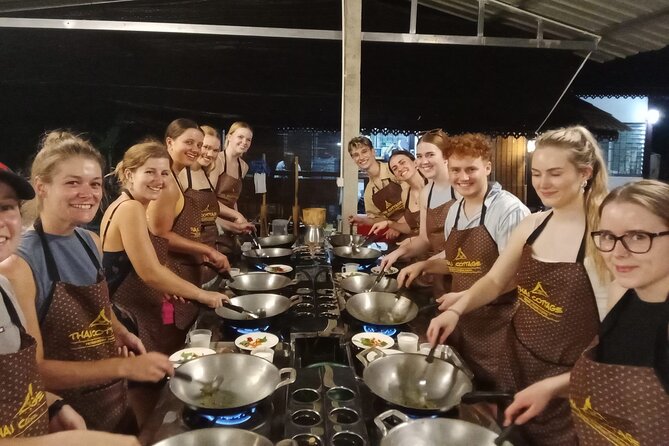
Most Thai cooking classes teach recipes. This one specifically emphasizes a core technique: you’ll make curry paste from scratch. That matters because curry paste isn’t just seasoning—it’s the flavor engine. When you grind, mix, and balance it yourself, you learn how different aromatics and dried spices behave, and you start to understand why some curries taste “round” while others taste sharp or flat.
Expect this to be one of the most satisfying parts of the class. It’s also the moment where you’ll notice how Thai cooking isn’t only about big flavors—it’s about technique and balance.
And if you’re the type who wants a souvenir that’s useful, paste is exactly that. You can recreate the base at home, then adjust dishes around it.
Hands-on Thai family-style cooking with real choice
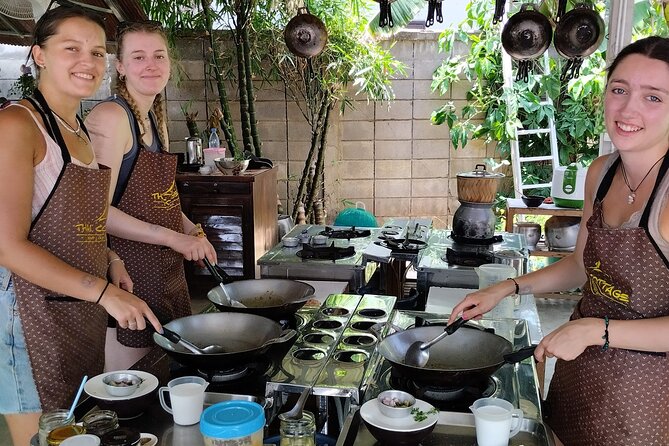
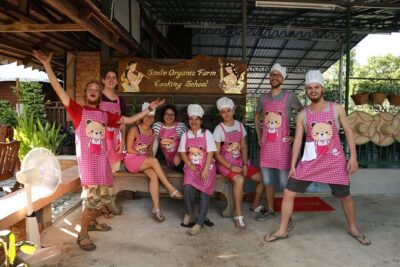
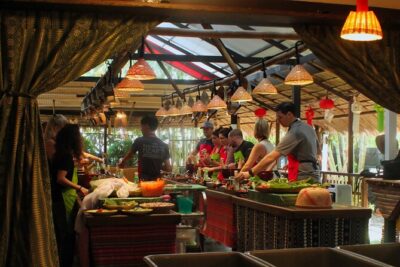
The kitchen setup is traditional Thai family-style, and the instruction is hands-on. There’s a strong focus on technique, not just watching someone else move faster than you. With a small group (up to eight), you’re more likely to get help while you’re learning.
One of the biggest benefits for real-life diners: you can choose what dishes you cook. That means you’re not stuck making something you’ll never crave again. Some classic categories show up in the cooking lineup—people commonly end up making items like soup, stir-fry, curry, and dessert—but the key point is that you get options and you’re actively involved.
The station setup
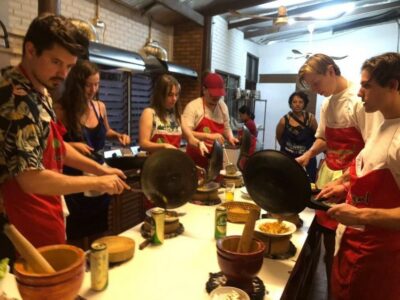
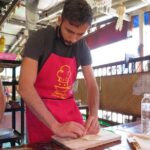
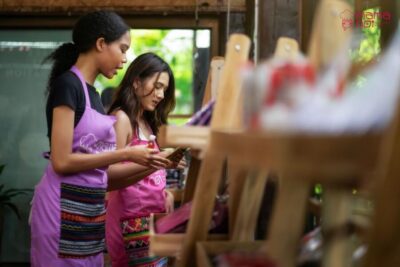
Several people highlighted that each person had their own cooking station, which makes a difference. Cooking improves when you’re not waiting for a turn. You’ll chop, stir, taste, and adjust as you go, then eat what you’ve made together.
Who you’ll likely cook with (and what that means)
Because this is a group class, it helps if you enjoy learning alongside others. If you’re traveling with a friend or family member, small-group cooking is a great shared activity. If you’re traveling solo, the interaction is still friendly because everyone’s working, tasting, and talking, rather than sitting quietly.
Sticky rice with mango: the sweet finish you’ll remember
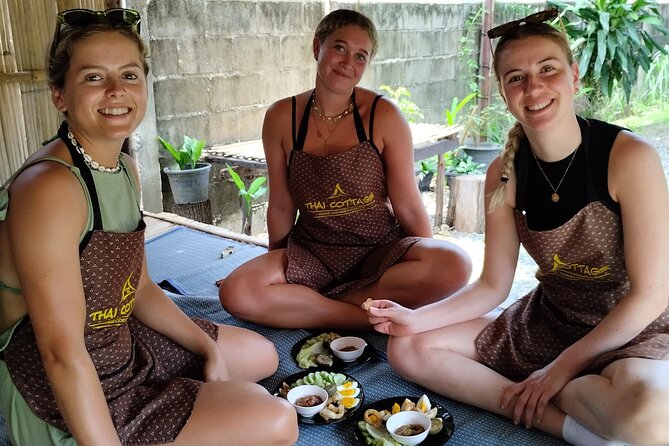
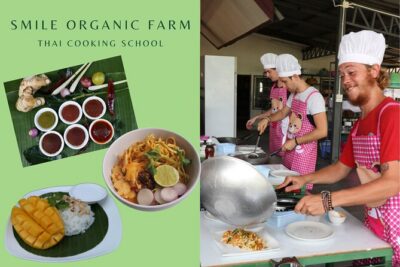
Everyone also learns the traditional sweet sticky rice with mango. It’s a simple concept—sticky rice and ripe fruit—but Thai dessert is all about texture and timing. If you get the sticky-rice method right during the class, you’ll feel confident when you try it again later.
In practice, this part often becomes the “everyone relaxes and enjoys it” segment. You’ve worked through savory dishes, made curry paste, and now you’re tasting the dessert right after. That flow is one reason the class feels complete instead of rushed.
Instructors in the real world: you might meet Toey, Tory, Kat, Mac, or Gataii
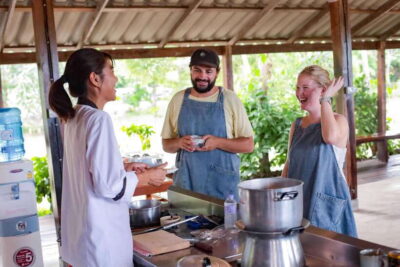
English instruction is included, and several instructors were specifically named in different instances. Depending on the day, your instructor could be Toey, Tory, Kat, Mac, or Gataii. What they seem to share is a focus on keeping dishes on track and guiding different skill levels without making you feel behind.
A practical way to use this: tell your instructor what you want most. If you want curry-paste technique, ask about grinding consistency and how to adjust balance. If you want to understand Thai ingredient behavior, ask what to taste for at each stage. Most of the class value is in the Q&A, even if you’re shy at first.
The recipes you’ll actually use later
You’ll receive ingredient guidance, recipes, and instruction in English. You’ll also get a PDF version recipe book online, so you’re not stuck trying to recreate the flavors from memory the next day.
This is the part that turns a fun afternoon into something that lasts. If you take the recipe book seriously—compare ingredients you used at the market with what you can find at home—you’ll be able to cook again without guessing.
Drinking water is included. Alcoholic drinks are not included, but they are available for purchase. If you’re planning to bring your own drinks, don’t count on it—plan around what’s provided and what you can buy on site.
Price check: does $35.86 feel fair?
At $35.86 per person for a roughly four-hour experience, the value mainly comes from inclusions that would add up separately:
- hotel round-trip transfer within 3 km
- a market visit
- an organic garden stop tied to your cooking
- ingredients, English instruction, and drinking water
- curry paste from scratch + sticky rice with mango as core learning pieces
- a PDF recipe book you can use again
For me, the best value is that you don’t just “learn Thai food” in theory. You shop for ingredients, see them in context at the garden, then cook them with direct instruction. That combo is what makes the price feel reasonable.
Where things can fall short (and how to manage it)
No class is perfect, and a couple of issues show up in people’s experiences.
1) Market guidance can vary. One person felt the market visit was more independent, with fewer explanations. If you want that deeper ingredient education, bring curiosity and ask questions quickly before the walk moves on.
2) Some prep may already be done. Another person mentioned things like rice or other components being prepared in advance. That can be totally normal in a kitchen with timing constraints, but if your joy is cooking from start to finish, keep expectations flexible. Still, you can ask what’s made fresh during your station time and what parts are prepped beforehand.
3) Kitchen tools and setup. One review noted that cooking location and tools could be improved. That doesn’t necessarily ruin the class, but it’s a reason to show up patient and ready to adapt. If your mindset is hands-on learning over perfect equipment, you’ll likely enjoy it.
Who should book this cooking class (and who might skip)
Book ThaiCottage if you:
- love Thai food and want techniques you can repeat
- enjoy cooking and don’t mind a group setting
- want a market + organic garden experience, not just a classroom-style demo
- like the idea of choosing dishes based on your tastes
You might skip it if:
- you’re very short on time and can’t work around the roughly four-hour block
- you hate group activities or need total one-on-one instruction
- you’re expecting every single step to be completely start-to-finish without any prep done ahead of time
Also, the experience requires good weather. If it’s canceled due to poor weather, you’ll be offered a different date or a full refund.
Should you book ThaiCottage with ThaiCottage Home Cookery School?
I think it’s a strong yes for most people who want an authentic Thai cooking afternoon in Chiang Mai. The mix of market learning, an organic garden stop, and hands-on cooking—especially the curry paste from scratch—gives you more than a meal. You get skills, context, and a recipe PDF you can use later.
If you go, go curious. Ask about ingredients at the market, pay attention during curry paste, and taste as you cook instead of waiting until the end. Do that, and you’ll leave with food you made and flavors you can actually recreate.
FAQ
How long is the ThaiCottage cooking class?
The duration is about 4 hours.
Is hotel pickup included?
Yes, round-trip hotel transfers are included, but only within 3 km from the city area.
What activities are included besides cooking?
You’ll visit a local market and an organic Thai herb garden, then cook and eat your chosen dishes.
What will I learn to cook?
You’ll choose and learn how to prepare six Thai dishes from different categories. Everyone also learns to make curry paste from scratch and sticky rice for sweet sticky rice with mango.
Is the class taught in English?
Yes. Ingredients, recipes, and instructions are provided in English.
Is alcohol included?
Alcoholic drinks are not included, but they are available to purchase.
What if weather is bad or I need to cancel?
This experience requires good weather. If it’s canceled due to poor weather, you’ll be offered a different date or a full refund. You can cancel up to 24 hours in advance for a full refund.
More Tours in Chiang Mai
- Chiang Mai: Doi Inthanon National Park Eco-Friendly Tour★ 4.6 · 6,667 reviews
- Chiang Mai: Elephant Sanctuary & Waterfall Group Tour★ 4.9 · 5,780 reviews
- Chiang Mai: Cooking Class, Market & Thai Herbs Garden Tour★ 4.9 · 4,824 reviews
- Chiang Mai: Elephant Sanctuary Feeding Program Half-Day Tour★ 4.8 · 4,527 reviews
- Chiang Rai White Temple and Blue Temple Day Tour★ 4.6 · 3,366 reviews
More Tour Reviews in Chiang Mai
- Half-Day Thai Cooking Class at Organic Farm in Chiang Mai★ 5.0 · 19,087 reviews
- Chiang Mai: Elephant Sanctuary, Waterfall & Bamboo Rafting★ 4.9 · 9,160 reviews
- Chiang Mai: Doi Inthanon National Park Eco-Friendly Tour★ 4.6 · 6,667 reviews
- Chiang Mai: Elephant Sanctuary & Waterfall Group Tour★ 4.9 · 5,780 reviews
- Chiang Mai: Chiang Rai Temples, Karen Tribe and Hot Springs★ 4.7 · 5,401 reviews
More Chiang Mai Cooking Classes
- Half-Day Thai Cooking Class at Organic Farm in Chiang Mai★ 5.0 · 19,087 reviews
- Chiang Mai: Cooking Class, Market & Thai Herbs Garden Tour★ 4.9 · 4,824 reviews
- Chiang Mai: Authentic Cooking Class with Market & Farm Visit★ 4.9 · 4,546 reviews
- Thai and Akha Cooking Class in Chiang Mai★ 5.0 · 4,358 reviews
- Chiang Mai: Cooking Class with Market and Pickup★ 4.9 · 1,365 reviews
Fresh off the pile: Chiang Mai tours we have just written up

Chiang Mai Cooking Classes, compared.
 ★ 5.0Half-Day Thai Cooking Class at Organic Farm in Chiang MaiFrom $2919,087 reviews
 ★ 4.9Cooking Class, Market & Thai Herbs Garden TourFrom $314,824 reviews
 ★ 4.9Authentic Cooking Class with Market & Farm VisitFrom $344,546 reviews
 ★ 5.0Thai and Akha Cooking Class in Chiang MaiFrom $424,358 reviews
 ★ 4.9Cooking Class with Market and PickupFrom $251,365 reviews
 ★ 4.9Cooking Class with Organic Farm at Mama NoiFrom $321,151 reviews
 ★ 5.0Full Day Thai Cooking at Farm (Chiang Mai)From $391,127 reviews
 ★ 4.9HALF-DAY COOKING COURSE at a Thai Cooking FarmFrom $28705 reviews
Browse the lists this tour appears in