
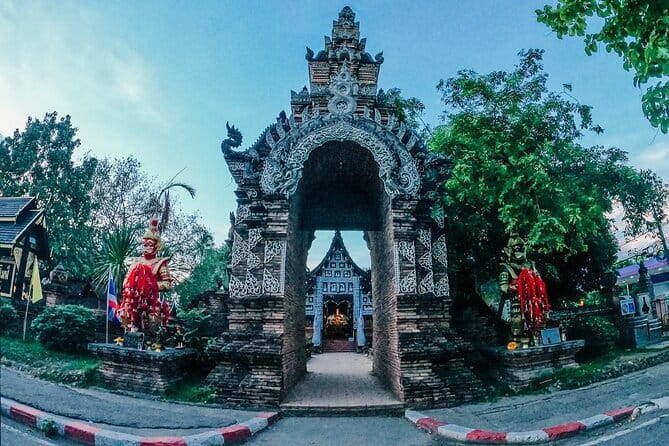
Reviewed · EVENING EXPERIENCES
Guided Chiang Mai City Night Tour by EV Tram
Night in Chiang Mai feels calmer by tram. This EV tram night tour is a slower, smarter way to get your bearings after dark, with an easy rhythm between temples, neighborhood lanes, and food stops. I like that it’s built for understanding Chiang Mai’s daily beliefs and routines, not just ticking off postcard landmarks.
My second favorite part is the human side: an English-speaking guide puts the city’s stories into context at each stop. You also get real value since admission fees are handled as listed, plus bottled water and some snacks and drinks for the food time. One thing to consider: it runs about two hours and includes short walks and market wandering, so if you want a pure, fast hit of only the biggest sights, this may feel more “orienting” than “racing.”
In This Review
- Key highlights worth your attention
- Why an EV Tram Makes Chiang Mai’s Night Feel Easier
- The Route: Temples, Gates, and Local Markets After Dark
- Three Kings Monument and Wat Chiang Man: Start With the City’s Story
- Wat Lok Molee and Wat Pa Pao: Woodwork, Sculptures, and Tai Yai Links
- Chang Puek Gate Night Market, Wat Nong Kham, and Warorot Market
- Tha Phae Gate and the Chiang Mai Gate Night Market for Dinner Energy
- Wat Chedi Luang and Wat Phra Singh: Big Stupa, Northern Style
- Price and Value: What $27.43 Really Buys
- Timing, Comfort, and What to Wear
- Who This Tour Fits Best
- Should You Book This Chiang Mai Night Tour?
- FAQ
- What is the meeting point for the Chiang Mai City Night Tour?
- What time does the tour start?
- How long is the tour?
- How many people are in the group?
- What’s included in the price?
- What isn’t included?
- Is pick-up and drop-off available?
- What should I wear?
- Can I cancel for a full refund?
Key highlights worth your attention
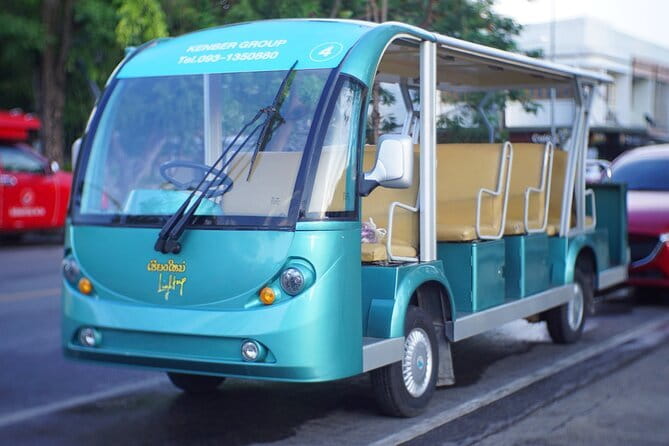
- Quieter, lower-impact travel: the EV tram keeps noise down while you move between areas
- Small group size: max 12 travelers, which makes the pacing feel human
- Temples plus everyday Chiang Mai: orientation through Lanna-style landmarks and local markets
- Food time included: you get market access and some snack-and-drink support for dinner breaks
- Smart start point: it begins at Three Kings Monument and loops back there at the end
Nothing jumping out yet? More Chiang Mai trips are just down the page
- Chiang Mai: 3 Hour Old City and Temples Guided Walking Tour
★ 4.6 · 1,568 reviews - Chiang Mai: Doi Inthanon Trip with Pha Dok Siew Guided Trek
★ 4.6 · 910 reviews - Chiang Mai: Historic Temples and City Guided Walking Tour
★ 4.7 · 650 reviews - Chiang Mai: Local Food and Markets Guided Walking Tour
★ 4.3 · 175 reviews
Why an EV Tram Makes Chiang Mai’s Night Feel Easier
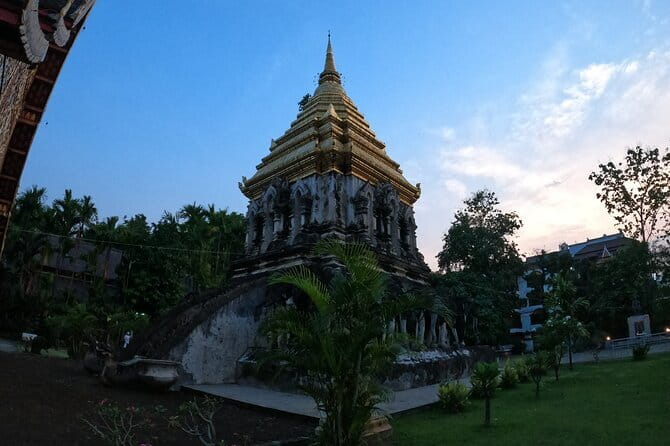
Chiang Mai at 6:00 pm has energy, but it also has traffic, scooters, and crowds that can make a first night stressful. This tour uses an electric tram to reduce the friction. You spend less time weaving through busy streets and more time learning what you’re actually seeing.
It also changes the vibe. A tram ride gives you a clean window to look around—city gates, temple silhouettes, and the shape of neighborhoods—without the full effort of long walks. And because the tour is designed as an “understand the city” experience, the guide uses the movement to connect dots: history → beliefs → what daily life looks like now.
One practical plus: the group is capped at 12, so you’re less likely to feel like you’re trapped behind a line of people. That matters at night markets, where stopping to look is half the fun.
The Route: Temples, Gates, and Local Markets After Dark
The pacing is unhurried. You’ll move by tram between key points, with short walk segments and brief temple visits. The itinerary blends classic temple areas with two important “real Chiang Mai” stops: a local fresh market and a night market built around street-food dinner.
Here’s what the flow feels like in practice: you start with city mythology and landmark temples, shift to architectural variety outside the old walls, then transition into food zones where Chiang Mai’s everyday culture is front and center. The result is a night that feels like a guided orientation, not a checklist.
Three Kings Monument and Wat Chiang Man: Start With the City’s Story
You begin at Three Kings Monument, a strong choice because this area helps frame Chiang Mai as more than scenery. There’s a quick stop that includes a brief history and references the city pillar called Inthakin, said to have been erected in 1296 by King Mangrai. You’ll also have a bit of walking in this area to Wat Inthakin Sadeu Muang, which connects that legend to a physical place.
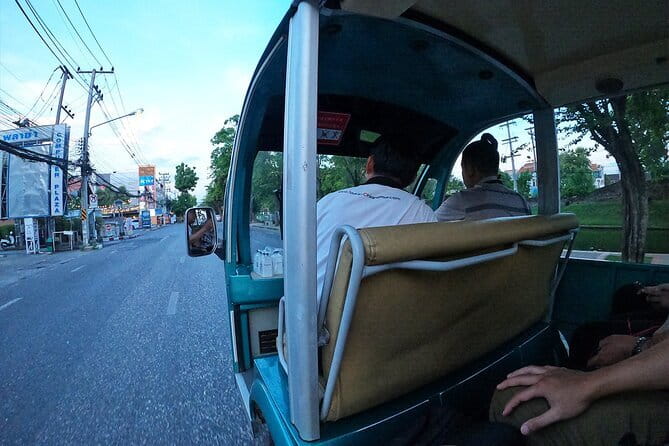
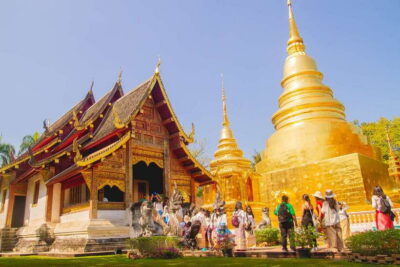
Then you hop back on the tram and head to Wat Chiang Man, described as the oldest temple in Lanna-style chedi form. It’s supported by rows of elephant-shaped buttresses—one of those architectural details that’s hard to notice unless someone points it out.
Why this works early: at the start of the tour you’re still fresh, and your brain is ready to absorb names, layers, and meaning. After that, when the city gates and markets come in, you’ll understand why people treat these spaces with care.
Nothing jumping out yet? More Chiang Mai trips are just down the page
Wat Lok Molee and Wat Pa Pao: Woodwork, Sculptures, and Tai Yai Links
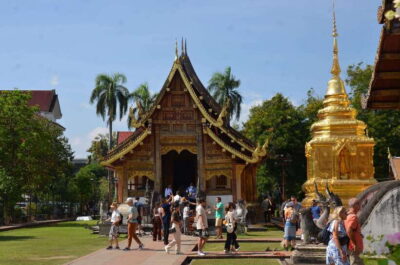
Next up is Wat Lok Molee, known for its wooden complex and terracotta sculptures. It’s described as one of the most attractive wát outside the city walls, and it’s thought to have been founded in the 14th century for monks from Burma. That’s a useful reminder: Chiang Mai’s religious culture wasn’t formed in isolation. Styles and traditions moved across regions, and you can still see that connection in the way temples look and how they’re used.
After that, you go toward the northern gate area and then visit Wat Pa Pao, described as the first temple of the Ngiaw or Tai Yai in Chiang Mai. That specific identity detail is exactly the kind of thing you remember later when you notice regional influences around the city.
Possible drawback here: temple visits are short. You’re not going to have a slow, long sit-down at each site. If you love deep, quiet time inside temples, this tour is more about context and highlights than long introspection.
Chang Puek Gate Night Market, Wat Nong Kham, and Warorot Market
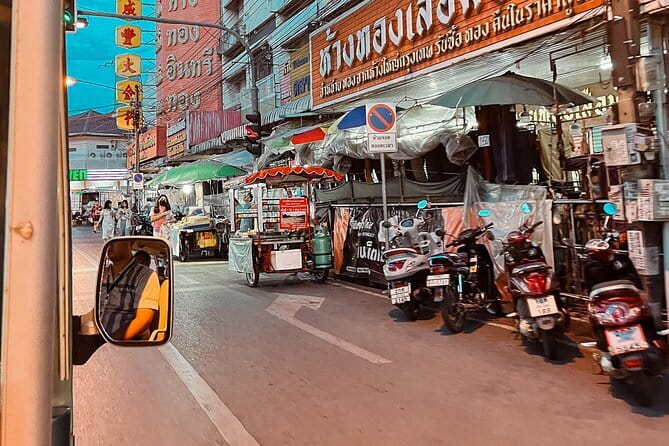
When you reach Chang Puek Gate, you’re at the northern gate of the old city, with ruins of the city wall nearby. This is also where the tour’s night market food energy shows up—think street-food style dinner options and a lively scene that’s popular with both locals and visitors.
Right after that, you’ll visit Wat Nong Kham, noted for Burmese-Shan temple styles. This is a good contrast stop: you’ve seen Lanna-style shapes already, and now you get a sense of how different regional influences can look in a single city.
Then comes Warorot Market, described as the biggest local fresh market in Chiang Mai. This part is less about a single photo spot and more about browsing: fresh produce and other products sold to local people. If you want to see how Chiang Mai eats and shops, this is the stop that turns the tour from “sights” into “daily life.”
Practical note: market areas can get crowded quickly. Wear comfortable shoes and keep an eye on your group. The tram ride helps, but markets are still markets.
Tha Phae Gate and the Chiang Mai Gate Night Market for Dinner Energy
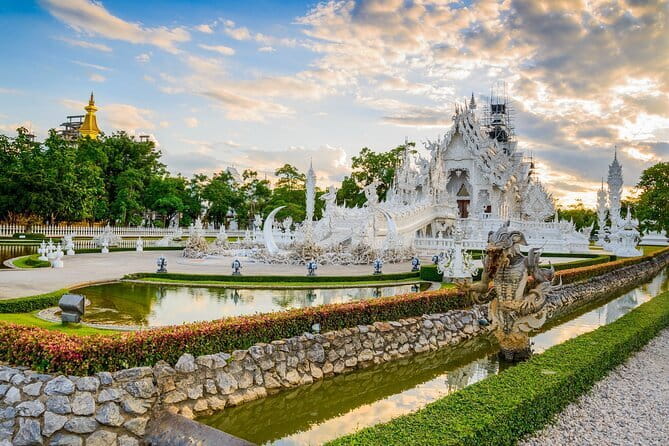
Tha Phae Gate is the main center of Chiang Mai’s public city activities and festivals. Even if you don’t catch a festival night, arriving here during the evening gives you a sense of the city’s pulse—where people gather when there’s something happening.
After Tha Phae, the tour moves to Chiang Mai Gate Night Market. This stop is timed for food: you’ll have about 25 minutes, and admission is included. The focus is street food, with a local foodie mindset—food as culture, not just calories.
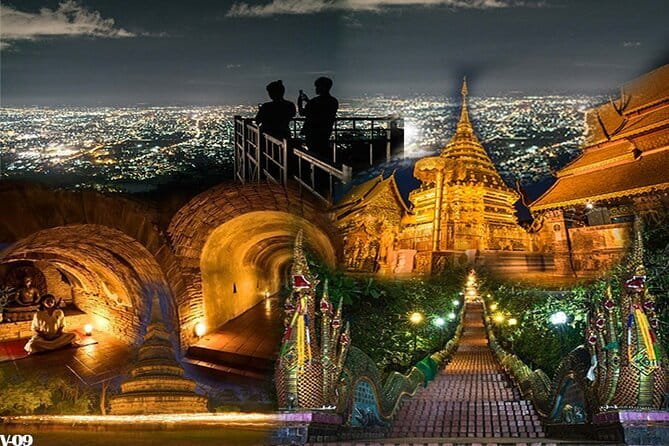
This is also where the experience becomes photo-friendly. One review I took note of described how the night light makes the city look different and how photos come out beautifully. I’d treat that as permission to bring your camera settings and slow down for a few shots, because the combination of temple silhouettes and food lights can look great.
Wat Chedi Luang and Wat Phra Singh: Big Stupa, Northern Style
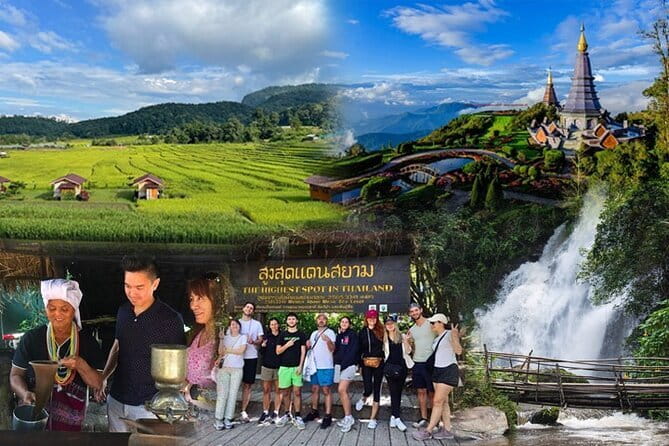
The tour finishes with a strong temple pair.
First, Wat Chedi Luang Varavihara, known for the temple’s biggest stupa. It’s also described as a place that housed the city pillar together with the Tripiṭaka (Buddhist Scriptures). Even in a short visit, that kind of detail helps you connect why the site matters beyond its architecture.
Then there’s Wat Phra Singh, highlighted as a northern-style architectural standout, including the chapel. This final temple stop gives your night a clean ending: earlier you learned how the city pillar connects to Chiang Mai’s roots, and now you close with a temple that feels like a signature of northern style.
Short visits can feel like “quick stops,” but the benefit is pacing. By the end, your head is full of names, and your feet aren’t destroyed.
Price and Value: What $27.43 Really Buys
At $27.43 per person, the price looks fair only because the inclusions are meaningful. You’re not just paying for a guide and a tram ride. The package includes:
- EV tram during the trip
- A professional English-speaking guide
- All admission fees as listed across the itinerary
- Bottled water
- Some snacks and drinks during the foodie portions
- Travel accident insurance
So the value equation is simple: you’re buying guided orientation plus transport plus site entry. The alternative is piecing together temple tickets, tram/local transport, and a separate dinner plan. Doing it this way usually costs less time and reduces decision fatigue.
There is also a group discount available, and the group size is limited to 12, which tends to keep the experience more manageable.
The optional add-on is pick-up and drop-off. If you want it, you’ll pay THB 500 per way per group for locations within 5 km from the city center. If you’re staying close, you may be fine meeting at the start and walking a bit.
Timing, Comfort, and What to Wear
Start time is 6:00 pm, and the tour ends back at the same meeting point at Three Kings Monument. Duration is listed as about 2 hours, but it’s realistic to expect a bit more time when you factor in market energy and the short temple breaks.
Dress code is smart casual. That’s easy, but don’t overthink it—just make sure you’re comfortable. You’ll be standing and moving between areas, and the walking segments add up.
If you’re hoping for strong nighttime photos, bring what you need for low-light shots. The night lighting can make temples and city streets look noticeably different, and one review specifically called out how beautiful the photos can be.
Who This Tour Fits Best
This tour is best for you if:
- you want your first night in Chiang Mai to do more than sightseeing
- you like learning why places matter, not only where they are
- you enjoy mixing temples with market and street-food dinner
- you prefer a small group and a guide who helps connect the dots
It might not be the best match if:
- you want a long, quiet temple experience with lots of time inside each site
- you’re only interested in a single “top attraction” and hate market wandering
Should You Book This Chiang Mai Night Tour?
Book it if you want a smart first evening: EV tram convenience, guided context at multiple temple stops, and real food time in two major market areas. The price makes sense because admission fees, water, and snack support are part of the package, and the small group size keeps it from feeling chaotic.
Skip it only if your style is strictly “see one or two big sights deeply” or if you hate walking through lively market spaces even briefly. Otherwise, this is one of the more practical ways to understand Chiang Mai after dark without burning your energy too early in your trip.
FAQ
What is the meeting point for the Chiang Mai City Night Tour?
The tour starts at Three Kings Monument (QXRP+3WX, Prapokklao Road, Tambon Si Phum, Amphoe Mueang Chiang Mai, Chiang Wat Chiang Mai 50200, Thailand) and ends back at the meeting point.
What time does the tour start?
The start time is 6:00 pm.
How long is the tour?
The duration is listed as 2 hours (approx.).
How many people are in the group?
This tour has a maximum of 12 travelers.
What’s included in the price?
Included features are EV tram, a professional English-speaking guide, all admission fees as mentioned, bottled water, and some snack and drinks during the foodie tour, plus travel accident insurance.
What isn’t included?
Not included are pick-up and drop-off service (optional), extra food and drinks, souvenir and other personal expenses, and alcoholic beverages.
Is pick-up and drop-off available?
Yes, pick-up and drop-off is optional. The price is THB 500 for a location within 5 km from the city center, and extra charge is THB 500 per way per group.
What should I wear?
The dress code is smart casual.
Can I cancel for a full refund?
Yes. Free cancellation is available, and you can cancel up to 24 hours in advance for a full refund. If you cancel less than 24 hours before the start time, the amount paid isn’t refunded.
More Guided in Chiang Mai
- Chiang Mai: 3 Hour Old City and Temples Guided Walking Tour★ 4.6 · 1,568 reviews
- Chiang Mai: Doi Inthanon Trip with Pha Dok Siew Guided Trek★ 4.6 · 910 reviews
- Chiang Mai: Historic Temples and City Guided Walking Tour★ 4.7 · 650 reviews
- Chiang Mai: Local Food and Markets Guided Walking Tour★ 4.3 · 175 reviews
- Taste of Chiang Mai: Michelin Guide & Street Food Tour★ 4.9 · 159 reviews
More Tours in Chiang Mai
- Chiang Mai: Doi Inthanon National Park Eco-Friendly Tour★ 4.6 · 6,667 reviews
- Chiang Mai: Elephant Sanctuary & Waterfall Group Tour★ 4.9 · 5,780 reviews
- Chiang Mai: Cooking Class, Market & Thai Herbs Garden Tour★ 4.9 · 4,824 reviews
- Chiang Mai: Elephant Sanctuary Feeding Program Half-Day Tour★ 4.8 · 4,527 reviews
- Chiang Rai White Temple and Blue Temple Day Tour★ 4.6 · 3,366 reviews
More Tour Reviews in Chiang Mai
- Half-Day Thai Cooking Class at Organic Farm in Chiang Mai★ 5.0 · 19,087 reviews
- Chiang Mai: Elephant Sanctuary, Waterfall & Bamboo Rafting★ 4.9 · 9,160 reviews
- Chiang Mai: Doi Inthanon National Park Eco-Friendly Tour★ 4.6 · 6,667 reviews
- Chiang Mai: Elephant Sanctuary & Waterfall Group Tour★ 4.9 · 5,780 reviews
- Chiang Mai: Chiang Rai Temples, Karen Tribe and Hot Springs★ 4.7 · 5,401 reviews
Fresh off the pile: Chiang Mai tours we have just written up

Evening Experiences, compared.
 ★ 4.6Doi Suthep and Wat Umong Enchanting Evening TourFrom $271,811 reviews
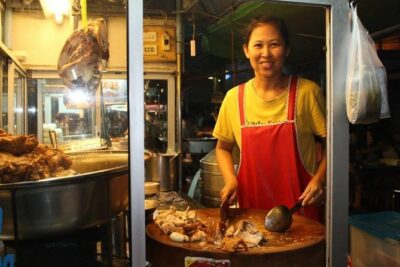 ★ 4.5Small-Group Chiang Mai Evening Street Food TourFrom $42826 reviews
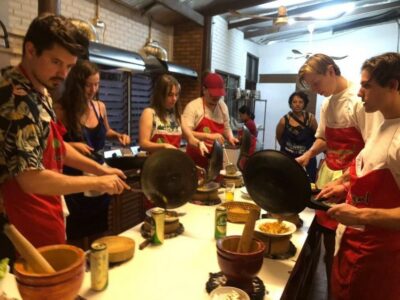 ★ 4.9Evening Cooking Class and Local Market VisitFrom $28648 reviews
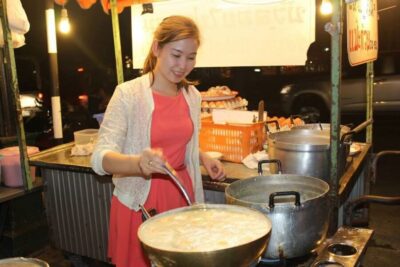 ★ 4.8Evening Local Street Food Market TourFrom $40604 reviews
 ★ 4.7Kalare Night Bazaar Boxing Stadium Muay ThaiFrom $19507 reviews
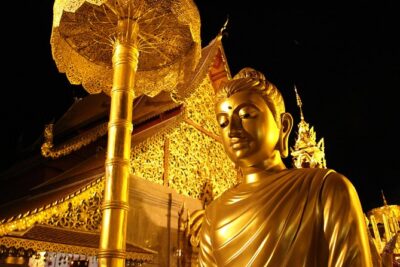 ★ 4.5Best seller!! Amazing Night tour, Doi Suthep + Wat umong – Top Must visit!From $20451 reviews
 ★ 5.0Evening Cooking Class in Organic Farm with Local Market TourFrom $29394 reviews
 ★ 4.7Historic Old City Bike Tour – Morning or NightFrom $39263 reviews
Browse the lists this tour appears in